2026 Volvo XC40 Recharge: Volvo's Compact PHEV SUV at a Glance
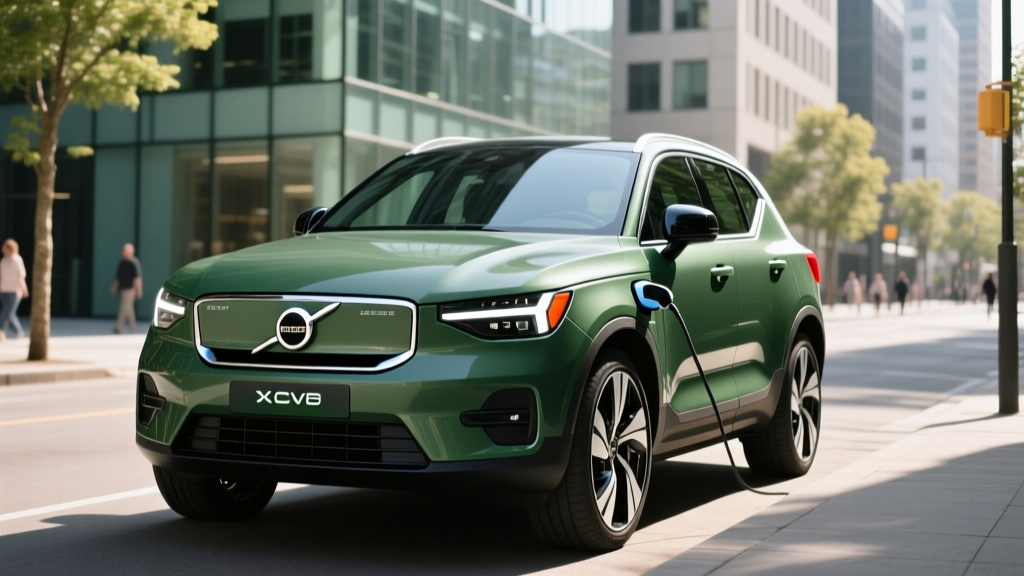
The Volvo XC40 has been one of the most recognizable compact luxury crossovers since its debut, but for 2026, the electrified variant commands the spotlight. The XC40 Volvo hybrid — officially badged as the XC40 Recharge Plug-in Hybrid — occupies a strategic middle ground: it offers genuine electric-only commuting range without the range anxiety or charging-dependency of a full battery-electric vehicle (BEV). For buyers not ready to commit to a pure EV like the XC40's sibling, the EX40, this PHEV represents a practical bridge technology with real daily utility.
Volvo simplified its naming convention in recent years, dropping the older "T8 Recharge" nomenclature in favor of "Recharge" across its PHEV lineup. The 2026 XC40 Recharge pairs a turbocharged 2.0-liter four-cylinder engine with a rear-axle electric motor, delivering all-wheel drive and a combined 300 horsepower. The critical upgrade over earlier model years is the enlarged 18.8 kWh (usable) battery pack, which extends electric-only range to an EPA-estimated 32 miles — enough to cover most daily commutes without burning a drop of gasoline.
| Specification | 2026 Volvo XC40 Recharge PHEV |
|---|---|
| Powertrain | 2.0L turbo I4 + rear electric motor (AWD) |
| Combined Horsepower | 300 hp (262 hp engine + 143 hp motor) |
| Combined Torque | 354 lb-ft |
| Battery Capacity (Usable) | 18.8 kWh (NMC lithium-ion) |
| EPA Electric-Only Range | 32 miles |
| Total Combined Range | ~430 miles (electric + gas) |
| EPA Combined MPG (hybrid mode) | 28 MPG combined (27 city / 29 highway) |
| MPGe (electric + gas combined) | 63 MPGe |
| 0-60 mph | 5.5 seconds |
| DC Fast Charging | Not available (Level 2 AC only) |
| Level 2 Charge Time (0-100%) | ~5 hours at 3.6 kW onboard charger |
| Starting MSRP | $54,050 (Plus trim) / $57,900 (Ultimate trim) |
| Federal §30D Tax Credit | Not eligible (see details below) |
| Powertrain Warranty | 4 years / 50,000 miles |
| Hybrid Battery Warranty | 8 years / 100,000 miles |
HEV vs PHEV: Where the XC40 Recharge Fits
Before evaluating the XC40 Recharge specifically, it's essential to understand the distinction between conventional hybrids (HEVs) and plug-in hybrids (PHEVs), because Volvo only offers the XC40 as a PHEV — there is no conventional HEV version for the US market.
| Feature | Conventional Hybrid (HEV) | Plug-in Hybrid (PHEV) — XC40 Recharge | Battery Electric (BEV) — EX40 |
|---|---|---|---|
| Plug-in Charging Required? | No — charges via regenerative braking and engine | Yes — plug in to access full electric range | Yes — sole energy source |
| Electric-Only Range | 1-2 miles at low speed | 32 miles (EPA) | 223-293 miles (EPA, depending on motor config) |
| Battery Size | ~1-2 kWh | 18.8 kWh usable | 75-82 kWh usable |
| Gasoline Engine? | Yes | Yes | No |
| Tailpipe Emissions (electric mode) | N/A (always uses engine) | Zero when driving on battery | Zero |
| Ideal For | Drivers without home charging access | Home chargers with short commutes + road-trip flexibility | Home chargers ready to go fully electric |
The XC40 Recharge's 18.8 kWh battery is large enough to meaningfully electrify daily driving but small enough that it doesn't add excessive weight or cost compared to a full BEV. If you have access to a standard 120V outlet (Level 1) or a 240V Level 2 home charger, you can wake up to a full battery every morning and commute in electric silence. If you forget to plug in, the vehicle simply operates as a conventional hybrid — you lose the electric-range benefit but still get 28 MPG combined, which is respectable for a 4,500-lb luxury AWD crossover.
Fuel Economy: EPA Numbers and Real-World MPG
| Driving Mode | EPA City | EPA Highway | EPA Combined |
|---|---|---|---|
| Charge-Sustaining (Hybrid Mode) | 27 MPG | 29 MPG | 28 MPG |
| Charge-Depleting (Electric + Gas) | 63 MPGe combined | ||
| Electric-Only Energy Consumption | 36 kWh/100 mi | ||
Per fueleconomy.gov, the 2026 XC40 Recharge posts 27 city / 29 highway / 28 combined MPG when operating in hybrid mode after the battery is depleted. The slightly higher highway figure is somewhat unusual for PHEVs and reflects Volvo's efficient turbocharged engine and aerodynamic tuning.
Real-world expectations: In city driving with a charged battery, owners frequently report operating almost entirely on electricity for trips under 30 miles. Once the battery depletes, real-world city MPG often exceeds the EPA estimate — regenerative braking recovers energy in stop-and-go traffic, and many PHEV owners see 30-33 MPG in urban conditions. Highway driving at sustained 70-80 mph speeds is where the XC40 Recharge is least efficient, typically delivering 26-28 MPG in hybrid mode. Cold weather (below 35°F) reduces electric-only range by roughly 20-30%, meaning that 32-mile EPA figure may shrink to 22-25 miles in winter conditions.
Real-world expectation: 26-30 miles in moderate weather; 22-25 miles in cold weather (below 35°F); highway-speed driving at 75 mph reduces range to ~24 miles. Actual results vary based on temperature, terrain, driving style, and cabin climate usage.
Powertrain and Performance Deep Dive
The XC40 Recharge's powertrain is Volvo's latest-generation PHEV architecture, which differs significantly from the older T8 Twin Engine setup. The turbocharged 2.0-liter four-cylinder engine produces 262 horsepower and drives the front wheels through an 8-speed automatic transmission. A 143-horsepower electric motor powers the rear axle, providing all-wheel drive without a mechanical driveshaft connecting the two axles. Combined output is 300 horsepower and 354 lb-ft of torque.
This rear-axle motor arrangement means the XC40 Recharge can operate in pure electric mode using only the rear motor — giving it a rear-wheel-drive character in EV mode. When you demand full acceleration, both power sources engage simultaneously, and the 0-60 mph sprint completes in a brisk 5.5 seconds. The transition between electric and gasoline power is well-managed by Volvo's software; most drivers won't notice the engine starting unless they're watching the tachometer or listening carefully.
Volvo offers multiple drive modes: Pure (electric-only, limited to ~78 mph), Hybrid (default, optimizes between electric and gas), Power (maximum combined output), and Off Road (AWD traction optimization at low speeds). A Hold function lets you preserve battery charge for later use — useful if you're highway driving and want to save your electric range for city driving at your destination.
Charging: What You Need to Know
One of the XC40 Recharge's most important limitations: it does not support DC fast charging. This is common for PHEVs — the battery is small enough that AC charging is sufficient — but it means you cannot use public fast-charging networks like Electrify America or Tesla Superchargers to replenish the battery quickly on road trips.
| Charging Level | Power | Time (0-100%) | Availability |
|---|---|---|---|
| Level 1 (120V household outlet) | ~1.4 kW | ~13-14 hours | Anywhere with a standard outlet |
| Level 2 (240V home/public charger) | 3.6 kW (onboard charger limit) | ~5 hours | Home wallbox, public Level 2 stations |
| DC Fast Charging | N/A | N/A | Not supported |
The onboard AC charger is rated at 3.6 kW, which is the bottleneck — even if you connect to a 7.2 kW or 11.5 kW Level 2 station, the XC40 Recharge will only accept 3.6 kW. For most PHEV owners, this is perfectly adequate: plug in overnight and the battery is fully replenished by morning. A dedicated Level 2 home charger (240V) is the optimal setup and typically costs $500-$1,200 for equipment plus $800-$2,000 for professional installation, depending on your electrical panel's proximity to the garage and whether a panel upgrade is needed.
Charging connector: The XC40 Recharge uses the standard J1772 connector for AC charging, which is universal across all non-Tesla EVs and PHEVs in North America. An adapter is needed only if you want to use a Tesla Wall Connector or Destination Charger.
Pricing, Trims, and Tax Credit Eligibility
The 2026 Volvo XC40 Recharge is offered in two trim levels:
- Plus ($54,050 MSRP, including destination): Includes panoramic moonroof, 9-inch touchscreen with Google built-in, Harman Kardon audio, heated front seats, heated steering wheel, 360-degree camera, and Volvo's full suite of ADAS features (adaptive cruise, lane-keeping, blind-spot monitoring with steering assist).
- Ultimate ($57,900 MSRP): Adds pixel LED headlights, premium leather, ventilated front seats, head-up display, and a 360-degree surround camera with park-assist pilot.
Options packages and standalone additions (such as 20-inch wheels, premium paint colors, or the Climate Package) can push a fully loaded Ultimate trim above $62,000.
The 2026 Volvo XC40 Recharge does not qualify for the federal §30D Clean Vehicle Credit (up to $7,500). Under current IRS rules, the credit requires that a vehicle's battery components and critical minerals meet specific North American sourcing thresholds. Volvo's PHEV battery supply chain does not currently satisfy these requirements. Additionally, PHEV vehicles must meet a minimum battery capacity threshold (which the XC40 does), but the sourcing requirement is the disqualifying factor.
- MSRP cap for SUVs: $80,000 — XC40 Recharge passes ✓
- Buyer income cap (AGI): $150K single / $300K joint — buyer-dependent
- Battery component manufacturing (North America): Not met ✗
- Critical minerals sourcing (US or FTA partners): Not met ✗
- Point-of-sale transfer option: N/A (no credit to transfer)
State incentives may apply. Several states — including California, Colorado, and New York — offer their own rebates or tax credits for PHEVs that are independent of federal eligibility. Check your state's energy or environmental agency for current programs. A tax professional can confirm your personal eligibility for any applicable incentives.
Reliability, Battery Longevity, and Warranty Coverage
Volvo's hybrid battery warranty is a critical ownership factor, and the XC40 Recharge is covered under Volvo's standard hybrid/electric component warranty: 8 years or 100,000 miles, whichever comes first. This warranty guarantees that the high-voltage battery will retain a minimum capacity threshold (typically 70% of original capacity) and covers defects in the battery pack, electric motor, power electronics, and associated control systems.
Capacity Retention Guarantee: Battery will maintain at least ~70% of original capacity during the warranty period
Coverage Includes: High-voltage battery pack, electric motor, inverter, onboard charger, high-voltage cabling
Estimated Out-of-Warranty Battery Replacement Cost: $8,000-$12,000 (parts and labor, based on current PHEV pack pricing — varies by dealer and region)
PHEV batteries experience less stress than full BEV batteries because the usable window is smaller (you're never truly at 0% or 100% — Volvo maintains a buffer at both ends to protect longevity). NMC (nickel manganese cobalt) chemistry in the XC40 Recharge offers good energy density for its compact size. Real-world data from earlier-generation Volvo PHEVs (2019-2023 model years) suggests that most owners experience minimal degradation in the first 5-6 years, typically losing 5-10% of electric range over that period.
For overall vehicle reliability, Volvo's compact platform has scored average to slightly above average in recent J.D. Power and Consumer Reports assessments, though the brand's infotainment software (now Google-based) has drawn occasional complaints for slow response times and occasional glitches. The mechanical powertrain — the turbocharged engine and 8-speed transmission — are proven components shared across Volvo's lineup, which helps with parts availability and service familiarity.
Who Should Choose the XC40 Volvo Hybrid (and Who Shouldn't)
- You have a short commute (under 30 miles round-trip) and access to home charging — you'll drive almost entirely on electricity on weekdays
- You take regular road trips (300+ miles) and don't want to plan around charging infrastructure
- You live in an apartment or area where public DC fast charging is sparse, but you can install or access a Level 2 charger at home
- You want a luxury compact SUV with genuine all-weather AWD capability and Volvo's safety reputation
- You're not ready to commit to a full BEV but want to reduce fuel consumption and emissions
- Your daily driving exceeds 40-50 miles — you'll deplete the PHEV's electric range daily and burn gas regularly
- You want access to the $7,500 federal tax credit (several competing BEVs qualify)
- You want DC fast charging for road-trip convenience
- You want zero tailpipe emissions and minimal maintenance (no oil changes, no engine)
- You have no access to any plug-in charging at home or work — a PHEV you can't plug in is just an expensive, heavy hybrid
- Your budget is under $45,000 — the XC40 Recharge's premium pricing is a significant factor
- 32 miles of real electric-only range covers most commutes
- 300 hp combined with seamless AWD — genuinely quick (5.5s 0-60)
- Premium interior with Google-based infotainment and strong audio
- Comprehensive standard safety suite (Volvo's Pilot Assist)
- Operates as a normal hybrid when battery is depleted — no range anxiety
- 8-year / 100,000-mile hybrid battery warranty
- No DC fast charging capability
- 3.6 kW onboard charger is slow compared to some PHEV competitors (e.g., Toyota RAV4 Prime at 6.6 kW)
- Does not qualify for the $7,500 federal §30D tax credit
- Starting MSRP above $54,000 is steep for a compact crossover
- Cargo space reduced slightly vs. gas XC40 due to battery placement
- Electric range drops meaningfully in cold weather and at highway speeds
Frequently Asked Questions
How many MPG does the Volvo XC40 hybrid get?
The 2026 XC40 Recharge PHEV achieves an EPA-estimated 27 city / 29 highway / 28 combined MPG when operating in hybrid mode (after the battery is depleted). In real-world city driving with regenerative braking, owners often see 30-33 MPG. The combined MPGe rating — which accounts for both electric and gasoline operation — is 63 MPGe. When driving within the 32-mile electric range, gasoline consumption is zero.
How far can the XC40 Recharge go on electric only?
The EPA rates the XC40 Recharge at 32 miles of electric-only range. In moderate temperatures (50-80°F) with mixed city/suburban driving, expect 26-30 real-world miles. Cold weather (below 35°F) and sustained highway speeds (75+ mph) will reduce this to approximately 22-25 miles. The vehicle will automatically switch to hybrid mode once the battery is depleted — you're never stranded.
Hybrid vs PHEV vs EV — which powertrain fits me?
A conventional hybrid (HEV) is best if you can't plug in at all — it improves fuel economy without any lifestyle change. A plug-in hybrid (PHEV) like the XC40 Recharge is ideal if you can charge at home and have a short commute but still want the freedom of a gas engine for long trips. A full electric vehicle (BEV) makes sense if you want zero emissions, minimal maintenance, access to federal tax credits, and are comfortable planning around charging on road trips. The PHEV is the compromise option — you get the best of both worlds, but with a higher purchase price and more mechanical complexity than either alternative.
Is the XC40 Recharge reliable, and what does battery replacement cost?
Volvo's PHEV powertrain has proven generally reliable, with the hybrid battery covered under an 8-year/100,000-mile warranty. The NMC battery pack is designed to last the vehicle's lifetime under normal use — most PHEV batteries lose only 5-10% capacity in the first 5-6 years. If replacement is needed out of warranty, expect a cost in the $8,000-$12,000 range (parts and labor), though prices vary by dealer and may decrease as battery technology matures. The turbocharged gasoline engine and 8-speed transmission are proven components with widespread service support.
Does the 2026 Volvo XC40 Recharge qualify for any tax credit?
The XC40 Recharge does not qualify for the federal §30D Clean Vehicle Credit (up to $7,500) due to battery component and critical-mineral sourcing requirements that Volvo's supply chain does not currently meet, per IRS guidelines. However, several states offer their own PHEV incentives — California's Clean Fuel Reward, Colorado's state tax credit, and New York's Drive Clean Rebate are examples that may apply depending on your residency. Always consult a tax professional and check your state's current programs before purchasing.
Can I charge the XC40 Recharge at a Tesla Supercharger?
No. Tesla Superchargers provide DC fast charging, which the XC40 Recharge does not support. You can charge at any Level 2 public station with a J1772 connector (ChargePoint, EVgo Level 2, Blink, etc.) or at a Tesla Wall Connector using a J1772 adapter. For home charging, a standard 120V outlet works (slowly) or a 240V Level 2 wallbox provides a full charge in about 5 hours.
How does the XC40 Recharge compare to competitors like the RAV4 Prime or BMW X3 PHEV?
The Toyota RAV4 Prime offers 42 miles of electric range, a 6.6 kW onboard charger, and a starting price around $44,000 — making it a strong value competitor, though it lacks the XC40's luxury interior and brand prestige. The BMW X3 xDrive30e PHEV offers similar luxury positioning but with slightly less electric range (~22 miles) and a comparable price point. The XC40 Recharge's advantage lies in its combination of 300 hp performance, Volvo's safety reputation, and a premium Scandinavian interior, though it trails the RAV4 Prime on pure electric efficiency and charging speed.