Quick Verdict: Is the Volvo XC40 Hybrid Worth It in 2026?
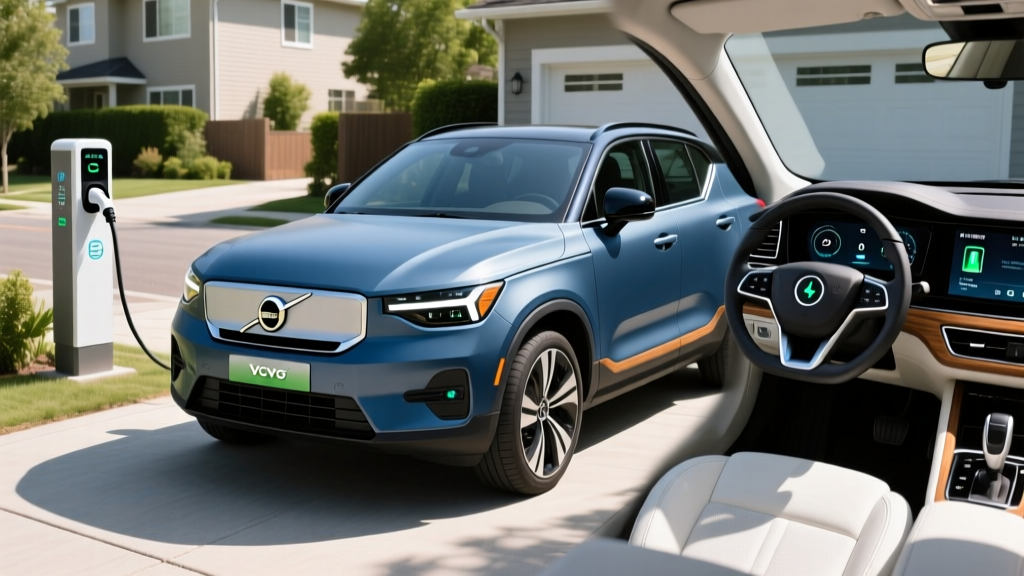
The Volvo XC40 has been one of the most popular compact luxury SUVs for years, and its electrified variants — the XC40 Recharge Plug-in Hybrid (PHEV) and the fully electric EX40 (formerly XC40 Recharge pure electric) — give buyers meaningful choices. But if you're searching specifically for a Volvo XC40 hybrid, you're likely looking at the XC40 Recharge PHEV, which pairs a turbocharged gasoline engine with an electric motor and a plug-in battery you can charge at home.
For 2026, Volvo continues to refine the XC40 Recharge PHEV with a larger battery pack than earlier model years, improved electric-only range, and the same Scandinavian design language that made the nameplate a hit. This guide breaks down every spec that matters — from EPA fuel economy and electric-only range to battery warranty, tax credit eligibility, and whether this PHEV is the right bridge between a gas car and a full EV.
| Spec | Value |
|---|---|
| Powertrain | 1.5L turbo 3-cyl + electric motor (PHEV) |
| Combined Horsepower | ~261 hp (combined system output) |
| Battery (Usable) | ~14.9 kWh (lithium-ion NMC) |
| EPA Electric-Only Range | ~35 miles |
| EPA Combined MPG (gas mode) | ~30 MPG combined |
| EPA MPGe (electric + gas) | ~63 MPGe |
| Total Combined Range | ~440 miles |
| Level 2 Charge Time (0–100%) | ~4–5 hours at 3.6 kW |
| DC Fast Charging | Not supported |
| 0–60 mph | ~6.8 seconds |
| Starting MSRP | ~$42,550 (Core trim) |
| Federal Tax Credit (§30D) | Not eligible (see details below) |
| Battery Warranty | 8 years / 100,000 miles |
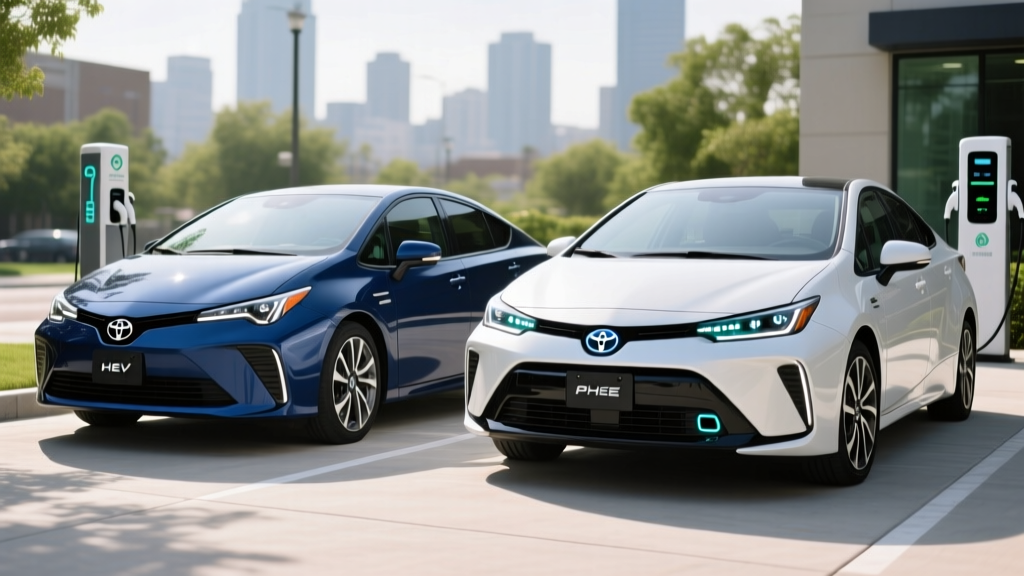
HEV vs PHEV: What Kind of Hybrid Is the XC40?
Volvo does not sell a conventional hybrid (HEV) version of the XC40 in the US market. The electrified XC40 you can buy is the XC40 Recharge Plug-in Hybrid, which is a PHEV. Understanding the difference is essential before you shop.
| Feature | HEV (Conventional Hybrid) | PHEV (XC40 Recharge) |
|---|---|---|
| Plug-in Charging | No — charges via regenerative braking and engine | Yes — plug in at home or public Level 2 |
| Electric-Only Range | ~1–2 miles at low speed | ~35 miles EPA |
| Battery Size | ~1–2 kWh | ~14.9 kWh usable |
| Fuel Economy Benefit | Better MPG across all driving | Zero-gas commuting under ~35 mi; gas MPG when battery depletes |
| Tax Credit Eligibility | No | Varies by model year and sourcing — see below |
The XC40 Recharge PHEV operates in two distinct modes. On a full charge, it drives as a pure electric vehicle for roughly 35 miles — enough for most daily commutes without burning a drop of gas. Once the battery depletes, the 1.5-liter turbocharged three-cylinder engine takes over, and the car functions like a conventional hybrid, using regenerative braking to recapture energy. You never need to worry about being stranded; the gas engine provides the same flexibility as any non-electrified car.
Fuel Economy: Real-World MPG vs EPA Estimates
The EPA rates the 2026 Volvo XC40 Recharge PHEV at approximately 30 MPG combined when operating in hybrid (gas) mode after the battery is depleted. City driving tends to yield slightly better results — around 31–32 MPG — because regenerative braking recaptures energy in stop-and-go traffic. Highway cruising at 70–75 mph typically returns 27–29 MPG.
| Mode | City | Highway | Combined |
|---|---|---|---|
| Charge-Sustaining (Gas Hybrid) | ~31 MPG | ~28 MPG | ~30 MPG |
| Charge-Depleting (Electric + Gas) | ~63 MPGe combined | ||
| Electric-Only Efficiency | ~2.0–2.2 kWh/mile | ||
When you factor in the electric-only miles driven on a full charge, the effective fuel economy jumps dramatically. If your daily round-trip commute is under 35 miles and you charge every night, you could go weeks without visiting a gas station. According to fueleconomy.gov, the combined MPGe rating of ~63 accounts for mixed electric and gasoline driving over the full cycle.
Real-world note: In cold weather (below 32°F), expect electric-only range to drop 20–30%, reducing the EV portion to roughly 25–28 miles. The gas engine's MPG also dips slightly in winter due to colder combustion efficiency and increased cabin heating demand. Owners in temperate climates who charge nightly report routinely exceeding the EPA combined MPG figure during warm months.
Electric-Only Range and Battery Charging
The 2026 XC40 Recharge PHEV's ~14.9 kWh usable battery delivers an EPA-estimated 35 miles of electric-only range. That figure assumes moderate temperatures, mixed city/highway driving, and no heavy cargo. On a warm day with city-only driving at 35–45 mph, some owners report squeezing out 38–40 miles. At sustained highway speeds of 75 mph, expect closer to 28–30 miles before the engine engages.
EPA Electric-Only Range: ~35 miles
Real-World Expectation: 28–40 miles depending on temperature, speed, and terrain. Cold weather and highway driving reduce range; mild city driving extends it.
Charging the PHEV battery is straightforward but slower than a full EV. The XC40 Recharge PHEV supports Level 1 (120V household outlet) and Level 2 (240V) charging but does not support DC fast charging. This is typical for PHEVs — the battery is small enough that DC fast charging infrastructure isn't necessary.
| Charging Level | Power | Time (0–100%) | Miles of EV Range per Hour |
|---|---|---|---|
| Level 1 (120V outlet) | ~1.4 kW | ~10–12 hours | ~3–4 miles/hr |
| Level 2 (240V, 16A) | ~3.6 kW | ~4–5 hours | ~8–9 miles/hr |
| DC Fast Charge | Not supported | ||
Most PHEV owners charge overnight on a standard 120V outlet (Level 1), which is sufficient to fully replenish the ~14.9 kWh battery in 10–12 hours. If you want faster turnaround — say, charging between a morning commute and an afternoon errand — a Level 2 home charger cuts that to roughly 4–5 hours. Installation of a Level 2 charger typically costs $500–$1,500 including equipment and electrician labor, depending on your panel's capacity and the distance from your electrical panel to the charging location.
Powertrain and Performance
The XC40 Recharge PHEV uses Volvo's T8 Twin Engine powertrain architecture, adapted for the compact platform. A 1.5-liter turbocharged three-cylinder gasoline engine drives the front wheels through a 7-speed dual-clutch automatic transmission, while an electric motor integrated into the rear axle provides all-wheel drive capability and supplemental power.
Combined system output is approximately 261 horsepower, with the electric motor contributing roughly 82 hp and the gas engine producing around 180 hp. The result is a 0–60 mph time of about 6.8 seconds — genuinely quick for a compact luxury SUV and noticeably faster than the non-electrified XC40 mild-hybrid variants.
Drive modes let you prioritize electric-only operation (Pure mode), blend gas and electric for efficiency (Hybrid mode), or use both power sources for maximum performance (Power mode). The AWD system engages the rear electric motor on demand, improving traction in rain and light snow without the mechanical complexity of a traditional driveshaft.
Pricing, Trims, and Tax Credit Eligibility
The 2026 Volvo XC40 Recharge PHEV starts at approximately $42,550 for the Core trim, which includes the PHEV powertrain, all-wheel drive, a 9-inch touchscreen with Google Built-in, wireless Apple CarPlay, a panoramic roof, and Volvo's full suite of driver-assistance features (adaptive cruise, lane-keeping, blind-spot monitoring, and automatic emergency braking).
Higher trims — Plus (~$46,000) and Ultimate (~$50,000) — add premium features like a Harman Kardon audio system, 360-degree camera, heated and ventilated front seats, and a head-up display.
Federal §30D Tax Credit Status for the XC40 Recharge PHEV:
- Current status: As of 2026, the XC40 Recharge PHEV does not qualify for the full $7,500 federal tax credit under IRS §30D. Battery component and critical mineral sourcing requirements introduced under the Inflation Reduction Act have disqualified many PHEVs that previously qualified.
- Partial credit possibility: Some model-year carryovers or specific battery sourcing configurations may qualify for $3,750 (half credit). Always verify on the fueleconomy.gov tax credit lookup before purchasing.
- Buyer income caps: Even if the vehicle qualifies, §30D has income limits — $150,000 single / $300,000 married filing jointly.
- MSRP cap: SUVs must be under $80,000 MSRP — the XC40 PHEV clears this easily.
- Point-of-sale transfer: If eligible, the credit can be transferred to the dealer at purchase, reducing your out-of-pocket cost immediately.
Many states offer additional incentives for PHEVs. California's CVRP program, Colorado's state tax credit, and various utility company rebates can stack on top of federal incentives. Check your state energy office or utility provider for current programs, as these vary by jurisdiction and change frequently.
Reliability and Battery Warranty
PHEV reliability is a common concern, but the data is reassuring. The XC40 Recharge PHEV's battery pack is covered by Volvo's hybrid battery warranty: 8 years or 100,000 miles, whichever comes first. This warranty guarantees the battery will retain at least 70% of its original capacity during the coverage period. If capacity drops below that threshold, Volvo will repair or replace the battery at no cost.
Volvo PHEV Battery Warranty: 8 years / 100,000 miles
Capacity retention guarantee: ≥70% of original capacity
Estimated out-of-warranty replacement cost: $5,000–$8,000 (based on current PHEV battery pricing for ~15 kWh packs)
In practice, PHEV batteries degrade more slowly than full EV batteries because they operate in a narrower state-of-charge window. The vehicle's battery management system (BMS) maintains a top and bottom buffer, meaning you never truly charge to 100% or discharge to 0% at the cell level. This significantly extends cycle life. According to long-term owner data and testing by EV analytics firms, most PHEV batteries retain 85–90% of their original capacity after 5 years of daily use.
Volvo's overall vehicle reliability has improved in recent model years. The 1.5L three-cylinder engine has been in production since 2019 across multiple Volvo models and has proven durable. The dual-clutch transmission is the component most commonly flagged in owner forums — some drivers report occasional hesitation at low speeds, though software updates have largely addressed this in 2025–2026 models.
For a deeper look at Volvo's safety performance, the XC40 consistently earns top marks from the IIHS and the NHTSA, with 5-star overall crash ratings and Top Safety Pick designations across recent model years.
XC40 Hybrid vs PHEV vs Full EV: Which Fits You?
Volvo offers the XC40 platform in two electrified flavors: the XC40 Recharge PHEV (this review's subject) and the EX40 (a fully electric version with ~250+ miles of EPA range). There is no conventional HEV version in the US. Here's how to decide which is right for you.
Choose the XC40 Recharge PHEV if:
- Your daily commute is under 35 miles round-trip and you can charge at home overnight
- You take road trips of 300+ miles regularly and don't want to plan around charging stops
- You live in an apartment or area where reliable public DC fast charging is scarce
- You want electric commuting without committing to a full EV
Choose the EX40 (full EV) if:
- You have reliable home Level 2 charging and your daily driving is under 200 miles
- You want zero tailpipe emissions and minimal maintenance (no oil changes, no gas engine)
- You want to maximize federal tax credit eligibility (the EX40 has historically qualified more readily)
- You drive mostly in urban areas where regenerative braking maximizes efficiency
Stick with a gas-only compact SUV if:
- You have no access to home or workplace charging of any kind
- Your budget is under $35,000 and you prioritize lowest upfront cost
- You regularly tow or drive in extreme cold where battery range loss is a dealbreaker
The PHEV's biggest advantage is flexibility. On a typical weekday, you drive 30 miles on electricity at a cost of roughly $1.00–$1.50 (depending on your electricity rate). On a weekend road trip, the gas engine provides 440+ total miles of range without any charging infrastructure dependency. You get the best of both worlds — at a premium of roughly $5,000–$7,000 over a comparably equipped gas-only compact SUV.
Pros and Cons at a Glance
Pros
- 35 miles of electric-only range covers most daily commutes gas-free
- Strong combined horsepower (261 hp) with smooth electric torque delivery
- AWD via rear electric motor — no mechanical driveshaft complexity
- Premium interior with Google Built-in infotainment
- 8-year/100,000-mile battery warranty provides long-term peace of mind
- Excellent IIHS and NHTSA safety ratings
Cons
- No DC fast charging — limits utility of public charging networks
- Level 2 charge time of 4–5 hours is slower than some competitors
- Does not qualify for the full $7,500 federal tax credit in most 2026 configurations
- Cargo space slightly reduced vs gas-only XC40 due to battery placement
- 3-cylinder engine can sound coarse under hard acceleration
- Starting MSRP of ~$42,550 is steep for the compact luxury segment
Frequently Asked Questions
How many MPG does the Volvo XC40 hybrid get?
The 2026 Volvo XC40 Recharge PHEV achieves an EPA-estimated ~30 MPG combined in gas-hybrid mode (after the battery is depleted). City driving returns ~31 MPG, highway ~28 MPG. When accounting for electric-only miles on a full charge, the combined rating is ~63 MPGe.
How far can the XC40 PHEV go on electric only?
The EPA estimates ~35 miles of electric-only range. In real-world driving, expect 28–30 miles at sustained highway speeds and up to 38–40 miles in mild-weather city driving at lower speeds. Cold weather (below freezing) can reduce this to 25–28 miles.
Does the Volvo XC40 hybrid qualify for a tax credit?
As of 2026, the XC40 Recharge PHEV does not qualify for the full $7,500 federal §30D tax credit due to battery sourcing requirements. A partial $3,750 credit may be available depending on the specific battery configuration. Always verify eligibility at fueleconomy.gov and consult a tax professional. State-level incentives may still apply.
Is the XC40 PHEV battery reliable, and what does replacement cost?
PHEV batteries are well-protected by the BMS and tend to degrade slowly. Volvo warrants the battery for 8 years/100,000 miles with a 70% capacity retention guarantee. Out-of-warranty replacement is estimated at $5,000–$8,000 based on current PHEV battery pricing, though most owners never need a replacement within typical ownership periods.
Can I charge the XC40 PHEV at a public fast charger?
No. The XC40 Recharge PHEV does not support DC fast charging. It can only charge via Level 1 (120V) or Level 2 (240V) AC charging. This is standard for most PHEVs — the battery is small enough that overnight Level 1 or Level 2 charging is sufficient.
Hybrid vs PHEV vs EV — which should I choose?
If you can charge at home and your commute is under 35 miles, the XC40 PHEV offers the best of both worlds: electric commuting with gas-powered road trip flexibility. If you have reliable home charging and rarely drive over 200 miles in a day, the full-electric EX40 eliminates gas entirely. If you have no charging access at all, a conventional gas SUV (or wait for broader charging infrastructure) may be more practical.
Specs and pricing reflect the most current 2026 model-year data available from Volvo Cars USA and fueleconomy.gov. Tax credit rules under IRS §30D are subject to change. Always verify eligibility with the IRS and a qualified tax professional before making a purchase decision.