Quick Verdict: The Volvo V90 Recharge in 2026
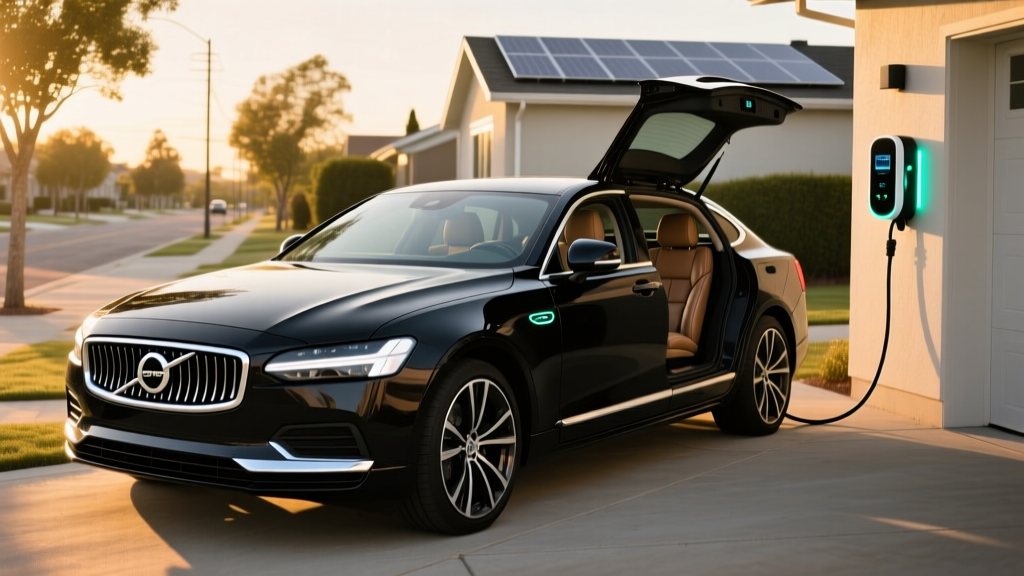
The 2026 Volvo V90 Recharge (T8 AWD) remains one of the few plug-in hybrid luxury wagons sold in the United States — a segment that has all but evaporated as rivals shifted to pure electric or SUV-only lineups. With an EPA-estimated 38 miles of electric-only range, 455 combined horsepower, and a usable 18.6 kWh battery, the V90 Recharge targets buyers who want daily electric commuting without surrendering the flexibility of a gasoline engine for longer trips.
But the V90 Recharge is not a conventional hybrid (HEV). It is a plug-in hybrid (PHEV), meaning you must charge it to unlock its efficiency advantage. If you never plug in, you are simply carrying extra weight and paying a premium for a battery you are not using. This guide breaks down every spec that matters — from real-world MPG to battery warranty to federal tax credit eligibility — so you can decide whether the V90 Recharge fits your driving pattern.
HEV vs PHEV: What the V90 Actually Is
Conventional Hybrid (HEV): A small battery (typically 1–2 kWh) recharged by regenerative braking and the engine. No plug. Examples: Toyota Prius, Honda Accord Hybrid. The V90 is not this.
Plug-in Hybrid (PHEV): A larger battery (18.6 kWh usable in the V90 Recharge) that can be charged via a wall outlet, Level 2 charger, or regenerative braking. Offers a meaningful electric-only range before the gasoline engine engages. The V90 Recharge is this.
This distinction matters because PHEV owners who charge daily report dramatically lower fuel consumption than the EPA combined MPG figure suggests, while PHEV owners who never charge see fuel economy that can fall below a conventional hybrid once the battery is depleted. The V90 Recharge demands a charging routine to deliver its promised efficiency.
Powertrain, Horsepower, and 0–60 Performance
| Specification | 2026 Volvo V90 Recharge T8 AWD |
|---|---|
| Powertrain Type | Plug-in Hybrid (PHEV) |
| Engine | 2.0L turbocharged + supercharged 4-cylinder |
| Electric Motor | 143 hp rear-axle motor (ERAD) |
| Combined Horsepower | 455 hp |
| Combined Torque | 523 lb-ft |
| Transmission | 8-speed automatic (Geartronic) |
| Drivetrain | AWD (electric rear axle) |
| 0–60 mph | 4.7 seconds (manufacturer est.) |
| Battery (Usable) | 18.6 kWh (NMC lithium-ion) |
| Battery (Gross) | ~20.0 kWh |
| Fuel Tank | 15.9 gallons |
The T8 powertrain pairs a twin-charged (turbo + supercharger) 2.0-liter four-cylinder with a 143-hp electric motor driving the rear wheels. The result is all-wheel drive without a mechanical driveshaft — the engine powers the front axle, the motor powers the rear. In Pure (EV-only) mode, the V90 Recharge operates as a rear-wheel-drive electric car. In Power mode, both systems combine for the full 455 hp, making it genuinely quick for a 4,800-pound wagon.
Fuel Economy: EPA Numbers and Real-World MPG
| Metric | EPA Estimate | Real-World Expectation |
|---|---|---|
| MPGe (combined, with charge) | 60 MPGe | 55–65 MPGe (varies with charging frequency) |
| MPG (gas only, battery depleted) | 30 MPG combined | 26–29 MPG highway; 28–32 MPG city |
| City MPG (gas only) | 31 MPG | Regen braking helps in stop-and-go |
| Highway MPG (gas only) | 29 MPG | Lower at 75+ mph; aerodynamic drag penalty |
| Electric-Only Range | 38 miles | 32–36 miles (highway); 35–40 miles (city, mild weather) |
| Total Combined Range | ~520 miles | 470–510 miles (mixed driving with full charge + full tank) |
The EPA's 60 MPGe figure assumes you start with a full charge and drive a mix of electric and gasoline miles. In practice, PHEV efficiency is entirely dependent on your charging habits. If your daily commute is under 35 miles round-trip and you charge every night, you may burn gasoline only a handful of times per year. If you routinely drive 60+ miles without charging, expect fuel economy to settle near 28–30 MPG — respectable for a 455-hp AWD wagon, but not Prius territory.
Real-World Range Note: The EPA's 38-mile electric range is achievable in mild conditions (55–70°F, city/suburban speeds). In freezing temperatures (below 32°F), expect a 20–30% reduction, yielding roughly 26–30 electric miles. Highway driving at 70+ mph also reduces electric range to approximately 30–33 miles due to aerodynamic losses and the absence of frequent regenerative braking opportunities.
Battery, Charging Times, and Connector Details
| Charging Method | Power (kW) | Time (0–100%) | Connector |
|---|---|---|---|
| Level 1 (120V household outlet) | ~1.4 kW | ~13–14 hours | J1772 / NACS adapter |
| Level 2 (240V, 16A) | ~3.7 kW | ~5 hours | J1772 / NACS (2025+ models) |
| Level 2 (240V, 32A) | ~7.4 kW (vehicle limited to ~3.7 kW) | ~5 hours (onboard charger limited) | J1772 / NACS |
| DC Fast Charging | Not supported | N/A | N/A |
The V90 Recharge's onboard charger is rated at approximately 3.7 kW. This means even if you connect to a 48-amp (11.5 kW) Level 2 home charger, the car will only draw about 3.7 kW. A full charge from empty takes roughly 5 hours on Level 2 — practical for overnight charging but not conducive to midday top-ups on the road.
No DC fast charging. This is a significant limitation for road-trip-oriented buyers. Unlike the Toyota RAV4 Prime (which also lacks DCFC) or the Chrysler Pacifica Hybrid, the V90 Recharge cannot accept DC fast charging at public stations. On long trips, you will drive exclusively on gasoline once the battery is depleted, recharging only when you reach a Level 2 destination.
For 2025 and later model years, Volvo has transitioned to the NACS (North American Charging Standard) port, replacing the previous J1772/CCS1 connector. If you are purchasing a 2024 or earlier V90 Recharge, expect a J1772 port and may need an adapter for Tesla destination chargers.
Pricing, Trims, and Tax Credit Eligibility
| Trim | MSRP (2026) | Key Features |
|---|---|---|
| V90 Recharge Plus | ~$73,500 | Panoramic roof, Pilot Assist, 12.3" digital cluster, Google built-in |
| V90 Recharge Ultimate | ~$78,900 | Nappa leather, Bowers & Wilkins audio, air suspension, head-up display |
Federal §30D Tax Credit Eligibility (2026 Rules):
- Credit Amount: Up to $7,500, split into $3,750 for battery components and $3,750 for critical minerals sourcing.
- MSRP Cap (Vans/SUVs/trucks): $80,000. The V90 wagon may qualify under the sedan cap of $55,000 — which it exceeds. Confirm classification with your dealer and tax professional.
- Buyer Income Cap: AGI ≤ $150,000 (single), $225,000 (head of household), $300,000 (married filing jointly).
- Battery Sourcing: Must meet escalating critical-mineral and battery-component requirements per IRS guidance. Volvo's South Carolina-built PHEVs have historically faced sourcing challenges.
- Point-of-Sale Transfer: Eligible buyers can transfer the credit to the dealer for an immediate price reduction.
Important: The V90 Recharge's MSRP likely exceeds the $55,000 sedan cap if classified as a car. If classified as an SUV/van (some wagons qualify), the $80,000 cap applies. Verify current-year classification and sourcing compliance on irs.gov or with a tax professional before relying on this credit.
Volvo does not offer a conventional (non-plug-in) hybrid V90 in the US market for 2026. The mild-hybrid B5/B6 powertrains available in some markets are not sold stateside, meaning the Recharge PHEV is your only electrified V90 option.
Battery Warranty, Reliability, and Replacement Cost
Volvo PHEV Battery Warranty:
- High-Voltage Battery: 8 years / 100,000 miles (whichever comes first)
- Capacity Retention Threshold: Volvo warrants the battery against defects and excessive degradation. If capacity falls below approximately 70% of original within the warranty period, Volvo will repair or replace the battery at no cost.
- Powertrain Warranty: 4 years / 50,000 miles (engine, transmission, electric motor)
- Basic Vehicle Warranty: 4 years / 50,000 miles
PHEV battery replacement cost, should it be needed out of warranty, typically ranges from $8,000 to $14,000 for the high-voltage pack, plus labor. However, PHEV batteries experience less extreme cycling than full BEV batteries because they operate within a narrower state-of-charge window and are smaller in total capacity. Real-world data from earlier Volvo T8 models (XC90, S60, XC60 Recharge) suggests modest degradation — most owners report 5–10% range loss over 5 years, which is manageable given the 38-mile starting point.
Volvo's overall reliability ratings have been mid-pack among luxury brands in recent Consumer Reports surveys, with infotainment glitches and minor electrical issues being more common complaints than powertrain failures. The T8 powertrain itself has proven durable in high-mileage fleet use in Europe.
Who Should Buy the V90 Recharge vs. a Full EV or Gas Car
Choose the V90 Recharge PHEV if:
- Your daily commute is under 35 miles round-trip and you can charge at home overnight.
- You take 4+ road trips per year exceeding 200 miles and don't want to plan around DC fast-charging infrastructure.
- You want a luxury wagon specifically — the V90 has no direct PHEV wagon rival in the US market.
- You value Scandinavian interior design, Google built-in infotainment, and Volvo's safety reputation.
Choose a full BEV (e.g., Audi A6 e-tron, Tesla Model S, Mercedes EQE) if:
- You have reliable home charging and your trips rarely exceed 250 miles.
- You want lower per-mile fuel cost (electricity vs. gasoline) and zero tailpipe emissions.
- You prefer DC fast charging for road trips (200+ kW capability).
Choose a conventional gas or mild-hybrid car if:
- You cannot charge at home or at work.
- Your budget is under $50,000.
- You drive predominantly long highway miles where PHEV electric range provides minimal benefit.
Pros
- 38 miles electric-only covers most daily commutes
- 455 hp makes it genuinely quick (4.7s 0–60)
- ~520 miles total range eliminates road-trip range anxiety
- No direct PHEV wagon competitor in the US
- Quiet, refined ride with available air suspension
- Google built-in with native navigation and voice assistant
Cons
- No DC fast charging — road trips are gas-only
- 3.7 kW onboard charger limits Level 2 speed
- MSRP likely exceeds §30D sedan tax credit cap
- Cargo space reduced vs. non-hybrid V90 (battery placement)
- Real-world electric range drops to ~26–30 miles in freezing weather
- Higher insurance premiums typical of luxury PHEVs
Frequently Asked Questions
How many MPG does the Volvo V90 hybrid get?
The 2026 V90 Recharge is rated at 60 MPGe combined when driven with a full charge (mixing electric and gasoline miles). Once the battery is depleted, it operates as a conventional hybrid and returns an EPA-estimated 30 MPG combined (31 city / 29 highway). Real-world gas-only MPG typically falls between 26 and 32 depending on driving style, speed, and temperature.
How far can the V90 Recharge go on electric only?
The EPA rates the V90 Recharge at 38 miles of electric-only range. In real-world driving, expect 32–36 miles on the highway and 35–40 miles in city/suburban conditions during mild weather. In freezing temperatures, plan for 26–30 electric miles due to battery chemistry limitations and cabin heating demands.
Is the V90 Recharge a conventional hybrid or a plug-in hybrid?
The V90 Recharge is a plug-in hybrid (PHEV). It has a larger 18.6 kWh battery that must be plugged in to realize its efficiency benefits. Volvo does not sell a conventional (non-plug-in) hybrid V90 in the United States. If you cannot charge at home, the V90 Recharge will function as a heavy, slightly less efficient gasoline car — negating the PHEV premium.
Does the Volvo V90 hybrid qualify for a federal tax credit?
Possibly, but with significant caveats. The federal §30D credit offers up to $7,500, but the V90 Recharge's MSRP ($73,500–$78,900) likely exceeds the $55,000 cap for vehicles classified as sedans/cars. If the IRS classifies it as an SUV or van, the $80,000 cap would apply and it could qualify. Battery component and critical-mineral sourcing requirements also apply. Always verify current eligibility on the IRS qualified vehicles list and consult a tax professional before purchasing.
Is the V90 Recharge reliable, and what does battery replacement cost?
Volvo's T8 PHEV powertrain has demonstrated solid durability in European fleet data, with the high-voltage battery covered by an 8-year/100,000-mile warranty. Out-of-warranty battery replacement typically costs $8,000–$14,000. Most owners report 5–10% electric range degradation over 5 years, which is manageable. Overall vehicle reliability is average for the luxury segment — expect occasional infotainment and electrical gremlins rather than powertrain failures.
Can the V90 Recharge DC fast charge?
No. The V90 Recharge does not support DC fast charging. It is limited to Level 2 AC charging at a maximum of 3.7 kW, taking approximately 5 hours for a full charge. On road trips, you will drive on gasoline once the battery is depleted and recharge only at Level 2 destinations (hotels, workplaces).
How does the V90 Recharge compare to a full EV like the Audi A6 e-tron?
The V90 Recharge offers more total range (~520 miles) and zero charging-infrastructure dependency for road trips, but higher per-mile fuel costs and more maintenance (oil changes, spark plugs, transmission fluid). A full EV like the Audi A6 e-tron offers lower operating costs, DC fast charging (270 kW), and zero tailpipe emissions, but requires reliable charging access and trip planning for drives exceeding ~280 miles. Your choice depends on charging access and trip patterns.
Sources: fueleconomy.gov (EPA range and efficiency data), IRS §30D qualified clean vehicles, Volvo Cars USA specifications.