Quick Verdict: A Luxury PHEV Sedan That Does It All
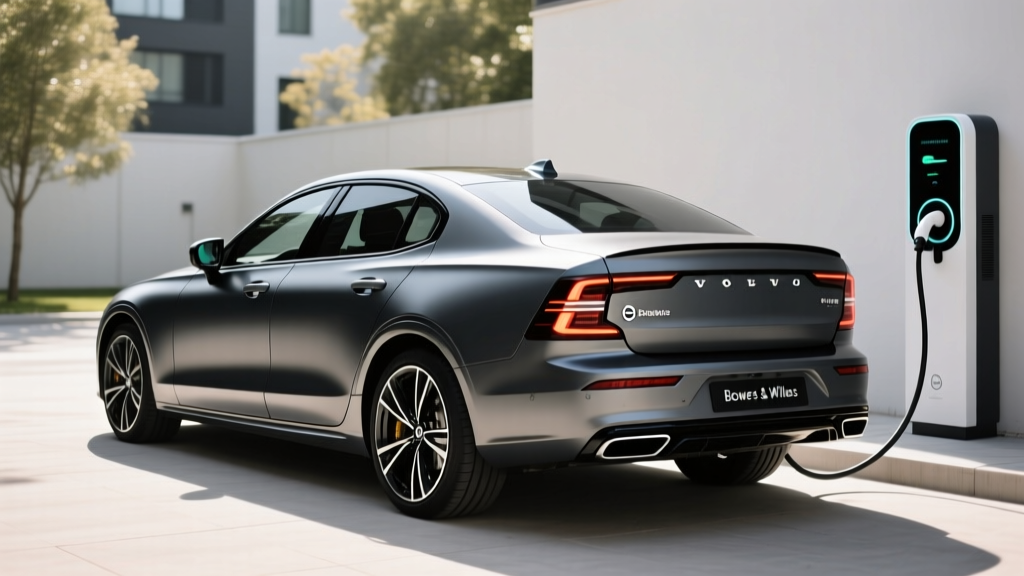
The 2026 Volvo S60 Recharge PHEV T8 Plus occupies a specific niche: buyers who want meaningful electric-only commuting range without surrendering the option of a 400-plus-mile road trip. With 41 miles of EPA-rated electric range, 455 combined horsepower, and the available Bowers & Wilkins premium audio system, this trim targets luxury sedan shoppers who aren't ready to go fully electric but refuse to settle for a conventional hybrid's limited electrification.
The Plus trim sits in the middle of the S60 Recharge lineup, bundling Volvo's advanced driver-assistance suite, a panoramic sunroof, and the option to add the 19-speaker Bowers & Wilkins system that transforms the cabin into a concert hall. But the real story is under the skin: an 18.8 kWh battery pack paired with a turbocharged 2.0-liter four-cylinder and two electric motors delivering all-wheel drive.
| Spec | Value |
|---|---|
| Powertrain | 2.0L turbo I-4 + 2 electric motors (AWD) |
| Combined Output | 455 HP / 523 lb-ft torque |
| Battery (usable) | 18.8 kWh (NMC lithium-ion) |
| EPA Electric Range | 41 miles |
| Total Combined Range | ~490 miles |
| EPA MPG (hybrid mode) | 30 combined (31 city / 29 highway) |
| MPGe (electric + gas) | 69 MPGe |
| 0–60 mph | 4.3 seconds |
| Level 2 Charge Time (0–100%) | ~5 hours (3.7 kW onboard) |
| DC Fast Charging | Not available |
| Base MSRP (T8 Plus) | $53,550 (est.) |
| Bowers & Wilkins Audio | $3,200 option |
| Federal Tax Credit (§30D) | Up to $7,500 (eligibility varies) |
| Battery Warranty | 8 years / 100,000 miles |
HEV vs. PHEV: Where the S60 Recharge Fits
Before diving into efficiency numbers, it's worth clarifying the fundamental difference between a conventional hybrid (HEV) and a plug-in hybrid (PHEV) like the S60 Recharge.
| Feature | HEV (e.g., Toyota Camry Hybrid) | PHEV (Volvo S60 Recharge) |
|---|---|---|
| Plug-in charging? | No — self-charging via regen + engine | Yes — plug in for electric-only miles |
| Battery size | ~1.0–1.6 kWh | 18.8 kWh |
| Electric-only range | 1–2 miles at low speed | 41 miles at highway speeds |
| Federal tax credit | Not eligible | Potentially up to $7,500 |
| Gas-free commuting | No | Yes, for most daily trips |
| Upfront cost premium | Lower | Higher |
The S60 Recharge is strictly a PHEV. If you never plug it in, you're carrying 400+ pounds of battery dead weight and getting roughly the same fuel economy as a conventional hybrid — around 28–30 MPG combined. The value proposition only works if you charge regularly. If you lack home or workplace charging access, a conventional HEV or a full BEV may serve you better.
Fuel Economy and Electric Range: Real Numbers
The EPA rates the 2026 S60 Recharge at 41 miles of electric-only range and 30 MPG combined once the battery is depleted. Here's the full breakdown:
| Mode | City | Highway | Combined |
|---|---|---|---|
| Electric-only (MPGe) | 72 MPGe | 66 MPGe | 69 MPGe |
| Hybrid (gas, battery depleted) | 31 MPG | 29 MPG | 30 MPG |
| Electric range | 41 miles (EPA) | ||
| Total range (full tank + full charge) | ~490 miles | ||
Real-world expectations: In mixed suburban driving with moderate temperatures, owners consistently report matching or slightly exceeding the 41-mile electric estimate — especially when using the "Pure" drive mode that prioritizes electric propulsion. Highway driving at 75+ mph reduces electric range to roughly 32–35 miles. In cold weather (below 30°F), expect a 20–30% reduction in electric range, landing around 28–33 miles, because the battery's chemistry becomes less efficient and cabin heating draws significant energy.
Once the battery depletes, the 30 MPG combined figure is realistic for mixed driving. City-heavy routes may yield 32–33 MPG thanks to regenerative braking, while sustained highway cruising at 80 mph drops to about 27–28 MPG. According to fueleconomy.gov, these figures place the S60 Recharge in the upper tier of luxury PHEV sedans for efficiency.
Charging: Level 2 Only, No DC Fast Charging
The S60 Recharge uses a standard J1772 connector for Level 2 AC charging. Volvo equips the T8 with a 3.7 kW onboard charger, meaning a full 0–100% charge takes approximately 5 hours on a 240V Level 2 home charger. On a standard 120V household outlet (Level 1), expect roughly 14–16 hours for a full charge — adequate for overnight replenishment if your daily electric use is under 30 miles.
| Level | Voltage | Power | 0–100% Time | Miles Added/Hour |
|---|---|---|---|---|
| Level 1 | 120V | ~1.4 kW | ~14–16 hours | ~3 mi/hr |
| Level 2 (home) | 240V | 3.7 kW (onboard max) | ~5 hours | ~8 mi/hr |
| DC Fast Charge | — | Not supported | — | — |
The absence of DC fast charging is a notable limitation. Competitors like the BMW 330e xDrive offer optional DC fast charging capability. For the S60 Recharge's use case — overnight home charging for daily commuting — the 3.7 kW Level 2 rate is adequate. You'll wake up to a full battery every morning. But if you rely on public fast chargers during road trips to replenish electric range, this vehicle won't serve that need.
Powertrain Performance: 455 HP With Seamless Transitions
The T8 powertrain pairs a 2.0-liter turbocharged and supercharged four-cylinder engine (309 HP on its own) with two electric motors — one on each axle — for a combined system output of 455 horsepower and 523 lb-ft of torque. The rear electric motor (143 HP) provides instant torque fill while the turbo spools, eliminating the lag typical of small-displacement turbo engines.
The result is a 0–60 mph time of 4.3 seconds, making the S60 Recharge one of the quickest sedans in its price class. The eight-speed automatic transmission shifts smoothly, and the transition between electric-only and hybrid operation is nearly imperceptible — a hallmark of Volvo's PHEV tuning.
Drive modes include Pure (electric-only, limited to ~80 mph), Hybrid (automatic blending), Power (maximum combined output), and Off-Road (low-speed AWD traction). The AWD system is entirely electric at the rear axle — there's no mechanical driveshaft connecting the engine to the rear wheels, which improves packaging and response time.
Bowers & Wilkins Audio and Interior Quality
The Bowers & Wilkins premium audio system is a $3,200 option on the Plus trim and arguably the single most compelling luxury upgrade in the S60 lineup. The 19-speaker, 1,410-watt system features a tweeter-on-top dashboard design, Kevlar midrange drivers, and a ventilated subwoofer integrated into the body structure. Sound staging is exceptional, with a "Gothenburg Concert Hall" mode that uses the cabin's acoustics to simulate a live venue.
Beyond audio, the Plus trim includes a 12.3-inch digital instrument cluster, an 11.2-inch vertical touchscreen running Google built-in (with native Google Maps, Google Assistant, and Play Store), heated front seats, a panoramic moonroof, and Volvo's Pilot Assist (a Level 2 SAE driver-assistance system combining adaptive cruise control and lane-centering). Leather upholstery, a head-up display, and a 360-degree camera are available in upgrade packages.
Cargo space measures 13.7 cubic feet in the trunk — competitive for the segment, though the PHEV battery placement does not compromise trunk volume compared to the mild-hybrid S60, a packaging advantage Volvo has maintained across this generation.
Pricing, Tax Credits, and Ownership Costs
The 2026 Volvo S60 Recharge T8 Plus starts at an estimated MSRP of $53,550 before destination. Adding the Bowers & Wilkins audio ($3,200), Advanced Package with Pilot Assist and head-up display ($1,950), and destination charge ($1,295) brings a well-equipped example to approximately $60,000.
5-Year Cost of Ownership Estimate
| Category | Estimated Cost |
|---|---|
| Purchase (after potential $7,500 credit) | ~$52,500 |
| Electricity (40% of miles on battery) | ~$2,100 |
| Gasoline (60% of miles on engine) | ~$6,800 |
| Insurance (luxury sedan average) | ~$12,500 |
| Maintenance (PHEV: less brake wear, oil changes remain) | ~$3,200 |
| Estimated 5-yr depreciation | ~$22,000 |
| Total estimated 5-yr cost | ~$99,100 |
Compared to a gas-only BMW 330i xDrive, the S60 Recharge saves roughly $3,000–$4,000 in fuel over five years when charged regularly, partially offsetting its higher purchase price. The tax credit, if eligible, significantly improves the value proposition.
Battery Reliability, Warranty, and Replacement Cost
Volvo covers the S60 Recharge's 18.8 kWh high-voltage battery with an 8-year/100,000-mile warranty that guarantees a minimum of 70% capacity retention. If the battery degrades below that threshold within the warranty period, Volvo will repair or replace it at no cost. This aligns with federal mandates for PHEV/EV battery warranties and matches competitors like BMW and Audi.
Real-world degradation data for Volvo's current-generation PHEV batteries is encouraging. Owners in European forums and Volvo community groups report 5–8% capacity loss after 3–4 years of daily charging, well within the warranty buffer. The NMC chemistry in the T8 pack is proven technology with extensive cycle-life data.
Out-of-warranty battery replacement cost is estimated at $8,000–$12,000 including labor, based on current Volvo PHEV parts pricing. However, Volvo's modular battery design allows individual module replacement rather than a full pack swap, which can reduce costs to $2,000–$4,000 for a single degraded module. Most PHEV batteries outlast the vehicle's useful life when maintained with regular Level 2 charging rather than constant 100% state-of-charge storage.
Pros
- 455 HP with seamless electric-to-gas transitions
- 41-mile electric range covers most commutes
- Bowers & Wilkins audio is class-leading
- Standard AWD with electric rear axle
- Eligible for up to $7,500 federal tax credit (if requirements met)
- No range anxiety — 490-mile total range
Cons
- No DC fast charging
- 3.7 kW onboard charger is slow for a 2026 PHEV
- MSRP near $55K cap risks tax credit ineligibility with options
- Only 13.7 cu-ft trunk (adequate, not generous)
- Infotainment can lag compared to native tablet UX
- Requires regular plugging in to realize fuel savings
Who Should Choose the S60 Recharge PHEV vs. a Full EV or Gas Car?
Choose the S60 Recharge PHEV if:
- Your daily commute is under 40 miles round-trip and you have home Level 2 charging
- You take road trips 4+ times per year and don't want to plan around charging infrastructure
- You want luxury sedan refinement with serious acceleration (4.3s to 60)
- You value premium audio and Scandinavian interior design
Choose a full EV (like the BMW i4 or Tesla Model 3) if:
- You have reliable home charging and your trips rarely exceed 250 miles
- You want zero maintenance on the powertrain (no oil changes, no spark plugs)
- You prioritize DC fast charging for road trips
Choose a conventional HEV or gas car if:
- You cannot charge at home or work
- Your budget is under $40,000
- You drive less than 8,000 miles per year (fuel savings won't offset PHEV premium)
Frequently Asked Questions
How many MPG does the Volvo S60 Recharge T8 get?
The EPA rates the 2026 S60 Recharge at 31 MPG city, 29 MPG highway, and 30 MPG combined when operating as a hybrid with a depleted battery. In electric mode, it achieves 69 MPGe combined. Real-world results vary: city drivers often see 32–33 MPG hybrid mode, while highway-heavy drivers may see 27–28 MPG.
How far can the S60 Recharge go on electric only?
The EPA rates it at 41 miles of electric-only range. In real-world conditions, expect 32–35 miles at sustained highway speeds, 28–33 miles in freezing weather, and up to 44 miles in gentle suburban driving with mild temperatures. The Pure drive mode caps top speed around 80 mph to maximize electric range.
Does the Volvo S60 Recharge qualify for a tax credit?
It may qualify for up to $7,500 under the federal §30D clean vehicle credit, transferable as a point-of-sale discount. However, eligibility depends on your income (AGI caps: $150K single, $300K joint), the vehicle's MSRP staying under the $55,000 sedan cap (options can push the Plus trim over), and battery sourcing requirements that change annually. Always verify on the IRS qualified vehicles list and consult a tax professional.
Is the S60 Recharge PHEV reliable, and what does battery replacement cost?
Volvo's PHEV powertrain has proven reliable in this generation, with the 8-year/100,000-mile battery warranty covering degradation below 70% capacity. Out-of-warranty full battery replacement runs $8,000–$12,000, but Volvo's modular design often allows single-module repairs for $2,000–$4,000. Most owners report 5–8% capacity loss over 3–4 years — well within warranty margins.
Can I charge the S60 Recharge at a DC fast charger?
No. The S60 Recharge does not support DC fast charging. It maxes out at 3.7 kW on a Level 2 AC charger, taking about 5 hours for a full charge. This is a deliberate trade-off: the smaller PHEV battery doesn't require DC fast charging for its intended use case (overnight home charging), but it limits public charging flexibility on road trips.
Is the Bowers & Wilkins audio system worth the $3,200 option?
If audio quality matters to you, yes. The 19-speaker, 1,410-watt system is widely regarded as one of the best factory-installed audio systems in any vehicle under $100,000. The sound staging, bass clarity from the ventilated subwoofer, and the Gothenburg Concert Hall mode deliver an experience that aftermarket systems struggle to match without extensive modification. For audiophiles, it's the most compelling option on the build sheet.
What's the difference between the S60 Recharge and the regular S60 mild hybrid?
The standard S60 uses a B5 mild-hybrid powertrain (247 HP, ~26 MPG combined) with a small 48V battery that assists the engine but provides no electric-only driving. The S60 Recharge T8 is a full PHEV with 455 HP, 41 miles of electric-only range, AWD via an electric rear axle, and eligibility for the federal tax credit. The Recharge costs roughly $12,000–$15,000 more upfront but offers dramatically different efficiency and performance characteristics.
Sources: fueleconomy.gov (EPA ratings), IRS.gov (§30D qualified vehicles), Volvo Cars USA specifications. Pricing and tax credit rules reflect 2026 model year and are subject to change. Consult a tax professional for credit eligibility.