Quick Verdict: The Volvo S60 Recharge PHEV in 2026
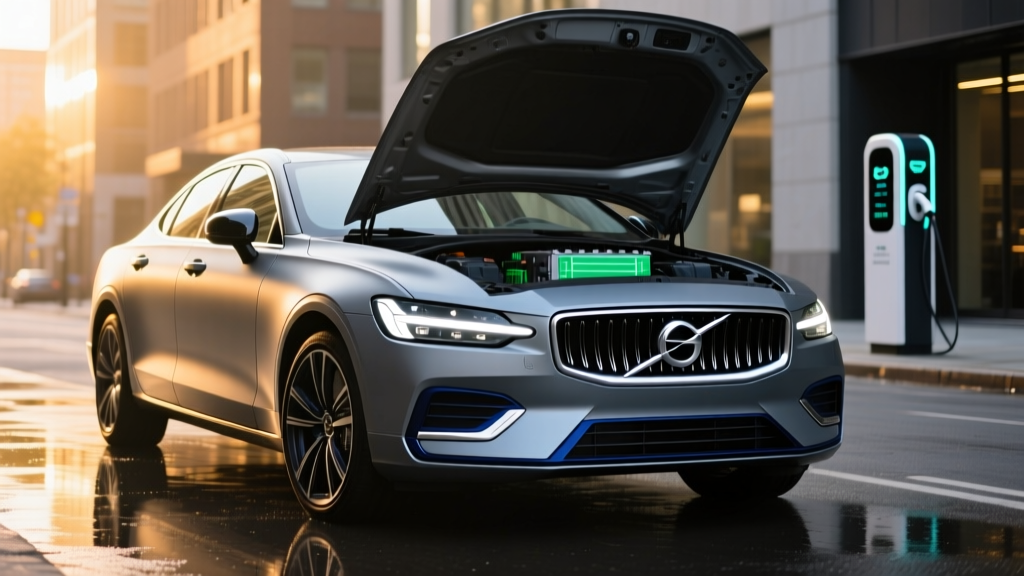
If you want Swedish luxury sedan styling, serious acceleration, and the ability to commute on electricity alone without ever worrying about charging infrastructure, the 2026 Volvo S60 Recharge plug-in hybrid (PHEV) makes a compelling case. With 41 miles of EPA-rated electric-only range and a combined 455 horsepower from its turbocharged engine and electric motor, this is a PHEV that punches well above its weight in both efficiency and performance.
But the S60 Recharge isn't for everyone. At a starting MSRP around $50,950, it sits at a premium compared to non-luxury PHEVs, and its 18.8 kWh battery won't DC fast charge — meaning home Level 2 charging is essential to getting the most from it. Below, we break down every number that matters: real-world MPG, charging logistics, tax credit eligibility under current IRS §30D rules, and whether this PHEV or a full EV is the smarter buy for your driveway.
A conventional hybrid (HEV) like the Toyota Prius uses a small battery charged only by the engine and regenerative braking. You never plug it in. A plug-in hybrid (PHEV) like the Volvo S60 Recharge has a larger battery (18.8 kWh here) that you plug in to charge, enabling 30–41 miles of pure electric driving before the gas engine takes over. The S60 is a PHEV — not a conventional hybrid.
Volvo S60 Recharge: Full Spec Sheet
| Spec | 2026 Volvo S60 Recharge (T8 AWD) |
|---|---|
| Powertrain | 2.0L turbocharged 4-cyl + rear electric motor (AWD) |
| Combined Horsepower | 455 HP / 523 lb-ft torque |
| 0–60 mph | 4.4 seconds |
| Battery Capacity | 18.8 kWh (usable ~14.9 kWh), lithium-ion NMC |
| Electric-Only Range | 41 miles (EPA) |
| Total Combined Range | ~480 miles (electric + 15.9-gal tank) |
| MPGe (Electric + Gas) | 74 MPGe combined |
| Gas-Only MPG | 30 city / 33 highway / 31 combined |
| Level 2 Charge Time (0–100%) | ~5 hours at 3.6 kW (Level 1: ~10 hrs at 120V) |
| DC Fast Charging | Not supported |
| Charge Port | J1772 (Level 1/2 AC only) |
| Base MSRP | $50,950 (Plus trim) — $56,250 (Ultimate trim) |
| Federal Tax Credit (§30D) | Up to $7,500 (eligibility varies — see below) |
| Battery Warranty | 8 years / 100,000 miles |
Fuel Economy: EPA Numbers vs. Real-World MPG
The EPA rates the 2026 Volvo S60 Recharge at 30 MPG city / 33 MPG highway / 31 MPG combined when operating as a hybrid (battery depleted). On electric power alone, it achieves 74 MPGe combined, per fueleconomy.gov.
But EPA stickers only tell part of the story. Here's what real-world driving actually looks like:
| Scenario | Expected MPG / Range | Notes |
|---|---|---|
| City driving (hybrid mode) | 33–36 MPG | Regen braking helps; often exceeds EPA city |
| Highway cruising (70–80 mph) | 27–30 MPG | Turbo engine works harder at sustained speed |
| Cold weather (below 32°F) | 25–28 MPG hybrid; ~30 mi EV range | Battery capacity drops 15–25%; cabin heat uses energy |
| Electric-only (mixed driving) | 35–41 miles | Max range at moderate speeds, mild temps |
| Electric-only (highway) | 28–33 miles | Higher speeds drain battery faster |
The EPA's 41-mile electric-only range is achievable on a warm day with mixed city/suburban driving at 35–50 mph. On a 75-mph highway commute in winter, expect closer to 28–33 miles before the gas engine fires up. If your one-way commute is under 30 miles and you charge nightly, you may burn almost zero gasoline on weekdays.
Charging the S60 Recharge: What You Need at Home
The S60 Recharge uses a standard J1772 connector for AC charging. It does not support DC fast charging — a limitation shared by most PHEVs in this segment due to their smaller battery packs. Here's what charging looks like in practice:
| Charging Level | Power (kW) | 0–100% Time | Best Use |
|---|---|---|---|
| Level 1 (120V household outlet) | ~1.4 kW | ~10–12 hours | Overnight top-up if no Level 2 available |
| Level 2 (240V, 16A) | 3.6 kW | ~5 hours | Ideal home setup — fully charges overnight |
| Level 2 (240V, 32A+) | Capped at 3.6 kW onboard | ~5 hours (no faster) | S60's onboard charger limits intake to 3.6 kW |
| DC Fast Charge (CCS/NACS) | N/A | Not supported | — |
The key takeaway: the S60 Recharge's onboard charger maxes out at 3.6 kW. Even if you install a 48-amp Level 2 home charger capable of 11.5 kW, the car will only accept 3.6 kW. That means a 16-amp, 240V circuit is all you need — potentially saving money on electrical installation compared to full EVs that demand 40–48 amp circuits.
A basic Level 2 home charger installation (16-amp, 240V) typically runs $500–$1,500 for equipment and electrician labor, assuming your electrical panel has capacity. A panel upgrade (100A to 200A) can add $1,500–$3,000. Always consult a licensed electrician for a site-specific quote.
Powertrain Deep Dive: 455 HP From a 4-Cylinder PHEV
The S60 Recharge uses Volvo's T8 powertrain, which pairs a 2.0-liter turbocharged and supercharged 4-cylinder engine driving the front wheels with an electric motor (143 HP / 228 lb-ft) on the rear axle. The result is standard all-wheel drive and a combined 455 horsepower and 523 lb-ft of torque.
This dual-power-source design means:
- Pure mode: Rear wheels only, electric motor only — silent, zero tailpipe emissions, up to 41 miles
- Hybrid mode: Car manages engine and motor for optimal efficiency
- Power mode: Both engine and motor deliver maximum output — 0–60 in 4.4 seconds
- AWD mode: Locks front engine + rear motor for all-wheel traction in snow/rain
The regenerative braking system recaptures energy during deceleration, though the S60 does not offer true one-pedal driving the way a full BEV does. You'll still use the brake pedal for full stops.
Pricing, Tax Credits, and Total Cost
The 2026 Volvo S60 Recharge starts at approximately $50,950 MSRP for the Plus trim and climbs to $56,250 for the Ultimate trim (which adds premium leather, upgraded audio, and Pilot Assist with adaptive cruise). The destination fee adds roughly $1,195.
Federal Tax Credit Eligibility (§30D)
The Volvo S60 Recharge may qualify for up to $7,500 in federal tax credits under IRS §30D, but eligibility is far from automatic. Current rules require:
- MSRP cap: Sedan MSRP must not exceed $55,000 — the Plus trim qualifies, but a fully loaded Ultimate may push past this threshold with options
- Buyer income cap: AGI must not exceed $150,000 (single) / $300,000 (joint filing)
- Battery sourcing: Critical minerals and battery components must meet phased-in sourcing requirements that tighten annually through 2030
- Point-of-sale transfer: As of 2024+, eligible buyers can transfer the credit to the dealer for an immediate price reduction at purchase
Always verify current eligibility on the IRS Clean Vehicle Credits page and confirm with your tax professional before purchase. Battery sourcing requirements change annually, and a model that qualifies in January may face different rules by year-end.
Estimated 5-Year Ownership Cost
| Cost Factor | Estimate (5 years / 75,000 mi) |
|---|---|
| Purchase price (Plus, after $7,500 credit) | ~$44,645 |
| Home Level 2 charger + install | $800–$1,200 |
| Fuel (50% EV / 50% gas driving) | $4,500–$5,500 |
| Electricity for charging | $1,200–$1,800 |
| Insurance (luxury sedan avg) | $9,000–$12,000 |
| Maintenance (fewer oil changes vs gas-only) | $2,500–$3,500 |
Reliability, Battery Warranty, and Replacement Costs
Volvo covers the S60 Recharge's high-voltage battery and hybrid components for 8 years or 100,000 miles (whichever comes first), with a capacity retention threshold typically set at 70% of original capacity. If the battery degrades below this level within the warranty period, Volvo will repair or replace it at no cost. The standard limited warranty covers 4 years / 50,000 miles, and complimentary scheduled maintenance is included for 3 years / 36,000 miles.
Volvo's hybrid battery packs have proven durable in real-world use. The T8 powertrain has been in production since 2016 across multiple Volvo models, and widespread battery failure reports are rare. The NMC chemistry used here is well-understood and benefits from Volvo's liquid thermal management system, which keeps the battery in an optimal temperature range.
Out-of-warranty battery replacement cost: If a replacement is needed beyond the 8-year/100,000-mile window, expect a dealer quote in the range of $8,000–$12,000 for the battery pack, plus $1,000–$2,000 for labor. Third-party hybrid battery repair shops can sometimes replace individual modules for $2,000–$4,000, though this is less common for Volvo than for Toyota or Hyundai PHEVs.
For reliability data, check NHTSA for any safety recalls or technical service bulletins specific to the model year.
Hybrid vs. PHEV vs. Full EV: Which Is Right for You?
The S60 Recharge is a PHEV, but how does that compare to a conventional hybrid or a full battery electric vehicle (BEV)? Here's a decision framework:
Choose the S60 Recharge PHEV if:
- Your daily commute is under 40 miles round-trip
- You can install a Level 2 charger at home
- You take road trips of 300+ miles regularly and don't want to plan charging stops
- You want luxury performance (4.4s 0–60) with efficiency
- Your household has one car that must do everything
Choose a Full EV (e.g., BMW i4, Tesla Model 3) if:
- You have reliable home charging and access to DC fast chargers on road trips
- You want zero tailpipe emissions and minimal maintenance (no oil, no spark plugs)
- You drive mostly in urban/suburban areas with charging infrastructure
- You want to maximize fuel savings ($0.04–$0.08/mi on electricity vs $0.12–$0.18/mi on gas)
Choose a Conventional Hybrid (HEV) if:
- You cannot install a home charger (apartment, street parking)
- You want maximum simplicity — no plugs, no charging habits
- Your budget is under $35,000
- You want proven long-term reliability with lower upfront cost
Pros and Cons of the Volvo S60 Recharge
Pros
- 41 miles EV range covers most daily commutes gas-free
- 455 HP / 4.4s 0–60 — genuinely fast for a PHEV sedan
- Standard AWD with rear electric motor
- Qualifies for up to $7,500 federal tax credit (Plus trim, income eligible)
- Volvo's safety reputation and Pilot Assist Level 2 ADAS included
- Comfortable, minimalist Scandinavian interior with Google built-in
- 8-year / 100,000-mile hybrid battery warranty
Cons
- No DC fast charging — Level 2 home charging is mandatory for best experience
- 3.6 kW onboard charger is slow compared to BEV standards
- MSRP near $51K–$56K; Ultimate trim may exceed $55K tax credit cap
- Rear-seat and trunk space compromised slightly by battery placement
- Real-world highway EV range drops to ~28–33 miles
- Infotainment (Google-based) can lag; no Apple CarPlay wireless on all trims
- Insurance premiums run 15–25% higher than gas-only S60 equivalents
Frequently Asked Questions
How many MPG does the Volvo S60 hybrid get?
The 2026 Volvo S60 Recharge is rated at 30 MPG city / 33 MPG highway / 31 MPG combined when running on gasoline (battery depleted). In real-world city driving with regenerative braking, owners often see 33–36 MPG. On the highway at 75+ mph, expect 27–30 MPG. When the battery is charged, the first 35–41 miles use zero gasoline.
How far can the Volvo S60 Recharge go on electric only?
The EPA rates it at 41 miles of electric-only range. In real-world conditions, expect 35–41 miles in moderate temperatures at city speeds, and 28–33 miles on the highway or in freezing weather. Once the battery is depleted, the gas engine takes over seamlessly — you'll never be stranded.
Does the Volvo S60 hybrid qualify for a tax credit?
The S60 Recharge may qualify for up to $7,500 under the federal §30D Clean Vehicle Credit. However, eligibility depends on your income (under $150K single / $300K joint), the vehicle's MSRP (under $55,000 for sedans), and battery component/critical mineral sourcing requirements. The Plus trim typically falls within the MSRP cap; the Ultimate with options may not. Verify on IRS.gov and consult a tax professional.
Is the Volvo S60 Recharge reliable, and what does battery replacement cost?
Volvo's T8 hybrid powertrain has been in production since 2016 with few widespread failure reports. The hybrid battery is warrantied for 8 years / 100,000 miles at 70% capacity retention. Out-of-warranty replacement runs $8,000–$12,000 at a dealer, though partial module repairs may cost $2,000–$4,000 at independent shops. Most PHEV batteries outlast the vehicle's useful life.
Can I charge the S60 Recharge at a public DC fast charger?
No. The S60 Recharge only accepts AC charging via a J1772 connector, capped at 3.6 kW by its onboard charger. You can use any public Level 2 station (ChargePoint, EVgo L2, etc.) but not DC fast chargers like Tesla Superchargers, Electrify America CCS stalls, or CHAdeMO stations. This is standard for nearly all PHEVs.
Hybrid vs. PHEV vs. EV — which should I buy?
If you can charge at home and your commute is under 40 miles, the S60 Recharge PHEV gives you electric daily driving with gas-powered road trip freedom — ideal for one-car households. A full EV (like the BMW i4 or Tesla Model 3) saves more on fuel and maintenance but requires charging infrastructure for road trips. A conventional HEV (like the Toyota Camry Hybrid) is simplest and cheapest upfront but offers no electric-only range. Your charging access and driving patterns should drive the decision.