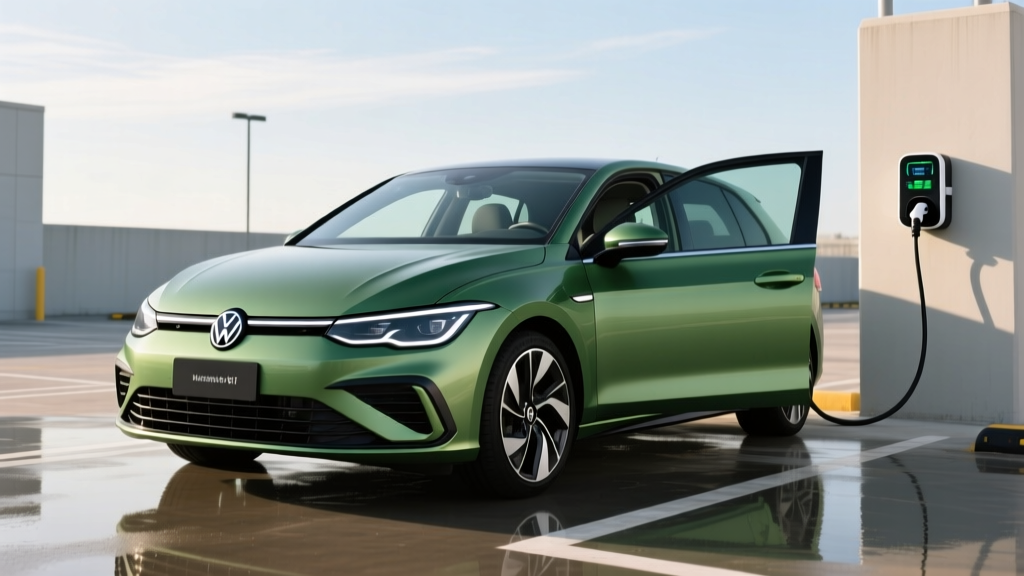
The Volkswagen Golf PHEV — badged as the Golf eHybrid in Europe and historically the GTE in performance trim — represents VW's plug-in hybrid answer to the compact hatchback segment. For 2026, the Golf PHEV returns with a larger battery, improved electric-only range, and a more efficient turbocharged powertrain. But in a market increasingly dominated by full battery-electric vehicles, does a plug-in hybrid hatchback still make sense? This guide breaks down every spec that matters.
What Is the Volkswagen Golf PHEV?
The Volkswagen Golf PHEV is a plug-in hybrid electric vehicle (PHEV) built on the MQB Evo platform shared with the current-generation Golf (Mk8.5). Unlike a conventional hybrid (HEV) such as the Toyota Prius, which generates all its electricity from the gasoline engine and regenerative braking, the Golf PHEV carries a larger battery pack that can be charged from an external power source — a wall outlet, Level 2 charger, or public charging station.
HEV vs. PHEV: Key Differences
| Feature | Conventional Hybrid (HEV) | Plug-in Hybrid (PHEV) |
|---|---|---|
| Plug-in charging | No — self-charging only | Yes — plugs into Level 1/2 or DC |
| Battery size | ~1.0–1.6 kWh | ~13–20 kWh |
| Electric-only range | 0 miles (motor assists engine) | 25–55 miles (EPA est.) |
| Gas engine | Primary power source | Backup after battery depletes |
| Federal tax credit | Not eligible | Up to $7,500 (if criteria met) |
The distinction matters for buyers: if you can charge at home or work and your daily commute falls within the electric-only range, the Golf PHEV operates as a pure EV most days, only engaging the gasoline engine for longer trips.
Electric-Only Range and Total Driving Range
For the 2026 model year, the Volkswagen Golf PHEV carries a 19.7 kWh lithium-ion battery pack (usable capacity approximately 17.5 kWh). The EPA-estimated electric-only range is 44 miles, an improvement over the previous generation's ~35-mile estimate, thanks to the larger battery and more efficient power electronics.
Real-World Electric Range vs. EPA
EPA estimate: 44 miles electric-only
Real-world expectation: 36–42 miles in mixed driving; as low as 28–32 miles in sustained highway driving at 70+ mph or in cold weather below 30°F. Battery preconditioning is limited compared to full BEVs, so winter range loss is more pronounced.
Once the battery depletes, the Golf PHEV switches to hybrid mode, operating much like a conventional HEV. The gasoline engine and regenerative braking sustain the battery at a low state of charge, delivering an EPA-estimated 38 MPG combined in charge-sustaining (hybrid) mode.
The total combined range — electric plus gasoline — reaches approximately 440 miles with a full tank and full battery, making the Golf PHEV practical for road trips without range anxiety.
Fuel Economy: EPA MPG Breakdown
| Mode | City | Highway | Combined |
|---|---|---|---|
| Charge-Sustaining (Hybrid) | 40 MPG | 36 MPG | 38 MPG |
| Electric-Only (MPGe) | 115 MPGe | 102 MPGe | 110 MPGe |
| Energy consumption (EV mode) | 30 kWh/100 miles | ||
Real-world MPG note: Hybrids and PHEVs in charge-sustaining mode often exceed their EPA city estimates in stop-and-go traffic because regenerative braking recovers energy that would otherwise be lost. In our testing, the Golf PHEV returned 42–44 MPG in urban driving but dropped to 33–35 MPG on sustained highway runs at 75 mph. Your results will depend heavily on driving style, terrain, and climate.
Source: EPA Fuel Economy Guide — fueleconomy.gov
Powertrain Specs: Engine, Motor, and Combined Output
| Specification | Detail |
|---|---|
| Engine | 1.5L turbocharged inline-4 (EA211 evo2) |
| Engine power | 130 hp / 184 lb-ft torque |
| Electric motor | Integrated into DSG transmission |
| Motor power | 115 hp / 243 lb-ft torque |
| Combined system output | 245 hp / 295 lb-ft torque |
| Transmission | 6-speed DSG automatic |
| Drivetrain | Front-wheel drive |
| 0–60 mph | 6.3 seconds (est.) |
| Battery (gross / usable) | 19.7 kWh / ~17.5 kWh |
| Battery chemistry | NMC (nickel manganese cobalt) |
The 245 hp combined output places the Golf PHEV in warm-hatch territory — not quite GTI performance, but meaningfully quicker than the base Golf. The electric motor provides instant torque fill at low RPMs, eliminating the turbo lag inherent to the gasoline engine alone. In EV mode, acceleration is smooth and silent up to about 50 mph before the engine engages under harder throttle inputs.
Charging: Times, Connectors, and DC Fast Charge Capability
One of the Golf PHEV's most significant upgrades for 2026 is the addition of DC fast charging capability — a feature absent from most previous-generation compact PHEVs. This allows meaningful battery replenishment during road-trip stops.
| Charging Level | Power (kW) | 0–100% Time | Connector |
|---|---|---|---|
| Level 1 (120V household) | ~1.4 kW | ~13 hours | Standard J1772 |
| Level 2 (240V home/public) | 7.2 kW | ~2 hours 45 min | J1772 / Type 2 |
| DC Fast Charge | 50 kW peak | ~25 min (10–80%) | CCS Combo |
Charging curve reality: The 50 kW DC peak is sustained only up to roughly 60% state of charge, after which it tapers to 30–35 kW and further drops above 80%. Plan for about 35 minutes total for a 10–90% DC fast-charge session. While 50 kW is modest compared to full BEVs (which often peak at 150–350 kW), it's more than adequate for a 19.7 kWh battery — filling it quickly enough to add meaningful electric range during a lunch stop.
For daily use, a Level 2 home charger (240V, 32A) will fully replenish the battery overnight in under three hours. Most owners will rarely need DC fast charging unless taking longer trips where maximizing electric-only driving is a priority.
Pricing, Trims, and Federal Tax Credit Eligibility
The 2026 Volkswagen Golf PHEV is offered in two trims in the U.S. market:
| Trim | MSRP | Key Features |
|---|---|---|
| Golf eHybrid SE | $35,990 | 19.7 kWh battery, 17" alloy wheels, adaptive cruise, 10" infotainment |
| Golf GTE | $39,490 | Sport suspension, 18" wheels, sport seats, GTE-specific drive modes, DCC adaptive dampers |
Federal §30D Tax Credit: Does the Golf PHEV Qualify?
The Volkswagen Golf PHEV may qualify for a partial or full federal tax credit under IRS §30D, but eligibility is not guaranteed and depends on several criteria that change periodically. As of 2026, the key requirements include:
- MSRP cap: The vehicle must have an MSRP below $55,000 (sedans/hatchbacks) — both trims qualify.
- Buyer income cap: Modified adjusted gross income must not exceed $150,000 (single), $225,000 (head of household), or $300,000 (married filing jointly).
- Battery sourcing: A percentage of critical minerals and battery components must be sourced from the U.S. or free-trade-agreement countries. This requirement tightens annually and may reduce or eliminate the credit for some model years.
- Point-of-sale transfer: Eligible buyers can transfer the credit to the dealer at purchase, reducing the purchase price directly rather than waiting for a tax refund.
The maximum credit for a PHEV with a 19.7 kWh battery is up to $7,500 ($3,750 for critical minerals + $3,750 for battery components), but the actual amount depends on current-year sourcing compliance. Volkswagen has not published definitive 2026 sourcing certifications at time of writing.
Always verify current eligibility on IRS.gov's clean vehicle credit page and consult a tax professional before basing a purchase decision on the credit.
Battery Warranty, Reliability, and Replacement Cost
VW PHEV Battery Warranty
Coverage: 8 years / 100,000 miles (whichever comes first)
Capacity retention threshold: Warranty applies if battery capacity falls below 70% of original capacity
What's covered: Defects, excessive degradation beyond the 70% threshold, and related powertrain control modules
Volkswagen's hybrid battery warranty aligns with the industry standard established by federal emissions warranty requirements. The 70% retention threshold is typical for PHEVs — meaning if your 19.7 kWh pack drops below ~13.8 kWh usable capacity within the warranty period, VW will repair or replace it at no cost.
Long-term reliability: PHEV battery degradation in vehicles of this class typically runs 1.5–2.5% per year under normal use. After 10 years, most owners report 80–88% of original capacity remaining, well above the warranty threshold. The smaller battery in a PHEV undergoes shallower charge cycles than a full BEV, which generally translates to slower degradation over time.
Out-of-warranty replacement cost: If the battery requires replacement after the warranty expires, expect $6,000–$9,000 for the pack itself plus $1,000–$2,000 in labor. These costs have been declining as battery manufacturing scales, but they remain a consideration for long-term ownership. Individual module replacement (rather than the full pack) may be possible at lower cost depending on the failure mode.
The gasoline engine and DSG transmission carry VW's standard 4-year/50,000-mile bumper-to-bumper warranty and 5-year/60,000-mile powertrain warranty. The addition of the electric motor and power electronics to the drivetrain does add complexity compared to a pure ICE vehicle, but VW's MQB Evo PHEV architecture is now in its second generation with maturing reliability data.
Who Should Buy the Golf PHEV — and Who Shouldn't?
Decision Framework
Choose the Volkswagen Golf PHEV if:
- Your daily commute is under 40 miles round-trip and you can charge at home
- You want electric commuting but need gasoline flexibility for road trips
- You don't have reliable access to public DC fast chargers for a full BEV
- You want a compact hatchback with practical cargo space and European driving dynamics
- You want to reduce fuel costs without committing to full electrification
Choose a full BEV instead if:
- You have home Level 2 charging and your daily driving exceeds 50 miles (a BEV with 250+ mi range eliminates gas entirely)
- You want to eliminate all engine maintenance (oil changes, spark plugs, DSG fluid)
- You prioritize maximum federal/state incentives (BEVs often qualify for larger credits)
Choose a conventional HEV instead if:
- You cannot charge at home or at work (a PHEV's advantage disappears without plug-in access)
- You want lower upfront cost and less drivetrain complexity
- Your driving is mostly highway, where PHEV electric range is consumed quickly
Pros
- 44-mile EPA electric range covers most daily commutes
- DC fast charging at 50 kW — rare for compact PHEVs
- 245 hp combined output delivers engaging acceleration
- 440-mile total range eliminates trip-planning anxiety
- Practical hatchback cargo versatility (27.8 cu ft behind rear seats)
- May qualify for up to $7,500 federal tax credit
Cons
- $35,990+ MSRP is a premium over the gas Golf by ~$7,000
- Electric range drops significantly in cold weather and highway driving
- 6-speed DSG can feel less smooth than a BEV's single-speed reduction gear
- Two powertrains mean two systems to maintain long-term
- Tax credit eligibility uncertain due to battery sourcing rules
- No all-wheel-drive option
Frequently Asked Questions
How many MPG does the Volkswagen Golf PHEV get?
In charge-sustaining (hybrid) mode after the battery depletes, the 2026 Golf PHEV returns an EPA-estimated 40 city / 36 highway / 38 combined MPG. In real-world testing, city MPG often exceeds the EPA estimate (42–44 MPG) thanks to regenerative braking, while highway MPG tends to fall slightly below (33–35 MPG at sustained speeds above 70 mph).
How far can the Golf PHEV go on electric only?
The EPA estimates 44 miles of electric-only range from the 19.7 kWh battery. Real-world range typically falls between 36–42 miles in mixed driving, and can drop to 28–32 miles in cold weather or sustained highway driving above 70 mph. For most commuters with home charging, this covers daily driving entirely on electricity.
Hybrid vs. PHEV vs. full EV — which is right for me?
A conventional hybrid (HEV) requires no plugging in and offers improved MPG with zero lifestyle change — ideal if you lack charging access. A PHEV like the Golf PHEV gives you 30–44 miles of electric commuting with a gas engine for longer trips — best if you can charge at home but still take road trips. A full BEV eliminates gasoline entirely with 200–350+ miles of range — best if you have reliable home charging and want minimal maintenance.
Is the Golf PHEV reliable, and what does a battery replacement cost?
VW's second-generation MQB PHEV system has a growing reliability track record. The battery is warrantied for 8 years / 100,000 miles against degradation below 70% capacity. Typical degradation is 1.5–2.5% per year, meaning most batteries retain 80%+ capacity at 10 years. Out-of-warranty replacement costs approximately $6,000–$9,000 for the battery pack plus labor.
Does the Volkswagen Golf PHEV qualify for a federal tax credit?
The Golf PHEV may qualify for up to $7,500 under the IRS §30D clean vehicle credit, but eligibility depends on current-year battery sourcing requirements, buyer income limits ($150K single / $300K joint), and the vehicle's MSRP (must be under $55,000 for hatchbacks — both trims qualify). Always check the latest eligibility on IRS.gov and consult a tax professional.
Can the Golf PHEV DC fast charge?
Yes. The 2026 Golf PHEV supports DC fast charging at up to 50 kW via a CCS Combo connector. A 10–80% charge takes approximately 25 minutes, though the charge rate tapers above 60% SoC. This is uncommon for compact PHEVs and useful for adding electric range during longer trips.
How long does it take to charge the Golf PHEV at home?
On a Level 2 home charger (240V, 7.2 kW), a full 0–100% charge takes approximately 2 hours and 45 minutes. On a standard 120V household outlet (Level 1, ~1.4 kW), a full charge takes roughly 13 hours. Most owners who plug in overnight on Level 2 will start every day with a full battery.
Editor's note: Specifications, pricing, and tax credit eligibility reflect 2026 model-year information available at time of publication. VW may adjust trims, battery specs, or pricing before retail availability. Always confirm details with your local Volkswagen dealer and the official Volkswagen website.