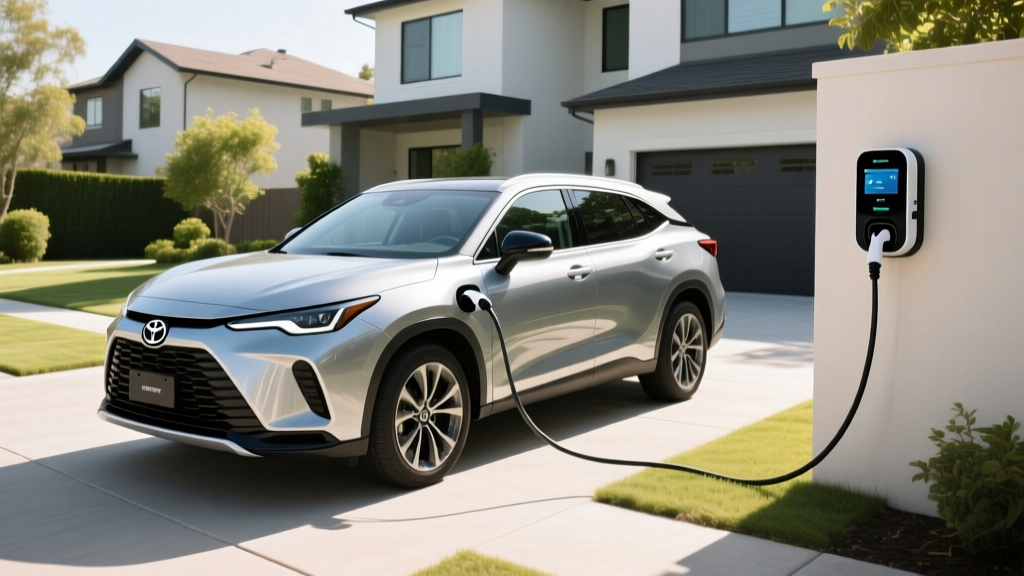
The Toyota Venza occupies a specific lane in the midsize crossover market: a hybrid-only, all-wheel-drive SUV that prioritizes fuel efficiency and premium styling over maximum cargo volume. For 2026, the Venza continues with Toyota's proven hybrid synergy drive system, delivering EPA-rated fuel economy that makes it one of the most efficient AWD crossovers available. If you're researching the Toyota Venza hybrid as a potential purchase, this guide covers every number that matters — from real-world MPG to battery warranty terms — and explains where the Venza fits against plug-in hybrids and full EVs.
2026 Toyota Venza Hybrid: Quick Verdict
The Venza is a conventional hybrid (HEV), not a plug-in. You never plug it in; the 1.6 kWh nickel-metal hydride battery charges itself through regenerative braking and the gasoline engine. That simplicity is its greatest strength for buyers who want EV-like efficiency without charging logistics. The trade-off is that you won't get any electric-only driving range — the Venza's electric motors assist the engine but can't propel the vehicle alone for meaningful distances.
| Spec | Value |
|---|---|
| Powertrain | 2.5L 4-cyl + 3 electric motors (AWD) |
| Combined Horsepower | 219 hp |
| EPA Fuel Economy (City / Hwy / Combined) | 40 / 37 / 39 MPG |
| Battery Type / Capacity | NiMH / 1.6 kWh (self-charging) |
| Drivetrain | Electronic On-Demand AWD |
| 0–60 mph | ~7.6 seconds |
| Cargo Volume (behind rear seats) | 28.8 cu ft |
| Towing Capacity | Not rated for towing |
| Base MSRP (LE) | ~$35,070 |
| Hybrid Battery Warranty | 10 years / 150,000 miles |
How Many MPG Does the Toyota Venza Hybrid Get?
The EPA rates the 2026 Toyota Venza hybrid at 40 MPG city, 37 MPG highway, and 39 MPG combined. These figures apply across all trims (LE, XLE, Limited, Nightshade) since they share the same powertrain. Per fueleconomy.gov, the Venza's combined rating places it among the most efficient AWD crossovers in its class.
| Condition | EPA Rating | Real-World Expectation |
|---|---|---|
| City | 40 MPG | 38–43 MPG (hybrids often exceed EPA in stop-and-go) |
| Highway | 37 MPG | 33–36 MPG (sustained 70+ mph reduces regen benefit) |
| Combined | 39 MPG | 36–40 MPG depending on driving mix |
| Cold Weather (below 30°F) | — | 33–36 MPG (engine runs more for cabin heat) |
Real-world MPG note: Toyota hybrids consistently outperform their EPA city estimates because regenerative braking recovers energy in stop-and-go traffic that conventional vehicles waste as heat. In our experience with Toyota's fourth-generation hybrid system, city driving of 30–40 miles with frequent stops routinely yields 41–43 MPG. Highway driving is where the Venza gives back some efficiency — aerodynamic drag at 75+ mph and reduced regen opportunities drop real-world highway numbers to the low-to-mid 30s. In sub-freezing temperatures, expect a 10–15% MPG reduction as the engine runs longer to heat the cabin and maintain battery temperature.
HEV vs PHEV vs EV: Which Powertrain Fits You?
The Venza is an HEV (hybrid electric vehicle). Understanding how this differs from PHEVs and full EVs is essential before you buy.
| Feature | HEV (Venza) | PHEV (e.g., RAV4 Prime) | BEV (e.g., Tesla Model Y) |
|---|---|---|---|
| Plug-in Required? | No — self-charging | Yes — plug in for EV range | Yes — plug in to drive |
| Electric-Only Range | None (motor assists engine) | 30–42 miles typical | 250–330 miles EPA |
| Total Range | ~540 miles (14.5-gal tank) | ~580+ miles (EV + gas) | 250–330 miles |
| Fuel / Energy Cost | Gas only (~$0.11/mi at $3.50/gal) | Electric + gas (~$0.04–0.11/mi) | Electric only (~$0.04/mi home charging) |
| Home Charging Needed? | No | Recommended (Level 2) | Essential (Level 2) |
| Federal Tax Credit | Not eligible | Up to $7,500 (varies) | Up to $7,500 (varies) |
| Maintenance | Oil changes, standard | Oil changes + EV systems | Minimal (no oil, fewer fluids) |
| Best For | No home charging access; want simplicity | Home charging + short commutes | Home charging + low running costs |
Choose the Venza HEV if you don't have access to home or workplace charging, you want a vehicle that works exactly like a gas car at the pump but sips fuel, and you don't want to think about plug-in logistics. Choose a PHEV (like the RAV4 Prime) if you can install a Level 2 charger at home and your daily commute is under 40 miles — you'd drive mostly on electricity with a gas backup for road trips. Choose a full EV if you have reliable home charging, want the lowest per-mile cost, and your driving patterns fit within 250+ miles of range.
Powertrain and Performance Details
The Venza pairs a 2.5-liter Dynamic Force 4-cylinder engine (176 hp, 163 lb-ft) with three electric motor-generators: two up front integrated into the transaxle and one on the rear axle providing electronic on-demand AWD. Combined system output is 219 horsepower.
The rear motor engages only when the system detects front-wheel slip or during hard acceleration, meaning the Venza operates primarily as a front-wheel-drive vehicle under normal conditions. This saves weight and complexity compared to a mechanical AWD system with a driveshaft.
The 0–60 mph time of approximately 7.6 seconds is adequate for merging and passing but not sporty. The eCVT (electronically controlled continuously variable transmission) delivers smooth, shift-free acceleration, though it produces the characteristic "rubber-band" drone under hard throttle that some drivers find unrefined. For everyday driving at moderate throttle inputs, the powertrain is quiet and seamless.
Pricing, Trims, and Tax Credit Eligibility
The 2026 Toyota Venza is offered in four trims. Pricing below includes destination charge:
| Trim | MSRP (approx.) | Key Features |
|---|---|---|
| LE | $35,070 | Toyota Safety Sense 3.0, 8" touchscreen, wireless CarPlay/Android Auto |
| XLE | $38,070 | SofTex seats, power liftgate, 12.3" touchscreen, ambient lighting |
| Nightshade | $39,570 | Black exterior accents, 19" black wheels, XLE content |
| Limited | $43,070 | Panoramic roof, ventilated front seats, 10" HUD, JBL audio, digital rearview mirror |
Does the Toyota Venza Hybrid Qualify for a Federal Tax Credit?
No. The Venza is a conventional hybrid (HEV), and the IRS §30D Clean Vehicle Credit applies only to plug-in electric vehicles (PHEVs and BEVs) with qualifying battery capacity and sourcing requirements. The Venza's 1.6 kWh NiMH battery does not meet the minimum 7 kWh threshold for any federal plug-in credit, and because it cannot be plugged in, it falls outside the program entirely.
Some states offer separate incentives for conventional hybrids, but these are uncommon and vary by jurisdiction. Check your state's energy office or department of environmental quality for current programs. The fuel savings — approximately $600–$900 per year versus a comparable non-hybrid AWD SUV — serve as the Venza's primary financial advantage.
Hybrid Battery Warranty, Lifespan, and Replacement Cost
Toyota Hybrid Battery Warranty
Coverage: 10 years or 150,000 miles (whichever comes first), transferable to subsequent owners.
What's covered: Defects in the hybrid battery pack and related hybrid system components (inverter, motor-generators, DC-DC converter).
Capacity threshold: Toyota does not publish a specific capacity-retention threshold for HEV batteries (unlike PHEV/EV warranties). Coverage applies to functional failure, not gradual capacity loss.
How Long Do Toyota Hybrid Batteries Last?
Toyota's hybrid battery packs are among the most proven in the industry. The Prius, which uses a similar NiMH chemistry, has demonstrated battery lifespans routinely exceeding 200,000 miles with original packs. The Venza's battery is smaller (1.6 kWh vs. the Prius's ~1.3 kWh) and operates within a narrow state-of-charge window managed by the hybrid system — typically between 40% and 80% SoC — which significantly reduces stress on the cells.
In practical terms, most Venza owners will never need a hybrid battery replacement during typical ownership. If replacement becomes necessary out of warranty, expect a cost of $2,000–$4,000 for a refurbished or new OEM pack plus labor. Third-party refurbished packs are available for $1,500–$2,500. This is dramatically less than a full EV battery replacement ($8,000–$20,000+) because the Venza's pack is small and uses mature NiMH chemistry.
Is the Toyota Venza Hybrid Reliable?
Toyota's hybrid powertrain has over 25 years of production history and consistently earns top reliability marks. The 2.5L Dynamic Force engine is naturally aspirated (no turbo complexity), the eCVT has no traditional transmission bands or clutches to wear, and the regenerative braking system reduces wear on the friction brakes — many Toyota hybrid owners report original brake pads lasting 80,000–100,000 miles. IIHS has historically rated the Venza as a Top Safety Pick when equipped with specific headlights.
Real-World Ownership: What It's Actually Like
The Venza's defining ownership experience is effortlessness. You fuel it like any gas car (14.5-gallon tank, roughly $50 to fill, yielding ~540 miles of range). There is no plug, no charging app, no range planning. The hybrid system is invisible — it seamlessly switches between engine, electric motor, and combined operation without driver input.
Cargo space is the Venza's most common criticism. At 28.8 cubic feet behind the rear seats, it trails the RAV4 Hybrid (37.6 cu ft) and Honda CR-V Hybrid (39.3 cu ft) significantly. The Venza's sloping roofline prioritizes style over utility. If you regularly haul large cargo, the RAV4 Hybrid is the more practical Toyota. If cargo needs are modest — groceries, luggage for two, a stroller — the Venza is sufficient.
Ride quality leans comfortable rather than sporty. The suspension absorbs pavement imperfections well, and cabin noise isolation is a step above the RAV4 Hybrid. The Limited trim's panoramic glass roof (with electrochromic dimming) adds an airy, premium feel that no competitor in this price range matches.
Pros
- 39 MPG combined with standard AWD — no charging required
- Proven hybrid reliability with 10-year/150,000-mile battery warranty
- Premium interior feel, especially Limited trim
- Strong city MPG (often exceeds EPA in stop-and-go driving)
- Low brake wear from regenerative braking
- Toyota Safety Sense 3.0 standard on all trims
Cons
- Cargo volume (28.8 cu ft) trails RAV4 Hybrid and CR-V Hybrid
- No federal tax credit eligibility (HEV, not PHEV)
- eCVT drone under hard acceleration
- Not rated for towing
- Highway MPG drops noticeably at 75+ mph
- Nightshade and Limited trims push into RAV4 Prime PHEV pricing
Frequently Asked Questions
How many MPG does the Toyota Venza hybrid get in real-world driving?
The EPA rates the Venza at 40 city / 37 highway / 39 combined. In real-world driving, most owners report 36–42 MPG combined depending on conditions. City driving with frequent stops often exceeds the EPA estimate (41–43 MPG), while sustained highway driving at 75+ mph typically yields 33–36 MPG. Cold weather (below 30°F) reduces MPG by roughly 10–15% due to increased engine operation for cabin heating.
Does the Toyota Venza need to be plugged in?
No. The Venza is a conventional hybrid (HEV). Its battery charges through regenerative braking and the gasoline engine. You simply fill the gas tank and drive. There is no plug, no charging cable, and no electric-only driving range.
What is the difference between the Toyota Venza and the RAV4 Hybrid?
Both use Toyota's 2.5L hybrid AWD powertrain, but the RAV4 Hybrid offers more cargo space (37.6 vs. 28.8 cu ft), slightly better fuel economy (41/38/40 MPG), a more upright design, and a lower starting price (~$33,000). The Venza trades utility for a more premium, coupe-like design and a slightly quieter ride. Mechanically, they are very similar.
How much does it cost to replace the Toyota Venza hybrid battery?
Out-of-warranty replacement of the Venza's 1.6 kWh NiMH hybrid battery typically costs $2,000–$4,000 (OEM new) or $1,500–$2,500 (refurbished). However, Toyota hybrid batteries routinely last 200,000+ miles, and the 10-year/150,000-mile warranty covers most ownership periods. Battery replacement is rare.
Does the Venza hybrid qualify for any tax credit?
No federal tax credit is available for the Venza because it is a conventional hybrid, not a plug-in vehicle. The IRS §30D Clean Vehicle Credit requires a minimum battery capacity and plug-in capability that the Venza does not have. Some states may offer minor hybrid incentives — check your state energy office for details.
Is the Venza hybrid good in snow and ice?
Yes. The electronic on-demand AWD system provides competent traction in light to moderate snow. The rear electric motor engages when front-wheel slip is detected, providing power to all four wheels without a mechanical connection. For severe winter conditions, dedicated winter tires significantly improve performance beyond what the AWD system alone provides.
Should I buy the Venza hybrid or a plug-in hybrid like the RAV4 Prime?
Choose the Venza if you lack home charging access and want a simple, efficient AWD SUV with no plug-in logistics. Choose the RAV4 Prime (PHEV) if you can install a Level 2 home charger — its 42 miles of electric-only range covers most daily commutes without burning gas, and it qualifies for up to $7,500 in federal tax credits (subject to income and sourcing rules). The RAV4 Prime starts higher (~$44,000) but the tax credit and fuel savings can close the gap.
Bottom Line: Who Should Buy the Toyota Venza Hybrid?
The Toyota Venza hybrid is the right choice if you want a fuel-efficient AWD crossover that requires zero behavioral change from a gas car. No plugs, no charging apps, no range calculations — just 39 MPG combined and a fill-up every ~540 miles. It's ideal for apartment dwellers without charging access, drivers who take frequent road trips where charging infrastructure is uncertain, and buyers who value Toyota's hybrid reliability track record.
It's the wrong choice if cargo space is a priority (get the RAV4 Hybrid), if you want electric-only commuting (get the RAV4 Prime PHEV), or if you're ready to go fully electric and have home charging (consider the Tesla Model Y or Hyundai Ioniq 5). The Venza's upper trims also push into PHEV pricing territory, where the tax-credit-eligible RAV4 Prime becomes a stronger financial argument.
For the buyer who wants efficiency without complexity, the Venza delivers exactly what it promises — and Toyota's 10-year/150,000-mile hybrid battery warranty provides long-term peace of mind that few competitors match.