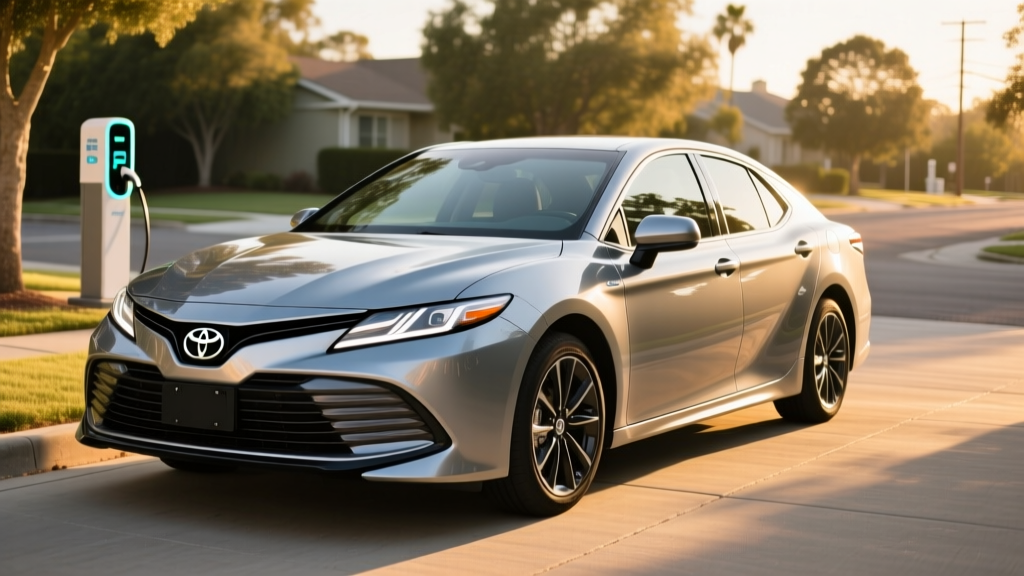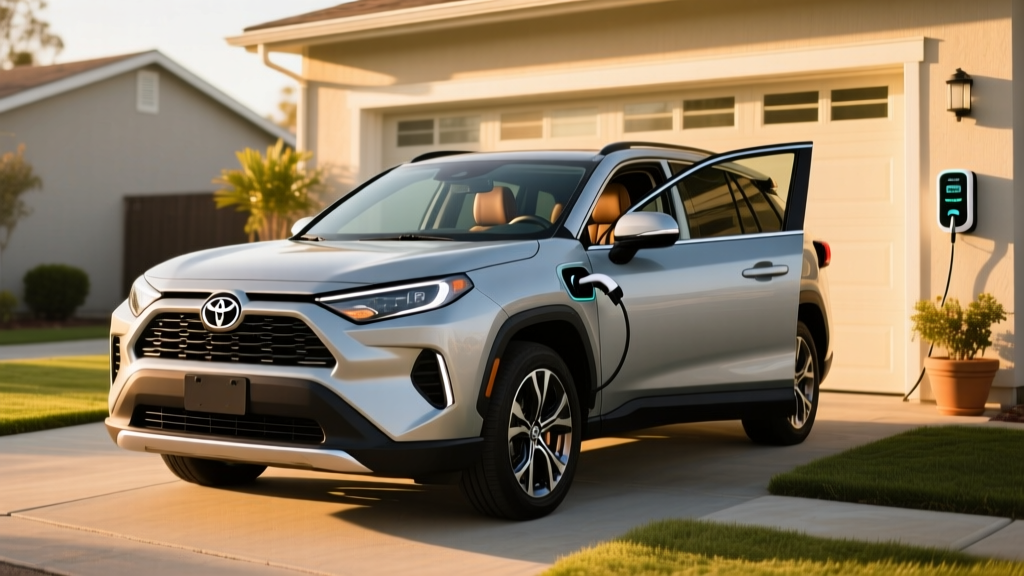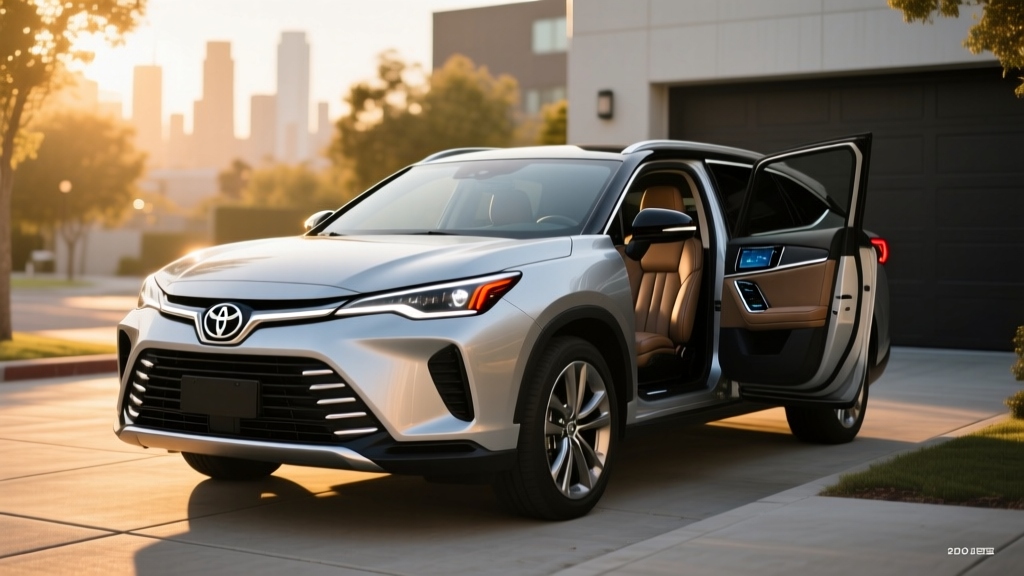
The Toyota Venza occupies a specific niche: a midsize crossover that pairs standard all-wheel drive with a proven hybrid powertrain, delivering strong fuel economy without the plug-in commitment. Originally reintroduced for the 2021 model year as a hybrid-only nameplate, the Venza shares its underpinnings with the RAV4 Hybrid but trades some cargo space and rugged styling for a more premium, car-like driving experience. For 2026, Toyota continues to refine the formula, and the Venza remains one of the most efficient AWD crossovers you can buy without plugging in.
This guide covers everything a buyer needs to know: exact EPA fuel economy, real-world MPG expectations, the hybrid powertrain breakdown, battery longevity and warranty, pricing, and how the Venza stacks up against plug-in hybrids and full battery-electric vehicles.
Toyota Venza Hybrid Fuel Economy: EPA Numbers and Real-World MPG
The headline figure for the Venza hybrid is its EPA-rated fuel economy. Equipped with Toyota's fourth-generation hybrid system and electronic on-demand AWD, the Venza delivers:
| Metric | EPA Rating |
|---|---|
| City | 40 MPG |
| Highway | 37 MPG |
| Combined | 39 MPG |
| Fuel Tank Capacity | 14.5 gallons |
| Total Driving Range | ~565 miles |
The Venza's combined 39 MPG places it among the most efficient AWD crossovers on the market. For comparison, the Honda CR-V Hybrid AWD rates at 37 MPG combined, while the Hyundai Tucson Hybrid AWD achieves 38 MPG combined.
HEV vs. PHEV: Understanding the Venza's Hybrid Type
A common point of confusion for crossover shoppers is the difference between a conventional hybrid (HEV) and a plug-in hybrid (PHEV). The Toyota Venza is a conventional hybrid (HEV) — it does not have a plug, and you never need to charge it externally.
Conventional Hybrid (HEV)
- No plug required — charges via regenerative braking and engine
- Small battery (~1.6 kWh) buffers energy
- Electric-only driving limited to low speeds, short distances
- EPA-rated MPG applies at all times
- No range anxiety — refuel at any gas station
Plug-In Hybrid (PHEV)
- Plugs into Level 1 or Level 2 charger
- Larger battery (10–20 kWh) for 20–45 miles electric-only
- Higher upfront cost; may qualify for federal tax credit
- Once battery depletes, operates as a conventional hybrid
- Ideal if you have home charging and a short commute
The Venza's HEV system means zero lifestyle change from a gas car: you fill up at the pump and drive. The trade-off is that you don't get the 25–42 miles of electric-only commuting that a PHEV like the Toyota RAV4 Prime offers. If your priority is maximum fuel savings without installing a home charger or changing your refueling habits, the Venza's HEV setup is the simpler path.
Powertrain Breakdown: Engine, Motors, and Horsepower
The Venza uses Toyota's well-established 2.5-liter Dynamic Force four-cylinder engine paired with three electric motor-generators — two up front (one for propulsion, one primarily as a generator) and one on the rear axle for AWD.
| Component | Specification |
|---|---|
| Engine | 2.5L 4-cylinder Atkinson-cycle |
| Engine Output | 176 hp / 163 lb-ft torque |
| Front Electric Motor | 118 hp / 149 lb-ft |
| Rear Electric Motor (AWD) | 54 hp / 89 lb-ft |
| Net Combined System Power | 219 hp |
| Transmission | eCVT (planetary gearset, no belt) |
| Drivetrain | Electronic on-demand AWD (standard) |
| 0–60 mph (est.) | ~7.6 seconds |
| Towing Capacity | Not rated for towing |
The eCVT is not a traditional belt-driven continuously variable transmission. Toyota uses a planetary gearset that seamlessly blends power from the engine and electric motors. This design has proven extremely durable — there are no belts, clutches, or friction bands to wear out, which contributes to the hybrid system's long-term reliability.
The rear motor activates automatically when the system detects front-wheel slip, rain, or snow. Unlike mechanical AWD systems, there's no driveshaft connecting the front and rear axles — the rear motor is independently powered, reducing parasitic loss and improving efficiency.
Battery, Warranty, and Long-Term Reliability
Hybrid battery longevity is one of the top concerns for buyers considering their first hybrid. The Venza uses a relatively small nickel-metal hydride (NiMH) traction battery — approximately 1.6 kWh — that is managed conservatively by Toyota's battery management system. The battery never fully charges or fully discharges during normal operation, which significantly extends its lifespan.
What Does Hybrid Battery Replacement Cost?
If the hybrid battery does fail outside of warranty — which is statistically rare based on two decades of Toyota hybrid data — a replacement battery pack for the Venza typically costs between $2,000 and $3,500 installed at a dealership. Independent hybrid specialists often offer refurbished or reconditioned packs for $1,500–$2,500. For context, Toyota's Prius fleet has demonstrated hybrid batteries lasting well beyond 200,000 miles with proper maintenance, and the Venza's system is mechanically similar.
Overall Reliability Outlook
Toyota's hybrid powertrain is among the most thoroughly proven in the automotive industry, with over 20 million hybrid vehicles sold globally since 1997. The 2.5L Dynamic Force engine and fourth-generation hybrid transaxle have been deployed across the RAV4 Hybrid, Camry Hybrid, Highlander Hybrid, and Venza with consistently strong reliability records. The Venza carries no timing belt (it uses a timing chain), and the eCVT eliminates traditional transmission failure points.
Pricing, Trims, and Tax Credit Eligibility
For 2026, the Toyota Venza is available in three trims, all with standard AWD and the hybrid powertrain:
| Trim | MSRP (est.) | Key Features |
|---|---|---|
| LE | ~$36,500 | Toyota Safety Sense 3.0, 8" touchscreen, wireless CarPlay/Android Auto, heated front seats |
| XLE | ~$40,000 | SofTex seats, power liftgate, ambient lighting, 12.3" display, wireless charging pad |
| Limited | ~$44,500 | Panoramic glass roof, JBL audio, HUD, ventilated seats, digital rearview mirror |
Does the Venza Hybrid Qualify for a Federal Tax Credit?
The conventional Toyota Venza hybrid (HEV) does not qualify for the federal §30D Clean Vehicle Credit. Under current IRS rules, the §30D credit of up to $7,500 is available only for plug-in electric vehicles (BEVs and PHEVs) that meet battery capacity, critical mineral sourcing, MSRP caps, and buyer income thresholds. Since the Venza HEV cannot be plugged in and has a battery far below the 7 kWh minimum threshold, it is ineligible.
However, some states and utilities offer rebates or incentives for high-efficiency hybrids. Check your state energy office or local utility for current programs, as these vary significantly by jurisdiction.
Who Should Buy the Venza Hybrid — and Who Shouldn't?
Choose the Venza Hybrid If…
- You want 39 MPG combined with standard AWD and no plug-in hassle
- You don't have access to home or workplace EV charging
- You prefer Toyota's long-term reliability track record
- You want a quieter, more refined ride than the RAV4 Hybrid
- Your annual mileage is high enough that fuel savings offset the hybrid premium
Look Elsewhere If…
- You need maximum cargo space (RAV4 Hybrid offers 37.5 cu ft vs. Venza's 28.8 cu ft)
- You want electric-only commuting (consider the RAV4 Prime PHEV or a BEV)
- You need towing capability (Venza is not rated for towing)
- You want eligibility for the $7,500 federal tax credit
- Third-row seating is a priority (look at the Highlander Hybrid)
Venza Hybrid vs. PHEV vs. Full EV: Which Fits You?
| Factor | Venza HEV | RAV4 Prime PHEV | Full EV (e.g., Ioniq 5) |
|---|---|---|---|
| Home Charging Needed? | No | Recommended | Essential |
| Fuel/Energy Cost per Mile | ~$0.12 | ~$0.04 (electric) / $0.12 (gas) | ~$0.04–$0.06 |
| Federal Tax Credit | None | Up to $7,500* | Up to $7,500* |
| Electric-Only Range | N/A | 42 miles | 250–310 miles |
| Upfront Cost | $36,500–$44,500 | $44,500–$49,000 | $42,000–$58,000 |
| Maintenance Complexity | Low | Moderate | Lowest |
* §30D credit eligibility depends on MSRP caps ($80,000 SUVs), buyer AGI limits ($150K single / $300K joint), battery sourcing requirements, and manufacturer availability. Always verify current rules at irs.gov and consult a tax professional.
Ownership Costs: 5-Year Outlook
At 39 MPG combined and 15,000 miles driven annually, the Venza hybrid consumes roughly 385 gallons of fuel per year. At $3.50/gallon, that's approximately $1,347/year in fuel — compared to $2,100/year for a comparable non-hybrid AWD crossover averaging 25 MPG.
Over five years, the Venza's fuel savings total roughly $3,750 versus a gas-only competitor. While this doesn't match the savings of a PHEV or BEV (which can cut fuel costs by 60–80%), it requires zero infrastructure investment — no home charger installation, no public charging apps, no route planning around DC fast chargers.
Insurance costs for the Venza tend to be moderate, typically $1,400–$1,800 annually depending on your profile and location. Toyota's Safety Sense 3.0 suite (standard on all trims) includes pre-collision braking, lane departure alert, dynamic radar cruise control, and lane tracing assist — all SAE Level 1–2 driver-assistance features that require active driver engagement at all times.
Frequently Asked Questions
How many MPG does the Toyota Venza hybrid get?
The EPA rates the Venza hybrid at 40 MPG city, 37 MPG highway, and 39 MPG combined. Real-world results vary: city drivers often see 41–44 MPG in warm weather, while sustained highway driving at 70+ mph typically yields 34–36 MPG. Cold weather reduces efficiency by 5–10%.
Does the Venza hybrid need to be plugged in?
No. The Venza is a conventional hybrid (HEV), not a plug-in hybrid. Its small battery charges entirely through regenerative braking and the gasoline engine. You refuel at any gas station, just like a traditional car.
Is the Toyota Venza hybrid reliable?
Toyota's hybrid powertrain has an extensive reliability track record spanning over two decades. The Venza's 2.5L hybrid system shares components with the RAV4 Hybrid and Camry Hybrid, both of which consistently rank highly in long-term dependability studies. The eCVT transmission eliminates many failure points found in conventional automatics.
What is the hybrid battery replacement cost for the Venza?
Out-of-warranty hybrid battery replacement typically costs $2,000–$3,500 at a dealership, or $1,500–$2,500 through an independent hybrid specialist. However, Toyota covers the hybrid battery for 10 years/150,000 miles, and historical data from Toyota's hybrid fleet suggests batteries frequently last well beyond 200,000 miles.
Does the Venza hybrid qualify for any tax credit?
The conventional Venza HEV does not qualify for the federal §30D Clean Vehicle Credit, which requires plug-in capability and a minimum 7 kWh battery. Some state and utility programs offer incentives for efficient hybrids — check your local programs for current availability.
How does the Venza hybrid compare to the RAV4 Hybrid?
Both share the same 219 hp hybrid AWD powertrain and similar EPA ratings (Venza: 39 MPG combined; RAV4 Hybrid: 39–41 MPG combined depending on trim). The RAV4 Hybrid offers more cargo space (37.5 vs. 28.8 cu ft), a lower starting price, and a PHEV variant (RAV4 Prime). The Venza offers a more premium interior, standard features like the panoramic roof on upper trims, and a quieter ride. Choose the RAV4 for utility; choose the Venza for refinement.