Quick Verdict: The Tundra Hybrid's Efficiency Promise
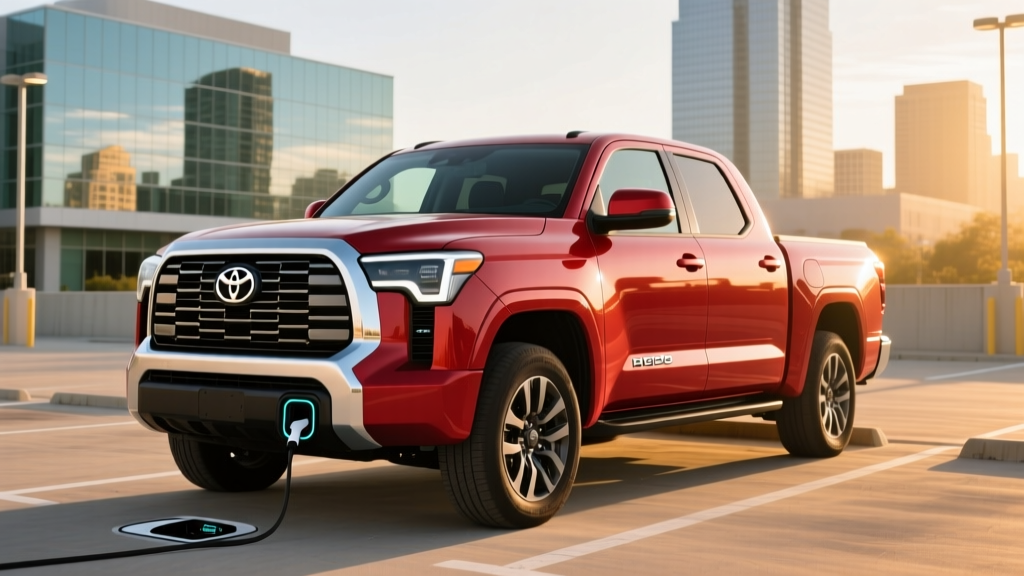
If you're researching the Toyota Tundra hybrid MPG before pulling the trigger on a full-size truck purchase, you're asking the right question. The 2026 Toyota Tundra i-FORCE MAX pairs a twin-turbo V6 with a 48-horsepower electric motor to deliver 20 MPG combined (19 city / 22 highway) in 4x2 configuration, according to EPA estimates on fueleconomy.gov. That's a modest but meaningful improvement over the non-hybrid i-FORCE V6, and it comes with a massive torque upgrade that makes this truck genuinely quicker and more capable when towing.
But EPA stickers only tell part of the story. In this guide, we'll break down what you can actually expect at the pump, how the i-FORCE MAX powertrain works, whether any tax credits apply, and where this hybrid truck fits against a full EV pickup or a conventional gas model.
Tundra Hybrid MPG: EPA Numbers and Real-World Expectations
| Configuration | City MPG | Highway MPG | Combined MPG |
|---|---|---|---|
| 4x2 (CrewMax, short bed) | 19 | 22 | 20 |
| 4x4 (CrewMax, short bed) | 18 | 21 | 19 |
| 4x4 (CrewMax, long bed) | 17 | 20 | 18 |
For comparison, the non-hybrid 2026 Tundra i-FORCE (twin-turbo V6, no electric assist) rates at 17 city / 23 highway / 19 combined in 4x2 form. The hybrid's advantage shows up most clearly in city driving, where the electric motor handles low-speed launches and regenerative braking recovers energy that a gas-only truck would waste as heat.
Owner-reported data and third-party testing suggest the Tundra i-FORCE MAX routinely matches or slightly exceeds its EPA city estimate in stop-and-go traffic, often hitting 20–21 MPG on urban routes. Highway cruising at 75+ MPH tends to drop to 18–19 MPG due to the truck's aerodynamic profile and 5,800+ lb curb weight. Towing a 7,000-lb trailer? Expect 12–14 MPG regardless of hybrid assist — the electric motor helps with initial acceleration but cannot offset the drag and rolling resistance of a heavy load over sustained distances.
One nuance that surprises first-time hybrid truck owners: cold weather has a smaller impact on MPG than it does on a full EV. The i-FORCE MAX's 1.87 kWh battery is tiny by EV standards, and the gasoline engine generates enough waste heat to warm the cabin without relying on the battery. You may see a 1–2 MPG dip in sub-freezing conditions, compared to the 20–30% range loss a battery-electric truck can experience.
HEV vs. PHEV: Why the Tundra Hybrid Is Not Plug-In
A common source of confusion in truck forums is whether the Tundra hybrid is a plug-in. It is not. The i-FORCE MAX is a conventional hybrid electric vehicle (HEV) — sometimes called a "self-charging" hybrid, though that term is marketing-speak. Here's the critical distinction:
| Feature | HEV (Tundra i-FORCE MAX) | PHEV (e.g., Plug-In Hybrid Truck) |
|---|---|---|
| Plug-in charging required? | No — charges via engine & regen | Yes — Level 1 or Level 2 |
| Battery capacity | 1.87 kWh (NiMH) | Typically 12–20+ kWh (Li-ion) |
| Electric-only range | None (motor assists only) | 20–50 miles typical |
| Federal tax credit (§30D) | Not eligible | Up to $7,500 if requirements met |
| Fueling | Gasoline only | Gasoline + electricity |
The Tundra's hybrid system is engineered for power assist and efficiency recovery, not electric-only propulsion. You will never plug it in, you will never find a charging port on the body, and you will never drive any meaningful distance on battery alone. The electric motor-generator sits between the engine and transmission, smoothing out torque delivery, enabling auto stop-start, and recapturing energy during braking.
If you're looking for a plug-in hybrid truck with electric-only commuting range, the Tundra does not offer that. As of 2026, no full-size PHEV pickup is on the U.S. market, though several automakers have announced development programs.
i-FORCE MAX Powertrain: Specs That Matter Beyond MPG
| Engine | 3.4L twin-turbo V6 |
| Electric motor | 48 HP / 184 lb-ft (integrated between engine & transmission) |
| Combined output | 437 HP / 583 lb-ft torque |
| Transmission | 10-speed automatic |
| 0–60 MPH | ~5.7 seconds (4x2, estimated) |
| Max towing capacity | Up to 10,890 lbs (properly equipped) |
| Max payload | Up to 1,735 lbs |
| Hybrid battery | 1.87 kWh, Nickel-Metal Hydride (NiMH) |
| Drivetrain | RWD (4x2) or part-time 4WD (4x4) |
The headline number is 583 lb-ft of torque, available low in the rev range thanks to the electric motor's instant response. This is 105 lb-ft more than the non-hybrid i-FORCE, and it's the primary reason the hybrid feels noticeably more responsive from a stop and when merging onto highways. The 0–60 time of roughly 5.7 seconds makes it one of the quickest full-size trucks available without stepping into high-performance territory.
Towing is where the hybrid system earns its keep for truck buyers. The electric motor's low-end torque fill reduces the frequency of transmission downshifts on grades, and the combined 583 lb-ft keeps the Tundra composed when pulling a boat, camper, or equipment trailer near its 10,890-lb maximum rating.
Pricing, Trims, and Tax Credit Reality
The i-FORCE MAX hybrid powertrain is available on SR5 and above trims for the 2026 model year, with pricing that reflects its positioning as a premium option:
| Trim | Starting MSRP (4x2) | Starting MSRP (4x4) |
|---|---|---|
| SR5 | ~$52,500 | ~$55,500 |
| Limited | ~$58,000 | ~$61,000 |
| Platinum | ~$65,000 | ~$68,000 |
| 1794 Edition | ~$64,500 | ~$67,500 |
| TRD Pro (4x4 only) | — | ~$72,000 |
| Capstone | ~$73,000 | ~$76,000 |
Pricing is approximate and based on manufacturer MSRP data. Destination charges, dealer options, and regional variations apply. Verify current pricing at Toyota's official site.
The Tundra i-FORCE MAX is a conventional hybrid (HEV), not a plug-in. Under IRS §30D rules, the federal clean vehicle credit applies only to battery-electric vehicles (BEVs) and plug-in hybrids (PHEVs) with a minimum battery capacity of 7 kWh. The Tundra's 1.87 kWh pack does not qualify. There is currently no federal tax credit for conventional hybrids purchased new. Some states offer rebates or reduced registration fees for hybrids — check your state's energy or DMV website for current programs.
The hybrid premium over the non-hybrid i-FORCE on comparable trims typically runs $3,000–$3,500. Whether that pays for itself at the pump depends on your driving mix. At 15,000 miles/year and $3.50/gallon gas, the 1–2 MPG improvement saves roughly $200–$400 annually — a long payback period if fuel savings are your only motivation. The real value proposition is the additional torque and performance, not the fuel economy.
Hybrid Battery Reliability, Warranty, and Replacement Cost
- Hybrid battery: 10 years / 150,000 miles (whichever comes first)
- Hybrid system components: 8 years / 100,000 miles
- Basic vehicle: 3 years / 36,000 miles
- Powertrain (engine/transmission): 5 years / 60,000 miles
Toyota's hybrid battery warranty is one of the strongest in the industry, and the company's track record backs it up. The Prius, now in its third decade, has demonstrated that Toyota's hybrid battery management systems can keep NiMH packs functional well past 200,000 miles with minimal degradation. The Tundra's hybrid system is simpler than a PHEV or BEV — the battery is small, the charge/discharge cycles are shallow, and the thermal management is proven.
If the hybrid battery does need replacement outside of warranty, expect a cost in the $3,000–$5,000 range for the battery pack itself, plus labor. Third-party refurbishers and Toyota's own remanufactured exchange program can reduce this cost. For context, this is a fraction of what a full EV battery replacement would cost ($10,000–$20,000+), and the likelihood of needing it is low based on Toyota's historical data.
The i-FORCE MAX's twin-turbo V6 is also a known quantity — it's the same engine family used in the non-hybrid Tundra and the Lexus LX 600. There are no exotic components that would concern a long-term owner or fleet buyer.
Tundra Hybrid vs. Gas Tundra vs. EV Pickup: Which Fits You?
Choose the Tundra i-FORCE MAX Hybrid if:
- You want a full-size truck with strong towing capacity and more low-end torque than the base V6
- You drive a mix of city and highway and want a modest MPG bump without changing your fueling habits
- You don't have access to home charging and aren't ready to plan road trips around DC fast chargers
- You value Toyota's reliability reputation and long hybrid battery warranty
Stick with the gas-only Tundra i-FORCE if:
- Your budget is tight and you don't need the extra 105 lb-ft of torque
- You drive predominantly highway miles where the hybrid's MPG advantage is minimal
- You prefer the lower upfront cost and simpler powertrain
Consider a full EV pickup (Ford F-150 Lightning, Rivian R1T, Chevrolet Silverado EV) if:
- You have reliable Level 2 home charging and your daily driving is under 250 miles
- You want to eliminate gasoline costs entirely for daily driving
- You qualify for the §30D federal tax credit (up to $7,500, subject to income, MSRP caps, and battery sourcing rules)
- You're willing to plan longer road trips around charging infrastructure
The honest assessment: the Tundra i-FORCE MAX is not an efficiency play. It's a performance-and-capability play that happens to be slightly more fuel-efficient than its gas counterpart. If your goal is maximum fuel savings, a full EV pickup with home charging will save dramatically more money over time. If your goal is a capable, reliable, no-compromise full-size truck that doesn't require any change to your fueling routine, the Tundra hybrid is the strongest option in its class.
Pros and Cons at a Glance
- 583 lb-ft of torque makes towing and acceleration effortless
- 19–20 MPG combined is competitive for a full-size 4x4 truck
- No plug-in charging required — fuel at any gas station
- 10-year / 150,000-mile hybrid battery warranty
- Proven Toyota hybrid reliability track record
- Up to 10,890 lbs towing capacity
- No electric-only driving range — this is not a PHEV
- No federal tax credit eligibility
- $3,000+ hybrid premium over base V6 with long fuel-cost payback
- Highway MPG drops significantly at 75+ MPH
- Towing fuel economy (12–14 MPG) is similar to gas-only trucks
- Hybrid battery adds weight and complexity vs. non-hybrid
Frequently Asked Questions
How many MPG does the Toyota Tundra hybrid get?
The 2026 Tundra i-FORCE MAX gets an EPA-estimated 19 city / 22 highway / 20 combined in 4x2 configuration, and 18/21/19 in 4x4. Real-world city driving often matches or slightly exceeds the EPA estimate, while sustained highway driving at high speeds can drop 1–2 MPG below the sticker number.
Is the Toyota Tundra hybrid a plug-in?
No. The Tundra i-FORCE MAX is a conventional hybrid (HEV). It charges its small 1.87 kWh battery through regenerative braking and the gasoline engine. There is no charging port and no electric-only driving range.
Does the Tundra hybrid qualify for a federal tax credit?
No. The IRS §30D clean vehicle credit requires a minimum 7 kWh battery and plug-in capability. The Tundra hybrid's 1.87 kWh pack does not qualify. Some states may offer separate hybrid incentives — check your state energy office.
How long will the Tundra hybrid battery last?
Toyota covers the hybrid battery for 10 years / 150,000 miles. Based on Toyota's track record with the Prius and Camry Hybrid, these batteries commonly last 200,000+ miles with minimal degradation. The NiMH chemistry is well-understood and the charge/discharge cycles are shallow, reducing wear.
What does it cost to replace the Tundra hybrid battery?
Out of warranty, expect $3,000–$5,000 for a replacement or remanufactured hybrid battery pack, plus labor. Toyota offers a remanufactured exchange program that can reduce costs. This is significantly less than a full EV battery replacement.
Is the Tundra hybrid better for towing than the gas model?
For towing performance, yes — the hybrid's 583 lb-ft of combined torque provides stronger low-end pull and fewer transmission downshifts on grades. For towing fuel economy, the advantage is marginal: expect 12–14 MPG under load, similar to the non-hybrid. The hybrid's maximum tow rating of 10,890 lbs is competitive within the full-size truck segment.
Should I buy the Tundra hybrid or wait for an electric truck?
If you need a truck now, tow frequently, lack home charging, or regularly drive 400+ miles in a day, the Tundra hybrid is the practical choice. If you have home charging, drive under 250 miles daily, and want maximum fuel savings, an EV pickup like the F-150 Lightning or Silverado EV offers lower operating costs and qualifies for up to $7,500 in federal tax credits (subject to eligibility requirements).