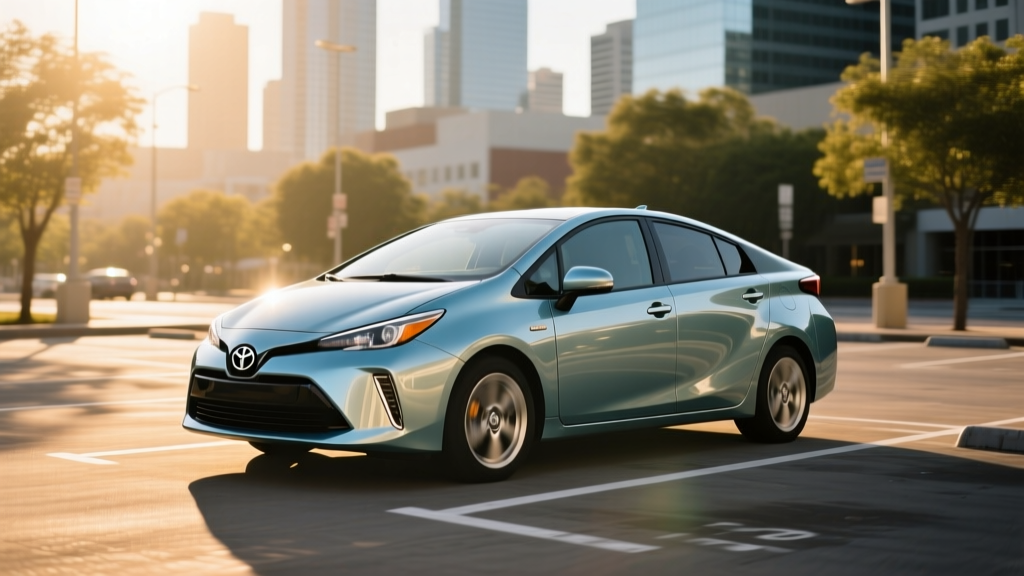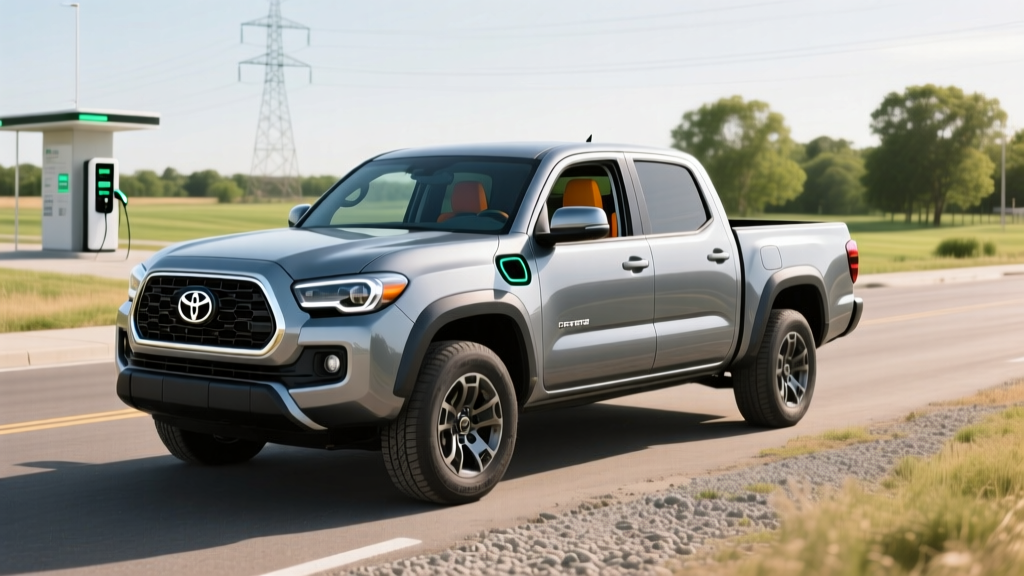
The midsize pickup segment has historically resisted electrification, but the Toyota Tacoma hybrid — officially branded the i-FORCE MAX — changes that calculus for truck buyers who want torque and efficiency without plugging in. Now in its second model year on the current TNGA-F platform, the 2026 Toyota Tacoma hybrid pickup pairs a turbocharged four-cylinder with an electric motor to deliver V6-rivaling power with four-cylinder fuel consumption.
This guide breaks down exactly what the i-FORCE MAX powertrain delivers in EPA-rated MPG, real-world efficiency, towing capability, battery longevity, and ownership cost — so you can decide whether this conventional hybrid (HEV) fits your needs or if a plug-in alternative or full EV truck makes more sense.
What the i-FORCE MAX Powertrain Actually Is
The 2026 Tacoma hybrid uses Toyota's i-FORCE MAX powertrain, a parallel hybrid system that sandwiches a 34 kW (46 hp) electric motor between a 2.4-liter turbocharged inline-four engine and an 8-speed automatic transmission. Unlike a plug-in hybrid (PHEV), this system has no charging port and no electric-only driving mode. It is a self-charging conventional hybrid (HEV) that recovers energy through regenerative braking and engine-driven generation.
HEV vs PHEV — Where the Tacoma Hybrid Fits
| Feature | Tacoma i-FORCE MAX (HEV) | Typical PHEV Truck/SUV |
|---|---|---|
| Plug-in charging? | No — self-charging only | Yes — Level 1/2 charging port |
| Electric-only range | N/A (motor assists engine) | 20–45 miles typical |
| Battery size | ~1.87 kWh (NiMH) | 12–20+ kWh (lithium-ion) |
| Federal tax credit (§30D) | Not eligible | Up to $7,500 if criteria met |
| Driver behavior change | None — drive like gas | Plug in nightly for max benefit |
The i-FORCE MAX is available across multiple Tacoma trims for 2026, including TRD Sport, TRD Off-Road, Limited, and the range-topping TRD Pro and Trailhunter. It is the standard powertrain on higher trims and an available upgrade on others.
Fuel Economy: EPA Ratings and Real-World MPG
For a body-on-frame midsize truck producing 326 horsepower and 465 lb-ft of torque, the Tacoma hybrid's fuel economy is its headline advantage over non-hybrid rivals.
| Configuration | City | Highway | Combined |
|---|---|---|---|
| 4WD Double Cab (standard tires) | 24 MPG | 27 MPG | 25 MPG |
| 4WD TRD Off-Road / Sport | 23 MPG | 27 MPG | 24 MPG |
| 4WD TRD Pro / Trailhunter (AT tires) | 22 MPG | 25 MPG | 23 MPG |
| Gas-only i-FORCE 4WD (comparison) | 20 MPG | 26 MPG | 22 MPG |
Source: EPA Fuel Economy — verify exact trim at fueleconomy.gov.
Real-World MPG: What Owners Actually See
Hybrid trucks tend to exceed their EPA city rating in stop-and-go driving because regenerative braking and electric motor assist do their best work at low speeds. Expect 25–27 MPG in urban commuting — better than the sticker. Highway driving at 75–80 MPH, however, reduces the hybrid advantage, and real-world highway numbers may dip to 23–25 MPG depending on load, terrain, and speed.
Owners towing near the 6,000-pound max capacity should anticipate combined figures in the 16–18 MPG range. The hybrid system does not meaningfully improve towing economy — its benefit is in unloaded daily driving.
Performance Specs: Torque, Towing, and 0–60
| Specification | Value |
|---|---|
| Engine | 2.4L turbocharged inline-4 |
| Electric Motor | 34 kW (46 hp) integrated in bell housing |
| Combined Output | 326 hp / 465 lb-ft torque |
| Transmission | 8-speed automatic |
| Hybrid Battery | ~1.87 kWh NiMH (sealed) |
| 0–60 MPH | ~6.5 seconds (est.) |
| Max Towing Capacity | 6,000 lbs (properly equipped) |
| Max Payload | ~1,700 lbs (varies by trim) |
| Drivetrain | 4WD standard on i-FORCE MAX trims |
| Starting MSRP (i-FORCE MAX) | ~$45,995 (TRD Sport 4WD) |
The 465 lb-ft of torque arrives low in the rev range thanks to electric motor fill, which eliminates the turbo lag common in gas-only turbocharged trucks. This makes the Tacoma hybrid feel immediately responsive off the line and confident when merging onto highways — a tangible improvement over the 228 hp / 243 lb-ft of the base i-FORCE gas engine.
How the Hybrid System Works Under Load
Toyota's hybrid synergy drive in the Tacoma operates differently than in a Prius. The electric motor cannot drive the wheels independently — it assists the gasoline engine and enables seamless stop/start, torque fill during turbo spool-up, and regenerative braking energy recovery. The ~1.87 kWh nickel-metal hydride (NiMH) battery is compact, mounted under the rear seat, and does not intrude on bed space or ground clearance.
This is a deliberate engineering choice: Toyota prioritized ruggedness and packaging over electric-only capability. If you need electric-only driving, a PHEV or BEV is the answer — but neither currently exists in the midsize pickup segment with comparable off-road capability.
Reliability, Battery Warranty, and Replacement Cost
Toyota Hybrid Battery Warranty
Coverage: 10 years / 150,000 miles (whichever comes first)
What's covered: Hybrid battery pack, hybrid control module, and related hybrid system components
Transferable: Yes — warranty transfers to subsequent owners
Additional: Standard powertrain warranty is 5 years / 60,000 miles; basic bumper-to-bumper is 3 years / 36,000 miles
Toyota's hybrid reliability track record is among the strongest in the industry. The Prius, Camry Hybrid, and RAV4 Hybrid have demonstrated hybrid battery lifespans routinely exceeding 200,000 miles with minimal degradation. The Tacoma's NiMH pack is less energy-dense than lithium-ion but is proven technology with excellent thermal stability — a key advantage for a truck that may see extreme temperatures and heavy loads.
Battery Replacement Cost
Should the hybrid battery require replacement outside of warranty, expect a cost between $3,000 and $5,000 for a new OEM pack installed at a Toyota dealer. Refurbished or aftermarket NiMH packs may reduce this to $1,500–$2,500. Given the 10-year/150,000-mile warranty and Toyota's hybrid longevity history, out-of-pocket battery replacement is statistically unlikely for most original owners.
Pricing, Trims, and Tax Credit Eligibility
The 2026 Toyota Tacoma i-FORCE MAX is available on the following trims (4WD Double Cab / 5-foot bed unless noted):
- TRD Sport: ~$45,995 MSRP
- TRD Off-Road: ~$47,295 MSRP
- Limited: ~$52,095 MSRP
- TRD Pro: ~$65,230 MSRP
- Trailhunter: ~$63,000 MSRP
Pricing reflects manufacturer MSRP before destination charges. Verify current pricing at Toyota.com.
Does the Tacoma Hybrid Qualify for a Federal Tax Credit?
No. The Tacoma i-FORCE MAX is a conventional hybrid (HEV), not a plug-in electric vehicle. Under IRS §30D Clean Vehicle Credit rules, only battery electric vehicles (BEVs) and plug-in hybrids (PHEVs) with battery capacities of at least 7 kWh qualify for the federal tax credit of up to $7,500. The Tacoma's ~1.87 kWh NiMH pack does not meet this threshold.
Some states and municipalities offer separate incentives for conventional hybrids — check your state energy office or local utility for current programs. However, no federal purchase incentive applies.
Who Should Buy the Tacoma Hybrid vs a Gas, PHEV, or EV Truck
Pros
- 465 lb-ft torque with zero turbo lag off the line
- 3–5 MPG improvement over gas-only Tacoma in daily driving
- No plug-in charging required — zero behavior change
- 10-year / 150,000-mile hybrid battery warranty
- Full TRD off-road capability retained (ground clearance, locking diff)
- Seamless stop/start — no engine shudder at lights
Cons
- No electric-only driving mode
- No federal tax credit eligibility
- ~$3,000–$4,000 premium over equivalent gas-only trims
- Highway MPG advantage shrinks at sustained 75+ MPH
- Towing economy largely unchanged vs gas model
- Hybrid battery adds minor weight (offset by torque gains)
Decision Framework: Is the Tacoma Hybrid Right for You?
Choose the Tacoma i-FORCE MAX hybrid if: You want a midsize truck with strong low-end torque for daily driving, commuting, and weekend adventures, and you want better fuel economy without changing your habits. You don't have access to home or workplace charging. You value Toyota's long-term reliability and hybrid warranty coverage.
Choose the gas-only Tacoma i-FORCE if: You're on a tighter budget and the $3,000+ hybrid premium doesn't justify the MPG savings at your annual mileage (roughly 12,000 miles/year or less). You primarily tow heavy loads where the hybrid advantage disappears.
Consider a full EV truck (Rivian R1T, Ford F-150 Lightning, Chevy Silverado EV) if: You have reliable home Level 2 charging, your daily driving is under 250 miles, you want zero tailpipe emissions, and you qualify for the $7,500 federal tax credit that can offset the higher EV purchase price.
Wait for a PHEV truck if: You want 25–40 miles of electric-only commuting with a gas engine for longer hauls. As of 2026, no midsize PHEV pickup is available in the US market, though several full-size PHEV concepts have been announced.
Ownership Cost: 5-Year Fuel Savings vs Gas-Only Tacoma
The hybrid premium pays for itself through fuel savings — but the timeline depends on your driving pattern. Here's a realistic 5-year comparison assuming 15,000 miles/year, $3.50/gallon regular unleaded, and a mix of city/highway driving:
| Metric | Gas i-FORCE (22 MPG) | Hybrid i-FORCE MAX (25 MPG) |
|---|---|---|
| Annual fuel (15k mi) | 682 gallons | 600 gallons |
| Annual fuel cost | $2,387 | $2,100 |
| 5-year fuel cost | $11,935 | $10,500 |
| 5-year fuel savings (hybrid) | ~$1,435 | |
At this mileage, the hybrid saves roughly $1,435 over five years — not enough to fully offset the trim premium alone. However, the hybrid also delivers meaningfully more power (326 hp vs 228 hp), smoother stop/start behavior, and stronger resale value. For high-mileage commuters doing 20,000+ miles annually, the fuel savings climb to $2,000+ over five years, making the payback more compelling.
Frequently Asked Questions
How many MPG does the Toyota Tacoma hybrid get?
The 2026 Tacoma i-FORCE MAX is EPA-rated at 23–25 MPG combined depending on trim and tire selection (24 city / 27 highway for the TRD Sport 4WD). In real-world city driving, owners frequently report 25–27 MPG thanks to regenerative braking. Highway-only driving at high speeds may yield 23–25 MPG. Towing reduces economy to the mid-teens.
Can the Tacoma hybrid drive on electric power alone?
No. The i-FORCE MAX is a conventional hybrid (HEV), not a plug-in hybrid. The electric motor assists the gasoline engine but cannot independently propel the truck. There is no EV mode and no charging port. If electric-only driving is a priority, you would need a PHEV or BEV — neither of which is currently offered in the midsize pickup segment.
Is the Tacoma hybrid reliable, and what does battery replacement cost?
Toyota's hybrid systems have an extensive reliability track record spanning over 25 years (since the original Prius). The Tacoma's NiMH hybrid battery is covered by a 10-year / 150,000-mile warranty. Out-of-warranty replacement, while statistically rare, would cost approximately $3,000–$5,000 for a new OEM pack. Toyota's hybrid components are among the most proven in the industry.
Does the Tacoma hybrid qualify for any federal tax credit?
No. The IRS §30D Clean Vehicle Credit applies only to plug-in electric vehicles (BEVs and PHEVs) with battery capacities of at least 7 kWh. The Tacoma i-FORCE MAX's ~1.87 kWh NiMH battery does not qualify. Check with your state energy office for any local hybrid incentives, which vary by jurisdiction.
How does the Tacoma hybrid compare to the Ford Maverick Hybrid?
The Ford Maverick Hybrid is a smaller, unibody compact truck rated at approximately 37–42 MPG combined (FWD) — significantly more efficient but with less towing capacity (~2,000 lbs vs 6,000 lbs), less ground clearance, and no serious off-road capability. The Tacoma hybrid is the choice for buyers who need body-on-frame durability, 4WD, and towing; the Maverick Hybrid wins for urban commuters who occasionally need a truck bed.
Does the hybrid system affect off-road capability?
No. The i-FORCE MAX system adds minimal weight and does not reduce ground clearance, approach/departure angles, or suspension travel. TRD Off-Road and TRD Pro trims retain all off-road hardware including locking rear differential, multi-terrain select, and crawl control. The instant electric torque fill can actually improve low-speed rock crawling response.