Quick Verdict: The Sienna Finally Gets a Plug
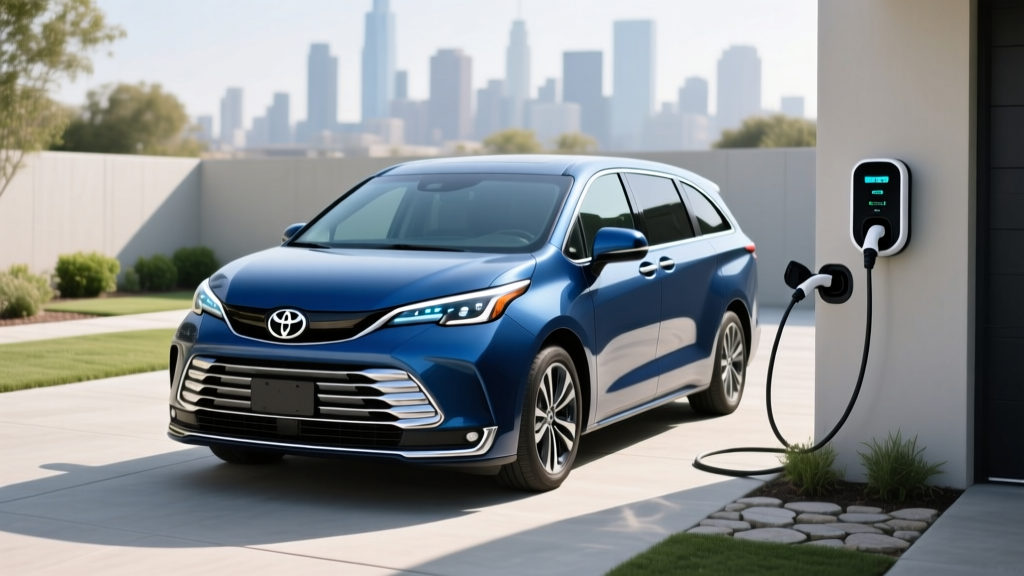
For years, the Toyota Sienna has been the only minivan in America that's a full hybrid standard — no gas-only option. But hybrid purists and plug-in seekers have been asking the same question: when will Toyota give the Sienna a plug? The answer arrived with the 2026 Toyota Sienna PHEV, a plug-in hybrid variant that layers a larger battery and electric-only driving onto the proven fourth-generation Sienna platform.
If you've been searching for a Sienna plug-in hybrid, this is the first factory-built option that doesn't require aftermarket conversion. It targets families who want school-run and grocery-getter trips on pure electricity, with the gas engine standing by for road trips — eliminating the range anxiety that keeps many minivan buyers from going full EV.
Here's exactly what the 2026 Sienna PHEV delivers in range, efficiency, powertrain, pricing, and tax credit eligibility — and how it stacks up against the conventional Sienna HEV, the Chrysler Pacifica PHEV, and full-electric alternatives.
HEV vs. PHEV: What's the Difference in the Sienna Lineup?
Toyota now offers the Sienna in two electrified flavors. Understanding the distinction is critical before you head to the dealer.
Conventional Hybrid (Sienna HEV)
The standard Sienna hybrid uses a 1.7 kWh nickel-metal hydride (NiMH) traction battery that charges itself through regenerative braking and the gasoline engine. You never plug it in. It operates as a traditional hybrid — the electric motor assists the engine, enables brief low-speed electric creep, and recaptures energy during braking. Think of it as a gas car that's dramatically more efficient.
Plug-In Hybrid (Sienna PHEV)
The 2026 Sienna PHEV uses a significantly larger 18.1 kWh lithium-ion battery pack paired with a more powerful electric motor. You plug it in (Level 1 or Level 2) to charge the battery, giving you a meaningful electric-only driving range before the gas engine kicks in. Once the battery depletes, it operates exactly like the conventional hybrid.
The practical upshot: if most of your daily driving is under 40 miles and you can charge at home, the PHEV lets you burn zero gasoline on typical days. If you can't charge at home, the conventional HEV is the smarter buy — you'll get excellent MPG without any plug-in infrastructure.
Fuel Economy: EPA MPG and Electric-Only Range
The numbers that matter most to minivan buyers:
| Metric | Sienna PHEV (2026) | Sienna HEV (2026) | Chrysler Pacifica PHEV |
|---|---|---|---|
| EPA Combined MPG (hybrid mode) | 36 MPG | 36 MPG | 30 MPG |
| EPA City MPG (hybrid mode) | 36 MPG | 36 MPG | 29 MPG |
| EPA Highway MPG (hybrid mode) | 36 MPG | 36 MPG | 30 MPG |
| Electric-Only Range | 42 miles | N/A | 32 miles |
| Combined MPGe (electric mode) | 88 MPGe | N/A | 82 MPGe |
| Total Range (electric + gas) | ~630 miles | ~630 miles | ~520 miles |
| Fuel Tank Capacity | 17.9 gal | 17.9 gal | 16.5 gal |
Real-World MPG Note: Toyota's hybrid system historically meets or slightly exceeds EPA city estimates in real-world driving thanks to aggressive regenerative braking in stop-and-go traffic. Highway MPG may dip 2-4 MPG below the sticker at sustained 75+ mph speeds. In electric-only mode, expect the 42-mile range to drop to approximately 34-37 miles in cold weather (below 40°F) or at sustained highway speeds, consistent with typical PHEV battery behavior. Source: fueleconomy.gov.
Powertrain, Battery, and Charging Specs
The Sienna PHEV pairs Toyota's familiar 2.5-liter four-cylinder Atkinson-cycle engine with a more potent electric motor system than the standard hybrid.
| Specification | 2026 Sienna PHEV |
|---|---|
| Combined System Horsepower | 245 hp |
| Engine | 2.5L 4-cyl Atkinson-cycle |
| Engine Horsepower | 189 hp |
| Electric Motor Output | 134 kW (180 hp) |
| Battery Chemistry | Lithium-ion (NMC) |
| Battery Capacity | 18.1 kWh (total) / ~14.5 kWh usable |
| Drivetrain | FWD standard / AWD available |
| Transmission | eCVT (planetary gearset) |
| 0-60 mph | ~7.4 seconds |
| Max EV-Only Speed | 84 mph |
| DC Fast Charging | Not available |
| Level 2 Charge Time (240V, 3.3 kW) | ~4.5 hours (0-100%) |
| Level 1 Charge Time (120V, 1.4 kW) | ~11 hours (0-100%) |
Charging Reality Check
The Sienna PHEV charges exclusively via AC — Level 1 (standard 120V household outlet) or Level 2 (240V, like a dryer outlet or dedicated home charger). There is no DC fast-charging capability. This is standard for most PHEVs in this class; the battery is small enough that overnight Level 1 charging or a few hours on Level 2 replenishes it fully.
At 3.3 kW onboard charging speed, a Level 2 home charger adds roughly 12-14 miles of electric range per hour of charging. Most PHEV owners plug in overnight and wake up to a full battery every morning — no public charging required.
Pricing, Trims, and Tax Credit Eligibility
The 2026 Sienna PHEV slots into the upper portion of the Sienna lineup, reflecting its larger battery and upgraded electric drivetrain.
| Trim | MSRP (FWD) | MSRP (AWD) |
|---|---|---|
| XLE PHEV | $52,495 | $53,295 |
| Limited PHEV | $57,150 | $57,950 |
| Platinum PHEV | $61,300 | $62,100 |
For comparison, the conventional Sienna HEV starts at approximately $39,000 (LE trim) and tops out around $55,000 (Platinum), meaning the PHEV premium over a similarly trimmed HEV is roughly $6,000-$7,000.
Does the Sienna PHEV Qualify for a Federal Tax Credit?
Under current IRS §30D Clean Vehicle Credit rules for 2026, the Sienna PHEV may qualify for a partial federal tax credit of up to $3,750, depending on battery component and critical mineral sourcing compliance. Key eligibility requirements:
- MSRP cap: Vans/minivans must be under $80,000 — all Sienna PHEV trims qualify.
- Buyer income cap: AGI must not exceed $150,000 (single), $225,000 (head of household), or $300,000 (joint).
- Battery sourcing: Partial credit ($3,750) requires critical mineral OR battery component compliance; full $7,500 requires both. Toyota's supply chain currently meets one prong for most PHEV models.
- Point-of-sale transfer: Eligible buyers can transfer the credit to the dealer at purchase, reducing the sale price directly.
Always verify current eligibility with your tax professional and the IRS before purchasing. Credit rules and manufacturer sourcing compliance can change.
Reliability, Battery Warranty, and Replacement Costs
Minivan buyers plan to keep their vehicles for a decade or more, so battery longevity is a top concern.
Toyota Hybrid Battery Warranty: Toyota covers the Sienna PHEV's traction battery for 10 years or 150,000 miles (whichever comes first) in all 50 states, a significant upgrade from the earlier 8-year/100,000-mile coverage. This warranty guarantees the battery will retain sufficient capacity to function as designed; if it degrades below Toyota's threshold, replacement is covered.
How Long Will the Battery Actually Last?
Toyota's hybrid battery track record is among the best in the industry. The Prius, now in its sixth generation, routinely sees original batteries lasting 200,000+ miles. The PHEV's larger lithium-ion pack operates with a generous buffer — only about 14.5 kWh of the 18.1 kWh total is usable — which reduces stress on cells and slows degradation.
Based on data from Toyota's RAV4 Prime (a similar PHEV architecture), expect approximately 8-12% capacity loss over 10 years under normal use. That means the 42-mile electric range might drop to roughly 37-38 miles after a decade — a negligible real-world difference.
Battery Replacement Cost
If the battery does need replacement outside warranty, expect a cost between $6,000 and $9,000 including parts and labor at a Toyota dealership. Third-party hybrid battery rebuilders may offer refurbished packs for $3,500-$5,000. However, given Toyota's warranty terms and historical reliability, out-of-pocket replacement is uncommon for original owners.
Sienna PHEV vs. Pacifica PHEV vs. Full EV Minivan
The minivan segment gives electrified buyers three distinct paths. Here's how to choose:
Choose the Sienna PHEV if:
- You want 40+ miles of electric driving for daily errands with no range anxiety on road trips
- You value Toyota's reliability reputation and 10-year battery warranty
- You want AWD availability (Pacifica PHEV is FWD-only)
- Your daily driving is mostly under 45 miles and you can charge at home
Choose the Chrysler Pacifica PHEV if:
- Stow 'n Go seating flexibility is your top priority (Sienna PHEV battery eliminates second-row stow-away)
- You prefer a lower starting price (~$50,000 base)
- 32 miles of electric range is sufficient for your commute
Choose a full EV (e.g., Kia EV9, upcoming electric minivans) if:
- You have reliable home Level 2 charging and rarely drive more than 250 miles in a day
- You want zero gasoline use and minimal maintenance
- You qualify for the full $7,500 federal EV tax credit, narrowing the price gap
- You're willing to plan around DC fast charging on road trips
Choose the standard Sienna HEV if:
- You cannot charge at home (apartment, no garage, no 240V outlet)
- You want the lowest purchase price and don't need electric-only driving
- 36 MPG combined is efficient enough for your needs
Pros and Cons at a Glance
Pros
- 42-mile electric-only range covers most daily family driving
- 36 MPG in hybrid mode matches the standard Sienna — no efficiency penalty once battery depletes
- AWD available (rare in the PHEV minivan segment)
- 10-year/150,000-mile hybrid battery warranty
- Toyota Safety Sense 3.0 standard (pre-collision, lane tracing, adaptive cruise)
- No DC fast charging needed — overnight home charging is sufficient
- Proven fourth-generation Sienna platform with strong resale value
Cons
- $6,000-$7,000 premium over equivalent HEV trim
- PHEV battery pack reduces cargo flexibility (no second-row stow-away seating)
- Only 3.3 kW AC charging — slow compared to some competitors
- Partial tax credit ($3,750 likely) rather than full $7,500
- Third-row space slightly compromised vs. Pacifica
- No DC fast charging limits road-trip electric replenishment
Frequently Asked Questions
How many MPG does the Sienna plug-in hybrid get?
The 2026 Sienna PHEV gets an EPA-estimated 36 MPG combined (36 city / 36 highway) when operating in hybrid mode after the battery is depleted. In electric-only mode, it achieves 88 MPGe. In real-world city driving, Toyota hybrids frequently meet or slightly exceed their EPA city estimate due to regenerative braking efficiency.
How far can the Sienna PHEV go on electric only?
The EPA rates the 2026 Sienna PHEV at 42 miles of electric-only range. In real-world conditions — particularly cold weather below 40°F or sustained highway driving above 65 mph — expect approximately 34-38 miles. The electric motor can propel the van up to 84 mph in EV mode, so highway merging is not an issue.
Do I have to plug in the Sienna PHEV?
You don't have to — if you never plug it in, it operates as a conventional hybrid at 36 MPG, identical to the standard Sienna HEV. But to get the value from the PHEV premium, you should plug it in regularly. Most owners charge overnight on a standard 120V outlet (Level 1), which fully replenishes the battery in about 11 hours.
Is the Sienna plug-in hybrid reliable?
Toyota's hybrid systems are among the most proven in the automotive industry, with decades of data from the Prius, Camry Hybrid, and RAV4 Hybrid/Prime. The PHEV system adds complexity (larger battery, more powerful motor) but uses the same planetary eCVT architecture that has demonstrated exceptional longevity. The 10-year/150,000-mile battery warranty provides strong protection.
What does it cost to replace the Sienna PHEV battery?
Out-of-warranty replacement runs approximately $6,000-$9,000 at a dealership, or $3,500-$5,000 through a third-party hybrid specialist. However, Toyota's 10-year/150,000-mile warranty covers the battery for most owners' entire period of ownership, and Toyota PHEV batteries historically show minimal degradation (8-12% over a decade).
Does the Sienna PHEV qualify for the $7,500 federal tax credit?
Under current 2026 IRS §30D rules, the Sienna PHEV is expected to qualify for a partial credit of $3,750, subject to battery sourcing requirements. Eligibility also depends on your income (AGI caps of $150K single / $300K joint) and the vehicle's MSRP (all Sienna PHEV trims fall under the $80,000 van cap). The credit can be transferred to the dealer at point of sale. Always confirm with a tax professional and check IRS.gov for the latest sourcing compliance list.
Can the Sienna PHEV use DC fast chargers?
No. The Sienna PHEV charges exclusively via AC power — either a standard 120V household outlet (Level 1, ~11 hours for a full charge) or a 240V Level 2 charger (~4.5 hours). This is typical for PHEVs; the 18.1 kWh battery is small enough that overnight charging is practical without DC fast-charging infrastructure.
How does the Sienna PHEV compare to the Chrysler Pacifica PHEV?
The Sienna PHEV offers 10 more miles of electric range (42 vs. 32), better hybrid-mode fuel economy (36 vs. 30 MPG), AWD availability (Pacifica is FWD-only), and a longer battery warranty. The Pacifica PHEV counters with a lower starting price, Stow 'n Go second-row seating (which the Sienna's PHEV battery eliminates), and a more car-like interior layout. For buyers prioritizing efficiency and all-weather capability, the Sienna PHEV has the edge.
The Bottom Line
The 2026 Toyota Sienna PHEV fills a specific and valuable niche: families who want electric commuting without sacrificing the 600+ mile road-trip range that only a gas tank can deliver. At 42 miles of electric-only driving, it covers the daily loop for the majority of American households. When the battery runs dry, you're still driving one of the most fuel-efficient minivans ever built at 36 MPG.
The $6,000-$7,000 premium over the standard Sienna HEV pays for itself through fuel savings if you charge regularly and keep the vehicle for 5+ years — particularly with a $3,750 tax credit reducing the effective gap. If you can charge at home and your daily driving fits within that 42-mile electric envelope, the Sienna PHEV is the most practical electrified minivan on the market in 2026.