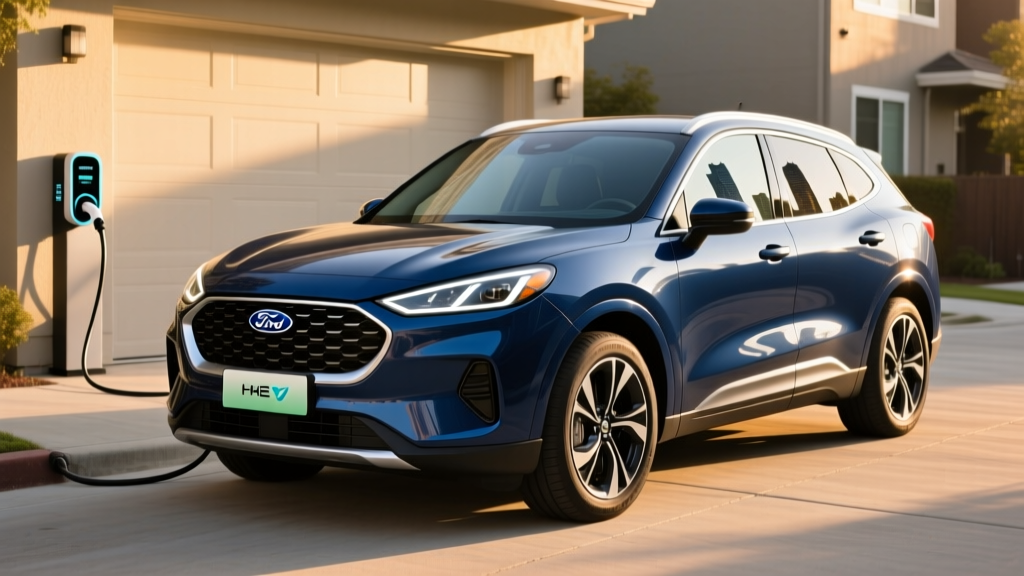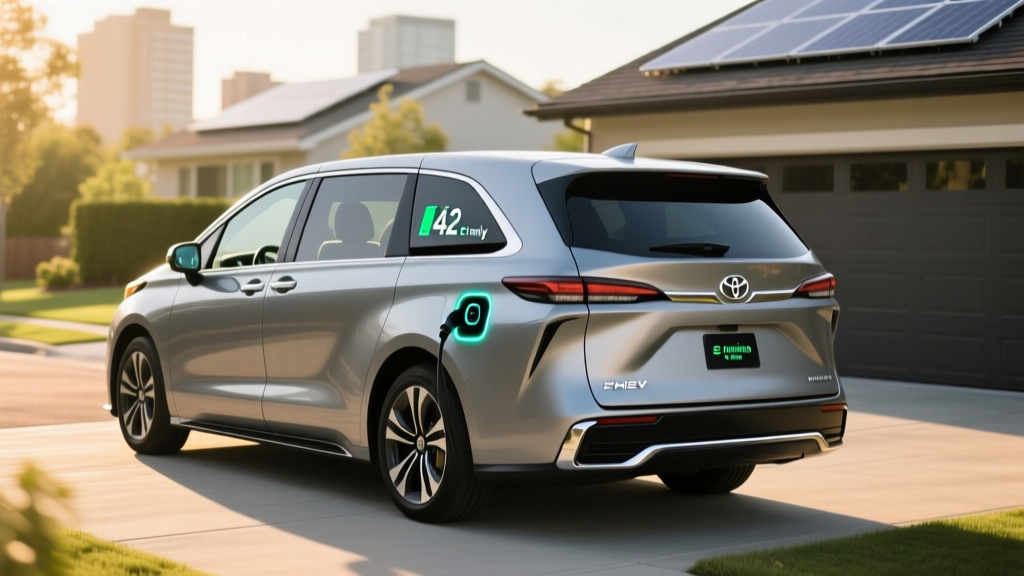
The 2026 Toyota Sienna PHEV (officially the Sienna Prime) finally bridges the gap Toyota left open when it made the standard Sienna a hybrid-only minivan. By adding a larger battery and a charge port, the Sienna PHEV lets families handle school runs, grocery trips, and daily commutes on electricity alone, while retaining the 500-plus-mile total range that made the conventional hybrid Sienna a road-trip favorite. Here is everything you need to know about real-world range, fuel economy, charging logistics, pricing, and whether the PHEV version earns its premium over the standard hybrid.
HEV vs PHEV: What Changed in the 2026 Sienna Lineup
Toyota sells two Sienna variants for 2026. Understanding the difference is critical before comparing trims or visiting a dealer.
| Attribute | Sienna HEV (Standard Hybrid) | Sienna PHEV (Prime) |
|---|---|---|
| Battery capacity | 1.6 kWh (NiMH) | 18.1 kWh (NMC lithium-ion) |
| Plug-in charging | No — self-charging via regen and engine | Yes — Level 1 and Level 2 AC |
| Electric-only range | ~1–2 miles at low speed | 36 miles (EPA) |
| EPA combined MPG (charge-sustaining) | 36 MPG | 38 MPG |
| MPGe (charge-depleting) | N/A | 84 MPGe |
| Total combined range | ~620 miles | ~550 miles |
| DC fast charging | No | No |
| Starting MSRP | $38,285 | $48,970 |
The conventional Sienna HEV never needs to be plugged in. Its small battery recharges through regenerative braking and the gasoline engine, delivering consistent fuel economy whether you start with a full tank or a nearly empty one. The Sienna PHEV, by contrast, requires regular plug-in charging to realize its electric-only range and efficiency advantage. If you never plug it in, the PHEV operates as a slightly heavier conventional hybrid and returns roughly 38 MPG — respectable, but not meaningfully better than the HEV it costs $10,000+ more to buy.
Electric-Only Range, MPGe, and Total Range
The 2026 Sienna PHEV carries an 18.1 kWh lithium-ion battery pack (NMC chemistry), of which approximately 14.5 kWh is usable for propulsion. Toyota's EPA-submitted figures rate it at 36 miles of electric-only range, with a combined 84 MPGe in charge-depleting mode.
EPA Electric-Only Range: 36 miles
Real-World Expectation: Expect 28–33 miles in mixed driving with climate control active. In cold weather (below 30°F), range can drop to 22–26 miles due to cabin heating demands and reduced battery efficiency. Highway-only driving at 70+ MPH will also reduce electric range to approximately 25–28 miles because of aerodynamic drag on a minivan's large frontal area.
Once the battery depletes to its charge-sustaining threshold (roughly 15% state of charge), the Sienna PHEV operates as a conventional hybrid and achieves an EPA-rated 38 MPG combined. Total range — combining the electric portion and the 14.5-gallon fuel tank — comes to approximately 550 miles.
Fuel Economy Breakdown: EPA and Real-World MPG
Hybrids and PHEVs often exceed their EPA city ratings in real-world stop-and-go driving, where regenerative braking recovers the most energy. Highway driving is the weak point for any minivan, PHEV or otherwise, because aerodynamic drag dominates at speed.
| Cycle | EPA Rating | Real-World Expectation |
|---|---|---|
| City | 40 MPG | 38–43 MPG (regen-heavy routes can exceed EPA) |
| Highway | 36 MPG | 33–36 MPG (70 MPH cruise) |
| Combined | 38 MPG | 36–40 MPG |
| Charge-Depleting (EV mode) | 84 MPGe | 75–84 MPGe depending on temperature and speed |
For context, the non-hybrid minivan segment (Kia Carnival, Chrysler Pacifica gas) averages 22–24 MPG combined. Even without ever plugging in, the Sienna PHEV's 38 MPG combined saves roughly $800–$1,100 annually in fuel compared to a 23 MPG gasoline minivan, assuming 15,000 miles driven and $3.40/gallon fuel. When charged daily, the savings grow substantially because the first 30+ miles each day use no gasoline.
Powertrain Specs: Horsepower, Engine, and Motors
The 2026 Sienna PHEV pairs Toyota's fifth-generation hybrid system with a plug-in-capable battery and more powerful electric motors than the standard HEV.
| Engine | 2.5L inline-4 Atkinson cycle |
| Engine output | 189 hp / 163 lb-ft torque |
| Front electric motor | 134 kW (180 hp) |
| Rear electric motor (AWD models) | 40 kW (54 hp) |
| Combined system horsepower | 260 hp (FWD) / 302 hp (AWD) |
| 0–60 MPH | 7.1 sec (AWD) |
| Drivetrain | FWD standard, AWD available (electronic rear axle) |
| Transmission | eCVT (planetary gearset) |
| Battery chemistry | NMC (nickel manganese cobalt) lithium-ion |
| Battery capacity | 18.1 kWh total / ~14.5 kWh usable |
| Towing capacity | 3,500 lbs |
The AWD variant uses a separate rear electric motor rather than a mechanical driveshaft, which means all-wheel-drive engagement is on-demand and electrically controlled. This system provides confident traction in rain and light snow without the efficiency penalty of a traditional mechanical AWD system. The 302 combined horsepower in AWD trim is genuinely brisk for a minivan, making highway merging and passing effortless even when fully loaded with passengers and cargo.
Charging: Level 1, Level 2, and What You Cannot Do
The Sienna PHEV charges exclusively via AC. There is no DC fast-charging port — a deliberate engineering decision that keeps weight and cost down. For a vehicle with 36 miles of range, DC fast charging would add complexity for minimal benefit; most owners will charge overnight at home.
| Level | Voltage / Current | Power (kW) | 0–100% Time | Typical Use Case |
|---|---|---|---|---|
| Level 1 | 120V / 12A | 1.4 kW | ~11 hours | Overnight from standard outlet |
| Level 2 | 240V / 16A | 3.3 kW | ~4.5 hours | Home wallbox or public AC station |
| Level 2 (faster unit) | 240V / 32A | 3.3 kW (vehicle-limited) | ~4.5 hours | Vehicle caps at 3.3 kW onboard charger |
The onboard charger is limited to 3.3 kW, meaning even a 48-amp Level 2 home station will not charge the Sienna PHEV any faster than a 16-amp unit. This is worth knowing before investing in expensive high-amperage charging equipment — a basic 16-amp, 240V Level 2 station (typically $200–$350 for the hardware) is all you need.
Level 1 charging from a standard 120V household outlet is viable for the Sienna PHEV's small battery. An 11-hour overnight session will fully replenish the pack, which means many owners can skip Level 2 installation entirely if they have garage or driveway access to a standard outlet. This is a significant practical advantage over full EVs with 70+ kWh batteries that would take days on Level 1.
Pricing, Trims, and Tax Credit Eligibility
The 2026 Sienna PHEV is offered in three trims, all positioned above the conventional Sienna's XSE and Limited grades.
| Trim | Drivetrain | MSRP | Destination |
|---|---|---|---|
| SE Prime | FWD | $48,970 | $1,450 |
| XSE Prime | FWD or AWD | $52,300 | $1,450 |
| Limited Prime | AWD | $57,850 | $1,450 |
Federal §30D Tax Credit — PHEV Eligibility Checklist (2026 rules):
- Vehicle MSRP cap: Vans/minivans must be at or below $80,000. All Sienna PHEV trims qualify.
- Buyer income cap: Adjusted gross income must not exceed $150,000 (single), $225,000 (head of household), or $300,000 (joint). Source: IRS §30D.
- Battery sourcing: A percentage of critical minerals and battery components must be sourced from the US or free-trade-agreement countries. Toyota's supply chain has evolved, but eligibility for the full $7,500 vs. a partial $3,750 credit varies by model year and production batch. Verify the specific VIN on the IRS qualifying vehicle list before purchase.
- Point-of-sale transfer: The credit can be transferred to the dealer at purchase, reducing your out-of-pocket cost immediately rather than waiting for tax filing.
- PHEV battery requirement: The vehicle must have at least 7 kWh of battery capacity. The Sienna PHEV's 18.1 kWh pack clears this threshold easily.
State incentives vary widely. California's CVRP, Colorado's state credit, and other programs may stack additional savings. Check your state energy office for current programs.
The Sienna PHEV's pricing premium over the standard Sienna HEV is approximately $10,000–$12,000 depending on trim. If the full $7,500 federal credit applies, the effective premium narrows to roughly $2,500–$4,500, which daily charging can recoup in fuel savings within 2–4 years depending on your electricity rate and driving pattern.
Battery Warranty, Reliability, and Replacement Cost
Hybrid/PHEV Battery Warranty: 10 years / 150,000 miles (whichever comes first) in all 50 states, covering defects and capacity loss below 70% of original capacity. This applies to both the 18.1 kWh traction battery and the hybrid system components (inverter, motors, control unit).
Powertrain Warranty: 5 years / 60,000 miles.
New Vehicle Limited Warranty: 3 years / 36,000 miles.
Toyota's hybrid reliability record is the strongest in the industry, built on 25+ years of Prius data. The PHEV battery uses NMC chemistry managed by a sophisticated thermal system that avoids the extreme states of charge most damaging to lithium-ion longevity. Toyota limits the usable window to roughly 15%–95% state of charge, which significantly slows degradation.
Based on Toyota's track record with the RAV4 Prime (which uses a similar architecture), expect battery degradation of approximately 8–12% over the first 100,000 miles. Most Toyota hybrid batteries outlast the vehicles they are installed in. If replacement is eventually needed outside of warranty, current out-of-pocket cost for a Sienna PHEV battery pack is estimated at $4,000–$6,500 including labor, though this figure will likely decrease as the supply chain matures and refurbished packs become available.
According to IIHS, the Sienna carries top safety ratings, and Toyota Safety Sense 3.0 (pre-collision, lane tracing, adaptive cruise, road sign assist) is standard across all trims.
Who Should Choose the Sienna PHEV vs. a Full EV or Gas Minivan
Choose the Sienna PHEV if:
- Your daily driving is under 40 miles and you can charge at home (even a 120V outlet works).
- You take regular road trips exceeding 200 miles and do not want to plan around DC fast-charging stops.
- You want three-row minivan space with the lowest possible fuel cost on weekdays and no range anxiety on weekends.
- You qualify for the federal PHEV tax credit, narrowing the price gap with the standard hybrid.
Choose the standard Sienna HEV if:
- You cannot charge at home (apartment, street parking, no garage outlet).
- You want the lowest purchase price and are content with 36 MPG combined without plugging in.
- Your daily mileage varies widely and you prefer simplicity — no charging cables, no battery management.
Choose a full EV (e.g., Kia EV9, Tesla Model X) if:
- You have reliable Level 2 home charging and access to DC fast-charging corridors.
- You want zero tailpipe emissions and the lowest per-mile energy cost.
- Your daily driving is predictable and within 250–300 miles between charges.
Pros
- 36 miles electric-only covers most family daily driving
- Level 1 (120V) charging is practical — no Level 2 install required
- 38 MPG combined even without charging is class-leading for a minivan
- AWD available with electric rear axle
- 10-year / 150,000-mile hybrid battery warranty
- Eligible for up to $7,500 federal tax credit (verify VIN sourcing)
Cons
- $10,000+ premium over standard Sienna HEV
- No DC fast charging — limits on-the-go replenishment
- 3.3 kW onboard charger caps Level 2 speed
- Electric range drops to ~22–26 miles in freezing weather
- PHEV battery reduces cargo underfloor storage vs. HEV
- Full credit eligibility depends on battery sourcing — not guaranteed
Frequently Asked Questions
How many MPG does the Toyota Sienna PHEV get?
In charge-sustaining (hybrid) mode after the battery depletes, the 2026 Sienna PHEV achieves an EPA-rated 40 MPG city, 36 MPG highway, and 38 MPG combined. In charge-depleting (electric-first) mode, it earns 84 MPGe. Real-world testing shows the city figure often exceeds 40 MPG on regenerative-heavy routes, while sustained highway driving at 70+ MPH typically returns 33–36 MPG.
How far can the Sienna PHEV go on electric only?
The EPA rates the 2026 Sienna PHEV at 36 miles of electric-only range. Real-world range is typically 28–33 miles with climate control running, and can drop to 22–26 miles in freezing temperatures. For a family with a sub-30-mile daily commute, this means zero gasoline consumption on most weekdays.
Does the Toyota Sienna PHEV qualify for a tax credit?
It can qualify for up to $7,500 under the federal §30D new clean vehicle credit, subject to buyer income limits ($150K single / $300K joint), the $80,000 MSRP cap for vans (all trims pass), and battery critical-mineral and component sourcing requirements. The credit can be transferred to the dealer at point of sale. Always verify your specific VIN on the IRS qualifying vehicles list before finalizing a purchase.
Is the Sienna PHEV battery reliable and what does replacement cost?
Toyota's hybrid battery reliability is among the best in the industry, backed by a 10-year/150,000-mile warranty covering capacity loss below 70%. Based on data from the RAV4 Prime and Prius Prime, expect 8–12% degradation over 100,000 miles. Out-of-warranty replacement is estimated at $4,000–$6,500, though most Toyota hybrid batteries last the life of the vehicle.
Do I need a Level 2 charger for the Sienna PHEV?
No. The Sienna PHEV's 18.1 kWh battery charges fully in about 11 hours on a standard 120V household outlet (Level 1). For most owners, plugging in overnight at home is sufficient to wake up with a full 36-mile electric range. A Level 2 station (240V) reduces charging time to about 4.5 hours, but because the onboard charger is limited to 3.3 kW, even an inexpensive 16-amp Level 2 unit is sufficient — no need for a high-amperage station.
Sienna PHEV vs. a full EV minivan — which makes more sense?
If you can charge at home and your daily driving stays under 35 miles, the Sienna PHEV offers near-EV daily operating costs with the freedom to take 500+ mile road trips without charging stops. A full EV minivan (like the Kia EV9, though larger and more expensive) eliminates gasoline entirely but requires DC fast-charging planning on long trips and carries a higher purchase price. The PHEV is the pragmatic bridge for families not ready to commit to full electric.
Sources: EPA Fuel Economy (fueleconomy.gov), IRS §30D Clean Vehicle Credit, Toyota Motor North America specifications.