Quick Verdict: The RAV4 Hybrid Lineup at a Glance
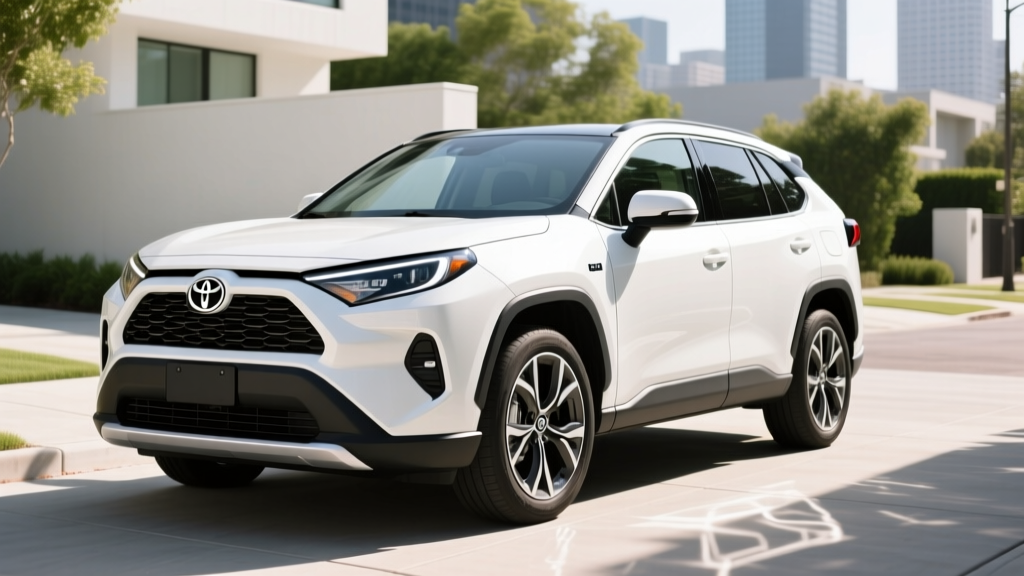
The Toyota RAV4 Hybrid remains one of the most pragmatic electrified vehicles on the market — no plug required, no range anxiety, and fuel economy that routinely beats its EPA estimates in real-world city driving. For 2026, Toyota continues to offer the RAV4 Hybrid across multiple trim levels, alongside the plug-in hybrid variant (now badged as the RAV4 Plug-In Hybrid, formerly Prime). Understanding the differences between each trim — and between the conventional hybrid (HEV) and the plug-in (PHEV) — is essential before you visit a dealer.
This guide breaks down every 2026 Toyota RAV4 Hybrid trim level with exact EPA MPG figures, pricing, powertrain output, and the real-world ownership insights that spec sheets leave out.
HEV vs. PHEV: What's the Actual Difference?
Before diving into trim levels, it's critical to understand that Toyota sells two distinct electrified RAV4 models. Conflating them is the single most common buyer mistake.
| Feature | RAV4 Hybrid (HEV) | RAV4 Plug-In Hybrid (PHEV) |
|---|---|---|
| Plug-in charging required? | No — self-charging via regen and engine | Yes — plug in for electric-only driving |
| Battery size | ~1.6 kWh (small, buffers energy) | 18.1 kWh usable (lithium-ion) |
| Electric-only range | Very short (under 1 mile at low speed) | EPA-est. 42 miles |
| Combined horsepower | 219 hp | 302 hp |
| EPA combined MPG (hybrid mode) | 39–41 MPG combined | 94 MPGe (EV mode) / 38 MPG (hybrid mode) |
| DC fast charging? | N/A | No — Level 2 AC only |
| Federal tax credit (§30D) | Not eligible | Eligible — up to $7,500 (rules apply) |
| Starting MSRP (2026) | ~$33,000 | ~$45,000 |
The HEV is a conventional hybrid: it captures energy from braking and the engine to charge a small battery, which assists acceleration and enables low-speed electric movement. You never plug it in. The PHEV has a much larger battery that provides meaningful electric-only range for daily commuting, and you plug it in to recharge — but it also operates as a regular hybrid once the battery is depleted.
2026 RAV4 Hybrid (HEV) Trim Levels: Specs and Pricing
The conventional RAV4 Hybrid is offered across a broad trim ladder. All trims share the same core powertrain: a 2.5-liter four-cylinder engine paired with Toyota's Hybrid Synergy Drive system and electronic all-wheel drive (AWD-i) as standard. Combined output is 219 horsepower.
| Trim | MSRP (est.) | EPA City | EPA Hwy | EPA Combined | Key Features |
|---|---|---|---|---|---|
| LE | $33,000 | 41 MPG | 38 MPG | 40 MPG | Toyota Safety Sense 3.0, 8" touchscreen, AWD-i |
| XLE | $35,000 | 41 MPG | 38 MPG | 40 MPG | Blind-spot monitor, dual-zone climate, smart key |
| XLE Premium | $37,500 | 41 MPG | 38 MPG | 40 MPG | SofTex seats, moonroof, 10-way power driver seat |
| SE | $38,500 | 40 MPG | 37 MPG | 39 MPG | Sport-tuned suspension, 19" wheels, paddle shifters |
| XSE | $39,500 | 40 MPG | 37 MPG | 39 MPG | Two-tone paint, sport seats, 9" touchscreen |
| Woodland Edition | $38,000 | 40 MPG | 37 MPG | 39 MPG | All-terrain tires, roof rails, TRD-tuned suspension |
| Limited | $42,500 | 41 MPG | 38 MPG | 40 MPG | Leather, panoramic roof, JBL audio, digital cluster |
Note: Pricing is estimated MSRP including destination. Actual dealer pricing may vary. Source: Toyota Motor Corporation.
The trims equipped with 18-inch or 19-inch wheels (SE, XSE, Woodland Edition) see a slight 1–2 MPG penalty on the highway cycle due to increased rolling resistance and weight. If maximizing fuel economy is your priority, the LE through XLE Premium trims on 17-inch wheels deliver the best numbers.
Real-World MPG: What Owners Actually Report
Toyota's hybrid system excels in city driving, where frequent stops allow regenerative braking to recapture energy and the electric motor handles low-speed propulsion. The EPA city rating of 41 MPG is often exceeded in real-world urban commuting — many owners on fueleconomy.gov report 42–45 MPG in stop-and-go traffic.
Real-World MPG Expectations (HEV):
- City driving: 40–45 MPG (often exceeds EPA 41 MPG)
- Highway cruising (70–75 mph): 34–37 MPG (below EPA 38 MPG)
- Mixed commute: 38–41 MPG (aligns with EPA 40 MPG combined)
- Cold weather (below 32°F): Expect a 5–10% reduction (36–38 MPG combined) due to engine running more for cabin heat
Highway driving is where hybrids lose their advantage — at sustained speeds, the gasoline engine does most of the work, and aerodynamic drag dominates. If your commute is 90% highway, the real-world benefit over an efficient gas crossover narrows. But for suburban and urban drivers, the RAV4 Hybrid delivers tangible fuel savings.
RAV4 Plug-In Hybrid: Trims, Electric Range, and Charging
For buyers who want electric-only commuting without fully committing to a BEV, the RAV4 Plug-In Hybrid (PHEV) offers a compelling middle ground. It shares the 2.5L engine but pairs it with a more powerful electric motor system and an 18.1 kWh lithium-ion battery pack, producing a combined 302 horsepower and a 0–60 mph time of approximately 5.7 seconds.
| PHEV Trim | MSRP (est.) | EV Range (EPA) | MPGe (EV) | MPG (Hybrid) | Total Range |
|---|---|---|---|---|---|
| SE | $45,000 | 42 miles | 94 MPGe | 38 MPG combined | ~480 miles |
| XSE | $47,500 | 42 miles | 94 MPGe | 38 MPG combined | ~480 miles |
| XSE Premium | $51,000 | 42 miles | 94 MPGe | 38 MPG combined | ~480 miles |
Charging the PHEV:
- Level 1 (120V household outlet): ~12 hours from empty to full — sufficient for overnight if your daily drive is short.
- Level 2 (240V, 3.3 kW onboard charger): ~4.5 hours from empty to full.
- DC fast charging: Not supported. The RAV4 PHEV uses a J1772 connector for AC charging only.
The lack of DC fast charging is a notable limitation for road trips — you'll be running on the hybrid powertrain (38 MPG) for long highway drives, which is still efficient but eliminates the EV advantage beyond the initial 42 miles.
Federal Tax Credit: Does the RAV4 Qualify?
The conventional RAV4 Hybrid (HEV) does not qualify for the federal §30D clean vehicle tax credit. It is not a plug-in vehicle and does not meet the battery-capacity threshold.
The RAV4 Plug-In Hybrid (PHEV) may qualify for up to $7,500 under IRS §30D, but eligibility depends on several conditions that change periodically:
- MSRP cap: SUVs must be at or below $80,000 MSRP — all RAV4 PHEV trims qualify.
- Buyer income cap: Modified adjusted gross income must not exceed $150,000 (single), $225,000 (head of household), or $300,000 (joint). Check current-year limits at IRS.gov.
- Battery sourcing: The credit is split into two halves — $3,750 for critical minerals and $3,750 for battery component manufacturing. Sourcing requirements tighten annually. Verify current-year compliance on the DOE's fueleconomy.gov tax credit page.
- Point-of-sale transfer: As of 2024, buyers can transfer the credit to the dealer at purchase for an immediate price reduction rather than claiming it on their tax return.
Tax rules are complex and subject to change. Consult a tax professional before relying on credit eligibility for purchase decisions.
Battery Warranty, Reliability, and Replacement Costs
Hybrid battery longevity is the top concern for buyers — and it's where Toyota's track record provides genuine reassurance. The RAV4 Hybrid's nickel-metal hydride (HEV) and lithium-ion (PHEV) battery packs are covered by Toyota's hybrid battery warranty:
Toyota Hybrid Battery Warranty:
- Coverage: 10 years / 150,000 miles (whichever comes first) for 2020 and newer models
- What's covered: Defects and capacity loss below a defined threshold
- Hybrid system components: Also covered under the 8-year/100,000-mile hybrid system warranty (inverter, control module, etc.)
Replacement cost if out of warranty:
- RAV4 Hybrid (HEV) battery: Approximately $3,000–$4,500 for the battery pack plus labor. The smaller NiMH pack is less expensive than a full EV battery.
- RAV4 PHEV battery: Approximately $6,000–$9,000 due to the larger 18.1 kWh lithium-ion pack.
In practice, Toyota hybrid batteries have demonstrated exceptional longevity. Tens of thousands of Prius and RAV4 Hybrid owners report well over 150,000 miles on original battery packs with minimal degradation. The hybrid system's battery management — never fully charging or fully depleting the pack — significantly extends cycle life. Third-party reliability data from sources like Consumer Reports consistently ranks the RAV4 Hybrid among the most reliable compact SUVs.
Who Should Choose the RAV4 Hybrid, PHEV, or a Full EV?
Choose the RAV4 Hybrid (HEV) if:
- You cannot charge at home or work (no garage, street parking, apartment living)
- You want a lower purchase price ($33K–$42K) and don't want to think about charging
- Your daily driving is 30–60 miles with a mix of city and highway
- You value proven reliability and low maintenance costs
Choose the RAV4 Plug-In Hybrid (PHEV) if:
- You can install a Level 2 charger at home and your commute is under 42 miles round-trip
- You want to drive on electricity daily but need a gas engine for road trips
- You qualify for the federal tax credit, effectively reducing the price gap with the HEV
- You want 302 hp and significantly quicker acceleration
Choose a full EV (e.g., Tesla Model Y, Hyundai Ioniq 5) if:
- You have reliable home Level 2 charging
- Your daily driving is under 250 miles and you're comfortable planning DC fast-charge stops on road trips
- You want zero tailpipe emissions and the lowest per-mile fuel cost
- You're ready to accept cold-weather range loss (15–30%) and charging-curve planning
Pros and Cons
RAV4 Hybrid (HEV) Pros
- No plug-in charging required — works with existing habits
- Real-world city MPG often exceeds EPA estimates
- AWD-i standard on all trims
- Strong reliability track record and 10-year battery warranty
- Competitive pricing starting around $33,000
RAV4 Hybrid (HEV) Cons
- No federal tax credit eligibility
- Highway MPG drops below EPA sticker at sustained speeds
- 219 hp is adequate but not quick (0–60 in ~7.8 seconds)
- Cabin noise under hard acceleration from the CVT
RAV4 PHEV Pros
- 42 miles of electric-only range covers most commutes
- 302 hp makes it the quickest RAV4 (0–60 in ~5.7 sec)
- Potential $7,500 federal tax credit reduces effective price
- ~480 miles total range — no road-trip compromises
RAV4 PHEV Cons
- Higher starting price ($45K+) before incentives
- No DC fast charging — Level 2 only
- Reduced cargo space vs. HEV (battery pack under floor)
- 3.3 kW onboard charger is slow by modern standards
Frequently Asked Questions
How many MPG does the 2026 Toyota RAV4 Hybrid get?
The EPA rates the RAV4 Hybrid at 41 city / 38 highway / 40 combined MPG for trims with 17-inch wheels (LE, XLE, XLE Premium, Limited). Sport trims with larger wheels drop to 40 city / 37 highway / 39 combined. Real-world city driving often exceeds EPA estimates, while sustained highway driving tends to fall slightly short.
How far can the RAV4 Plug-In Hybrid go on electric only?
The EPA rates the RAV4 PHEV at 42 miles of electric-only range. In mild weather with moderate speeds, some owners report 44–48 miles. In cold weather or at highway speeds, expect 32–38 miles before the gas engine engages.
Is the RAV4 Hybrid reliable? What does a battery replacement cost?
Toyota's hybrid system has one of the strongest reliability records in the industry. The hybrid battery is warrantied for 10 years/150,000 miles. Out-of-warranty replacement costs approximately $3,000–$4,500 for the HEV battery and $6,000–$9,000 for the PHEV battery. Most owners never need a replacement within typical ownership periods.
Does the RAV4 Hybrid qualify for any tax credit?
The conventional RAV4 Hybrid (HEV) does not qualify for the federal §30D tax credit — it's not a plug-in vehicle. The RAV4 Plug-In Hybrid (PHEV) may qualify for up to $7,500 depending on buyer income, battery sourcing requirements, and current-year IRS rules. Check IRS.gov and fueleconomy.gov for current eligibility.
Do I need to plug in the RAV4 Hybrid?
No. The conventional RAV4 Hybrid (HEV) charges its small battery through regenerative braking and the gasoline engine. You simply fill it with gas like any other vehicle. Only the RAV4 Plug-In Hybrid (PHEV) benefits from being plugged in.
Which RAV4 Hybrid trim is the best value?
The XLE trim at approximately $35,000 offers the strongest value proposition: you get the full 40 MPG combined, Toyota Safety Sense 3.0, blind-spot monitoring, and smart key entry. The LE saves $2,000 but omits convenience features most buyers want. The Limited adds luxury but at a $9,500 premium that's harder to justify on fuel savings alone.