Quick Verdict: The RAV4 Hybrid's Reliability Reputation Is Earned
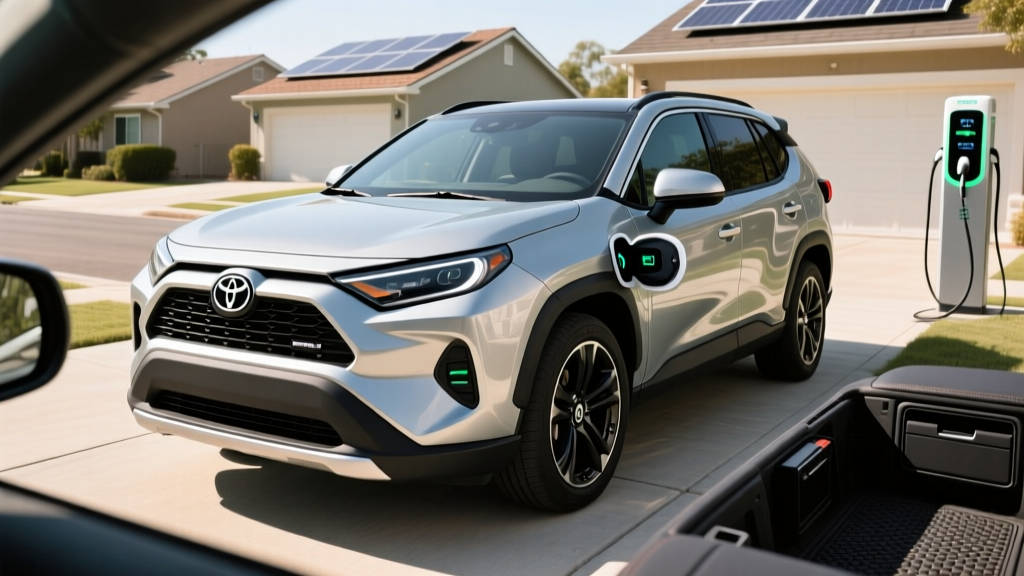
If you've spent any time researching compact SUVs, you've likely encountered the phrase Toyota RAV4 Hybrid reliability — and for good reason. Now in its fifth generation, the RAV4 Hybrid has accumulated years of real-world data, millions of miles on the road, and a track record that consistently places it near the top of dependability rankings from J.D. Power and Consumer Reports. For 2026, Toyota continues to refine the formula: a proven 2.5-liter four-cylinder paired with Toyota's fourth-generation hybrid synergy drive, standard electronic all-wheel drive (AWD-i), and an EPA-estimated 39 MPG combined.
But reliability isn't just about whether the engine starts every morning. For hybrid buyers, it extends to the high-voltage battery, the power electronics, long-term fuel economy consistency, and total cost of ownership over a decade. This guide covers every dimension of RAV4 Hybrid reliability — including the numbers most reviews skip.
HEV vs. PHEV: Which RAV4 Hybrid Are We Talking About?
Toyota sells two electrified RAV4 variants. Understanding the difference is essential before evaluating reliability, cost, or fuel economy.
| Attribute | RAV4 Hybrid (HEV) | RAV4 Prime (PHEV) |
|---|---|---|
| Powertrain type | Conventional hybrid — no plug needed | Plug-in hybrid — requires charging for EV miles |
| Battery capacity | ~1.6 kWh (nickel-metal hydride) | 18.1 kWh usable (lithium-ion) |
| Electric-only range | N/A (electric assist only) | EPA 42 miles |
| Combined horsepower | 219 hp | 302 hp |
| DC fast charging | N/A | No — Level 2 AC only |
| Federal tax credit (§30D) | Not eligible | Up to $7,500 (subject to sourcing/income rules) |
| Starting MSRP (2026) | ~$33,575 | ~$44,940 |
The standard RAV4 Hybrid is a conventional hybrid electric vehicle (HEV). It charges its small battery through regenerative braking and the gasoline engine — you never plug it in. The RAV4 Prime is a plug-in hybrid electric vehicle (PHEV) with a much larger battery, an electric-only driving mode, and the ability to accept a Level 2 (240V) charge. Both are covered here, but their reliability profiles, ownership costs, and buyer profiles differ meaningfully.
Fuel Economy: EPA Numbers vs. Real-World MPG
Hybrid fuel economy is where EPA estimates and real-world results often diverge — usually in the driver's favor for city driving, but sometimes against them on the highway. Here's what the EPA rates the 2026 RAV4 Hybrid at:
| Driving Cycle | RAV4 Hybrid (HEV) AWD | RAV4 Prime (PHEV) — Gas Only | RAV4 Prime — Charge-Depleting (EV+Gas) |
|---|---|---|---|
| City | 41 MPG | 40 MPG | 94 MPGe |
| Highway | 38 MPG | 36 MPG | 84 MPGe |
| Combined | 39 MPG | 38 MPG | 38 MPG (gas) / 94 MPGe (EV mode) |
Real-world note: Hybrid systems recapture energy during braking and low-speed driving, so city MPG often matches or exceeds the EPA estimate. Many RAV4 Hybrid owners report 41–44 MPG in urban commuting. Highway driving at sustained 70–80 MPH, however, typically yields 34–37 MPG — the electric motor contributes less at high speeds, and aerodynamic drag dominates. In cold weather (below 30°F), expect a 5–10% MPG reduction as the engine runs more frequently for cabin heat and battery conditioning.
For the RAV4 Prime, the 42 miles of electric-only range covers most daily commutes. Once the battery depletes, it operates as a conventional hybrid at 38 MPG combined. Total combined range (electric + gas) exceeds 600 miles — eliminating range anxiety entirely.
Powertrain Specs: What's Under the Hood
| Specification | RAV4 Hybrid (HEV) | RAV4 Prime (PHEV) |
|---|---|---|
| Engine | 2.5L inline-4 Atkinson cycle | 2.5L inline-4 Atkinson cycle (higher output) |
| Engine horsepower | 176 hp | 177 hp |
| Front electric motor | 118 hp | 180 hp |
| Rear electric motor (AWD-i) | 54 hp | 54 hp |
| Net combined horsepower | 219 hp | 302 hp |
| 0–60 mph | ~7.4 seconds | ~5.7 seconds |
| Transmission | eCVT (planetary gearset) | eCVT (planetary gearset) |
| Drivetrain | AWD-i (standard) | AWD-i (standard) |
| Towing capacity | 1,750 lbs | 2,500 lbs |
Toyota's eCVT is not a traditional belt-and-pulley CVT. It uses a planetary gearset that blends engine and motor power with no fixed gear ratios and no friction bands to wear out. This design has proven exceptionally durable — there are no clutch packs, torque converters, or gear-shift mechanisms that commonly fail in conventional automatic transmissions.
Toyota RAV4 Hybrid Reliability: Battery Lifespan and Warranty
Hybrid Battery Warranty: Toyota covers the hybrid battery in all 50 states for 10 years or 150,000 miles, whichever comes first. This applies to both the RAV4 Hybrid (HEV) and RAV4 Prime (PHEV). The broader hybrid system — including the inverter, DC-DC converter, and control modules — is also covered for 8 years/100,000 miles.
The hybrid battery is the single biggest reliability concern for prospective buyers. Here's what the data shows:
- RAV4 Hybrid (HEV): Uses a ~1.6 kWh nickel-metal hydride (NiMH) pack. NiMH chemistry is well-understood and degrades gracefully. Toyota's hybrid batteries in the Camry and Prius have demonstrated 150,000–200,000+ mile lifespans with minimal capacity loss. The RAV4 Hybrid's pack is small and rarely cycled deeply, which extends its life significantly.
- RAV4 Prime (PHEV): Uses an 18.1 kWh lithium-ion pack. Because it's cycled more deeply (full EV mode drains it to a buffer threshold), degradation is slightly more relevant — but Toyota engineers a substantial buffer (you never use 100% of the pack). Early RAV4 Prime data from 2021–2025 models shows minimal range loss at 50,000–80,000 miles.
Battery replacement cost: If the hybrid battery fails out of warranty, a new OEM replacement for the RAV4 Hybrid runs approximately $3,000–$4,500 including labor. The RAV4 Prime's larger lithium-ion pack is more expensive — estimated at $6,000–$9,000. However, full battery replacement on a RAV4 Hybrid is rare before 150,000 miles, and independent shops increasingly offer refurbished pack replacements for $1,500–$2,500.
Beyond the battery, the RAV4 Hybrid's mechanical simplicity aids long-term reliability. There's no traditional starter motor (the hybrid motor starts the engine), no alternator (the DC-DC converter handles 12V charging), and regenerative braking significantly extends brake pad life — many owners report 60,000+ miles on original pads.
Pricing, Trims, and Tax Credit Eligibility
Here's where the RAV4 Hybrid lineup stands for the 2026 model year:
| Trim | RAV4 Hybrid MSRP | RAV4 Prime MSRP |
|---|---|---|
| LE (base) | $33,575 | $44,940 |
| XLE | $35,075 | — |
| Woodland Edition | $36,950 | — |
| XSE | $37,275 | $47,840 |
| SE | — | $50,240 |
| Limited | $40,675 | $52,640 |
Federal tax credit for the RAV4 Prime (PHEV): Under current IRS §30D rules, the RAV4 Prime may qualify for up to $7,500 in federal tax credits, split between a critical minerals component and a battery components component. However, eligibility depends on:
- Buyer income caps: Modified AGI ≤ $150,000 (single), $225,000 (head of household), $300,000 (joint)
- MSRP cap: SUVs/vans/pickups must have an MSRP ≤ $80,000 (RAV4 Prime qualifies)
- Battery sourcing requirements: Critical minerals and battery components must meet escalating domestic-content thresholds that tighten annually — check the DOE/FuelEconomy eligible vehicle list for current-year compliance
- Point-of-sale transfer: As of 2024+, the credit can be transferred to the dealer at purchase, reducing your out-of-pocket cost directly rather than waiting for a tax refund
The standard RAV4 Hybrid (HEV) does not qualify for the §30D federal tax credit. Conventional hybrids are not considered "clean vehicles" under the current statute. Some states offer rebates for hybrids — check your state energy office for local programs.
RAV4 Hybrid vs. RAV4 Prime vs. Full EV: Which Fits You?
Choose the RAV4 Hybrid (HEV) if:
- You want maximum MPG with zero behavior change — no plugging in, no charging apps
- Your daily driving is a mix of city and highway without a predictable home-charging routine
- You want the lowest entry price ($33,575) and proven long-term reliability
- You live in an apartment or lack access to Level 2 charging
Choose the RAV4 Prime (PHEV) if:
- You can install a Level 2 charger at home and your commute is ≤ 42 miles round-trip
- You want EV-like daily driving with gas-engine freedom for road trips
- You qualify for the §30D tax credit, effectively bringing the price gap with the HEV to under $4,000
- You value the 302 hp performance bump and 2,500-lb towing capacity
Choose a full EV (like the Toyota bZ4X, Hyundai Ioniq 5, or Tesla Model Y) if:
- You have reliable home Level 2 charging and rarely take trips exceeding 250 miles without planning
- You want zero tailpipe emissions and the lowest per-mile fuel cost (electricity at $0.14/kWh ≈ $4.50/gallon equivalent)
- You're ready to manage charging logistics on road trips via DC fast-charging networks
For buyers who can't charge at home and don't want to think about electrification logistics, the RAV4 Hybrid remains the lowest-friction path to 39+ MPG. The RAV4 Prime is the enthusiast's hybrid — more power, EV commuting, and tax-credit eligibility — but demands a home charging setup to realize its advantages.
RAV4 Prime Charging: What PHEV Owners Need to Know
The RAV4 Prime's 18.1 kWh battery charges exclusively via AC — there is no DC fast-charging capability. Here's what charging looks like:
| Charging Level | Power (kW) | 0–100% Time | Notes |
|---|---|---|---|
| Level 1 (120V household outlet) | ~1.4 kW | ~12 hours | Trickle charge; fine for overnight if daily EV use is light |
| Level 2 (240V, 16A) | ~3.3 kW | ~5.5 hours | Standard RAV4 Prime onboard charger |
| Level 2 (240V, 32A) | ~6.6 kW | ~2.5 hours | Available with Premium trim / upgraded onboard charger |
| DC Fast Charge | N/A | N/A | RAV4 Prime does not support DC fast charging |
A full Level 2 charge overnight is the ideal PHEV routine. At the national average electricity rate of ~$0.16/kWh, a full RAV4 Prime charge costs roughly $2.90 — equivalent to running 42 miles on under a gallon of gas. If your commute fits within 42 miles, you may go weeks without visiting a gas station.
Pros and Cons at a Glance
Pros — RAV4 Hybrid (HEV)
- 39 MPG combined with no plug-in required
- 10-year/150,000-mile hybrid battery warranty
- Standard AWD-i across all trims
- Proven eCVT with no conventional transmission wear items
- Strong resale value — typically retains 55–65% at 5 years
- Regenerative braking extends pad life to 60,000+ mi
Cons — RAV4 Hybrid (HEV)
- No federal tax credit eligibility
- Highway MPG drops to 34–37 real-world at 75+ MPH
- 219 hp is adequate but not quick (7.4s 0–60)
- 1,750-lb towing is low for the class
- Infotainment lags behind competitors in responsiveness
- Cold-weather MPG penalty of 5–10%
Pros — RAV4 Prime (PHEV)
- 42 miles EV range covers most commutes gas-free
- 302 hp — 5.7-second 0–60 makes it the quickest RAV4
- Potential $7,500 federal tax credit (with caveats)
- 2,500-lb towing capacity
- 600+ mile total range eliminates road-trip anxiety
- 6.6 kW onboard charger (Premium) refills in ~2.5 hours
Cons — RAV4 Prime (PHEV)
- ~$11,000 premium over the HEV base price
- No DC fast charging — impractical for public charging on the go
- Heavier curb weight reduces highway MPG vs. HEV when battery is depleted
- Lithium-ion battery replacement is $6,000–$9,000 out of warranty
- High demand = dealer markups common; long wait times
- Tax credit eligibility depends on battery sourcing rules that change annually
Frequently Asked Questions
How many MPG does the Toyota RAV4 Hybrid actually get?
The EPA rates the RAV4 Hybrid at 41 city / 38 highway / 39 combined MPG. In real-world driving, expect 41–44 MPG in city commuting (regenerative braking helps significantly) and 34–37 MPG at sustained highway speeds above 70 MPH. Cold weather and short trips where the engine runs for cabin heat will reduce figures by 5–10%.
How far can the RAV4 Prime go on electric only?
The EPA rates the RAV4 Prime at 42 miles of electric-only range. In mild weather at moderate speeds, some drivers squeeze out 45–48 miles. In winter or at highway speeds, expect 33–38 miles before the gas engine engages.
Is the Toyota RAV4 Hybrid reliable long-term?
Yes. The RAV4 Hybrid consistently scores above average in J.D. Power Vehicle Dependability Studies and Consumer Reports reliability surveys. The eCVT planetary gearset has no friction wear components, the hybrid battery is warrantied for 10 years/150,000 miles, and the 2.5L Atkinson-cycle engine is under-stressed by design. High-mileage examples (150,000+ miles) with original hybrid batteries are common.
What does a RAV4 Hybrid battery replacement cost?
An OEM hybrid battery replacement for the RAV4 Hybrid (HEV) costs approximately $3,000–$4,500 installed. The RAV4 Prime's larger lithium-ion pack is estimated at $6,000–$9,000. However, full battery failure before 150,000 miles is uncommon. Refurbished/remanufactured packs are available from independent shops for $1,500–$2,500.
Does the RAV4 Hybrid qualify for a federal tax credit?
The conventional RAV4 Hybrid (HEV) does not qualify for the federal §30D clean vehicle tax credit — only plug-in vehicles are eligible. The RAV4 Prime (PHEV) may qualify for up to $7,500, subject to buyer income limits ($150K single / $300K joint), MSRP caps ($80K for SUVs), and battery sourcing requirements that tighten each year. Verify current eligibility at fueleconomy.gov and consult a tax professional.
Do I need to plug in the RAV4 Hybrid?
No. The standard RAV4 Hybrid (HEV) charges its battery entirely through regenerative braking and the gasoline engine. You fuel it like any conventional car. Only the RAV4 Prime (PHEV) requires plug-in charging to access its electric-only driving mode — and even the Prime operates as a normal hybrid if you never plug it in.
Hybrid vs. PHEV vs. EV — which should I choose?
If you can't charge at home, the RAV4 Hybrid (HEV) is the right call — zero behavior change, excellent MPG. If you have home Level 2 charging and a short commute, the RAV4 Prime (PHEV) lets you drive electrically most days while keeping a gas engine for road trips. If you're ready to commit to charging infrastructure and want the lowest per-mile cost, a full EV like the Ioniq 5 or Model Y eliminates gasoline entirely — but requires planning for longer trips.