The Toyota RAV4 Hybrid MPG Story: Two Powertrains, One Clear Efficiency Winner
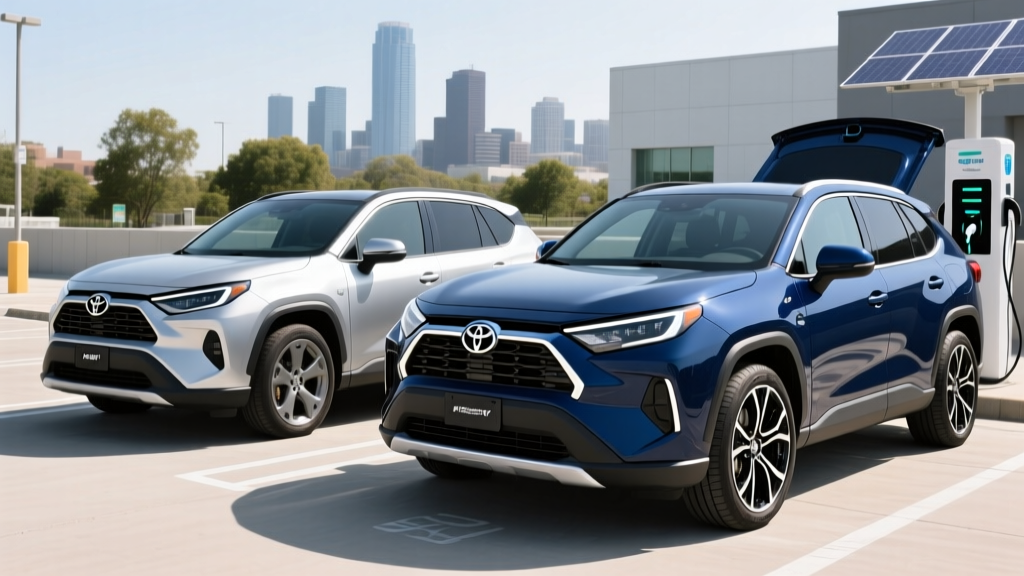
If you've been searching for Toyota Hybrid RAV4 MPG figures, you've likely encountered a confusing mix of numbers. That's because Toyota sells two very different electrified RAV4s: the conventional RAV4 Hybrid (HEV) and the RAV4 Prime plug-in hybrid (PHEV). Both use Toyota's proven hybrid synergy drive, but their efficiency profiles, pricing, and ideal use cases diverge significantly.
For the 2026 model year, the RAV4 Hybrid delivers an EPA-estimated 41 MPG city / 38 MPG highway / 39 MPG combined (LE AWD trim), while the RAV4 Prime achieves 94 MPGe combined in electric-assisted operation with a 42-mile electric-only range. Let's break down what these numbers mean in the real world, which powertrain fits your driving pattern, and the total ownership cost of each.
HEV vs. PHEV: The Critical Distinction
RAV4 Hybrid (HEV): A conventional hybrid that never needs to be plugged in. It uses a small 1.6 kWh nickel-metal hydride battery to assist the gas engine, recapture braking energy, and enable brief low-speed electric driving. You fuel it like any other car — the hybrid system simply makes it far more efficient.
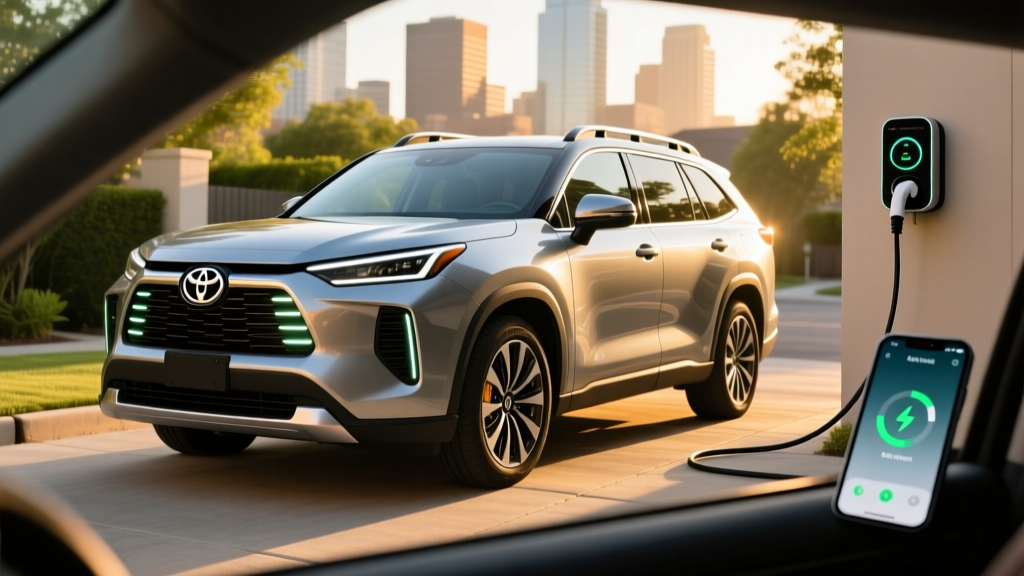
RAV4 Prime (PHEV): A plug-in hybrid with a larger 18.1 kWh lithium-ion battery that you can charge from a wall outlet or public charger. It can drive 42 miles on electricity alone before the gas engine activates. If you never plug it in, it still functions as a conventional hybrid — but you lose the efficiency and cost advantage that makes the Prime special.
2026 RAV4 Hybrid and Prime MPG: EPA Ratings Table
| Spec | RAV4 Hybrid (HEV) AWD | RAV4 Prime (PHEV) AWD |
|---|---|---|
| EPA City MPG | 41 MPG | 40 MPG (hybrid mode) |
| EPA Highway MPG | 38 MPG | 36 MPG (hybrid mode) |
| EPA Combined MPG | 39 MPG | 38 MPG (hybrid mode) |
| MPGe (electric+gas) | N/A | 94 MPGe combined |
| Electric-Only Range | N/A | 42 miles |
| Total Range (full tank + full battery) | ~580 miles | ~600 miles |
| Fuel Tank Capacity | 14.5 gallons | 14.5 gallons |
| Combined System Horsepower | 219 HP | 302 HP |
Source: EPA Fuel Economy. MPGe (miles per gallon equivalent) measures the distance traveled per unit of energy when blending electricity and gasoline. It is not directly comparable to gas-only MPG.
Real-World MPG: Where the RAV4 Hybrid Beats Its Own Sticker
Here's something the EPA sticker doesn't advertise: Toyota's hybrid system is one of the few powertrains that consistently exceeds its EPA rating in city driving. The regenerative braking system recaptures energy at every stoplight, and the Atkinson-cycle 2.5-liter four-cylinder engine operates at peak efficiency under low-load urban conditions.
Real-World MPG Expectations
RAV4 Hybrid (HEV): Expect 40-44 MPG in mixed city driving, 34-37 MPG on sustained highway trips above 70 mph, and 36-40 MPG combined in moderate climates. In winter conditions (below 30°F), anticipate a 3-5 MPG drop due to increased engine warm-up cycles and cabin heating demands.
RAV4 Prime (PHEV): If you charge nightly and your commute is under 42 miles round-trip, you may use gasoline only on weekend road trips. In hybrid mode (battery depleted), expect 35-38 MPG combined — slightly below the HEV due to the Prime's ~300 lb weight penalty from the larger battery pack.
The highway penalty is real for both models. At 75-80 mph, aerodynamic drag dominates, and the hybrid system's city-centric advantages diminish. If your driving is 80%+ highway miles, the RAV4 Hybrid's real-world advantage over a conventional gas RAV4 (28 MPG combined) narrows from ~14 MPG to ~8 MPG.
Powertrain Specs: What Moves the RAV4 Hybrid and Prime
| Specification | RAV4 Hybrid | RAV4 Prime |
|---|---|---|
| Engine | 2.5L 4-cyl Atkinson | 2.5L 4-cyl Atkinson |
| Engine HP | 176 HP | 177 HP |
| Front Electric Motor | 118 HP / 149 lb-ft | 180 HP / 199 lb-ft |
| Rear Electric Motor | 54 HP / 89 lb-ft | 54 HP / 89 lb-ft |
| Net Combined System HP | 219 HP | 302 HP |
| 0-60 MPH | 7.4 seconds | 5.7 seconds |
| Drivetrain | AWD (eAWD) | AWD (eAWD) |
| Hybrid Battery | 1.6 kWh NiMH | 18.1 kWh Li-ion |
| Transmission | eCVT | eCVT |
| Towing Capacity | 1,750 lbs | 2,500 lbs |
The Prime's 302 HP makes it the quickest RAV4 Toyota has ever built — quicker than the V6 Camry of a decade ago. The HEV's 219 HP is more than adequate for daily driving and highway merging, though it won't win any stoplight drags.
RAV4 Prime Charging: Battery Size, Charge Time, and the DC Fast-Charge Gap
The RAV4 Prime's 18.1 kWh lithium-ion battery pack (approximately 14.9 kWh usable to preserve longevity) can be replenished in three ways:
| Charging Method | Power (kW) | Full Charge Time | Availability |
|---|---|---|---|
| Level 1 (120V household outlet) | ~1.4 kW | ~12.5 hours | Included cord |
| Level 2 (240V, 16A) | ~3.3 kW | ~4.5 hours | Home or public |
| Level 2 (240V, 32A) | ~6.6 kW | ~2.5 hours | SE/XSE trims |
| DC Fast Charging | N/A | N/A | Not supported |
This is a critical limitation: the RAV4 Prime does not support DC fast charging. There is no CCS or CHAdeMO port. For a PHEV with a modest 18.1 kWh battery, this is less of a practical issue than it would be for a full EV — most Prime owners charge overnight at home and never need public charging. But if you were hoping to top up at an Electrify America station during a road trip, that option doesn't exist.
The onboard charger difference matters at trim selection: the base SE trim includes a 3.3 kW onboard charger, while upgrading to the XSE trim (or adding the Premium package) unlocks 6.6 kW charging — cutting Level 2 time nearly in half. If you're installing a Level 2 home charger (which we strongly recommend for Prime ownership), confirm your trim's onboard charger rate to set expectations.
Pricing, Tax Credits, and the Hybrid Value Equation
| 2026 Trim | MSRP (est.) | Federal Tax Credit |
|---|---|---|
| RAV4 Hybrid LE AWD | ~$33,500 | None |
| RAV4 Hybrid XLE AWD | ~$35,800 | None |
| RAV4 Hybrid Limited AWD | ~$40,200 | None |
| RAV4 Prime SE AWD | ~$44,500 | Up to $7,500* |
| RAV4 Prime XSE AWD | ~$48,000 | Up to $7,500* |
*Federal tax credit subject to IRS §30D rules. Eligibility depends on buyer income caps ($150K single / $300K joint MAGI), vehicle MSRP caps ($80K for SUVs), battery critical-mineral and component sourcing requirements, and available credit allocation. Credit may be transferred to the dealer as a point-of-sale rebate. Confirm current eligibility at IRS.gov before purchasing.
The conventional RAV4 Hybrid does not qualify for any federal tax credit. IRS §30D applies only to plug-in electric vehicles with a minimum battery capacity of 7 kWh. The HEV's 1.6 kWh NiMH pack falls well below that threshold.
Here's the ownership math that matters: the RAV4 Prime SE starts roughly $11,000 higher than the RAV4 Hybrid LE. If you qualify for the full $7,500 federal credit, that gap narrows to ~$3,500. Factor in fuel savings (a Prime owner charging at $0.14/kWh and driving 42 electric miles daily spends roughly $0.04/mile vs. $0.14/mile for the HEV at 39 MPG and $3.50/gallon), and the Prime pays back its premium in approximately 3-4 years for a 12,000-mile/year driver with home charging access.
Battery Warranty, Lifespan, and Replacement Costs
Hybrid Battery Warranty Coverage
RAV4 Hybrid (HEV): Toyota covers the hybrid battery for 10 years / 150,000 miles (whichever comes first) in all 50 states. This applies to the 1.6 kWh NiMH pack and all hybrid system components including the inverter and eCVT.
RAV4 Prime (PHEV): The 18.1 kWh lithium-ion traction battery is covered for 10 years / 150,000 miles with a capacity retention guarantee. Toyota warrants that the battery will retain a minimum threshold of usable capacity (typically ~70%) during the warranty period.
General powertrain: Both models carry Toyota's standard 5-year/60,000-mile powertrain warranty in addition to the hybrid-specific coverage.
The question every hybrid buyer asks: what does a replacement battery cost? For the RAV4 Hybrid's NiMH pack, out-of-warranty replacement runs approximately $3,000-$4,500 including labor at a Toyota dealership. Third-party refurbished packs can reduce this to $2,000-$3,000. For the Prime's larger lithium-ion pack, replacement costs are estimated at $8,000-$12,000 — a significant sum, though it would only apply outside the generous 10-year/150,000-mile warranty window.
In practice, Toyota hybrid batteries have demonstrated excellent longevity. Long-term reliability data shows failure rates well below 5% within the first 10 years of ownership. The NiMH chemistry in the HEV is particularly robust — it's the same basic technology that powered the original Prius past 200,000 miles in taxi fleets worldwide. The Prime's lithium-ion pack operates within a conservative state-of-charge window (roughly 20-85% in daily use), which substantially reduces calendar degradation.
RAV4 Hybrid vs. Prime vs. Full EV: Which Fits Your Life?
Choose the RAV4 Hybrid (HEV) if:
- You lack access to home or workplace charging (apartment, street parking)
- Your budget prioritizes the lowest upfront cost (~$33,500 starting)
- You want maximum simplicity — no cables, no charging apps, no planning
- Your driving is a mix of city and highway with no single pattern
- You want proven, low-risk technology with 25+ years of Toyota hybrid refinement
Choose the RAV4 Prime (PHEV) if:
- You have reliable home Level 2 charging (garage or driveway with 240V access)
- Your daily round-trip commute is under 42 miles (most American commutes are)
- You qualify for the federal tax credit, narrowing the price gap significantly
- You want EV-like daily driving with gas-engine road-trip flexibility
- You value the 302 HP performance upgrade and 2,500-lb towing capacity
Choose a Full EV (e.g., Tesla Model Y, Hyundai Ioniq 5) if:
- You want zero gasoline purchases and minimal drivetrain maintenance
- You have home charging and your daily driving is under 250 miles
- You want access to the expanding DC fast-charging network for road trips
- You're ready to fully transition from fossil fuels
Pros and Cons at a Glance
RAV4 Hybrid (HEV) Pros
- 39-41 MPG combined — no plug required
- Lowest entry price in the electrified RAV4 lineup
- 10-year/150,000-mile hybrid battery warranty
- Exceeds EPA MPG in real-world city driving
- No range anxiety — refuel at any gas station in 3 minutes
- Strong reliability track record
RAV4 Hybrid (HEV) Cons
- No federal tax credit eligibility
- 219 HP feels merely adequate, not quick
- Highway MPG drops to mid-30s at 75+ mph
- Still burns gasoline 100% of the time
- eCVT drone under hard acceleration
RAV4 Prime (PHEV) Pros
- 42 miles electric-only covers most commutes
- 302 HP — quickest RAV4 ever
- Up to $7,500 federal tax credit
- 94 MPGe when regularly charged
- 2,500-lb towing capacity
- Functions as a regular hybrid even unplugged
RAV4 Prime (PHEV) Cons
- $11,000 price premium over the HEV base
- No DC fast charging capability
- ~300 lbs heavier, slightly lower MPG in hybrid mode
- Requires home charging to realize full value
- Limited dealer inventory — long wait times common
- Higher battery replacement cost out of warranty
Frequently Asked Questions
How many MPG does the Toyota RAV4 Hybrid actually get?
The EPA rates the 2026 RAV4 Hybrid AWD at 41 city / 38 highway / 39 combined MPG. In real-world driving, owners consistently report 40-44 MPG in city and suburban conditions thanks to aggressive regenerative braking. Highway-only driving at 75+ mph typically yields 34-37 MPG. Cold weather (below 30°F) can reduce combined MPG by 3-5 points.
How far can the RAV4 Prime go on electric power alone?
The EPA rates the RAV4 Prime at 42 miles of electric-only range on a full charge. In warm weather with moderate speeds, some owners report 44-48 miles. In cold weather or at highway speeds, expect 32-38 miles. Once the battery is depleted, the Prime seamlessly transitions to hybrid mode with no driver action required.
Does the RAV4 Hybrid qualify for any tax credit?
No. The conventional RAV4 Hybrid (HEV) does not qualify for the federal §30D clean vehicle credit because its 1.6 kWh battery is far below the 7 kWh minimum. The RAV4 Prime (PHEV) may qualify for up to $7,500 depending on your income, the vehicle's battery sourcing compliance, and current IRS rules. Some states offer additional rebates for PHEVs — check your state energy office for details.
Is the RAV4 Hybrid reliable, and how long will the battery last?
Toyota's hybrid system has one of the strongest reliability records in the automotive industry. The hybrid battery is warrantied for 10 years/150,000 miles, and real-world data shows most Toyota hybrid batteries lasting 150,000-200,000+ miles before significant degradation. Out-of-warranty replacement for the HEV battery costs approximately $3,000-$4,500. The Prime's lithium-ion pack replacement runs $8,000-$12,000 but is similarly covered for a decade.
Do I need to plug in the RAV4 Hybrid?
No. The RAV4 Hybrid (HEV) is a conventional hybrid — it charges its own small battery through regenerative braking and the gas engine. You never plug it in. Only the RAV4 Prime (PHEV) benefits from plug-in charging, though it will still function as a regular hybrid if you never connect it to an outlet.
Is the RAV4 Hybrid better than a full electric vehicle?
It depends on your situation. If you lack home charging, drive more than 250 miles daily, or frequently travel through areas with sparse charging infrastructure, the RAV4 Hybrid's go-anywhere flexibility is a genuine advantage. If you have reliable home charging and want to eliminate gasoline costs and tailpipe emissions entirely, a full EV like the Hyundai Ioniq 5 or Tesla Model Y offers lower per-mile energy costs and less maintenance. The RAV4 Prime occupies the middle ground — electric daily driving with gas-engine insurance for road trips.
Additional sources: Toyota RAV4 Hybrid Official Page, IIHS Safety Ratings. All pricing is estimated MSRP for the 2026 model year and may vary by dealer. Tax credit eligibility is subject to change — consult a tax professional.