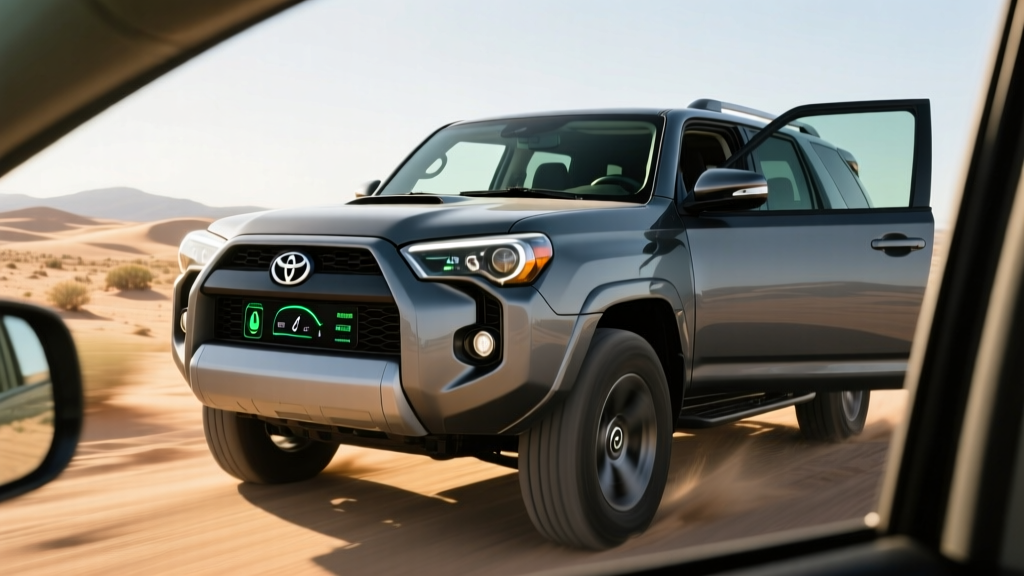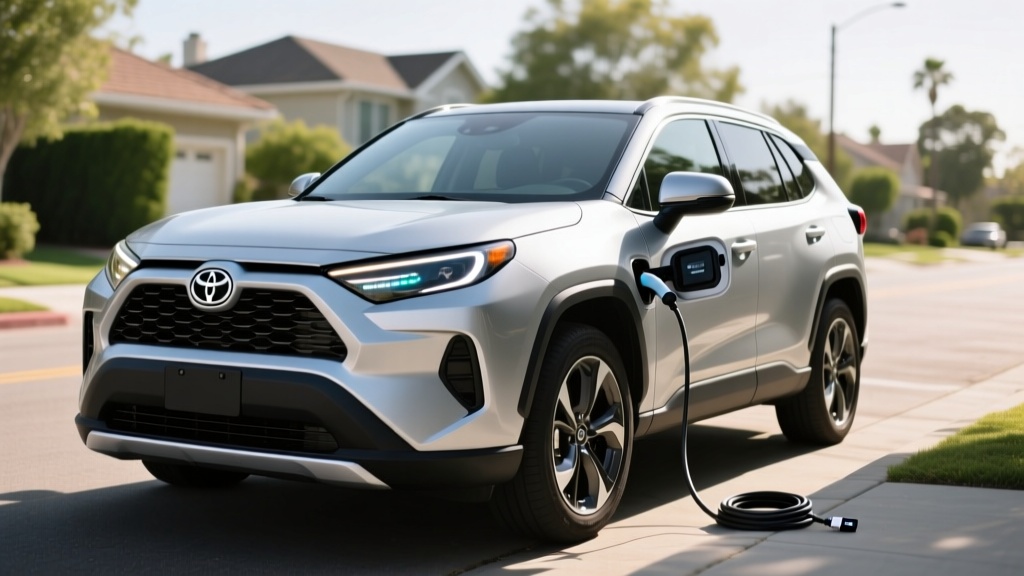
The Toyota RAV4 Hybrid has been the best-selling hybrid SUV in America for years, and the 2026 Toyota RAV4 Hybrid Limited sits at the top of that lineup. It bundles Toyota's proven hybrid powertrain with premium features like a panoramic moonroof, heated and ventilated front seats, and the Toyota Safety Sense 3.0 suite. But does the top-trim hybrid justify its $43,515 MSRP over the base LE? And how does it stack up against the plug-in RAV4 Prime or a full battery-electric rival? Here's the data-driven breakdown.
2026 RAV4 Hybrid Limited: Core Specs at a Glance
| Spec | Value |
|---|---|
| Powertrain | 2.5L 4-cyl + 3 electric motors (AWD-i) |
| Combined Horsepower | 219 hp |
| Drivetrain | Electronic on-demand AWD |
| EPA MPG (City / Hwy / Combined) | 41 / 38 / 39 MPG |
| Fuel Tank | 14.5 gallons |
| EPA Total Range | ~565 miles |
| 0–60 mph | 7.4 seconds |
| Cargo Volume (behind rear seats) | 37.6 cu ft |
| Towing Capacity | 1,750 lbs |
| Hybrid Battery | 1.6 kWh (NiMH), sealed, no plug |
| Base MSRP (Limited AWD) | $43,515 |
| Federal Tax Credit | Not eligible (§30D requires plug-in) |
| Hybrid Battery Warranty | 10 years / 150,000 miles |
The Limited trim adds significant equipment over the XLE and XSE: a 10.5-inch multimedia touchscreen with wireless Apple CarPlay and Android Auto, a 12.3-inch digital instrument cluster, Qi wireless phone charging, a heated steering wheel, and SofTex-trimmed seats. It also includes the panoramic glass roof that's exclusive to the Limited in the hybrid lineup.
Fuel Economy: EPA Ratings vs. Real-World MPG
| Driving Cycle | EPA Rating |
|---|---|
| City | 41 MPG |
| Highway | 38 MPG |
| Combined | 39 MPG |
Over 15,000 miles of mixed driving per year at $3.40/gallon (national average for regular unleaded), the RAV4 Hybrid Limited would cost roughly $1,307 annually in fuel. A comparable gas-only RAV4 AWD (28 MPG combined) would cost approximately $1,821 — a savings of about $514 per year with the hybrid.
HEV vs. PHEV: RAV4 Hybrid vs. RAV4 Prime
Toyota sells two electrified RAV4 variants, and the distinction matters for your wallet and daily routine:
| Attribute | RAV4 Hybrid (HEV) | RAV4 Prime (PHEV) |
|---|---|---|
| Plug-in Required? | No — self-charging via engine + regen | Yes — 18.1 kWh battery, Level 1/2 plug |
| Electric-Only Range | ~1 mile (low-speed creep only) | 42 miles (EPA est.) |
| Combined HP | 219 hp | 302 hp |
| EPA Combined MPG / MPGe | 39 MPG | 94 MPGe (elec) / 38 MPG (gas) |
| 0–60 mph | 7.4 sec | 5.7 sec |
| Level 2 Charge Time (0–100%) | N/A | ~2.5 hours (6.6 kW onboard charger) |
| DC Fast Charge | N/A | No DC fast charge capability |
| Base MSRP | $33,515 (LE) | $45,440 (SE) |
| Federal Tax Credit (§30D) | Not eligible | Up to $7,500 (eligibility varies) |
The HEV (conventional hybrid) never needs plugging in. Its small 1.6 kWh nickel-metal hydride battery charges entirely through regenerative braking and the gasoline engine. You drive it exactly like a gas car — just fill up and go. The electric motors assist the engine for better acceleration and efficiency but cannot propel the vehicle at meaningful speeds on electricity alone.
The PHEV (RAV4 Prime) carries a much larger 18.1 kWh lithium-ion battery that enables 42 miles of pure electric driving at speeds up to 84 mph. Once that battery depletes, it reverts to hybrid operation at 38 MPG combined. The Prime requires access to a Level 1 (120V) or Level 2 (240V) outlet to realize its electric-range benefit. Without regular plugging in, you're just carrying 400+ lbs of dead battery weight.
Powertrain Deep Dive: How the Hybrid System Works
The RAV4 Hybrid Limited uses Toyota's fourth-generation Hybrid Synergy Drive with a 2.5-liter Dynamic Force four-cylinder engine producing 176 hp and 163 lb-ft of torque on its own. Two front-mounted electric motor-generators (MG1 and MG2) handle starting, regeneration, and primary electric propulsion, while a third motor on the rear axle provides electronic AWD (AWD-i) by powering the rear wheels when slip is detected or during hard acceleration.
The combined system output of 219 horsepower makes the RAV4 Hybrid Limited one of the quicker vehicles in the compact hybrid SUV segment. The eCVT (planetary gearset, not a belt-driven CVT) delivers seamless power delivery without the rubber-band feel associated with traditional continuously variable transmissions.
Three drive modes are available: EV Mode (electric-only at very low speeds for short distances), ECO Mode (throttle dampening and climate control optimization), and Sport Mode (sharper throttle mapping and more aggressive regen). Normal mode is the default and strikes the best balance for most drivers.
Pricing, Trims, and Tax Credit Eligibility
The 2026 RAV4 Hybrid Limited carries a base MSRP of $43,515, including destination. That positions it roughly $10,000 above the Hybrid LE ($33,515) and $3,000 above the XLE Premium. Key Limited-exclusive features include:
- Panoramic glass moonroof with power sunshade
- Ventilated front seats (heated seats standard on lower trims)
- 10.5-inch multimedia display with embedded navigation
- 11-speaker JBL premium audio with subwoofer
- Digital rearview mirror with HomeLink
- Bird's-eye view camera with perimeter scan
Some states offer their own hybrid or high-efficiency vehicle rebates, though these are increasingly targeted at zero-emission vehicles. Check your state energy office or AFDC state incentive database for current programs.
Battery Longevity, Warranty, and Replacement Cost
Hybrid battery anxiety is the single most common concern among first-time hybrid buyers. Here's what the data shows:
Toyota covers the RAV4 Hybrid's battery with a 10-year / 150,000-mile warranty (whichever comes first) in all 50 states. This warranty guarantees the battery will retain sufficient capacity to operate the hybrid system properly. Toyota also covers all hybrid-system components — the inverter, motor-generators, and control ECU — for 8 years / 100,000 miles.
In practice, Toyota's nickel-metal hydride hybrid batteries have demonstrated exceptional longevity. Data from fleet operators and long-term owners shows many first-generation Prius and RAV4 Hybrid batteries lasting 200,000+ miles with minimal capacity loss. The NiMH chemistry is less energy-dense than lithium-ion but extremely tolerant of the shallow charge-discharge cycles that hybrid operation demands. The system never fully charges or fully depletes the battery, keeping it in a 40–80% state-of-charge window that minimizes degradation.
If replacement is needed outside warranty, a new OEM hybrid battery for the RAV4 Hybrid currently costs between $3,000 and $4,500 including labor at a Toyota dealer. Refurbished or reconditioned units from third-party specialists run $1,500–$2,500. Given the 10-year/150,000-mile warranty and the battery's proven track record, most owners will never face this expense.
Who Should Choose the RAV4 Hybrid Limited?
- You want maximum fuel efficiency without changing your fueling habits (no plug needed)
- Your daily driving is city-heavy, where regenerative braking maximizes hybrid advantage
- You need AWD capability for snow or light off-road use
- You want premium features (panoramic roof, ventilated seats, JBL audio) without stepping to a luxury brand
- Long-term reliability and low maintenance costs are top priorities
- You have home Level 2 charging access and a commute under 42 miles
- You want the potential $7,500 federal tax credit to offset the higher MSRP
- You value the 302-hp performance advantage and 5.7-second 0–60 time
- You want to drive on electricity most days but need gas flexibility for road trips
- You have reliable home charging and your daily range needs are under 250 miles
- You want zero tailpipe emissions and minimal drivetrain maintenance
- You want the full $7,500 federal credit and lower per-mile energy cost
- You drive fewer than 8,000 miles per year (hybrid premium won't pay back)
- You do mostly highway driving at 80+ mph where hybrid advantage shrinks
- Upfront cost is the primary constraint
Pros and Cons
Pros
- 39 MPG combined, often exceeding 42 MPG in city driving
- No plug-in charging required — zero lifestyle adjustment
- 219 hp with standard electronic AWD provides confident acceleration
- 10-year / 150,000-mile hybrid battery warranty
- Proven reliability with low long-term maintenance costs
- Strong resale value — RAV4 Hybrid consistently tops depreciation rankings
- Limited trim adds luxury features at a mainstream price point
Cons
- $43,515 MSRP is steep for a compact SUV with no federal tax credit
- Highway MPG (38) trails city MPG — less advantage on long commutes
- 1,750-lb towing capacity trails the gas RAV4 (3,500 lbs)
- No DC fast charging or meaningful electric-only range (that's the PHEV's role)
- Infotainment system is functional but lacks the polish of Hyundai/Kia competitors
- Panoramic roof slightly reduces rear headroom vs. non-moonroof trims
Frequently Asked Questions
How many MPG does the 2026 Toyota RAV4 Hybrid Limited get?
The EPA rates the RAV4 Hybrid at 41 MPG city, 38 MPG highway, and 39 MPG combined. In real-world city and suburban driving, owners frequently report 42–44 MPG thanks to regenerative braking. Highway-only driving at 75+ mph typically returns 34–36 MPG.
Does the RAV4 Hybrid need to be plugged in?
No. The conventional RAV4 Hybrid is a self-charging HEV. Its small battery charges entirely through regenerative braking and the gasoline engine. You never plug it in — just refuel at any gas station as you would with a conventional vehicle.
What's the difference between the RAV4 Hybrid and the RAV4 Prime?
The RAV4 Hybrid (HEV) cannot plug in and has no meaningful electric-only range. The RAV4 Prime (PHEV) has a larger 18.1 kWh battery that provides 42 miles of electric-only driving when plugged in, 302 combined horsepower, and potential eligibility for a $7,500 federal tax credit. The Prime starts around $45,440 — about $12,000 more than the Hybrid LE.
Does the RAV4 Hybrid qualify for a federal tax credit?
No. The IRS §30D Clean Vehicle Credit applies only to plug-in vehicles (BEVs and PHEVs). The conventional RAV4 Hybrid does not have a plug or sufficient battery capacity to qualify. The RAV4 Prime PHEV may qualify depending on your income, MSRP caps, and battery sourcing requirements.
How long does the RAV4 Hybrid battery last, and what does replacement cost?
Toyota warranties the hybrid battery for 10 years or 150,000 miles. Real-world data shows many Toyota hybrid batteries lasting 200,000+ miles. If replacement is needed outside warranty, expect $3,000–$4,500 for a new OEM battery at a dealer, or $1,500–$2,500 for a refurbished unit.
Is the RAV4 Hybrid Limited worth the premium over the XLE?
The Limited adds roughly $5,000 over the XLE Premium and includes the panoramic roof, ventilated seats, JBL audio, bird's-eye view camera, and digital rearview mirror. If these luxury-adjacent features matter to you and you plan to keep the vehicle 5+ years, the Limited holds its value well. If you prioritize value, the XLE at ~$38,500 delivers the same powertrain and MPG with most key tech features.
How does the RAV4 Hybrid compare to the Honda CR-V Hybrid?
The 2026 Honda CR-V Hybrid (Sport Touring) is rated at 40 MPG combined — 1 MPG more than the RAV4 Hybrid. However, the CR-V Hybrid produces 204 hp (15 less than the RAV4) and offers slightly less cargo volume. The RAV4 Hybrid's eCVT planetary gearset is generally considered more durable long-term than the CR-V's two-motor system. Both are excellent choices; the RAV4 edges ahead on power and AWD confidence, while the CR-V wins on interior space and combined MPG by a narrow margin.