Quick Verdict: The Hybrid SUV Benchmark Holds Strong
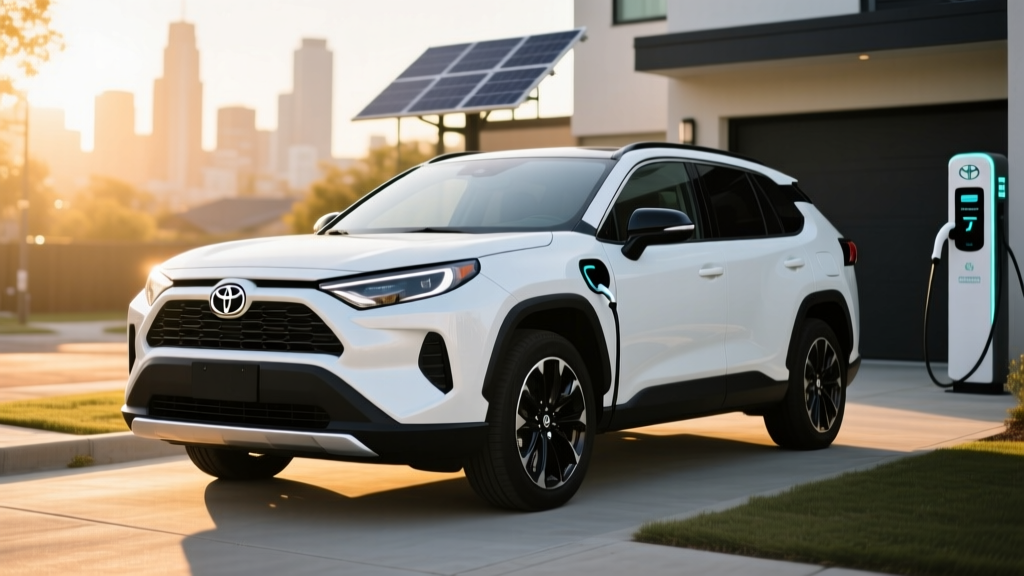
The 2025 Toyota RAV4 Hybrid SUV remains the best-selling electrified compact crossover in America for a reason: it delivers 39–41 MPG EPA combined with standard electronic all-wheel drive, 219 combined horsepower, and a starting MSRP of $33,575 — all without ever needing to plug in. For buyers who want dramatically better fuel economy than a gas RAV4 but aren't ready to manage charging infrastructure, the conventional hybrid (HEV) is a low-friction upgrade. For those who can charge at home and want 42 miles of electric-only commuting, the RAV4 Prime plug-in hybrid (PHEV) is the more radical option — though it commands a significant price premium and is notoriously hard to find at MSRP.
This guide breaks down both powertrains, real-world MPG expectations, battery longevity, tax credit eligibility under current IRS §30D rules, and exactly who should choose which version.
HEV vs PHEV: Understanding the Two RAV4 Electrified Options
Toyota offers two distinct electrified RAV4 variants for 2025. They share a platform but serve very different use cases.
| Feature | RAV4 Hybrid (HEV) | RAV4 Prime (PHEV) |
|---|---|---|
| Powertrain Type | Conventional hybrid — no plug | Plug-in hybrid — charges via outlet/station |
| Combined Horsepower | 219 hp | 302 hp |
| EPA Combined MPG | 39–41 MPG | 38 MPG (hybrid mode) / 94 MPGe (EV mode) |
| Electric-Only Range | N/A (EV mode only at very low speeds) | 42 miles EPA |
| Battery Capacity | 1.6 kWh (nickel-metal hydride) | 18.1 kWh (lithium-ion) |
| Charging Required? | No — self-charging via regen & engine | Yes — Level 1 or Level 2 |
| DC Fast Charging? | N/A | No — AC only (Level 2 max 6.6 kW) |
| AWD Standard? | Yes (electronic on-demand) | Yes (electronic on-demand) |
| Starting MSRP (2025) | $33,575 (LE trim) | $43,690 (SE trim) |
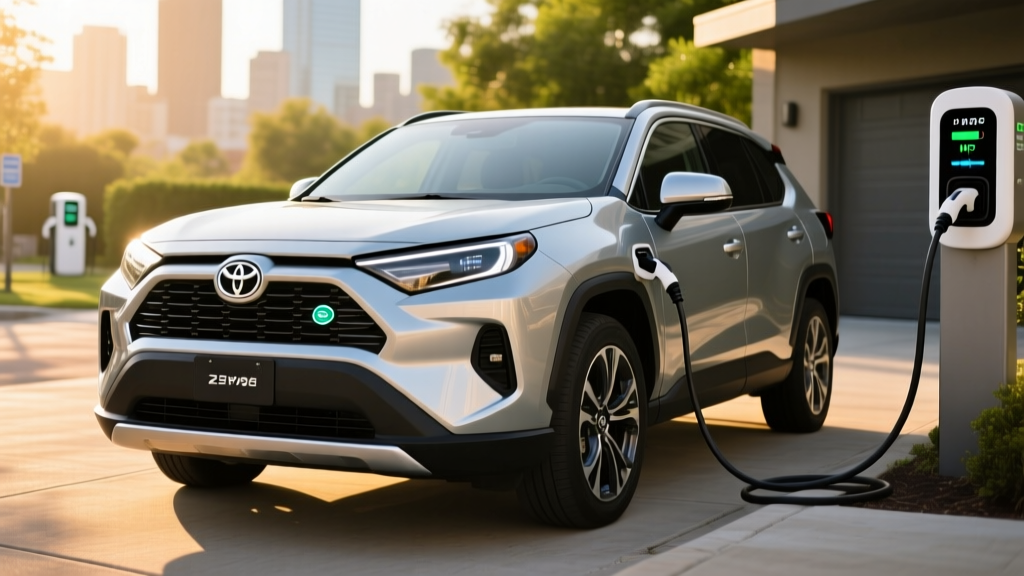
The key distinction: the RAV4 Hybrid (HEV) generates all its electricity internally. The gasoline engine and regenerative braking charge the small battery. You never plug it in. The RAV4 Prime (PHEV) has a much larger battery that you can charge from a wall outlet or Level 2 station, giving you 42 miles of pure electric driving before the gas engine kicks in as a hybrid.
Fuel Economy Breakdown: EPA Numbers and Real-World MPG
| Trim / Variant | City MPG | Highway MPG | Combined MPG |
|---|---|---|---|
| RAV4 Hybrid LE | 41 | 38 | 39 |
| RAV4 Hybrid XLE / XLE Premium | 41 | 38 | 39 |
| RAV4 Hybrid Woodland Edition | 38 | 35 | 37 |
| RAV4 Hybrid SE / XSE | 41 | 38 | 39 |
| RAV4 Hybrid Limited | 41 | 38 | 39 |
| RAV4 Prime (hybrid mode) | 40 | 36 | 38 |
| RAV4 Prime (EV mode) | 94 MPGe combined / 42 miles electric range | ||
Source: fueleconomy.gov — EPA estimates for 2025 model year.
Real-World MPG: What Owners Actually Report
Toyota hybrids, including the RAV4, tend to meet or slightly exceed their EPA estimates in real-world city driving — the opposite of many gas-only vehicles. This is because city driving maximizes regenerative braking and electric-motor assist, where the hybrid system shines.
- City driving: Many owners report 42–44 MPG in stop-and-go traffic, exceeding the 41 MPG EPA city estimate.
- Highway driving: Expect 36–38 MPG at 70–75 mph. Hybrids lose their advantage at sustained high speeds where the gas engine does most of the work.
- Cold weather: In sub-freezing temperatures, expect a 5–10% fuel economy drop (roughly 35–37 MPG combined) as the engine runs more frequently to generate cabin heat and the battery operates less efficiently.
- Woodland Edition penalty: The all-terrain tires and lifted suspension cost you 2 MPG combined versus the standard LE. If fuel economy is the priority, stick with the LE or XLE.
Powertrain and Performance Specs
| Specification | RAV4 Hybrid | RAV4 Prime |
|---|---|---|
| Engine | 2.5L 4-cylinder Atkinson-cycle | 2.5L 4-cylinder Atkinson-cycle |
| Engine Output | 176 hp / 163 lb-ft | 177 hp / 165 lb-ft |
| Front Electric Motor | 118 hp / 149 lb-ft | 174 hp / 199 lb-ft |
| Rear Electric Motor | 54 hp / 89 lb-ft | 40 hp / 89 lb-ft |
| Net Combined Horsepower | 219 hp | 302 hp |
| Transmission | eCVT (electronically controlled) | eCVT |
| 0–60 mph | 7.4 seconds | 5.7 seconds |
| Drivetrain | AWD (electronic, on-demand rear motor) | AWD (electronic, on-demand rear motor) |
| Towing Capacity | 1,750 lbs | 1,750 lbs |
The RAV4 Hybrid's eCVT is not a traditional belt-and-pulley CVT. It uses a planetary gearset to blend power from the engine and electric motors seamlessly. There are no fixed gear ratios, which contributes to the smooth, linear acceleration feel — though it can drone under hard acceleration as the engine holds a constant RPM.
The RAV4 Prime's 302 hp makes it the quickest RAV4 Toyota sells, beating even the gas-only V6 models of past generations. The larger electric motors deliver instant torque off the line, making it genuinely quick for a compact SUV.
RAV4 Prime PHEV: Electric-Only Range and Charging Details
If you're considering the plug-in RAV4 Prime, here's what the electric side of the equation looks like in practice.
Battery and Electric Range
- Battery capacity: 18.1 kWh total / ~14.9 kWh usable (lithium-ion)
- EPA electric-only range: 42 miles
- Real-world electric range: 38–44 miles depending on temperature and driving style. In mild weather at city speeds, some owners exceed the EPA estimate. In freezing temperatures or at highway speeds, expect 32–36 miles.
- Electric top speed: 84 mph (engine stays off if you keep acceleration moderate)
Charging Times and Equipment
- Level 1 (120V household outlet): ~12 hours for a full charge using the included cordset. Plugging in overnight works if your commute is under 40 miles and you have 10+ hours at home.
- Level 2 (240V, 32A): ~2.5 hours for a full charge using the optional upgraded onboard charger (6.6 kW). A standard Level 2 home station is the recommended setup for Prime owners.
- DC fast charging: Not available. The RAV4 Prime cannot use DC fast chargers (CCS, CHAdeMO, or NACS). This is a notable limitation compared to some PHEV competitors that offer DC fast charging on larger batteries.
If you don't have access to home or workplace charging, the Prime's electric advantage is largely wasted — you'd be paying a ~$10,000 premium to drive it as a slightly heavier conventional hybrid. In that case, the standard RAV4 Hybrid is the smarter buy.
Pricing, Trims, and Tax Credit Eligibility
2025 RAV4 Hybrid (HEV) Pricing
| Trim | MSRP (incl. destination) |
|---|---|
| LE | $33,575 |
| XLE | $35,125 |
| XLE Premium | $37,075 |
| SE | $37,325 |
| Woodland Edition | $37,575 |
| XSE | $38,575 |
| Limited | $41,075 |
2025 RAV4 Prime (PHEV) Pricing
| Trim | MSRP (incl. destination) |
|---|---|
| SE | $43,690 |
| XSE | $47,560 |
Federal Tax Credit: Does the RAV4 Qualify?
Here's where the HEV and PHEV diverge sharply:
RAV4 Prime (PHEV): The RAV4 Prime may qualify for a partial or full federal tax credit up to $7,500 under IRS §30D rules, but eligibility depends on several factors that change frequently:
- Battery sourcing requirements: The vehicle must meet critical minerals and battery component thresholds that phase up annually. Toyota's supply chain has been affected by these rules — verify current-year eligibility on fueleconomy.gov before purchasing.
- MSRP cap: The vehicle's MSRP must not exceed $80,000 for SUVs (both Prime trims clear this easily).
- Buyer income cap: Adjusted gross income must not exceed $150,000 (single) / $300,000 (joint filing).
- Point-of-sale transfer: As of 2024, eligible buyers can transfer the credit to the dealer at purchase, reducing the purchase price directly rather than waiting for a tax refund.
Always verify current eligibility with your tax professional and the IRS before purchasing. Rules are subject to legislative change.
Battery Warranty, Reliability, and Replacement Cost
- Hybrid battery: 10 years / 150,000 miles (whichever comes first) — covers the high-voltage traction battery against defects and excessive capacity loss.
- Hybrid system components: 8 years / 100,000 miles — covers the inverter, electric motors, and associated control electronics.
- Bumper-to-bumper: 3 years / 36,000 miles.
- Powertrain (engine, transmission): 5 years / 60,000 miles.
How Long Do Toyota Hybrid Batteries Actually Last?
Toyota's hybrid battery track record is among the best in the industry. Data from fleet operators and long-term owners consistently shows:
- The RAV4 Hybrid's 1.6 kWh NiMH battery is small and conservatively managed — Toyota limits the usable state-of-charge window to roughly 40–80% to minimize degradation. Many Toyota hybrid batteries from the Prius and Camry lineages have exceeded 200,000 miles without replacement.
- The RAV4 Prime's 18.1 kWh lithium-ion battery faces more cycling stress due to deeper discharge cycles, but Toyota's thermal management and charge-buffer strategy are proven. Early Prime models (2021+) have not shown widespread battery issues.
- Consumer Reports and IIHS consistently rate the RAV4 highly for predicted reliability.
Battery Replacement Cost (Out of Warranty)
- RAV4 Hybrid (HEV): Approximately $3,000–$5,000 for a new hybrid battery pack, including labor. Refurbished/reconditioned packs are available for $1,500–$2,500 from third-party suppliers.
- RAV4 Prime (PHEV): Estimated $8,000–$12,000+ for a full lithium-ion pack replacement. This is significantly more expensive due to the larger battery. However, given the 10-year/150,000-mile warranty and Toyota's track record, most owners will never face this cost.
Who Should Choose the RAV4 Hybrid vs. Prime vs. a Full EV?
Choose the RAV4 Hybrid (HEV) if:
- You don't have access to home or workplace charging.
- You want maximum fuel savings with zero behavioral change — no apps, no charging cables, no route planning.
- Your budget is under $40,000 and you want AWD.
- You drive 12,000–15,000 miles/year and want to spend roughly $1,100–$1,300/year on gas (at $3.50/gal and 39 MPG).
Choose the RAV4 Prime (PHEV) if:
- You can install a Level 2 charger at home and your daily commute is under 42 miles round-trip.
- You want to drive mostly on electricity during the week but need gas-engine flexibility for road trips.
- You value the 302 hp performance upgrade and can justify the ~$10,000 price premium.
- You may qualify for the federal tax credit, narrowing the price gap with the HEV.
Choose a Full EV (like the Toyota bZ4X, Tesla Model Y, or Hyundai Ioniq 5) if:
- You have reliable home charging and your daily driving is under 250 miles.
- You want zero tailpipe emissions and the lowest per-mile fuel cost (~$0.04–$0.06/mile on electricity vs. ~$0.09/mile on the RAV4 Hybrid).
- You're ready to plan longer road trips around DC fast charging stops.
- You want to take full advantage of the $7,500 federal tax credit (which applies more broadly to BEVs).
Pros — RAV4 Hybrid
- 39–41 MPG combined — best in the compact SUV hybrid segment
- Standard AWD with no fuel-economy penalty vs. FWD
- No charging infrastructure required
- Strong resale value and Toyota reliability reputation
- 10-year / 150,000-mile hybrid battery warranty
- Reasonable starting price at $33,575
Cons — RAV4 Hybrid
- No federal tax credit eligibility
- eCVT drone under hard acceleration
- 1,750-lb towing capacity is modest for the class
- Infotainment system lags behind competitors in responsiveness
- Woodland Edition sacrifices 2 MPG for all-terrain tires
- Not available with a third row (Highlander Hybrid fills that gap)
Frequently Asked Questions
How many MPG does the 2025 Toyota RAV4 Hybrid get?
The EPA rates most 2025 RAV4 Hybrid trims at 41 city / 38 highway / 39 combined MPG. The Woodland Edition with all-terrain tires drops to 38/35/37 MPG. In real-world city driving, many owners report exceeding the EPA city estimate, reaching 42–44 MPG thanks to aggressive regenerative braking.
How far can the RAV4 Prime go on electric only?
The EPA rates the RAV4 Prime at 42 miles of electric-only range. In real-world conditions, expect 32–44 miles depending on temperature, speed, and terrain. Highway driving at 70+ mph and freezing temperatures reduce range the most. For commutes under 35 miles round-trip, most Prime owners report running on electricity almost exclusively during the week.
Does the RAV4 Hybrid need to be plugged in?
No. The conventional RAV4 Hybrid (HEV) charges its battery entirely through the gasoline engine and regenerative braking. You simply fill it with gas like any other vehicle. Only the RAV4 Prime (PHEV) requires plugging in to access its electric-only range — and even the Prime functions as a normal hybrid if you never plug it in.
Is the RAV4 Hybrid reliable, and what does a battery replacement cost?
Toyota's hybrid system is one of the most proven in the automotive industry, with over 25 years of continuous refinement since the original Prius. The hybrid battery is covered by a 10-year/150,000-mile warranty. Out-of-warranty replacement costs approximately $3,000–$5,000 for the HEV and $8,000–$12,000 for the Prime's larger lithium-ion pack. Real-world data suggests most Toyota hybrid batteries last well beyond 150,000 miles.
Does the 2025 RAV4 Hybrid qualify for a federal tax credit?
The conventional RAV4 Hybrid (HEV) does not qualify for any federal tax credit — §30D applies only to plug-in vehicles. The RAV4 Prime (PHEV) may qualify for up to $7,500 depending on current battery-sourcing rules, your income, and the vehicle's MSRP. Eligibility changes as supply-chain requirements tighten annually. Check the latest status at fueleconomy.gov and consult a tax professional before relying on the credit.
RAV4 Hybrid vs. Honda CR-V Hybrid — which is better?
The 2025 Honda CR-V Hybrid is the closest competitor, rated at 40 city / 35 highway / 37 combined MPG with FWD (AWD drops it to 38/33/36). The RAV4 Hybrid edges it out on highway MPG and offers a slightly lower starting price. The CR-V Hybrid has a more refined interior and a smoother driving feel. Both carry excellent reliability records and 10-year hybrid battery warranties. The choice often comes down to brand preference and dealer pricing in your area.
What is the annual fuel cost for the RAV4 Hybrid?
At 15,000 miles per year, 39 MPG combined, and $3.50 per gallon, annual fuel cost is approximately $1,346. Compare that to the gas-only RAV4 (28 MPG combined): roughly $1,875 per year — a savings of about $529 annually with the hybrid. Over a 10-year ownership period, that's roughly $5,290 in fuel savings, which more than offsets the hybrid's ~$2,000 price premium over the gas model.