Quick Verdict: The Sport Touring Hybrid Worth Taking Seriously
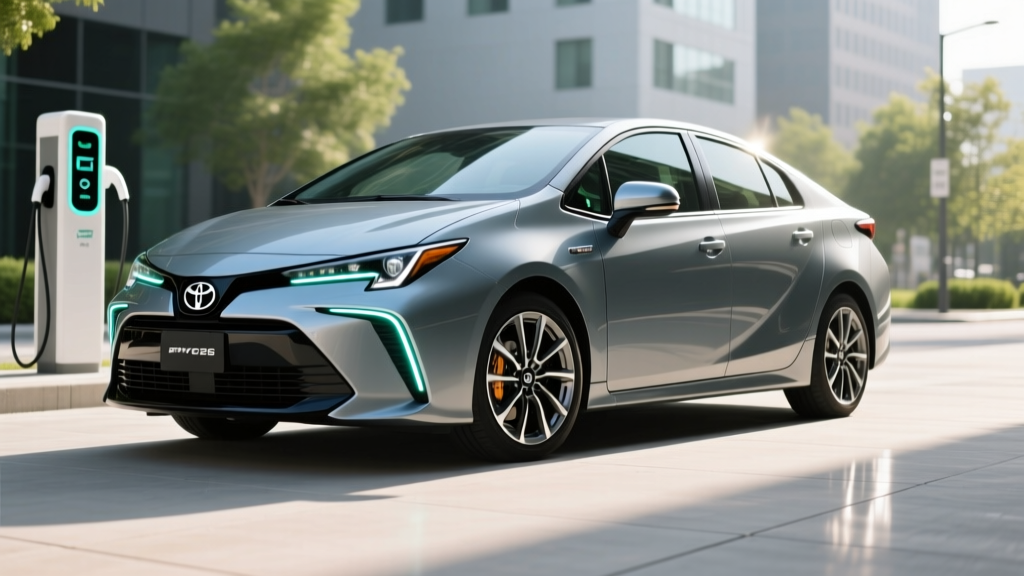
The 2026 Toyota Prius Prime has shed every ounce of its econobox reputation. With 220 combined horsepower, a 44-mile electric-only range, and an EPA-estimated 52 MPG combined once the battery depletes, this plug-in hybrid (PHEV) occupies a rare middle ground: genuine daily EV commuting with zero range anxiety on longer trips. For buyers searching for a sport touring hybrid that balances weekend road-trip capability with weekday electric efficiency, the Prius Prime makes a compelling case — especially in the XSE and XSE Premium trims that add sport-tuned suspension and sharper styling.
But the numbers only tell part of the story. Real-world efficiency, charging practicality, battery longevity, and tax-credit eligibility all factor into whether this PHEV is the right electrified vehicle for your driveway. Let's break down every spec that matters.
2026 Toyota Prius Prime — Key Specifications
| Attribute | SE | XSE | XSE Premium |
|---|---|---|---|
| EPA Electric-Only Range | 44 miles | 40 miles | 40 miles |
| EPA MPG (Combined / City / Highway) | 52 / 53 / 51 | 50 / 52 / 48 | 50 / 52 / 48 |
| MPGe (Electric + Gas Combined) | 127 MPGe | 125 MPGe | 125 MPGe |
| Battery (Usable) | 13.6 kWh lithium-ion (NMC) | ||
| Combined Horsepower | 220 HP (2.0L 4-cyl + electric motor) | ||
| 0–60 mph | 6.6 seconds | ||
| Level 2 Charge Time (0–100%) | ~4 hours at 3.3 kW (16A / 240V) | ||
| DC Fast Charging | Not available | ||
| Total Range (EV + Gas) | ~510 miles | ~490 miles | ~490 miles |
| Base MSRP | $33,445 | $36,695 | $40,195 |
| Battery / Powertrain Warranty | 10 yr / 150,000 mi (hybrid battery); 5 yr / 60,000 mi (powertrain) | ||
HEV vs PHEV: Understanding What the Prius Prime Actually Is
A common source of confusion is the difference between the standard Toyota Prius (a conventional hybrid, or HEV) and the Prius Prime (a plug-in hybrid, or PHEV). Here's how they differ:
| Feature | Prius (HEV) | Prius Prime (PHEV) |
|---|---|---|
| Plugs in to charge? | No — charges via regenerative braking and engine | Yes — plug in to access 40–44 mi EV range |
| Electric-only driving | Limited (low-speed, short distances) | Full EV mode up to 44 miles at highway speeds |
| Battery size | ~1.0 kWh | 13.6 kWh usable |
| EPA Combined MPG | 57 MPG | 50–52 MPG (after EV range depletes) |
| Federal tax credit eligible? | No | Potentially — up to $3,750 under §30D |
| Starting MSRP (2026) | ~$28,350 | ~$33,445 |
Bottom line: The standard Prius HEV never needs plugging in and squeezes out slightly better gas-only MPG. The Prius Prime PHEV trades a small MPG penalty for the ability to drive 40–44 miles on electricity alone — which, for most commuters, means zero gasoline use on weekdays.
Fuel Economy Breakdown: EPA vs Real-World MPG
The EPA rates the 2026 Prius Prime SE at 52 MPG combined (53 city / 51 highway) once the battery is depleted. The heavier XSE and XSE Premium trims drop slightly to 50 MPG combined (52 city / 48 highway). These figures come from the EPA's fueleconomy.gov database.
How Many MPG Does This Hybrid Get?
| Trim | City | Highway | Combined |
|---|---|---|---|
| Prius Prime SE | 53 | 51 | 52 |
| Prius Prime XSE | 52 | 48 | 50 |
| Prius Prime XSE Premium | 52 | 48 | 50 |
Real-world note: Hybrids — and especially PHEVs in hybrid mode — tend to exceed their EPA city estimates in stop-and-go traffic because regenerative braking recaptures energy that gas cars waste as heat. In mixed suburban driving, owners frequently report 54–58 MPG in the SE trim once the EV range is used up. Highway driving at sustained 75+ mph is where you'll see numbers dip toward the mid-to-high 40s, particularly in the XSE with its wider, stickier tires.
In EV mode, expect roughly 3.5–4.0 miles per kWh, translating to the full 40–44 miles in moderate temperatures. Cold weather (below 35°F) will reduce EV range by 15–25% due to cabin heating demands and reduced battery efficiency — plan on 30–35 electric miles in winter.
Electric-Only Range, Charging, and Battery Specs
The Prius Prime's 13.6 kWh usable battery (lithium-ion NMC chemistry) delivers an EPA-rated 44 miles of electric-only range in the SE trim and 40 miles in the XSE/XSE Premium (the extra weight of larger wheels and additional equipment accounts for the difference).
How Far Can It Go on Electric Only?
For the median American commuter — whose one-way trip is under 16 miles according to FHWA data — 40–44 miles of EV range covers the full round trip without burning a drop of gasoline. Charge at home overnight, and you'll effectively drive an EV Monday through Friday. For longer trips, the 11.4-gallon fuel tank extends total range to 490–510 miles combined.
Charging Time and Equipment
| Charging Level | Power | Time (0–100%) | Notes |
|---|---|---|---|
| Level 1 (120V household) | ~1.0 kW | ~12 hours | Works but slow — fine for overnight top-ups |
| Level 2 (240V, 16A) | 3.3 kW | ~4 hours | Recommended for daily use; J1772 connector |
| DC Fast Charging | N/A | N/A | Not supported — no CCS or CHAdeMO port |
The onboard charger maxes out at 3.3 kW, which means even a 48-amp Level 2 home charger won't speed things up beyond 4 hours. That's adequate for overnight charging but a limitation if you need a quick midday top-up. The absence of DC fast charging is a deliberate trade-off: Toyota prioritized cabin and cargo space over a larger battery and DC capability. For a PHEV with a 13.6 kWh pack, the 4-hour Level 2 time is reasonable — but it's worth knowing before you buy.
Powertrain and Performance: 220 HP Changes the Story
The 2026 Prius Prime pairs a 2.0-liter four-cylinder engine (150 HP) with a permanent-magnet electric motor integrated into the transaxle, producing a combined 220 horsepower. That's a massive leap from the prior-generation Prime's 121 HP and transforms the car's character entirely.
The 0–60 mph time of 6.6 seconds puts the Prius Prime in the same territory as sport compacts from just a few years ago. Toyota's fifth-generation hybrid system manages the transition between electric and gas power seamlessly — in EV mode, acceleration is linear and quiet; when the engine engages, there's a brief CVT drone under hard throttle, but it settles quickly at cruise.
The XSE trim adds a sport-tuned suspension with firmer damping and 19-inch alloy wheels, giving it sharper turn-in and reduced body roll compared to the SE. It's not a track car, but for a sport touring hybrid tasked with highway cruising and back-road weekends, the XSE handles with genuine composure.
Pricing, Tax Credits, and Total Cost
The 2026 Prius Prime lineup starts at $33,445 for the SE, climbs to $36,695 for the XSE, and tops out at $40,195 for the XSE Premium (which adds a panoramic fixed-glass roof, heated and ventilated front seats, and a premium JBL audio system).
Does It Qualify for Any Tax Credit?
Under the IRS §30D New Clean Vehicle Credit, the Prius Prime may qualify for a federal tax credit of up to $3,750 — not the full $7,500, because it meets the critical-minerals requirement but does not fully satisfy the battery-component sourcing threshold for the additional $3,750 half. Key eligibility rules:
- MSRP cap: The vehicle must have an MSRP at or below $55,000 (sedan cap). All Prius Prime trims qualify.
- Buyer income cap: Modified AGI must not exceed $150,000 (single), $225,000 (head of household), or $300,000 (joint).
- Point-of-sale transfer: As of 2024, eligible buyers can transfer the credit to the dealer at purchase, applying it as a down-payment reduction rather than waiting for a tax refund.
- Battery sourcing: Critical-mineral and battery-component percentages shift annually. Always verify current-year eligibility on the IRS website or with your tax professional before purchasing.
Some states offer additional PHEV incentives (California's CVRP, for example, has variable funding). Check your state energy office for current programs.
Battery Longevity, Warranty, and Replacement Cost
Is This Hybrid Reliable and What Is Battery Replacement Cost?
Toyota's hybrid battery warranty covers the Prius Prime's traction battery for 10 years or 150,000 miles (whichever comes first) against capacity loss below 70% of original capacity. The broader powertrain warranty covers 5 years / 60,000 miles.
Toyota's hybrid systems have an exceptional reliability track record. The Prius nameplate has been in production since 1997, and real-world data from fleet operators and high-mileage owners shows hybrid battery packs routinely lasting 150,000–200,000+ miles before significant degradation. The 13.6 kWh pack in the Prime is larger and operates in a shallower state-of-charge window than a full EV, which reduces cycle stress.
If replacement is eventually needed out of warranty, expect a cost in the range of $3,500–$5,500 for a new OEM battery pack (installed), with refurbished options available for less. Independent hybrid-battery repair shops can often replace individual modules for $1,000–$2,000, though this is more common on older, higher-mileage vehicles.
Hybrid vs PHEV vs EV — Which Fits You?
Who Should Choose the Prius Prime PHEV?
| Your Situation | Best Fit | Why |
|---|---|---|
| Daily commute under 40 miles, home charging available | Prius Prime (PHEV) | Drive on electricity all week; gas for road trips. Best of both worlds. |
| No home charging access; apartment or street parking | Prius HEV | No plug needed. 57 MPG combined without infrastructure. |
| Daily commute under 30 miles, want zero gas use ever | Full EV (e.g., Tesla Model 3, Hyundai Ioniq 6) | Lower operating cost, no engine maintenance, 250–360 mi range. |
| Frequent 400+ mile road trips, tow occasionally | Prius Prime (PHEV) or HEV | 510 mi total range, no charging-desert risk. Not rated for towing. |
| Want sport-tuned handling + efficiency | Prius Prime XSE | Sport suspension, 220 HP, 40 mi EV range. Genuinely engaging. |
Pros and Cons at a Glance
Pros
- 44-mile EV range covers most commutes gasoline-free
- 220 HP and 6.6-sec 0–60 — legitimately quick for the class
- 50–52 MPG combined in hybrid mode exceeds most gas cars by 2×
- 10-year / 150,000-mile hybrid battery warranty
- XSE sport suspension adds real handling substance
- Potential $3,750 federal tax credit reduces effective price
- No range anxiety — 510-mile total range with gas backup
Cons
- No DC fast charging — 4-hour Level 2 is the quickest option
- 3.3 kW onboard charger limits midday top-up speed
- XSE Premium pushes past $40K, encroaching on EV territory
- Rear seat and cargo space tighter than crossover alternatives
- EV range drops to ~30–35 mi in cold weather
- Only $3,750 of the $7,500 federal credit — not the full amount
Frequently Asked Questions
How many MPG does the 2026 Prius Prime get?
The SE trim is EPA-rated at 52 MPG combined (53 city / 51 highway) in hybrid mode after the EV range is used. The XSE and XSE Premium achieve 50 MPG combined (52 city / 48 highway). Real-world city driving often exceeds these estimates thanks to aggressive regenerative braking.
How far can the Prius Prime go on electric only?
The SE trim delivers an EPA-estimated 44 miles of electric-only range; the XSE and XSE Premium deliver 40 miles. In cold weather (below 35°F), expect a 15–25% reduction, yielding approximately 30–35 miles.
Does the Prius Prime qualify for the $7,500 federal tax credit?
Not the full amount. Under current IRS §30D rules, the Prius Prime qualifies for up to $3,750 based on its critical-minerals compliance. Full eligibility depends on your income, the vehicle's MSRP (all trims pass the $55K sedan cap), and current-year battery sourcing percentages. Consult a tax professional or verify on IRS.gov before purchasing.
Is the Prius Prime reliable? What does battery replacement cost?
Toyota's hybrid systems are among the most proven in the industry. The hybrid battery is warranted for 10 years / 150,000 miles. Real-world longevity data shows packs lasting 150,000–200,000+ miles. Out-of-warranty replacement runs approximately $3,500–$5,500 for a new OEM pack.
Can I charge the Prius Prime on a regular household outlet?
Yes. Level 1 charging on a standard 120V outlet takes about 12 hours for a full charge — adequate for overnight replenishment. A 240V Level 2 charger cuts that to roughly 4 hours and is recommended if you drive the full EV range daily.
Is the Prius Prime all-wheel drive?
No. The 2026 Prius Prime is front-wheel drive only. If AWD is a priority, the standard Prius (HEV) offers an available electronic AWD system, though it does not have plug-in capability.