The Toyota Prius Prime plug-in hybrid has become the default answer for buyers who want electric commuting without range anxiety. With its fifth-generation redesign settling into maturity for 2026, the Prius Prime pairs a 44-mile electric-only range with a combined 50 MPG once the battery depletes — all in a package that starts under $35,000. But is it the right electrified vehicle for your specific commute and charging situation?
We've broken down every spec that matters: real-world fuel economy, charging logistics, battery longevity, and how the Prime stacks up against both its non-plug-in sibling and full battery-electric alternatives.
HEV vs PHEV: What Makes the Prius Prime Different
Toyota sells two versions of the Prius, and the distinction matters for your wallet and your daily routine.
Toyota Prius (HEV — Conventional Hybrid)
- No plug — charges itself via regenerative braking and the gas engine
- 57 MPG combined EPA
- Smaller 0.7 kWh battery
- Electric-only driving limited to very low speeds, under 1 mile
- Lower starting price (~$29,000)
Toyota Prius Prime (PHEV — Plug-In Hybrid)
- Plugs in — 13.6 kWh usable battery for meaningful electric-only range
- 44 miles EPA electric-only, then 50 MPG combined as a hybrid
- Total range: approximately 440 miles
- Qualifies for up to $3,750 federal tax credit (if eligible)
- Higher starting price (~$34,000)
The conventional Prius HEV never needs a charger. You fuel it like any gas car and it delivers exceptional MPG automatically. The Prius Prime PHEV requires access to a standard 120V outlet (Level 1) or a 240V charger (Level 2) to unlock its electric range. If you can't plug in regularly, you're paying extra weight and complexity for a battery you won't use — the standard HEV is the smarter buy in that scenario.
2026 Prius Prime Specs at a Glance
| Specification | 2026 Toyota Prius Prime |
|---|---|
| Powertrain | 2.0L 4-cylinder + two electric motors (series-parallel hybrid) |
| Combined Horsepower | 220 hp net system output |
| Battery (PHEV) | 13.6 kWh lithium-ion (usable) |
| Electric-Only Range (EPA) | 44 miles |
| Total Combined Range | ~440 miles |
| MPGe (electric + gas) | 127 MPGe combined |
| MPG (charge-depleted hybrid) | 50 city / 47 highway / 50 combined (SE trim) |
| 0–60 mph | 6.6 seconds |
| Level 1 Charging (120V) | ~11 hours (0–100%) |
| Level 2 Charging (240V) | ~4 hours (0–100%) |
| DC Fast Charging | Not available |
| Drivetrain | FWD (AWD-e available on select trims) |
| Battery Warranty | 10 years / 150,000 miles |
| Starting MSRP | $34,170 (SE) / $37,345 (XSE) |
A few things worth noting in this spec sheet: the Prius Prime does not support DC fast charging. That's common for PHEVs — the battery is too small to justify the hardware cost and thermal management complexity. Level 2 charging at home is the intended use case, and at roughly 4 hours for a full charge, overnight topping-off is effortless.
Fuel Economy: EPA vs. Real-World MPG
| Driving Mode | EPA Estimate | Real-World Expectation |
|---|---|---|
| Electric-only (combined) | 127 MPGe | 115–130 MPGe (varies with climate and speed) |
| Hybrid mode — City | 50 MPG | 50–55 MPG (regenerative braking favors city driving) |
| Hybrid mode — Highway | 47 MPG | 43–48 MPG (aerodynamic drag and sustained speed reduce regen benefit) |
| Hybrid mode — Combined | 50 MPG | 46–52 MPG |
The Prius Prime, like most Toyota hybrids, tends to exceed its EPA city estimate in stop-and-go traffic because regenerative braking recaptures energy that a gas car wastes as heat. Highway driving is where you'll see slightly lower numbers than the sticker — sustained 75+ mph speeds reduce the hybrid system's advantage. In cold weather (below 35°F), expect a 10–15% reduction in electric-only range due to battery chemistry limitations and cabin heating demands.
Real-World Range Note: The EPA 44-mile electric range assumes moderate temperatures and mixed driving. In winter conditions, expect 33–38 miles of electric range. In summer city driving with a light foot, owners report 48–50 miles before the gas engine engages. Once the battery depletes, the 50 MPG combined figure holds remarkably well across seasons.
Charging the Prius Prime: What You Need at Home
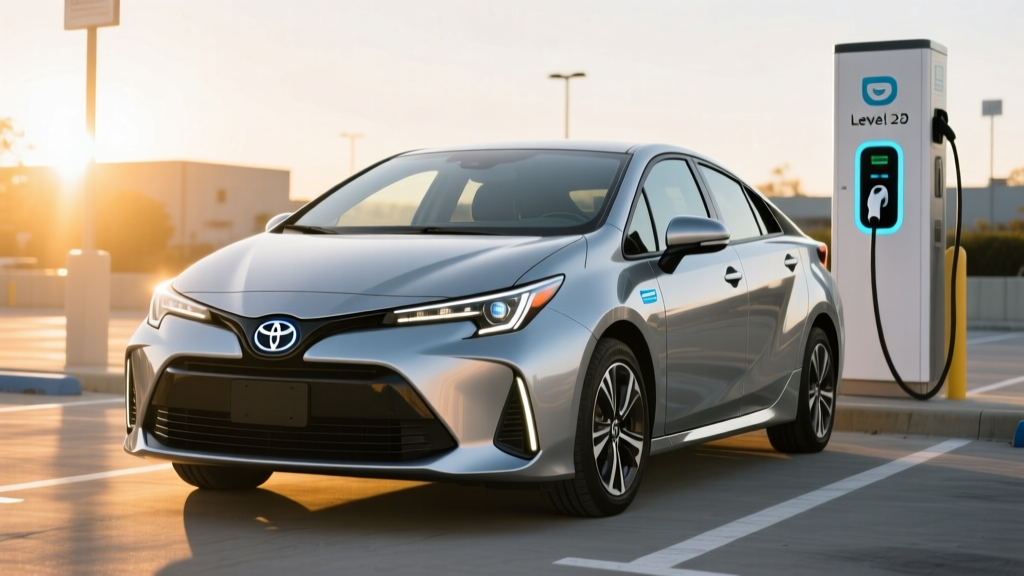
The Prius Prime's 13.6 kWh battery is small enough that charging infrastructure requirements are minimal — but you still need a plan.
| Charging Level | Power | 0–100% Time | Miles Added per Hour |
|---|---|---|---|
| Level 1 (120V household outlet) | ~1.4 kW | ~11 hours | ~4 miles |
| Level 2 (240V, 16A) | ~3.5 kW | ~4 hours | ~11 miles |
Most Prius Prime owners find Level 1 charging from a standard garage outlet sufficient. If your daily commute is 30 miles round-trip and you plug in for 10 hours overnight, you'll wake up with a nearly full battery every morning without spending a dollar on installation.
If you want faster turnaround — say, to charge between a morning commute and an afternoon errand run — a Level 2 home charger is worthwhile. Installation typically runs $500–$1,500 depending on your electrical panel's capacity and the distance from panel to garage. A licensed electrician should confirm whether your panel can support a dedicated 240V circuit before purchasing equipment.
Public charging is a non-factor for most Prius Prime owners. The lack of DC fast charging means you won't be hunting for Electrify America or Tesla Supercharger stations on road trips. The gas engine handles highway driving seamlessly, and you'll simply refuel at any gas station.
Powertrain and Performance
The fifth-generation Prius Prime uses Toyota's latest hybrid synergy drive with a 2.0-liter naturally aspirated four-cylinder engine paired with two motor-generators. The net system output of 220 hp represents a significant jump from the previous generation's 121 hp, and it shows in daily driving.
The 0–60 mph time of 6.6 seconds makes the Prius Prime genuinely quick for its class — faster than many compact crossovers and considerably quicker than the standard Prius HEV (7.2 seconds). Power delivery is linear and immediate from the electric motors, with the gas engine blending in smoothly under heavier acceleration.
Driving dynamics have improved markedly over earlier generations. The low center of gravity from the battery placement and a more rigid chassis give the Prime competent handling, though it remains tuned for comfort rather than sportiness. The available AWD-e system uses a small rear electric motor for traction in slippery conditions, though it does reduce electric-only range slightly (to approximately 39 miles EPA).
Tax Credit and Pricing: The $3,750 Question
The 2026 Toyota Prius Prime qualifies for up to $3,750 under the IRS §30D Clean Vehicle Credit — not the full $7,500. This is because the Prime's battery, while meeting some critical-mineral and component sourcing thresholds, does not meet both requirements needed for the maximum credit.
§30D Federal Tax Credit Requirements for the Prius Prime:
- Credit amount: up to $3,750 (battery component requirement met; critical minerals requirement not fully met for 2026)
- MSRP cap: vehicle must be under $55,000 (Prius Prime qualifies — base is ~$34,170)
- Buyer income cap: AGI must not exceed $150,000 (single) / $300,000 (married filing jointly)
- Point-of-sale transfer: available — dealer can apply the credit at purchase, reducing out-of-pocket cost immediately
- Must be new vehicle purchase (not lease — leased PHEVs fall under §45W commercial credit instead)
Always verify current eligibility on IRS.gov before purchasing. Battery sourcing requirements tighten annually under the Inflation Reduction Act, and credit amounts can change between model years.
With the $3,750 credit applied, the effective starting price of the Prius Prime SE drops to approximately $30,420 — narrowing the gap with the conventional Prius HEV (~$29,000) considerably. At that price point, the Prime becomes the stronger value for anyone with plug-in access, since you'll save $500–$1,000 annually in fuel costs depending on your commute and local electricity rates.
Battery Longevity, Warranty, and Replacement Costs
Toyota Hybrid Battery Warranty: 10 years or 150,000 miles, whichever comes first. This covers capacity loss below a defined threshold and defects. California-emissions states may offer extended coverage (up to 10 years / 150,000 miles on all hybrid components).
Toyota's hybrid battery track record is among the best in the industry. The Prius has been in production since 1997, and data from fleet operators and long-term owners consistently shows hybrid battery packs lasting 150,000–200,000+ miles with gradual, manageable degradation rather than sudden failure.
The 13.6 kWh PHEV battery in the Prime is larger than the standard Prius battery, but it operates within a conservative state-of-charge window managed by Toyota's battery management system. The vehicle never charges the pack to true 100% or drains it to 0% — the displayed "full" and "empty" are within a safe buffer that protects long-term cell health.
If the battery does require replacement outside of warranty, expect a cost of $3,500–$5,500 for the PHEV pack including labor, based on current dealer pricing. Third-party refurbishment services exist for $2,000–$3,500. For context, most Prius Prime batteries will outlast the vehicle's useful economic life under normal ownership patterns.
Toyota's reliability ratings remain industry-leading. The Prius consistently earns top marks from IIHS for safety and scores highly in J.D. Power dependability studies. There are no widespread reports of systemic issues with the fifth-generation powertrain.
Prius Prime vs. Full EV vs. Gas Car: Which Fits You?
Choose the Prius Prime PHEV if:
- Your daily commute is under 40 miles round-trip and you can plug in at home or work
- You take road trips several times a year and don't want to plan around charging stations
- You live in an apartment or area with limited public charging infrastructure
- You want electric commuting today but aren't ready to commit to a full EV
Choose the standard Prius HEV if:
- You cannot plug in at home or work (street parking, no garage, landlord restrictions)
- Your daily driving exceeds 50+ miles and you won't benefit from the electric range
- You want the lowest possible purchase price and don't need electric-only driving
Choose a full EV (BEV) if:
- You have reliable Level 2 home charging and your daily driving is under 250 miles
- You want to eliminate gas station visits entirely and reduce maintenance (no oil changes, fewer brake replacements)
- You qualify for the full $7,500 federal credit on an eligible BEV, narrowing the cost gap
- You want the lowest per-mile "fuel" cost (electricity is typically $0.04–$0.06/mile vs. $0.10–$0.14/mile for the Prius in hybrid mode)
Prius Prime Pros
- 44-mile electric range covers most commutes gas-free
- 50 MPG combined when battery depletes — no range anxiety on road trips
- 220 hp makes it surprisingly quick (6.6s 0–60)
- 10-year/150,000-mile hybrid battery warranty
- Level 1 charging sufficient for most owners — no installation cost required
- Strong resale value and proven Toyota reliability
Prius Prime Cons
- No DC fast charging — irrelevant for most PHEV buyers, but limits flexibility
- Only $3,750 federal credit, not the full $7,500
- AWD-e reduces electric range to ~39 miles
- Rear seat and cargo space slightly reduced vs. standard Prius due to larger battery
- Requires plug-in access to justify the price premium over the HEV
Frequently Asked Questions
How many MPG does the Toyota Prius Prime get?
The 2026 Prius Prime achieves 50 MPG combined (50 city / 47 highway) in hybrid mode after the battery depletes, per the EPA. In electric-only mode, it achieves 127 MPGe. Real-world results typically match or slightly exceed the EPA city figure in stop-and-go driving, while highway driving at sustained speeds may yield 43–48 MPG.
How far can the Prius Prime go on electric only?
The EPA rates the Prius Prime at 44 miles of electric-only range. In real-world conditions, expect 33–38 miles in cold weather and up to 48–50 miles in mild conditions with city driving. Once depleted, the gas engine starts automatically and the car operates as a conventional hybrid.
Does the Prius Prime qualify for a federal tax credit?
Yes. The 2026 Prius Prime qualifies for up to $3,750 under IRS §30D, not the full $7,500. Eligibility depends on your adjusted gross income (under $150,000 single / $300,000 married filing jointly) and the vehicle's MSRP (under $55,000). The credit can be transferred to the dealer at point of sale to reduce your purchase price immediately. Always verify current rules at IRS.gov.
Is the Prius Prime reliable, and what does battery replacement cost?
Toyota's hybrid systems have an exceptional reliability record spanning 25+ years. The Prius Prime battery is covered by a 10-year/150,000-mile warranty. Out-of-warranty replacement costs approximately $3,500–$5,500, though most batteries last well beyond 150,000 miles with gradual degradation. The EPA fuel economy listing confirms the Prime's efficiency ratings.
Do I need to install a home charger for the Prius Prime?
Not necessarily. The Prius Prime charges fully in about 11 hours on a standard 120V household outlet (Level 1), which is sufficient for most daily commuters who plug in overnight. A 240V Level 2 charger reduces charging time to approximately 4 hours and is worthwhile if you need faster turnaround between drives, but it requires professional installation ($500–$1,500 typical).
Should I buy the Prius Prime or a full EV like the Tesla Model 3?
It depends on your charging access and driving patterns. If you can charge at home and rarely drive more than 250 miles in a day, a full EV offers lower per-mile costs and near-zero maintenance. If you take frequent road trips, lack reliable home charging, or want the security of a gas engine for long drives, the Prius Prime eliminates range anxiety while still delivering gas-free commuting on most days.
The 2026 Toyota Prius Prime occupies a narrow but valuable niche: it's the most practical electrified vehicle for drivers who want meaningful electric range without any dependence on public charging infrastructure. If your life includes a garage outlet and a sub-40-mile commute, the Prime will run on electricity most days while keeping the freedom to drive cross-country without a second thought. That combination — plus Toyota's proven hybrid reliability and a 10-year battery warranty — makes it one of the lowest-risk entries into electrified driving available today.