Quick Verdict: The PHEV That Redefined the Category
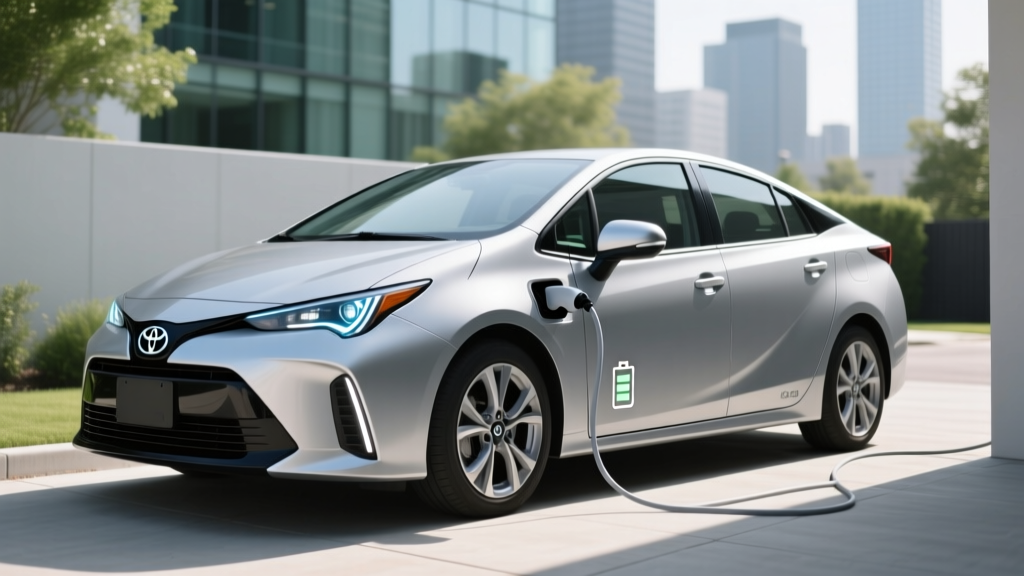
When Toyota redesigned the Prius Prime (the official name for the Prius plug-in hybrid) for the current generation, it stopped being a compromise vehicle. With 220 combined horsepower, a usable 44 miles of electric-only range, and 52 MPG combined once the battery depletes, it occupies a rare sweet spot: genuine EV commuting capability without range anxiety on road trips. For buyers who can charge at home but aren't ready to commit to a full battery-electric vehicle, the Prius Prime remains one of the most practical electrified vehicles on the market.
| Specification | Value |
|---|---|
| EV Range (EPA) | 44 miles (SE); 40 miles (XSE/XSE Premium) |
| Combined MPG (hybrid mode) | 52 MPG (SE); 48 MPG (XSE/XSE Premium) |
| MPGe (electric + gas combined) | 127 MPGe |
| Battery Capacity | 13.6 kWh (lithium-ion) |
| Combined Horsepower | 220 HP |
| 0-60 mph | 6.6 seconds |
| Level 2 Charge Time (0-100%) | ~4 hours (at 240V / 3.3 kW) |
| DC Fast Charging | Not available |
| Base MSRP (SE trim) | $33,445 |
| Battery Warranty | 10 years / 150,000 miles |
HEV vs PHEV: What's the Actual Difference?
Toyota sells two distinct Prius models, and confusing them is a common buyer mistake. The conventional Prius hybrid (HEV) uses a small battery recharged entirely by the gas engine and regenerative braking — you never plug it in. The Prius Prime (PHEV) adds a much larger battery and a charge port, letting you drive on electricity alone before the hybrid system takes over.
| Feature | Prius (HEV) | Prius Prime (PHEV) |
|---|---|---|
| Plug-in charging | No — self-charging | Yes — Level 1 & Level 2 |
| Battery size | ~1.0 kWh | 13.6 kWh |
| Electric-only driving | Brief low-speed assist only | Up to 44 miles at highway speeds |
| Combined MPG (gas mode) | 57 MPG | 52 MPG (SE) |
| Combined HP | 194 HP | 220 HP |
| Base MSRP | ~$28,345 | ~$33,445 |
| Federal tax credit eligible | No | Check §30D sourcing rules |
The HEV is the better pick if you have zero access to charging — apartment dwellers, street parkers, or those who simply want maximum fuel economy without behavioral change. The PHEV makes financial sense when you can charge at home or work and your daily driving falls under ~40 miles, effectively turning it into an EV for most commutes while retaining gas-engine backup for longer trips.
Electric-Only Range and Charging: What to Expect
The Prius Prime's EPA-rated electric range is 44 miles on the SE trim and 40 miles on the XSE and XSE Premium trims (the larger 19-inch wheels and extra weight reduce range slightly). In real-world driving, expect roughly 36-42 miles of electric range in warm weather with mixed city/highway use. In cold conditions (below 35°F), the gasoline engine will engage sooner to provide cabin heat, reducing electric-only range to approximately 28-34 miles unless you precondition the cabin while still plugged in.
Charging is straightforward but limited compared to full EVs:
- Level 1 (120V household outlet): ~11 hours for a full charge using the included cable. Adequate if you plug in overnight and drive less than 40 miles daily.
- Level 2 (240V home charger or public station): ~4 hours at the car's maximum acceptance rate of 3.3 kW. A standard Level 2 home charger (even a 32-amp unit delivering 7.7 kW) will still only push 3.3 kW into the Prime because the onboard charger is the bottleneck.
- DC fast charging: Not supported. Toyota omitted DC fast-charge capability, which is typical for PHEVs in this price segment but worth noting if you expected quick top-ups on road trips.
The total combined range — electric plus a full tank of gasoline — exceeds 550 miles, eliminating range anxiety entirely. When the battery depletes, the car seamlessly transitions to hybrid mode without any driver intervention.
Fuel Economy: EPA vs Real-World MPG
Once the battery is depleted and the Prius Prime operates as a conventional hybrid, the EPA rates it at 52 MPG combined (53 city / 51 highway) for the SE trim and 48 MPG combined (50 city / 47 highway) for the XSE trims. According to fueleconomy.gov, the combined MPGe rating (blending electric and gasoline operation) is 127 MPGe.
| Trim | City MPG | Highway MPG | Combined MPG | MPGe |
|---|---|---|---|---|
| SE | 53 | 51 | 52 | 127 |
| XSE | 50 | 47 | 48 | 114 |
| XSE Premium | 50 | 47 | 48 | 114 |
Real-world expectation: Toyota hybrids frequently exceed their EPA city ratings because regenerative braking recovers more energy in stop-and-go traffic. Owners on fuel-tracking platforms commonly report 54-58 MPG in city-heavy driving on the SE trim. Highway-only driving at 75+ MPH tends to drop efficiency to 46-50 MPG as aerodynamic drag increases and regen opportunities decrease. In cold weather, expect a 5-10% MPG reduction due to engine warm-up cycles and cabin heating demands.
Powertrain and Performance
The current-generation Prius Prime pairs a 2.0-liter four-cylinder Atkinson-cycle engine with two motor-generators through Toyota's fifth-generation hybrid transaxle. Combined output is 220 horsepower — a dramatic improvement over the previous generation's 121 HP. The 0-60 mph time of 6.6 seconds makes it genuinely quick for an efficiency-focused vehicle, merging onto highways with confidence that older Prius models lacked.
The powertrain operates in several modes:
- EV Mode: Pure electric driving up to highway speeds (approximately 84 mph top electric speed). The default when the battery has charge.
- Hybrid (HV) Mode: Engine and motors work together for maximum efficiency. Engages automatically when the battery depletes or under hard acceleration.
- Auto EV/HV Mode: The system decides when to use electric vs. hybrid based on driving patterns and navigation data (if a route is entered).
- Charge Mode: The gas engine actively charges the battery while driving — useful if you want to save electric range for a zero-emission zone later in your trip.
Regenerative braking is adjustable via paddle shifters (four levels of regen intensity), though the Prius Prime does not offer true one-pedal driving to a complete stop like some full EVs. The strongest regen setting provides meaningful deceleration but you will still need the brake pedal for final stops.
Pricing, Trims, and Tax Credit Eligibility
The 2025 Toyota Prius Prime is offered in three trims:
- SE: ~$33,445 MSRP — 17-inch wheels, maximum 44-mile EV range, 52 MPG combined
- XSE: ~$36,695 MSRP — 19-inch wheels, 40-mile EV range, SofTex seats, larger touchscreen
- XSE Premium: ~$39,995 MSRP — adds panoramic roof, heated/ventilated front seats, premium audio, advanced park assist
Federal tax credit (§30D): The Prius Prime's eligibility for the up-to-$3,750 federal tax credit depends on current battery-sourcing and critical-mineral requirements under the Inflation Reduction Act. Because Toyota manufactures the Prius Prime in Japan (not in a qualifying North American final-assembly location for the new-vehicle credit), it does not qualify for the §30D new clean vehicle credit as of current IRS rules. However, if you purchase a used Prius Prime that meets the criteria, the previously owned clean vehicle credit (up to $4,000) under §25E may apply, subject to income caps ($75,000 single / $150,000 joint), a $25,000 maximum sale price, and dealer reporting requirements. Always verify current eligibility on IRS.gov and consult a tax professional before relying on credit availability.
§30D New Vehicle Credit — Prius Prime Status:
- ❌ Final assembly in North America: No (assembled in Japan)
- ❌ Battery component sourcing requirement: Does not meet current threshold
- ❌ Critical minerals sourcing requirement: Does not meet current threshold
- Result: Not eligible for the new-vehicle §30D credit
§25E Used Vehicle Credit — May Apply:
- Sale price must be $25,000 or below
- Buyer income: ≤$75,000 single / $112,500 head of household / $150,000 joint
- Credit: 30% of sale price, maximum $4,000
- Must purchase through a licensed dealer
Reliability, Battery Warranty, and Replacement Cost
Toyota Hybrid Battery Warranty: 10 years or 150,000 miles (whichever comes first) in all 50 states. This covers the high-voltage traction battery against defects and capacity loss below a specified threshold. The 12V auxiliary battery carries a separate warranty (typically 2 years/36,000 miles).
Toyota's hybrid system is among the most proven in the automotive industry, with over two decades of real-world deployment since the original 1997 Prius. Independent reliability surveys from Consumer Reports and J.D. Power consistently rank Toyota hybrids at or near the top of their segments. The fifth-generation hybrid transaxle in the current Prius Prime uses a simpler parallel-gear design that Toyota claims reduces internal losses and improves durability.
Battery replacement cost: If the high-voltage battery fails outside warranty, a new OEM replacement battery pack for the Prius Prime costs approximately $4,500-$6,500 including parts and labor at a Toyota dealer. However, actual out-of-warranty failures are rare — Toyota's hybrid batteries in prior generations have demonstrated 15-20+ year lifespans in normal use. The larger 13.6 kWh pack in the Prime operates at a shallower depth of discharge than a full EV battery (the system maintains a buffer, using only a portion of total capacity), which reduces stress and extends cycle life.
The conventional 12V auxiliary battery — which powers electronics and starts the system — typically needs replacement every 4-6 years at a cost of $200-$400. This is a standard maintenance item, not a reliability concern.
Who Should Choose the Prius Prime vs a Full EV or Gas Car?
Choose the Prius Prime (PHEV) if:
- You can charge at home (garage, driveway, or workplace Level 2)
- Your daily commute is under ~40 miles round-trip
- You take regular road trips exceeding 200 miles and don't want to plan around charging stops
- You want EV-like commuting without committing to a full battery-electric vehicle
- You live in a cold climate where EV range loss is a concern
Choose the conventional Prius (HEV) if:
- You cannot charge at home or work (apartment, street parking, no outlet access)
- You want maximum MPG without any plug-in behavior change
- Your budget is tighter — the HEV starts ~$5,100 lower
- You drive primarily long highway routes where the PHEV's electric range provides minimal benefit
Choose a full EV (e.g., Tesla Model 3, Hyundai Ioniq 6, Chevrolet Equinox EV) if:
- You can install a Level 2 home charger
- Your daily driving is under 200 miles and you're comfortable with public charging for road trips
- You want zero tailpipe emissions and lower per-mile energy costs
- You want to qualify for the full $7,500 §30D federal tax credit (many full EVs now qualify)
- You want minimal maintenance — no oil changes, no gas engine upkeep
Pros
- 44-mile EV range covers most commutes gas-free
- 52 MPG in hybrid mode — among the best of any PHEV
- 220 HP makes it genuinely quick (6.6s to 60 mph)
- 550+ mile total range eliminates trip-planning anxiety
- 10-year / 150,000-mile battery warranty
- Proven Toyota reliability and strong resale value
- Charges on a standard 120V outlet (Level 1 included)
Cons
- No DC fast charging capability
- 3.3 kW onboard charger limits Level 2 speed
- Does not qualify for the $7,500 new-vehicle federal tax credit
- Cargo space reduced vs. conventional Prius (battery under rear seat)
- Rear-seat headroom tight for taller passengers
- Cold weather reduces EV range by 15-25%
- XSE Premium trim approaches $40,000, entering full-EV price territory
Frequently Asked Questions
How many MPG does the Prius plug-in hybrid get?
The Toyota Prius Prime SE is EPA-rated at 52 MPG combined (53 city / 51 highway) when operating as a hybrid after the battery is depleted. The XSE and XSE Premium trims are rated at 48 MPG combined. Real-world city driving often yields 54-58 MPG thanks to regenerative braking, while sustained highway driving at high speeds may return 46-50 MPG.
How far can the Prius Prime go on electric only?
The EPA rates the Prius Prime SE at 44 miles of electric-only range, and the XSE/XSE Premium at 40 miles. In warm weather with moderate driving, expect 36-42 real-world electric miles. In cold weather (below 35°F), range drops to roughly 28-34 miles because the engine engages to heat the cabin. Preconditioning the cabin while plugged in can mitigate this loss.
Does the Prius Prime qualify for a federal tax credit?
The Prius Prime does not qualify for the §30D new clean vehicle credit because it is assembled in Japan and does not meet current battery-sourcing requirements. However, a used Prius Prime purchased for $25,000 or less from a licensed dealer may qualify for the §25E previously owned clean vehicle credit (up to $4,000), subject to buyer income limits. Always check current rules at IRS.gov.
How long does the Prius Prime battery last and what does replacement cost?
Toyota warranties the hybrid battery for 10 years or 150,000 miles in all states. Historical data from prior-generation Toyota hybrids suggests the battery can last 15-20 years under normal use. Out-of-warranty replacement costs approximately $4,500-$6,500 at a dealer, though failures outside warranty are uncommon. The system's shallow depth of discharge (maintaining a buffer above and below the usable range) significantly extends battery longevity.
Can I charge the Prius Prime at a regular wall outlet?
Yes. The Prius Prime includes a Level 1 charging cable that plugs into a standard 120V household outlet. A full charge takes approximately 11 hours, which is sufficient for overnight charging if your daily driving is under 40 miles. For faster charging, a 240V Level 2 station reduces the time to about 4 hours, though the car's 3.3 kW onboard charger is the limiting factor.
Is the Prius Prime better than a full EV like the Tesla Model 3?
It depends on your situation. The Prius Prime is better if you lack reliable charging access for road trips, live in extreme cold, or want a lower purchase price without charging-infrastructure dependency. A full EV like the Model 3 (358-mile range, DC fast charging, $7,500 tax credit eligibility, lower per-mile energy cost) is better if you can charge at home, drive under 300 miles daily, and want zero tailpipe emissions with minimal maintenance.