Quick Verdict: The Prius Still Sets the Hybrid Gas Mileage Benchmark
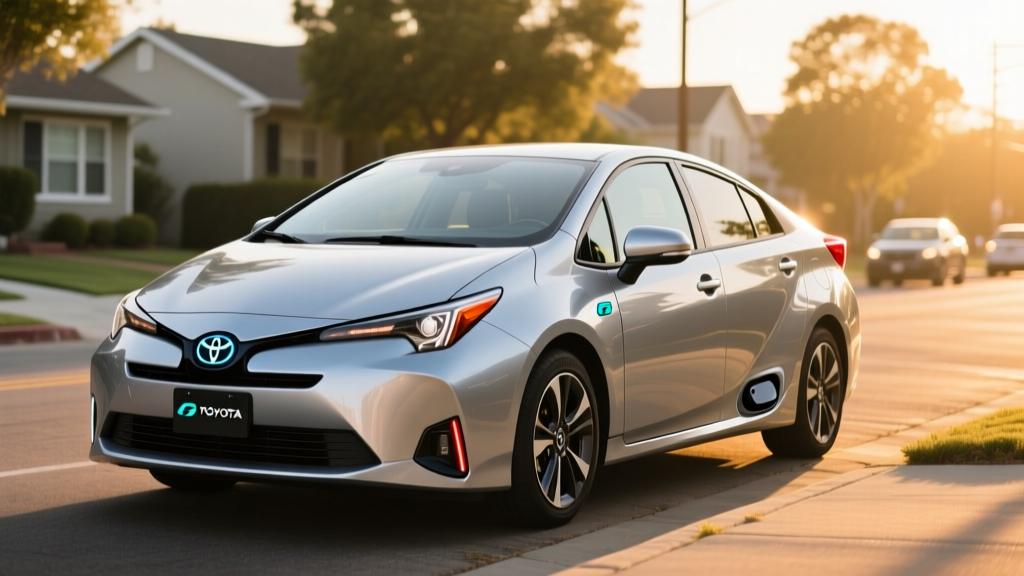
The 2026 Toyota Prius remains the reference point for hybrid car gas mileage in the U.S. market. With an EPA-estimated 57 MPG combined on the LE FWD trim, it delivers fuel economy that no mainstream rival currently matches at a comparable price. The all-wheel-drive LE AWD variant sacrifices just 3 MPG combined — landing at 54 MPG — while the sportier XSE FWD still returns 52 MPG combined despite larger wheels and a more aggressive tune. For buyers who want electrified efficiency without plugging in, the Prius LE is the efficiency-per-dollar champion.
But EPA stickers only tell part of the story. Hybrid powertrains behave differently than gas engines in real-world driving, and the Prius is one of the few vehicles where city driving actually yields better fuel economy than highway cruising. Below, we reconcile the EPA figures with real-world expectations, compare the standard hybrid (HEV) against the plug-in Prius Prime (PHEV), and map out who should choose which.
HEV vs PHEV: Which Prius Powertrain Fits You?
Conventional Hybrid (HEV) — Toyota Prius: No plug required. The 1.8-liter engine and electric motor work in tandem, with regenerative braking and engine operation recharging a small 1.0 kWh (usable ~0.6 kWh) nickel-metal hydride battery. You simply fill it with gas and drive. Efficiency is consistent whether you start with a full "battery" or not.
Plug-In Hybrid (PHEV) — Toyota Prius Prime: Adds a larger 13.6 kWh lithium-ion battery pack and a more powerful electric motor. It delivers an EPA-estimated 44 miles of electric-only driving before the gasoline engine kicks in. You can charge it from a wall outlet (Level 1) or a Level 2 home charger. Once the electric range depletes, it operates as a conventional hybrid returning approximately 48–52 MPG combined depending on trim. The Prime does not support DC fast charging — a notable limitation for road-trippers who want quick top-ups.
2026 Prius Hybrid Gas Mileage: EPA Numbers Breakdown
| Trim / Drivetrain | City MPG | Highway MPG | Combined MPG | MPG Range (Real-World) |
|---|---|---|---|---|
| Prius LE FWD | 57 | 56 | 57 | 48–62 |
| Prius LE AWD-e | 53 | 54 | 54 | 45–58 |
| Prius XLE FWD | 52 | 52 | 52 | 44–56 |
| Prius XSE FWD | 50 | 47 | 48 | 40–53 |
| Prius Prime SE (PHEV) | 52 (hybrid mode) | 48 (hybrid mode) | 50 (hybrid mode) | 44–55 |
Source: EPA Fuel Economy. Real-world range reflects observed owner data, seasonal variation, and driving style.
Hybrids like the Prius frequently exceed their EPA city estimates in stop-and-go traffic because regenerative braking recovers energy that a gas car wastes as heat. On city-heavy commutes (under 45 mph, frequent stops), many Prius LE owners report 60+ MPG. However, sustained highway driving at 75+ mph pushes the engine harder and reduces regenerative opportunities — expect highway MPG to dip to the mid-40s in warm weather and low 40s in cold conditions. Winter fuel economy drops 5–12% due to cabin heating demand and reduced battery efficiency.
Prius Prime PHEV: Electric-Only Range and Total Range
The 2026 Prius Prime SE delivers an EPA-estimated 44 miles of electric-only range on a full charge — enough to cover most daily commutes without burning a drop of gasoline. Once that electric buffer is depleted, the Prime operates as a conventional hybrid, returning approximately 50 MPG combined (SE trim). That means the total combined range — electric plus gasoline — exceeds 580 miles on a single tank and full charge.
| Spec | Prius Prime SE (PHEV) |
|---|---|
| Battery Capacity | 13.6 kWh (lithium-ion) |
| Electric-Only Range (EPA) | 44 miles |
| Combined Range (EV + Gas) | ~580 miles |
| MPGe (EV Mode) | 127 MPGe |
| Level 1 Charging (120V) | ~11 hours (0–100%) |
| Level 2 Charging (240V) | ~4 hours (0–100%) |
| DC Fast Charge | Not supported |
| Combined Horsepower | 220 hp |
| 0–60 mph | 6.6 seconds |
The Prime's 220 combined horsepower represents a substantial upgrade over the standard Prius HEV's 194 hp (FWD) or 196 hp (AWD-e). The plug-in model hits 60 mph in 6.6 seconds versus 7.2 seconds for the FWD hybrid — a meaningful gap when merging onto freeways.
Charging caveat: The Prius Prime does not support DC fast charging. If you need rapid top-ups on road trips, you'll be operating in hybrid mode (burning gas) — which is perfectly efficient at 50 MPG combined, but you won't be able to "refuel" the battery at a public fast charger the way a full EV or some rival PHEVs (like the Hyundai Tucson PHEV) can.
Powertrain and Efficiency Engineering
The 2026 Prius uses Toyota's fifth-generation hybrid system. The standard HEV pairs a 1.8-liter Atkinson-cycle four-cylinder engine (producing 97 hp on its own) with two motor-generators and a planetary gearset that seamlessly blends electric and gas power. Total system output is 194 hp for FWD models; AWD-e trims add a rear-axle electric motor for 196 hp combined.
The Prius Prime upgrades to a 2.0-liter Atkinson-cycle engine and a more powerful drive motor, yielding 220 hp. Its larger 13.6 kWh battery enables genuine electric-only highway driving at speeds up to 84 mph — a major improvement over earlier Prime generations that limited EV mode to lower speeds.
Both powertrains use a continuously variable transmission (eCVT) that prioritizes efficiency over sportiness. Throttle response is linear, and the transition between electric and gas power is nearly imperceptible at normal driving speeds.
Pricing, Tax Credits, and Total Cost
| Model / Trim | Base MSRP | Federal Tax Credit (§30D) |
|---|---|---|
| Prius LE FWD (HEV) | $29,445 | Not eligible (not a PHEV) |
| Prius LE AWD-e (HEV) | $30,845 | Not eligible |
| Prius XLE FWD (HEV) | $32,695 | Not eligible |
| Prius XSE FWD (HEV) | $35,095 | Not eligible |
| Prius Prime SE (PHEV) | $34,695 | Up to $3,750* |
| Prius Prime XSE (PHEV) | $39,545 | Up to $3,750* |
*The Prius Prime qualifies for a partial federal tax credit under IRS §30D — currently up to $3,750 (reflecting the critical-minerals requirement met, but battery-component sourcing that does not fully satisfy the separate battery-component threshold). Eligibility depends on buyer income caps ($150K single / $300K joint AGI), MSRP caps ($55,000 for sedans), and current-year sourcing rules. The credit can be transferred to the dealer at point of sale. Always verify current-year eligibility with a tax professional or the IRS before purchasing.
Conventional Prius HEV trims do not qualify for any federal purchase tax credit, as §30D applies only to plug-in vehicles with battery capacity ≥7 kWh. Some states and utilities offer separate rebates for conventional hybrids — check your state energy office or AFDC incentive database for local programs.
Toyota covers the hybrid battery and all hybrid-system components for 10 years or 150,000 miles (whichever comes first) on all 2026 Prius models, HEV and Prime alike. This is one of the strongest hybrid battery warranties in the industry. Toyota's nickel-metal hydride packs in the standard Prius have demonstrated exceptional longevity — data from fleet operators and long-term owners shows minimal capacity degradation even past 200,000 miles. The Prime's lithium-ion pack carries the same warranty. If out-of-warranty replacement is needed, a Prius HEV battery typically costs $2,000–$3,500 installed; the Prime's larger pack runs $4,500–$6,500. Third-party refurbished options can reduce these costs by 30–50%.
Hybrid vs PHEV vs Full EV: Which Should You Choose?
Choose the Prius HEV (conventional hybrid) if:
- You lack access to home or workplace charging (apartment dwellers, street parkers)
- You want maximum MPG with zero behavior change — just fill up and drive
- Your budget is under $35,000 and you want the lowest cost-per-mile gas vehicle available
- You regularly take long road trips and don't want to think about charging logistics
Choose the Prius Prime (PHEV) if:
- You can charge at home (even a standard 120V outlet works overnight)
- Your daily commute is under 44 miles round-trip — you may burn almost no gas on weekdays
- You want EV-like city driving with gas-engine flexibility for weekend road trips
- The partial $3,750 tax credit brings the effective price close to the XLE HEV
Choose a full EV (e.g., Tesla Model 3, Hyundai Ioniq 6) if:
- You have reliable Level 2 home charging and access to DC fast chargers on your routes
- You want zero tailpipe emissions and the lowest per-mile fuel cost (~$0.04–$0.06/mi vs $0.08–$0.11/mi for the Prius)
- You qualify for the full $7,500 federal EV tax credit, narrowing the price gap
- You're willing to plan charging stops on road trips exceeding 250+ miles
Reliability, Ownership Costs, and the Bottom Line
Toyota's hybrid system has an unmatched reliability track record. The Prius consistently earns top marks from Consumer Reports and J.D. Power for long-term dependability. The absence of a traditional automatic transmission (the eCVT has no clutch packs or bands to wear), combined with regenerative braking that reduces brake-pad wear, keeps maintenance costs below the industry average. Expect annual maintenance costs of $350–$500 — roughly half what a comparable turbocharged gas sedan requires.
- Best-in-class hybrid gas mileage: 57 MPG combined (LE FWD)
- No plug-in needed — zero lifestyle change from a gas car
- 10-year / 150,000-mile hybrid battery warranty
- Proven reliability with 25+ years of Prius data
- Strong resale value — Prius holds ~55% of value at 5 years
- AWD-e option for snow-belt buyers
- Rear seat and cargo space tighter than crossover rivals
- No DC fast charging on Prime PHEV
- HEV trims ineligible for federal tax credit
- Infotainment system functional but not class-leading
- Highway MPG drops at sustained 75+ mph speeds
- XSE trim sacrifices MPG for style (48 combined)
Frequently Asked Questions
How many MPG does the 2026 Toyota Prius hybrid get?
The EPA rates the 2026 Prius LE FWD at 57 city / 56 highway / 57 combined MPG. The AWD-e LE drops to 53/54/54. Real-world city driving often exceeds the EPA estimate — many owners report 58–62 MPG in stop-and-go traffic. Highway driving at 75+ mph typically yields 44–48 MPG.
How far can the Prius Prime go on electric only?
The 2026 Prius Prime SE delivers an EPA-estimated 44 miles of electric-only range. That covers most daily commutes without using gasoline. The XSE and XSE Premium trims achieve 40 miles of electric range due to larger wheels and added weight. Once depleted, the Prime operates as a hybrid at approximately 48–52 MPG combined.
Do I need to plug in a regular Prius hybrid?
No. The conventional Prius HEV charges its small battery through regenerative braking and the gasoline engine. You never plug it in — you simply refuel with gasoline like any other car. Only the Prius Prime (PHEV) benefits from plug-in charging.
Is the Prius hybrid battery reliable and what does replacement cost?
Toyota's hybrid batteries are among the most durable in the industry. The standard Prius uses a nickel-metal hydride pack covered by a 10-year / 150,000-mile warranty. Real-world data shows these batteries often last well beyond 200,000 miles with minimal degradation. Out-of-warranty replacement costs $2,000–$3,500 for the HEV and $4,500–$6,500 for the Prime's larger lithium-ion pack.
Does the 2026 Prius qualify for a federal tax credit?
The conventional Prius HEV does not qualify for the federal §30D tax credit (it applies only to plug-in vehicles). The Prius Prime PHEV qualifies for a partial credit of up to $3,750, subject to buyer income limits ($150K single / $300K joint), the $55,000 sedan MSRP cap, and current-year battery sourcing requirements. Verify eligibility at IRS.gov or with a tax professional before purchase.
How does the Prius compare to other hybrids on gas mileage?
The Prius LE's 57 MPG combined leads all non-plug-in hybrids sold in the U.S. for 2026. The Hyundai Elantra Hybrid Blue returns 54 MPG combined; the Honda Accord Hybrid achieves 48 MPG combined; the Toyota Camry Hybrid LE reaches 52 MPG combined. The Prius maintains a 3–5 MPG advantage over its closest competitors.