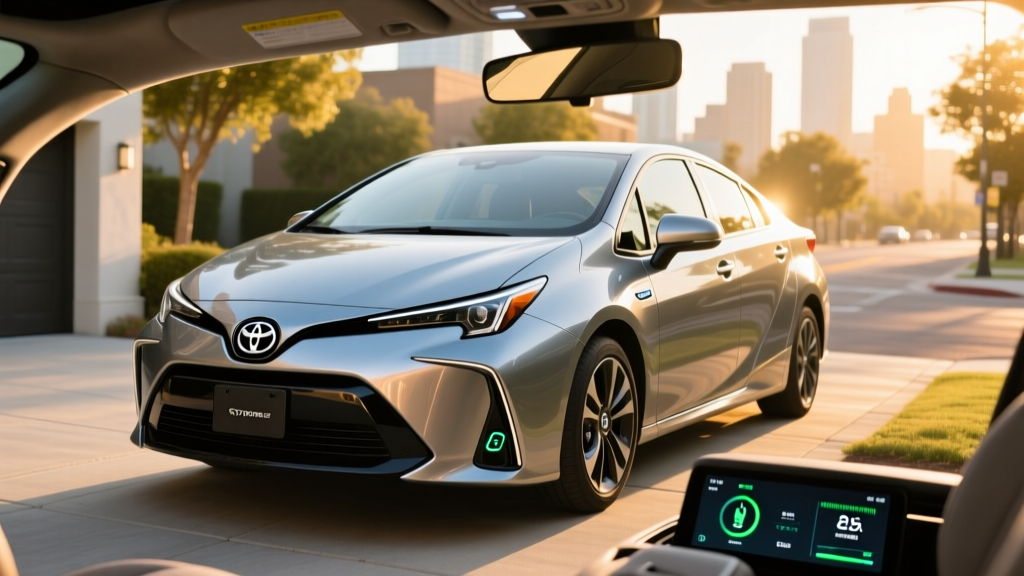
The fifth-generation Toyota Prius has shed its econobox reputation without sacrificing the efficiency that made it famous. For buyers researching the Toyota Prius hybrid cost — from sticker price through five years of fuel, maintenance, and insurance — the math is more compelling than ever. This guide breaks down every dollar and every mile, using 2026 model-year data.
2026 Toyota Prius Hybrid: Trim Pricing and What You Get
The conventional Prius (HEV) comes in three trims for 2026. All use Toyota's latest hybrid synergy drive with a 2.0-liter four-cylinder engine paired with two motor-generators and a lithium-ion traction battery. All-wheel drive (AWD-e) adds an independent rear motor on select trims.
| Trim | Drivetrain | MSRP | Key Features |
|---|---|---|---|
| LE | FWD | $29,445 | 17-inch alloys, 8-inch touchscreen, TSS 3.0, wireless CarPlay/Android Auto |
| XLE | FWD | $32,895 | Heated front seats, 12.3-inch display, SofTex, wireless charging, smart key |
| XLE AWD-e | AWD | $34,295 | Electronic on-demand AWD, same as XLE |
| Limited | FWD | $36,240 | Fixed glass roof, JBL 8-speaker audio, heated/ventilated seats, digital rearview mirror |
| Limited AWD-e | AWD | $37,640 | AWD-e plus all Limited features |
The Prius Prime (PHEV) starts at $34,445 for the SE trim and climbs to $40,620 for the XSE Premium with AWD. We cover the Prime in detail below, but it's important to understand the fundamental difference between these two powertrains before evaluating cost.
HEV vs. PHEV: Which Prius Fits Your Driving?
PHEV (Prius Prime): The Prime has a larger 13.6 kWh battery and a charge port. Plug it in overnight on Level 1 (120V) or Level 2 (240V) to unlock up to 44 miles of electric-only driving. Once the battery depletes, it operates as a conventional hybrid.
| Attribute | Prius HEV (LE FWD) | Prius Prime (SE) |
|---|---|---|
| Powertrain | 2.0L I4 + 2 motor-generators | 2.0L I4 + 2 motor-generators |
| Combined HP | 194 hp (FWD) / 196 hp (AWD-e) | 220 hp |
| 0–60 mph | 7.2 sec (FWD) | 6.6 sec |
| Battery capacity | ~1.0 kWh lithium-ion | 13.6 kWh lithium-ion |
| Plugs in? | No | Yes (J1772 / Level 1 & 2) |
| EV-only range | N/A | 44 miles (EPA) |
| EPA combined MPG | 57 MPG | 52 MPG (hybrid mode) / 127 MPGe (with charge) |
| Total range | ~600+ miles | ~490 miles (EV + hybrid) |
| Base MSRP | $29,445 | $34,445 |
If your daily commute is under 40 miles round-trip and you have home charging access, the Prime can run almost entirely on electricity during the week, using gas only on longer trips. If you lack reliable charging access or drive mostly highway miles, the standard HEV delivers outstanding efficiency with zero plug-in hassle.
Fuel Economy: EPA Ratings and Real-World MPG
| Trim / Drivetrain | City MPG | Highway MPG | Combined MPG |
|---|---|---|---|
| LE (FWD) | 57 | 56 | 57 |
| XLE (FWD) | 52 | 52 | 52 |
| XLE AWD-e | 49 | 50 | 49 |
| Limited (FWD) | 52 | 52 | 52 |
| Limited AWD-e | 49 | 50 | 49 |
Source: EPA / fueleconomy.gov
The XLE and Limited trims drop to 52 MPG combined because of larger 19-inch wheels, added weight from premium features, and higher rolling resistance. AWD-e trims cost you another 3 MPG but provide meaningful traction in rain and light snow.
Prius Prime PHEV: Electric Range and Charging Details
For buyers cross-shopping the Prius Prime against fully electric vehicles, the electric-only range is the headline number. The 2026 Prius Prime SE delivers an EPA-rated 44 miles of EV driving on a full charge. The XSE and XSE Premium trims (with 19-inch wheels and more weight) drop to 40 miles.
Once the battery is depleted, the Prime seamlessly transitions to hybrid mode, returning an EPA-rated 52 MPG combined (SE) or 48 MPG (XSE trims). Total range — EV plus hybrid — reaches approximately 490 miles, eliminating range anxiety entirely.
| Charging Method | Power Level | 0–100% Time | Connector |
|---|---|---|---|
| Level 1 (120V household) | ~1.4 kW | ~11 hours | Standard NEMA 5-15 |
| Level 2 (240V home/public) | ~3.3 kW (onboard charger limit) | ~4 hours | J1772 |
| DC Fast Charge | Not supported | N/A | N/A |
The Prime's onboard charger is limited to 3.3 kW, meaning even a 48-amp Level 2 station will only deliver 3.3 kW to the battery. This is standard for PHEVs — the smaller battery doesn't need rapid charging. However, the lack of DC fast charging means you cannot top up quickly on road trips. For the Prime's use case (overnight home charging for daily commutes), this is rarely a limitation.
Five-Year Cost of Ownership: Prius Hybrid vs. Gas Sedan
Sticker price is only the starting point. The Toyota Prius hybrid cost picture becomes clearer when you model five years of fuel, maintenance, insurance, and depreciation against a comparable gas-only sedan like the Honda Civic or Toyota Corolla.
| Cost Category | Prius LE (57 MPG) | Gas Sedan (33 MPG avg) |
|---|---|---|
| Purchase price (MSRP) | $29,445 | $26,500 |
| Fuel (75,000 mi @ $3.40/gal) | $4,474 | $7,727 |
| Maintenance (5 yr) | $2,100 | $2,800 |
| Insurance (5 yr avg) | $7,500 | $6,900 |
| Depreciation (est. 5 yr) | $11,200 | $12,400 |
| Total 5-yr cost | $54,719 | $56,327 |
| Cost per mile | $0.73 | $0.75 |
Assumptions: 15,000 miles/year, $3.40/gallon regular unleaded, 55% city / 45% highway mix. Insurance estimates based on national averages. Depreciation based on historical Prius resale strength (Kelley Blue Book data consistently ranks Prius among top compact cars for value retention).
The Prius LE breaks even on its ~$2,945 higher purchase price within roughly 3.5 years through fuel savings alone. After five years, the Prius comes out approximately $1,600 ahead — and that gap widens as you keep the car longer. Drivers who log higher annual miles or face higher local gas prices will see payback even sooner.
Battery Warranty, Lifespan, and Replacement Cost
Hybrid battery longevity has improved substantially with Toyota's shift from nickel-metal hydride (NiMH) to lithium-ion chemistry. Real-world data from fleet operators and high-mileage owners shows the current-generation lithium-ion pack routinely lasting 150,000–200,000 miles before meaningful capacity loss. The small ~1.0 kWh battery in the HEV undergoes shallow charge cycles (typically operating between 40–80% state of charge), which dramatically reduces degradation compared to a full EV battery that cycles through a wider range.
If replacement is needed out of warranty, a new OEM hybrid battery for the current Prius runs approximately $2,200–$3,500 including labor at a dealership. Independent hybrid specialists often offer refurbished packs for $1,200–$1,800. For the Prime's larger 13.6 kWh pack, expect $4,000–$6,500 for OEM replacement — a more significant sum, though still far less than a full EV battery swap.
Source: Toyota Owner's Warranty Guide
Tax Credits and Incentives for the Prius
Under current IRS §30D rules, the conventional Prius HEV does not qualify for the federal plug-in EV tax credit. It is not a plug-in vehicle — it has no charge port and no meaningful all-electric range. The up-to-$7,500 federal credit applies only to new plug-in electric vehicles (BEVs and qualifying PHEVs) that meet battery sourcing, critical mineral, MSRP cap ($55,000 for sedans), and buyer income requirements.
The Prius Prime (PHEV) does qualify for the federal tax credit — but the amount depends on current-year battery sourcing compliance. For 2026, verify the Prime's eligibility on the IRS clean vehicle credit list at fueleconomy.gov, as critical mineral and battery component sourcing requirements tighten annually. If eligible, buyers can claim up to $3,750 or $7,500 depending on whether the vehicle meets one or both of the sourcing thresholds, and may transfer the credit to the dealer at point of sale for an instant price reduction.
- Buyer income cap: Modified AGI must not exceed $150,000 (single) or $300,000 (joint) to claim the credit.
- MSRP cap: The Prius Prime's MSRP is well under the $55,000 sedan cap, so it clears this hurdle easily.
- State incentives: Several states offer additional rebates for PHEVs (e.g., California, Colorado, New York). Check your state energy office for current programs.
Reliability and Safety Ratings
The Prius nameplate carries one of the strongest long-term reliability records in the industry. The current-generation model earned an IIHS Top Safety Pick designation, with Good ratings across all crashworthiness tests. Toyota Safety Sense 3.0 comes standard on every trim, including pre-collision braking with pedestrian detection, full-speed adaptive cruise control, lane departure alert with steering assist, lane tracing assist, and automatic high beams.
On the maintenance side, the hybrid powertrain eliminates several traditional wear items. There is no conventional starter motor, no alternator, and the engine runs fewer hours per mile (reducing oil degradation). Brake pads last significantly longer thanks to regenerative braking handling most deceleration — many Prius owners report original brake pads at 80,000+ miles. Toyota's recommended maintenance schedule calls for oil changes every 10,000 miles, keeping routine service costs low.
Who Should Buy the Prius Hybrid — and Who Should Look Elsewhere?
- You want maximum MPG with zero charging infrastructure needs
- You drive 12,000–20,000 miles/year and want to minimize fuel costs
- You lack access to home or workplace charging
- You want proven long-term reliability with a 10-year battery warranty
- Your budget is $29,000–$37,000 for a new vehicle
Choose the Prius Prime PHEV if:
- Your commute is under 40 miles round-trip and you can charge at home
- You want EV-like daily driving without range anxiety on road trips
- You want to qualify for the federal tax credit (up to $7,500)
- You're willing to pay ~$5,000 more upfront for electrified driving
Choose a full EV instead if:
- You have reliable home Level 2 charging and want zero gas use
- Your state offers strong EV rebates on top of the federal credit
- You want the lowest possible per-mile fuel cost (~$0.04/mi on home electricity vs. ~$0.06/mi in the Prius HEV)
- You're comfortable with 250+ mile range and DC fast charging for road trips
Frequently Asked Questions
How many MPG does the 2026 Toyota Prius hybrid get?
The Prius LE FWD achieves an EPA-rated 57 MPG city, 56 highway, and 57 combined. XLE and Limited trims drop to 52 combined. AWD-e trims return 49 combined. Real-world city driving often exceeds EPA estimates due to regenerative braking; highway driving at sustained high speeds may return slightly less.
Does the Toyota Prius hybrid need to be plugged in?
No. The conventional Prius HEV charges its battery entirely through regenerative braking and engine power. You never plug it in. Only the Prius Prime (PHEV) has a charge port and benefits from plugging in.
How far can the Prius Prime go on electric only?
The 2026 Prius Prime SE delivers an EPA-rated 44 miles of all-electric range. XSE and XSE Premium trims achieve 40 miles. After the battery depletes, the Prime operates as a standard hybrid with no range limitation beyond the gas tank.
Is the Toyota Prius hybrid reliable and what does battery replacement cost?
The Prius has one of the strongest reliability records in the auto industry. Toyota covers the hybrid battery for 10 years/150,000 miles. Real-world lifespan typically reaches 150,000–200,000 miles. Out-of-warranty OEM replacement costs $2,200–$3,500 for the HEV and $4,000–$6,500 for the Prime's larger pack.
Does the Toyota Prius qualify for any tax credit?
The conventional Prius HEV does not qualify for the federal §30D plug-in EV tax credit. The Prius Prime PHEV may qualify for up to $7,500 depending on current-year battery sourcing rules and your income. Always verify eligibility at fueleconomy.gov before purchasing. Some states offer additional PHEV rebates.
How does Prius fuel cost compare to a gas car?
At $3.40/gallon and 15,000 miles/year, the Prius LE (57 MPG) costs about $895/year in fuel. A comparable gas sedan averaging 33 MPG costs about $1,545/year. That's roughly $650 in annual fuel savings with the Prius, or $3,250 over five years.