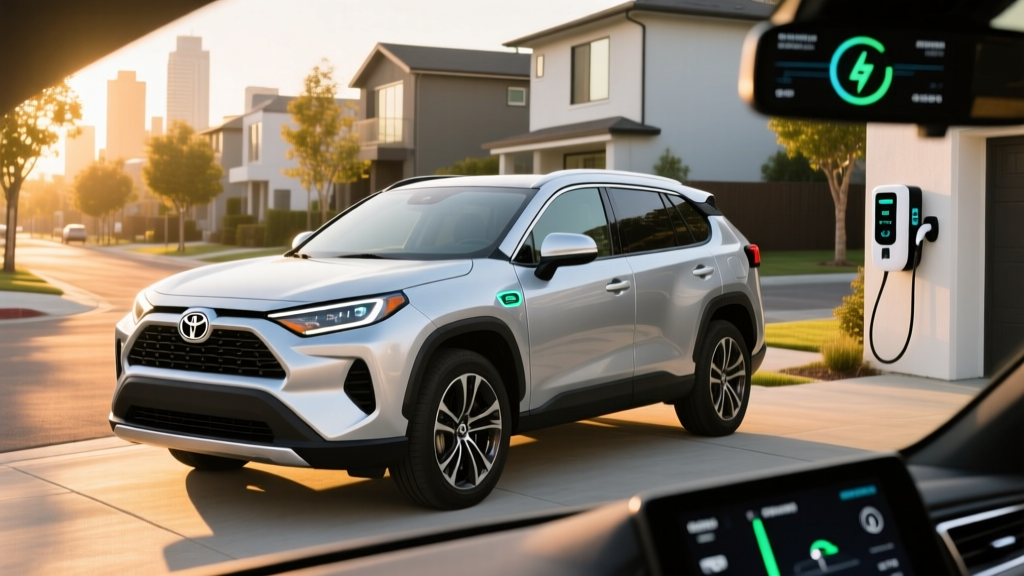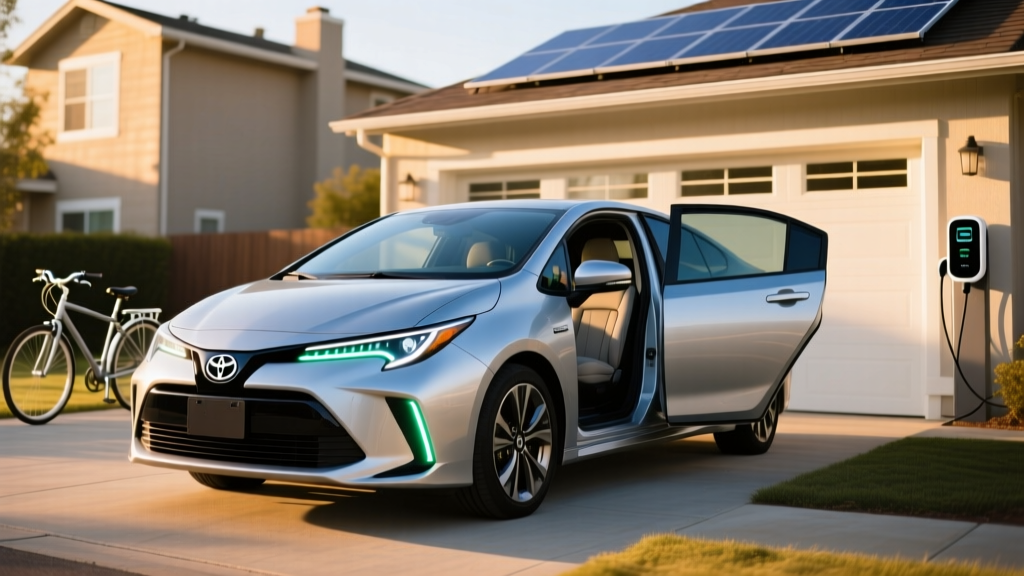
The Toyota Prius invented the mainstream hybrid segment, and the 2026 model year continues to prove that a conventional hybrid (HEV) doesn't need a plug to deliver exceptional fuel economy. With EPA ratings reaching 57 MPG combined and a redesigned powertrain that produces up to 196 horsepower, the current-generation Prius has shed its reputation as a slow, dowdy commuter pod. But with the plug-in Prius Prime sitting right next to it in showrooms — and affordable BEVs expanding their range — where does the standard 2026 Toyota Prius hybrid fit in today's electrified market?
This review covers the 2026 Prius HEV lineup: FWD and AWD trims, real-world fuel economy versus EPA estimates, powertrain specs, pricing, tax credit eligibility, and battery longevity. We'll also compare it head-to-head with the Prius Prime PHEV and full battery-electric vehicles so you can pick the right powertrain for your driving pattern.
2026 Prius Hybrid Powertrain and Performance Specs
The 2026 Toyota Prius uses Toyota's fifth-generation hybrid system, pairing a 2.0-liter four-cylinder Atkinson-cycle engine with one or two electric motor-generators (depending on drivetrain). Unlike a plug-in hybrid, this system charges its small lithium-ion traction battery entirely through regenerative braking and engine power — you never plug it in.
| Spec | FWD (LE/XLE/Limited) | AWD (LE/XLE/Limited) |
|---|---|---|
| Combined Horsepower | 196 hp | 196 hp |
| Engine | 2.0L 4-cyl Atkinson | 2.0L 4-cyl Atkinson |
| Rear Motor (AWD) | None | 40 kW electric |
| 0–60 mph | ~7.2 sec | ~7.0 sec |
| Transmission | eCVT | eCVT |
| Drivetrain | Front-wheel drive | Electronic AWD |
| Traction Battery | ~1.0 kWh lithium-ion | ~1.0 kWh lithium-ion |
| Cargo Volume | ~20.3 cu ft (rear seats up) | ~20.3 cu ft |
The 196 hp combined output is a dramatic leap from the 121 hp the pre-2023 Prius produced. On real-world highway merges and passing maneuvers, the fifth-gen Prius feels genuinely responsive. The electronic AWD system uses a dedicated rear-mounted 40 kW electric motor that engages automatically under acceleration or low-traction conditions — there's no mechanical driveshaft connecting the axles.
Fuel Economy: EPA Ratings vs. Real-World MPG
Fuel economy is the Prius's headline feature. Here's how the 2026 trims break down according to EPA data at fueleconomy.gov:
| Trim / Drivetrain | City MPG | Highway MPG | Combined MPG |
|---|---|---|---|
| LE FWD | 57 | 56 | 57 |
| XLE / Limited FWD | 52 | 52 | 52 |
| LE AWD | 53 | 54 | 54 |
| XLE / Limited AWD | 49 | 50 | 49 |
The LE FWD trim achieves its 57 MPG combined partly through lighter weight (no rear motor, smaller wheels with lower-rolling-resistance tires) and a slightly more aggressive engine-stop strategy at idle. The XLE and Limited trims add weight from features like a panoramic glass roof, larger alloy wheels, and additional sound insulation, which drops efficiency by roughly 5 MPG.
At 12,000 miles per year and $3.40/gallon regular unleaded, the LE FWD trim costs roughly $715 annually in fuel — about $430 less than a comparable 30 MPG compact gas sedan.
HEV vs. PHEV: Prius Hybrid vs. Prius Prime
Toyota sells two distinct Prius models. Understanding the difference is essential before you visit a dealer:
Prius HEV (This Review)
- Conventional hybrid — never plugs in
- ~1.0 kWh battery, charged by regen + engine
- No electric-only driving range (EV mode limited to ~1 mile at low speed)
- 57 MPG combined (LE FWD)
- Lower starting price
- No federal tax credit
Prius Prime (PHEV)
- Plug-in hybrid — charges via outlet or charger
- ~13.6 kWh battery, plug-in capable
- ~44 miles EPA electric-only range
- ~52 MPG combined after battery depletes (hybrid mode)
- Higher starting price
- May qualify for up to $3,750 federal credit (§30D)
The Prius Prime PHEV makes sense if you have reliable home charging access and a daily commute under 44 miles round-trip — you'd drive almost entirely on electricity most days, only using gas on longer road trips. The standard Prius HEV is the right call if you lack charging access (apartment, street parking) or simply want maximum simplicity with zero behavior change from a gas car.
2026 Prius Pricing by Trim
| Trim | Drivetrain | Starting MSRP |
|---|---|---|
| LE | FWD | ~$28,550 |
| LE | AWD | ~$29,950 |
| XLE | FWD | ~$31,600 |
| XLE | AWD | ~$33,000 |
| Limited | FWD | ~$35,100 |
| Limited | AWD | ~$36,500 |
All prices include destination charge. The LE FWD at roughly $28,550 remains one of the most fuel-efficient new vehicles available under $30,000. The Limited AWD pushes into the mid-$30,000s, where it begins competing with the Prius Prime SE and entry-level BEVs like the Chevrolet Equinox EV and Hyundai Kona Electric.
Federal Tax Credit Eligibility
The conventional Prius HEV does not qualify for the federal §30D clean vehicle tax credit. That credit is reserved for plug-in vehicles (BEVs and PHEVs) with sufficient battery capacity and compliant battery sourcing. If tax incentives are a priority, the IRS §30D program applies to the Prius Prime PHEV (up to $3,750 depending on battery sourcing compliance and your tax liability), not this HEV.
Some states offer separate rebates for conventional hybrids, though these are increasingly rare as incentive programs shift toward plug-in vehicles. Check your state energy office or Alternative Fuels Data Center for current local programs.
Battery Longevity, Warranty, and Replacement Cost
Toyota's hybrid battery reliability track record is among the strongest in the industry. Data from long-term fleet studies and owner surveys show that the vast majority of Prius hybrid batteries last well beyond the warranty period. The fifth-generation system uses a lithium-ion pack (replacing the older nickel-metal hydride), which offers better energy density and thermal stability.
If a hybrid battery does need replacement out of warranty, a new OEM unit from a Toyota dealer typically costs between $2,500 and $4,000 installed. Refurbished and aftermarket options are available for $1,500–$2,500. Individual cell-module replacement (repairing rather than replacing the full pack) can cost $500–$1,200 at specialized hybrid repair shops. For context, most Prius owners never face this expense — the battery is designed to last the life of the vehicle under normal use.
The rest of the powertrain — engine, eCVT transaxle, motor-generators — carries Toyota's standard 5-year/60,000-mile powertrain warranty, with hybrid-specific components covered under the 10-year/150,000-mile hybrid system warranty.
Who Should Buy the 2026 Prius Hybrid?
Choose the Prius HEV If:
- You lack home or workplace charging access
- You want EV-like efficiency with zero plug-in routine
- Your budget is under $30,000–$35,000
- You drive a mix of city and highway with no predictable short-commute pattern
- You want Toyota's long-term reliability and low maintenance costs
Look at a PHEV or BEV Instead If:
- You have Level 2 home charging and a commute under 40 miles (consider Prius Prime)
- You want to drive on electricity daily and minimize gas use (Prius Prime or a BEV)
- You qualify for the full $7,500 federal tax credit on a BEV (effectively lowering its price)
- You want zero tailpipe emissions in your neighborhood (BEV only)
- You drive under 30 miles daily and can charge at home (a BEV eliminates gas entirely)
The Prius HEV occupies a specific and valuable niche: it's the best option for buyers who want to cut fuel costs dramatically without changing any habits. No charging apps, no route planning around chargers, no electrical panel upgrades. You fill up at any gas station and go — you just go much further per gallon.
Pros and Cons
Pros
- 57 MPG combined (LE FWD) — class-leading
- 196 hp makes it genuinely quick for the segment
- 10-year/150,000-mile hybrid battery warranty
- No charging infrastructure required
- Available AWD for snow-belt buyers
- Low starting price (~$28,550)
- Strong resale value and reliability record
Cons
- No federal tax credit (HEV, not PHEV)
- Rear seat and cargo space tighter than crossover alternatives
- XLE/Limited trims sacrifice 5 MPG for features
- Still uses gasoline — tailpipe emissions remain
- No DC fast charging capability (not applicable to HEV)
- AWD system is light-duty, not for off-road use
Frequently Asked Questions
How many MPG does the 2026 Toyota Prius hybrid get?
The most efficient trim, the Prius LE FWD, earns an EPA-estimated 57 MPG city, 56 highway, and 57 combined. The AWD LE drops to 54 combined, while the heavier XLE and Limited trims range from 49–52 combined depending on drivetrain. Real-world results typically match or slightly exceed EPA city figures in stop-and-go driving, with highway-only trips at 75+ mph returning 48–52 MPG.
Does the Prius hybrid need to be plugged in?
No. The conventional Prius HEV charges its hybrid battery entirely through regenerative braking and the gasoline engine. There is no plug, no charging cable, and no electric-only driving range beyond about one mile at very low speeds in EV mode. If you want plug-in capability, look at the Prius Prime PHEV instead.
Is the 2026 Prius hybrid reliable, and what does battery replacement cost?
The Prius has one of the strongest long-term reliability records of any vehicle sold in the US, backed by a 10-year/150,000-mile hybrid battery warranty. Out-of-warranty battery replacement typically runs $2,500–$4,000 for a new OEM unit, though most owners never need one. Refurbished packs and cell-level repairs cost less.
Does the 2026 Prius hybrid qualify for a federal tax credit?
No. The standard Prius HEV does not qualify for the IRS §30D clean vehicle credit because it is not a plug-in vehicle. The Prius Prime PHEV may qualify for up to $3,750 depending on battery component sourcing and your personal tax situation. Always verify current eligibility on irs.gov and consult a tax professional.
Should I buy the Prius hybrid or a full electric vehicle?
If you have reliable home Level 2 charging, a daily commute under 40 miles, and access to the $7,500 federal BEV credit, a full EV like the Tesla Model 3, Hyundai Ioniq 6, or Chevrolet Equinox EV can offer lower per-mile energy costs and zero tailpipe emissions. If you lack charging access, frequently drive long distances, live in an area with unreliable public charging, or want the lowest upfront cost, the Prius HEV is the more practical choice. The Prius Prime PHEV splits the difference — electric commuting with gas-engine backup.