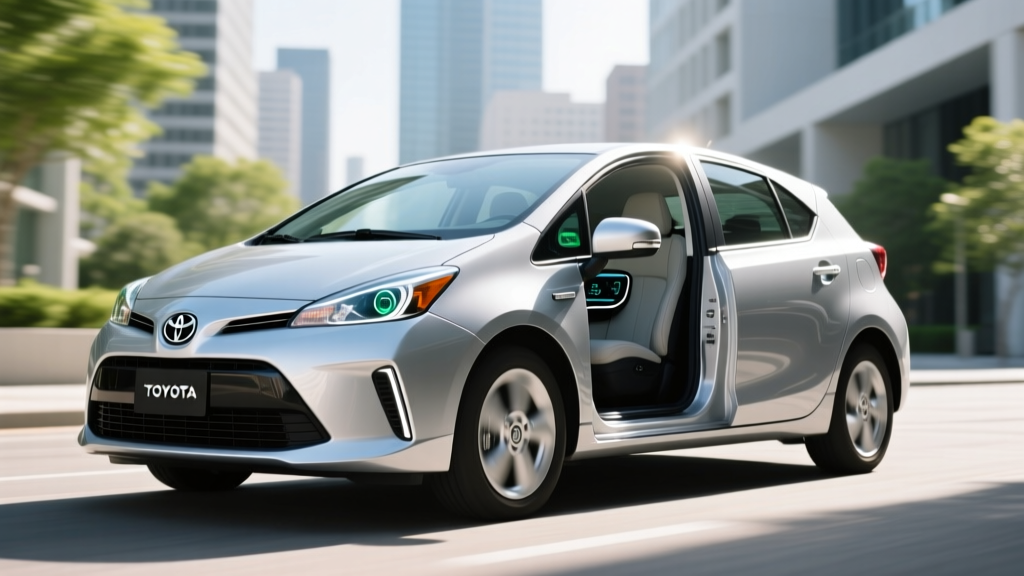
If you've been searching for a Prius C hybrid, you've probably noticed something: Toyota discontinued this subcompact hybrid after the 2019 model year in the United States. Yet the Prius C remains one of the most sought-after used hybrids on the market, thanks to its legendary 50 MPG combined rating, rock-bottom running costs, and Toyota's hybrid reliability reputation. Whether you're shopping the used market or wondering how the Prius C stacks up against today's hybrid and EV options, this guide gives you the exact numbers you need.
Prius C Hybrid at a Glance: EPA Fuel Economy and Real-World MPG
The Toyota Prius C was rated by the EPA at 48 MPG city / 43 MPG highway / 46 MPG combined for most model years (2012–2019), with slight variations by year. For a subcompact that never required a plug, those numbers remain exceptional even by 2026 standards.
| Model Years | City MPG | Highway MPG | Combined MPG | Fuel Tank (gal) | Total Range (mi) |
|---|---|---|---|---|---|
| 2012–2014 | 53 | 46 | 50 | 9.5 | ~475 |
| 2015–2019 | 48 | 43 | 46 | 9.5 | ~437 |
Source: fueleconomy.gov
HEV vs. PHEV: Understanding the Prius C's Hybrid System
The Prius C is a conventional hybrid electric vehicle (HEV) — not a plug-in hybrid. This is a critical distinction that buyers sometimes confuse.
Conventional Hybrid (HEV) — Prius C
- No plug required — the battery charges via regenerative braking and the gasoline engine
- Small battery: ~0.9 kWh (nickel-metal hydride)
- Electric-only driving limited to very low speeds and short distances (~1 mile max)
- Fuel economy advantage: city > highway
- No electric-only range to plan around
Plug-In Hybrid (PHEV) — e.g., Prius Prime
- Plugs into a wall outlet or Level 2 charger
- Larger battery: 13.6 kWh (2023+ Prius Prime)
- Up to 44 miles electric-only range (EPA)
- Operates as a hybrid after battery is depleted
- Eligible for up to $3,750 federal tax credit (2026 rules)
The Prius C's HEV system pairs a 1.5-liter 4-cylinder Atkinson-cycle engine (73 HP) with an electric motor (60 HP) for a combined system output of 99 horsepower. Power is routed through Toyota's eCVT (planetary gearset, not a belt-driven CVT). The result is seamless, if unhurried, acceleration — 0–60 MPH takes approximately 11.8 seconds.
Powertrain, Battery, and What Makes the Prius C Tick
| Specification | Value |
|---|---|
| Engine | 1.5L 4-cylinder Atkinson-cycle (73 HP / 82 lb-ft) |
| Electric Motor | 60 HP / 125 lb-ft |
| Combined System Output | 99 HP |
| Transmission | eCVT (planetary gearset) |
| Hybrid Battery | ~0.9 kWh, Nickel-Metal Hydride (NiMH) |
| Drivetrain | Front-wheel drive |
| Curb Weight | ~2,600 lbs |
| 0–60 MPH | ~11.8 seconds |
The Prius C uses a nickel-metal hydride (NiMH) battery pack, not the lithium-ion chemistry found in newer Toyota hybrids. NiMH is less energy-dense but has a proven longevity track record — many first-generation Prius vehicles exceeded 200,000 miles on their original NiMH packs. The smaller pack in the Prius C is less stressed than larger hybrid batteries, contributing to its durability.
Battery Lifespan, Warranty, and Replacement Cost
For used Prius C shoppers, the battery question is paramount. Here's what the data shows:
- Typical NiMH hybrid battery lifespan: 150,000–200,000+ miles before significant degradation
- Degradation pattern: Gradual capacity loss rather than sudden failure — you'll notice slightly reduced MPG over time
- Replacement cost (OEM): $2,000–$3,500 at a Toyota dealer, including labor
- Replacement cost (remanufactured): $1,000–$2,000 from reputable hybrid specialists
- Individual module replacement: Some hybrid shops can replace failed NiMH modules for $300–$600, extending pack life at lower cost
The Prius C's hybrid battery is one of the least expensive to replace in Toyota's lineup due to its small size. Compared to a full EV battery replacement ($5,000–$20,000+), hybrid battery costs are manageable — and far less likely to be needed within typical ownership periods.
Prius C vs. Modern Alternatives: Hybrid, PHEV, or Full EV?
The Prius C occupies a specific niche: ultra-efficient, affordable, no-plug-needed transportation. Here's how it compares to what's available in 2026:
| Vehicle | Type | EPA Combined | Starting Price | Electric-Only Range | Federal Tax Credit |
|---|---|---|---|---|---|
| Used Toyota Prius C (2018–2019) | HEV | 46 MPG | $14,000–$18,000 (used) | N/A | None (used HEV) |
| 2026 Toyota Prius LE | HEV | 57 MPG | $29,445 | N/A | None (HEV) |
| 2026 Toyota Prius Prime SE | PHEV | 52 MPG + 127 MPGe | $34,045 | 44 miles | Up to $3,750* |
| 2026 Hyundai Ioniq 5 SE | BEV | 114 MPGe | $42,600 | 303 miles | Up to $7,500* |
*Federal tax credit eligibility depends on MSRP caps, buyer income limits, battery sourcing requirements, and point-of-sale transfer rules under IRS §30D. Verify current eligibility at irs.gov. Used EVs may qualify for up to $4,000 under §25E, subject to income and price caps.
Choose the Prius C If:
- Your budget is under $20,000
- You want proven hybrid reliability without plug-in complexity
- You primarily drive in the city (where HEVs shine)
- You lack home charging access
- You want the lowest possible cost per mile without lifestyle changes
Look at a PHEV or BEV If:
- You have home Level 2 charging and a short commute
- You want electric-only driving for daily trips
- You qualify for federal or state EV/PHEV tax credits
- You want modern safety tech (AEB, lane-keep) standard
- Acceleration and highway passing power matter to you
Safety, Tech, and What the Prius C Lacks by 2026 Standards
Honesty matters here: the Prius C was a budget vehicle even when new, and its tech and safety equipment reflect that. The 2019 model added Toyota Safety Sense C (pre-collision system, lane departure alert, automatic high beams), but it lacks the full-speed adaptive cruise control and lane-centering steering found in modern Toyota Safety Sense 3.0.
Notable gaps by 2026 standards:
- No Apple CarPlay (2019 model year added Amazon Alexa but not CarPlay)
- No blind-spot monitoring on most trims
- Modest 6.1-inch touchscreen with dated interface
- Rear drum brakes (adequate for the weight, but not modern spec)
- Thin sound insulation — noticeable road and wind noise at highway speeds
The NHTSA gave the Prius C a 4-star overall safety rating, which was respectable for its era but falls short of today's 5-star expectations. If advanced driver assistance is a priority, the current-generation Prius or a used Corolla Hybrid will serve you better.
Ownership Costs: What a Prius C Actually Costs to Drive
The Prius C's financial appeal goes well beyond the purchase price. Here's a realistic annual cost breakdown based on 15,000 miles per year at $3.50/gallon average fuel:
| Cost Factor | Toyota Prius C (46 MPG) | Gas Subcompact (30 MPG) |
|---|---|---|
| Annual fuel (15,000 mi) | $1,141 | $1,750 |
| Oil changes (conventional hybrid, still has an engine) | ~$120 | ~$120 |
| Brake wear (regen extends pad life 2–3×) | ~$50/yr avg | ~$150/yr avg |
| Insurance (avg) | ~$1,200 | ~$1,200 |
| Total annual operating | ~$2,511 | ~$3,220 |
Annual fuel savings of roughly $600–$700 over a comparable gas subcompact add up quickly. Over five years, that's $3,000–$3,500 in fuel savings alone — and the Prius C's regenerative braking means brake pads often last 80,000+ miles.
Frequently Asked Questions
How many MPG does the Prius C hybrid get?
The EPA rated the 2015–2019 Prius C at 48 city / 43 highway / 46 combined MPG. Earlier models (2012–2014) were rated at 53/46/50. Real-world city driving often exceeds the EPA rating thanks to heavy regenerative braking, while highway MPG at 75+ MPH may fall to 40–42.
Does the Prius C need to be plugged in?
No. The Prius C is a conventional hybrid (HEV), not a plug-in hybrid. Its small NiMH battery charges entirely through regenerative braking and the gasoline engine. You never plug it in — just fill up at the gas station like any other car.
Is the Prius C hybrid battery expensive to replace?
Compared to full EV batteries, no. An OEM replacement runs $2,000–$3,500; remanufactured packs cost $1,000–$2,000. NiMH packs in the Prius C commonly last 150,000–200,000+ miles. Many owners never need a replacement within typical ownership.
Does a used Prius C qualify for any tax credit?
No federal tax credit applies to the purchase of a used conventional hybrid. The IRS §30D credit applies only to new plug-in vehicles (BEVs and PHEVs) meeting battery sourcing and MSRP requirements. The §25E used EV credit (up to $4,000) applies only to used plug-in vehicles, not HEVs. Check IRS guidelines for current rules.
Should I buy a used Prius C or a new 2026 Prius?
It depends on budget and priorities. A used 2018–2019 Prius C runs $14,000–$18,000 and delivers 46 MPG combined with minimal depreciation risk. A new 2026 Prius LE starts at $29,445 and delivers 57 MPG combined plus modern safety tech, a warranty, and CarPlay — but costs nearly double. If your budget is tight and you need dependable, ultra-efficient transportation, the used Prius C remains one of the smartest buys in the hybrid market.
How does the Prius C compare to the Prius Prime PHEV?
They serve different needs. The Prius C is a no-plug HEV ideal for buyers without charging access who want maximum MPG simplicity. The Prius Prime is a PHEV with 44 miles of electric-only range — ideal for short commutes on electricity with gas-engine backup for longer trips. The Prime costs significantly more but can qualify for a federal tax credit and eliminates most gasoline use for drivers with short commutes and home charging.