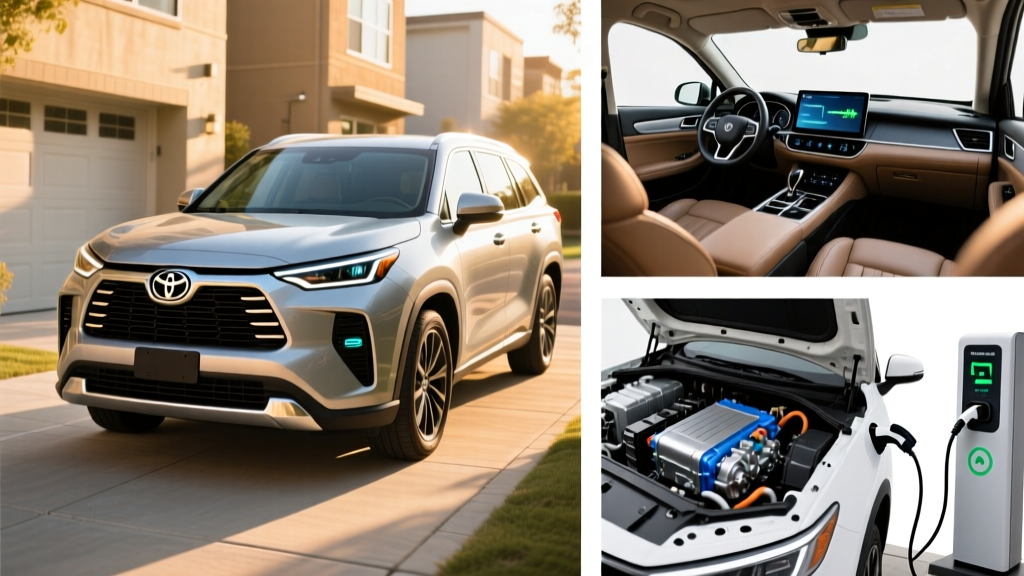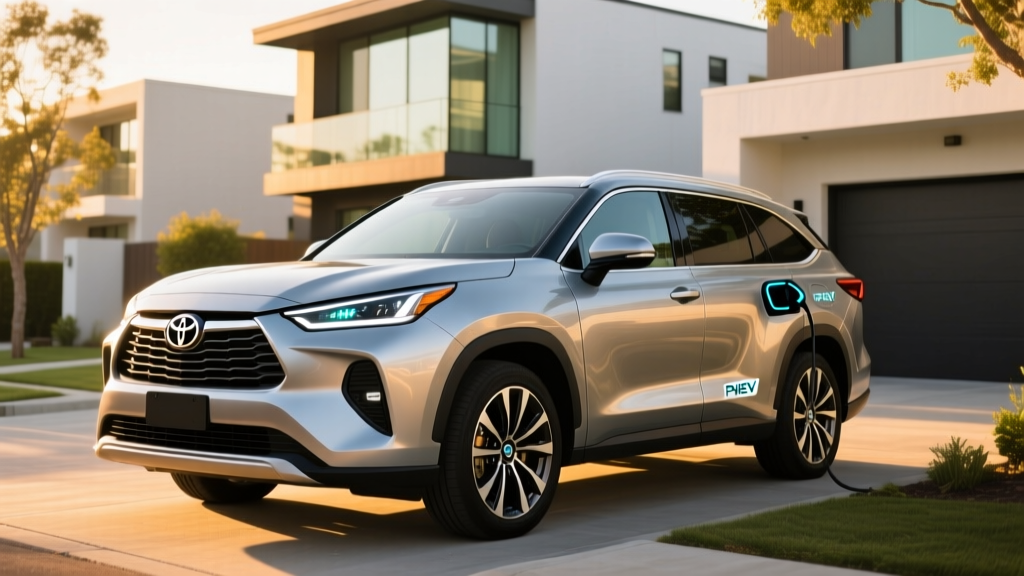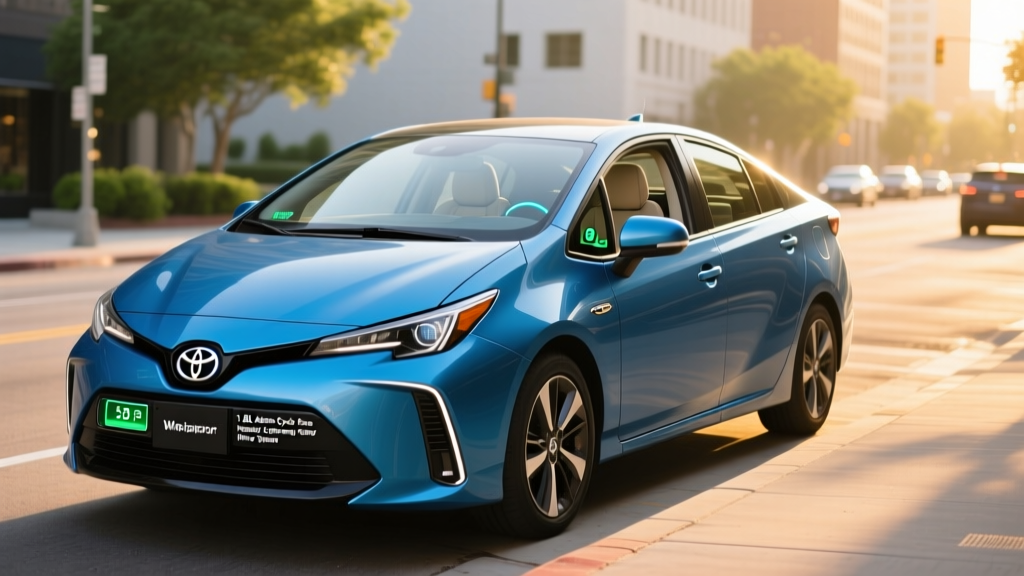
The Toyota Prius has been the default blue hybrid for eco-minded drivers for over two decades, and the current fifth-generation model continues that legacy with a sleeker design, more power, and efficiency numbers that still lead the segment. If you've been searching for a "blue hybrid" — whether that refers to Toyota's iconic blue paint options, the hybrid "blue" badge heritage, or simply the most fuel-efficient hybrid on the market — the 2026 Prius is the vehicle that defines the category.
This guide breaks down everything a data-driven buyer needs: exact EPA MPG figures, real-world fuel economy observations, powertrain specs, battery longevity data, warranty coverage, pricing, tax-credit eligibility, and whether the Prius is the right electrified choice compared to a PHEV or full EV.
What Is the Toyota Prius Blue Hybrid?
The term "blue hybrid" has been associated with Toyota since the original Prius debuted. Toyota has historically offered signature blue exterior colors — from Blue Pearl to the current Blueprint and Blue Crush Metallic — that have become shorthand for the hybrid movement itself. The 2026 Toyota Prius is a conventional hybrid electric vehicle (HEV), meaning it generates its own electricity through regenerative braking and its gasoline engine. You never plug it in.
HEV vs. PHEV — What's the Difference?
Conventional Hybrid (HEV): The Prius standard model uses a small battery (approximately 0.9 kWh) charged by the engine and regenerative braking. No plug required. You simply fuel up at any gas station and the hybrid system optimizes efficiency automatically.
Plug-in Hybrid (PHEV): The Prius Prime variant carries a larger 13.6 kWh lithium-ion battery that provides approximately 44 miles of electric-only driving before the gasoline engine engages. It can be plugged into a Level 1 (120V) or Level 2 (240V) charger. DC fast charging is not available on the Prius Prime.
This article focuses primarily on the standard Prius HEV — the true blue hybrid — with Prius Prime (PHEV) comparisons where relevant.
Fuel Economy: How Many MPG Does the Prius Blue Hybrid Get?
The 2026 Toyota Prius LE trim delivers some of the highest fuel-economy numbers of any non-plug-in vehicle sold in the United States. Here's the EPA-verified breakdown from fueleconomy.gov:
| Trim | City MPG | Highway MPG | Combined MPG | Annual Fuel Cost* |
|---|---|---|---|---|
| Prius LE (FWD) | 57 | 56 | 57 | ~$1,050 |
| Prius XLE / Limited (FWD) | 52 | 52 | 52 | ~$1,150 |
| Prius AWD-e (LE) | 53 | 54 | 54 | ~$1,100 |
| Prius Prime (PHEV) — gas only | 52 | 48 | 50 | ~$1,200 |
*Based on 15,000 miles/year and $3.50/gallon regular unleaded. Actual costs vary by region and driving habits.
Real-World MPG vs. EPA Sticker
One of the pleasant surprises with Toyota's hybrid synergy system is that real-world city driving often matches or even exceeds the EPA city estimate. Hybrids recapture energy during stop-and-go driving through regenerative braking, so urban commuters frequently report 58–62 MPG in warm-weather city conditions. Highway driving at sustained 75+ mph speeds, however, tends to drop efficiency to roughly 48–52 MPG because the electric motor assists less at constant high velocity.
In cold weather (below 35°F), expect a 5–10% reduction in fuel economy as the engine runs more frequently to generate cabin heat and maintain battery temperature. This is modest compared to the 20–30% range loss a full EV experiences in winter, making the Prius a pragmatic year-round choice in colder climates.
Powertrain: Engine, Motor, and Combined Horsepower
The fifth-generation Prius pairs a 2.0-liter four-cylinder Atkinson-cycle engine with Toyota's latest hybrid transaxle. The result is noticeably more responsive acceleration than prior generations while maintaining class-leading efficiency.
| Specification | Prius HEV (FWD) | Prius AWD-e | Prius Prime (PHEV) |
|---|---|---|---|
| Engine | 2.0L I4 Atkinson | 2.0L I4 Atkinson | 2.0L I4 Atkinson |
| Combined Net HP | 196 hp | 196 hp | 220 hp |
| 0–60 mph | ~7.2 sec | ~7.0 sec | ~6.6 sec |
| Drivetrain | FWD | AWD (e-motor rear) | FWD |
| Transmission | eCVT | eCVT | eCVT |
| Fuel Type | Regular 87 octane | Regular 87 octane | Regular 87 octane |
| Cargo Volume | 23.8 cu ft | 23.8 cu ft | 20.3 cu ft |
The 196-horsepower output is a substantial upgrade from the 121 hp of the fourth-generation model. Merging onto highways and passing at speed no longer requires the white-knuckle patience that older Prius owners remember. The AWD-e variant adds a rear-mounted electric motor that activates automatically during low-triction conditions without a mechanical driveshaft — a clever efficiency-preserving all-wheel-drive solution.
Prius Prime PHEV: Electric-Only Range and Charging
If you're considering the plug-in Prius Prime variant, here's the critical electric-driving data:
| PHEV Metric | Prius Prime (2026) |
|---|---|
| Battery Capacity | 13.6 kWh lithium-ion |
| EPA Electric-Only Range | 44 miles |
| Total Combined Range (gas + electric) | ~440 miles |
| MPGe (electric mode) | 127 MPGe |
| Level 1 Charging (120V) | ~11 hours (0–100%) |
| Level 2 Charging (240V) | ~4 hours (0–100%) |
| DC Fast Charging | Not available |
The 44-mile electric-only range covers most daily commutes entirely on electricity. A driver with a 20-mile round-trip commute and home Level 2 charging could go weeks without the engine engaging. However, the lack of DC fast charging is a notable limitation — on road trips, the Prius Prime operates purely as a conventional hybrid once the battery depletes.
The 13.6 kWh battery is significantly smaller than a full EV's pack (typically 60–100 kWh), which is why the Prius Prime costs less, weighs less, and avoids range anxiety. You always have the gasoline engine as a fallback.
Pricing, Tax Credits, and Ownership Economics
The 2026 Toyota Prius lineup starts at an accessible price point, undercutting many compact crossovers and most competing electrified vehicles.
| Trim | MSRP (approx.) | Federal Tax Credit |
|---|---|---|
| Prius LE (HEV) | ~$28,550 | Not eligible (§30D requires plug-in) |
| Prius XLE (HEV) | ~$31,000 | Not eligible |
| Prius Limited (HEV) | ~$34,500 | Not eligible |
| Prius Prime SE (PHEV) | ~$33,500 | Up to $3,750* |
| Prius Prime XSE (PHEV) | ~$37,000 | Up to $3,750* |
*The IRS §30D clean vehicle credit for the Prius Prime is subject to buyer income caps ($150K single / $300K joint modified AGI), MSRP caps ($55,000 for sedans), and battery component/critical mineral sourcing requirements that may reduce the credit from $7,500 to $3,750 or disqualify it entirely depending on the model year's supply chain compliance. The conventional Prius HEV does not qualify for §30D because it lacks plug-in capability. Always verify current eligibility with a tax professional before purchasing.
Total Cost of Ownership: Prius vs. Gas vs. EV
At 57 combined MPG and current fuel prices, a Prius LE driver covering 15,000 miles annually spends roughly $1,050/year on gasoline. A comparable gas-only compact sedan averaging 30 MPG would cost approximately $1,750/year — a $700 annual premium. Over a 10-year ownership period, that's $7,000 in fuel savings with the Prius.
Compared to a full EV, the Prius has lower upfront cost but higher ongoing fuel expense. An EV charging at home at $0.14/kWh and averaging 3.5 miles/kWh would cost roughly $600/year for the same mileage. The EV wins on operating cost, but the Prius wins on purchase price and eliminates any charging-infrastructure dependency.
Battery Warranty, Reliability, and Replacement Cost
Toyota Hybrid Battery Warranty
Coverage: 10 years / 150,000 miles (whichever comes first) on the hybrid battery and all hybrid system components, including the inverter and electric motor(s).
Capacity Retention Threshold: Toyota warrants the hybrid battery against defects and excessive capacity loss. If the battery fails to function within normal parameters during the warranty period, Toyota replaces it at no cost.
Extended in California & CARB States: In California and states adopting CARB emissions standards, the hybrid battery warranty extends to 10 years / 150,000 miles with additional emissions-related coverage.
Real-World Battery Longevity
Toyota's hybrid battery packs have demonstrated exceptional longevity. The Prius uses a nickel-metal hydride (NiMH) battery in the standard HEV (approximately 0.9 kWh usable) and a lithium-ion pack in the Prime PHEV (13.6 kWh). Because the HEV battery is small and the hybrid system never fully charges or fully depletes it — maintaining a roughly 40–80% state-of-charge window — degradation is minimal.
Independent fleet data and owner surveys show that the majority of Prius hybrid batteries last 150,000–200,000+ miles before requiring replacement. Some first-generation Prius taxis exceeded 300,000 miles on the original battery pack. This is substantially different from early EV batteries that experienced more noticeable degradation.
Battery Replacement Cost
If replacement is needed outside warranty coverage:
- Prius HEV (NiMH pack): $2,000–$3,500 for a new OEM battery, or $1,000–$1,800 for a refurbished unit, plus $300–$500 labor.
- Prius Prime (Li-ion pack): $4,500–$7,000 for a new OEM replacement, given the larger capacity.
These costs are modest relative to a full EV battery replacement ($8,000–$20,000+) and, given the proven longevity, represent a low-probability expense during typical ownership.
Reliability Ratings
Toyota consistently ranks at or near the top of dependability studies from J.D. Power and Consumer Reports, and the Prius specifically has been one of the brand's most reliable nameplates. The hybrid system has fewer wear components than a conventional gasoline powertrain — no traditional starter motor, no alternator, no conventional automatic transmission with a torque converter, and regenerative braking reduces brake pad wear significantly (many Prius owners report 80,000–100,000+ miles on original brake pads).
The IIHS has awarded the current-generation Prius top safety ratings, including the Top Safety Pick+ designation when equipped with qualifying headlights, giving buyers confidence that efficiency doesn't come at the expense of crashworthiness.
Who Should Choose the Prius Blue Hybrid?
Pros
- Class-leading 57 MPG combined (LE trim)
- No plug-in required — zero charging infrastructure needed
- 196 hp provides confident acceleration
- 10-year / 150,000-mile hybrid battery warranty
- Low starting MSRP (~$28,550)
- Excellent real-world reliability track record
- Regenerative braking extends brake pad life
- AWD-e option available for snow-belt drivers
Cons
- HEV does not qualify for federal §30D tax credit
- Rear-seat headroom is tight for taller passengers
- Cargo space (23.8 cu ft) trails compact SUVs
- Higher trims push price toward PHEV territory
- Infotainment system is functional but not class-leading
- Road noise at highway speeds is noticeable
Decision Framework
Choose the Prius HEV (standard blue hybrid) if: You want maximum MPG without ever plugging in, you lack access to home or workplace charging, your budget is under $35,000, and you want a proven, low-maintenance daily driver.
Choose the Prius Prime (PHEV) if: You have home Level 2 charging, your daily commute is under 44 miles round-trip, you want to drive mostly on electricity but need the gas engine for road trips, and you want to capture a partial federal tax credit.
Choose a full EV (BEV) if: You have reliable home charging, your daily driving is under 250 miles, you want zero tailpipe emissions and minimal maintenance, and you can absorb a higher purchase price (offset by lower fuel and maintenance costs over time).
Stick with a gas car if: You drive very few miles annually (under 8,000), the hybrid premium isn't justified by fuel savings, or you frequently tow or haul heavy loads where hybrid efficiency advantages diminish.
Frequently Asked Questions
How many MPG does the Toyota Prius blue hybrid get?
The 2026 Toyota Prius LE achieves an EPA-estimated 57 city / 56 highway / 57 combined MPG. The XLE and Limited trims are rated at 52 combined MPG due to larger wheels and additional equipment weight. Real-world city driving often yields 58–62 MPG in warm weather thanks to regenerative braking.
Does the Prius hybrid need to be plugged in?
No. The standard Prius HEV charges its battery entirely through regenerative braking and the gasoline engine. You never plug it in — just refuel at any gas station. Only the Prius Prime PHEV variant requires plugging in to access its electric-only range.
How far can the Prius Prime go on electric only?
The 2026 Prius Prime delivers an EPA-estimated 44 miles of electric-only driving on a full charge. After the battery depletes, the gasoline engine engages seamlessly, and the vehicle operates as a conventional hybrid with approximately 50 combined MPG, giving a total combined range of roughly 440 miles.
Is the Toyota Prius hybrid reliable?
Yes. The Prius has one of the strongest long-term reliability records of any vehicle sold in the US. Toyota's hybrid system has been refined over 25+ years, and the hybrid battery is warrantied for 10 years / 150,000 miles. Many Prius examples have exceeded 200,000 miles with no hybrid system repairs.
What does a Prius hybrid battery replacement cost?
Outside of warranty, a Prius HEV battery replacement runs $2,000–$3,500 for a new OEM pack or $1,000–$1,800 for a refurbished unit, plus $300–$500 in labor. Given that most Prius batteries last 150,000–200,000+ miles, replacement is uncommon during typical first-owner use.
Does the Toyota Prius qualify for any tax credit?
The conventional Prius HEV does not qualify for the federal §30D clean vehicle credit because it is not a plug-in vehicle. The Prius Prime PHEV may qualify for up to $3,750 depending on battery sourcing requirements, subject to buyer income limits ($150K single / $300K joint AGI) and the $55,000 MSRP cap for sedans. Check current eligibility at IRS.gov or consult a tax professional before purchasing.
Hybrid vs. PHEV vs. EV — which should I choose?
A conventional hybrid (HEV) like the Prius is best for buyers who want efficiency without lifestyle changes — no plugging in, no range anxiety, no charging infrastructure. A PHEV like the Prius Prime suits those with home charging who want electric commuting with gas-powered road-trip flexibility. A full EV suits those with reliable home charging, predictable daily routes within the vehicle's range, and a desire for the lowest operating cost and zero tailpipe emissions.