The Case for a Toyota Plug-In Hybrid SUV in 2026
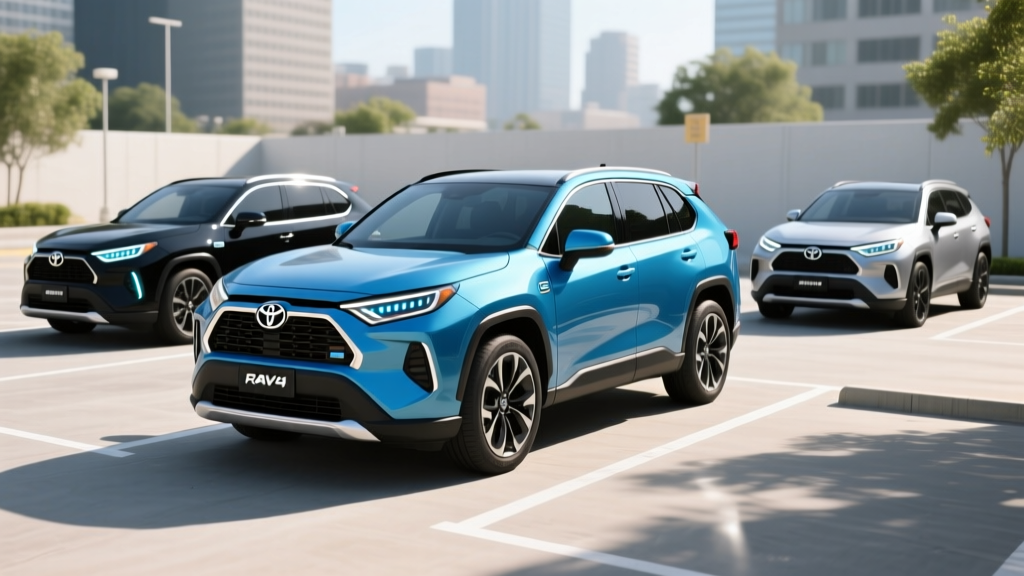
Toyota has bet heavily on a diversified electrification strategy, and nowhere is that more visible than in its plug-in hybrid (PHEV) lineup. For buyers who want electric-only commuting without surrendering the flexibility of a gasoline engine for road trips, a Toyota plug-in hybrid SUV occupies a compelling middle ground. The 2026 RAV4 Prime remains the flagship of that strategy, while the recently refreshed Highlander and new Grand Highlander PHEV variants broaden the appeal to three-row families.
This guide breaks down every current Toyota PHEV SUV with exact EPA figures, real-world expectations, battery specs, charging logistics, and tax-credit eligibility so you can decide whether a PHEV, conventional HEV, or full battery-electric vehicle (BEV) fits your life.
HEV vs. PHEV: What Toyota Buyers Need to Know
Before examining specific models, the distinction between Toyota's two hybrid flavors is essential — and frequently confused.
Conventional Hybrid (HEV)
A Toyota HEV — like the standard RAV4 Hybrid or Highlander Hybrid — pairs a gasoline engine with one or more electric motors and a small battery (typically 1.0–1.6 kWh). The battery recharges exclusively through regenerative braking and the engine. You never plug it in. It operates as a seamless, self-contained system that optimizes fuel economy automatically.
Plug-In Hybrid (PHEV)
A Toyota PHEV — branded "Prime" in the RAV4 lineup — carries a substantially larger battery (18.1 kWh usable in the RAV4 Prime) and an onboard charger. You plug it into a wall outlet or Level 2 station to fill the battery, enabling 30–40+ miles of pure electric driving before the gasoline engine engages. Once the battery depletes, the vehicle operates as a conventional hybrid.
The practical difference: A HEV is ideal if you cannot charge at home or work. A PHEV rewards those who can charge regularly — a daily 30-mile commute can be completed entirely on electricity, with the gas tank reserved for weekends and road trips.
2026 Toyota Plug-In Hybrid SUV Lineup at a Glance
| Specification | RAV4 Prime | Grand Highlander Hybrid MAX* |
|---|---|---|
| Powertrain | 2.5L I4 + 2 electric motors (AWD) | 2.4L Turbo Hybrid MAX (HEV, not PHEV) |
| Combined Horsepower | 302 hp | 362 hp |
| Battery Capacity (usable) | 18.1 kWh (lithium-ion, NMC) | 1.4 kWh (HEV — not plug-in) |
| EPA Electric-Only Range | 42 miles | N/A (HEV) |
| EPA Combined MPGe (electric+gas) | 94 MPGe | N/A |
| EPA MPG (hybrid mode, gas only) | 38 combined (40 city / 36 hwy) | 27 combined (26 city / 27 hwy) |
| Total Combined Range | ~600 miles | ~530 miles |
| 0–60 mph | 5.7 seconds | 5.5 seconds |
| Level 2 Charge Time (0–100%) | ~2.5 hours (6.6 kW onboard) | N/A |
| DC Fast Charging | Not available | N/A |
| Starting MSRP | $44,960 (SE) | $54,405 (Limited) |
*Note: As of the 2026 model year, Toyota does not offer a plug-in hybrid version of the Grand Highlander. The Hybrid MAX powertrain is a conventional HEV. The RAV4 Prime remains Toyota's sole PHEV SUV available in the U.S. market. Toyota has signaled future PHEV expansion but no official timeline.
RAV4 Prime: Deep Dive on Range, Efficiency, and Real-World MPG
The 2026 RAV4 Prime continues with the proven 2.5-liter Dynamic Force four-cylinder engine paired with front and rear electric motors for standard electronic AWD. The 18.1 kWh battery pack sits beneath the floor, preserving cargo space while lowering the center of gravity.
Electric-Only Range: EPA vs. Reality
The EPA rates the RAV4 Prime at 42 miles of electric-only range. In real-world testing, owners who precondition the cabin and drive conservatively in moderate temperatures (60–75°F) regularly report 44–48 miles. Highway driving at 70+ mph reduces that to roughly 32–36 miles. In cold weather (below 30°F), expect 28–34 miles due to cabin heating demands and reduced battery efficiency — a predictable loss for any PHEV without a dedicated heat pump for the battery pack.
EPA Electric Range: 42 miles
Real-World Expectation: 34–48 miles depending on temperature, speed, and terrain
Highway at 75 mph: ~32–36 miles
Cold Weather (sub-30°F): ~28–34 miles
Hybrid-Mode MPG After the Battery Depletes
| Driving Cycle | EPA Rating | Real-World Owner Average |
|---|---|---|
| City | 40 MPG | 41–44 MPG |
| Highway | 36 MPG | 33–36 MPG |
| Combined | 38 MPG | 37–40 MPG |
Like most Toyota hybrids, the RAV4 Prime tends to exceed its EPA city rating in real-world stop-and-go driving, where regenerative braking and electric-motor assist work hardest. Highway efficiency drops slightly due to the vehicle's 4,200-pound curb weight (the battery adds roughly 400 lbs over the standard RAV4 Hybrid). According to fueleconomy.gov, the RAV4 Prime achieves 94 MPGe when operating in combined charge-depleting (electric+gas) mode.
Charging the RAV4 Prime: What to Expect
The RAV4 Prime includes a 6.6 kW onboard charger and a J1772 inlet. Here is what charging looks like in practice:
- Level 1 (120V household outlet): ~12 hours from empty to full — viable for overnight top-ups if your daily drive is under 40 miles.
- Level 2 (240V, 32A home charger): ~2.5 hours from 0–100%. This is the practical sweet spot. A ChargePoint Home Flex or Emporia Vue charger installed on a 40A circuit handles this easily.
- DC Fast Charging: Not supported. Toyota has not equipped the RAV4 Prime with DC fast-charge capability. This is a deliberate cost and packaging decision — the 18.1 kWh battery is small enough that Level 2 replenishes it quickly.
Charging cost reality: At the U.S. average residential electricity rate of ~$0.17/kWh (per EIA data), a full charge costs approximately $3.08 — equating to roughly $0.07 per electric mile. Compare that to $0.14–$0.18 per mile for a 28-MPG gas SUV at $3.50/gallon.
Battery Longevity, Warranty, and Replacement Cost
Hybrid and PHEV battery longevity is the single most common concern among prospective buyers. Toyota's track record here is among the best in the industry, dating back to the original Prius in 2000.
Toyota PHEV Battery Warranty
Hybrid Battery: 10 years / 150,000 miles (whichever comes first), covering capacity below 70% of original.
Hybrid System Components: 8 years / 100,000 miles (inverter, transaxle, control modules).
Source: Toyota Warranty Guide
Real-World Degradation Data
Independent data from PHEV fleet operators and owner forums indicates that Toyota's NMC lithium-ion packs lose approximately 8–12% capacity over the first 5 years / 75,000 miles under normal use. This is less aggressive than early-generation BEV degradation curves, partly because Toyota's battery management system (BMS) maintains a generous top and bottom buffer — you never truly access the full 18.1 kWh.
Battery Replacement Cost
If the battery does require replacement outside of warranty, expect a dealer-installed replacement pack to cost between $4,500 and $6,500 (parts and labor). Independent hybrid specialists often offer refurbished packs for $2,500–$3,800. However, given Toyota's warranty coverage and historical reliability, out-of-pocket replacement is uncommon before 150,000+ miles.
Pricing, Trims, and Federal Tax Credit Eligibility
The 2026 RAV4 Prime is offered in two trims:
- SE: $44,960 MSRP (destination included). Includes 18-inch alloy wheels, 8-inch touchscreen, wireless Apple CarPlay/Android Auto, heated front seats, and Toyota Safety Sense 3.0.
- XSE: $48,360 MSRP. Adds SofTex seats, panoramic moonroof, 9-inch display, and premium JBL audio.
Does the RAV4 Prime Qualify for the Federal Tax Credit?
Under current IRS §30D rules for 2026, the RAV4 Prime is not eligible for the full $7,500 federal tax credit. Here is why:
§30D New Clean Vehicle Credit Requirements (2026)
- MSRP Cap: SUVs must be under $80,000 — RAV4 Prime passes ✓
- Buyer Income Cap: $150K single / $300K joint filers — varies by buyer ✓
- Battery Capacity: Must be ≥ 7 kWh — RAV4 Prime passes ✓ (18.1 kWh)
- Critical Minerals Sourcing: Must meet escalating percentage thresholds from approved trade partners — Toyota has not confirmed full compliance for 2026 ✗
- Battery Component Assembly: Must be manufactured in North America at escalating thresholds — RAV4 Prime battery is assembled in Japan ✗
- Final Assembly: Must occur in North America — RAV4 Prime is assembled in Japan and Canada (varies by VIN) — check fueleconomy.gov for your specific VIN ✗
Bottom line: Most RAV4 Prime buyers will not qualify for the federal credit due to battery-sourcing and assembly requirements. Always verify your specific VIN on the IRS portal at irs.gov before purchasing. Some states — including California, Colorado, New York, and Massachusetts — offer separate PHEV rebates of $1,000–$4,000 that may still apply. Consult your state's energy office or a tax professional for current local incentives.
Who Should Choose the RAV4 Prime vs. a HEV or Full EV?
Pros
- 42 miles electric covers most commutes without gas
- 302 hp makes it the quickest RAV4 ever (5.7s 0–60)
- Standard AWD with no range penalty from a mechanical driveshaft
- Excellent reliability record; 10-year/150K-mile battery warranty
- 600+ mile total range eliminates road-trip charging anxiety
- Strong resale value — RAV4 Prime waitlists remain common
Cons
- $44,960 starting price — ~$10K more than the RAV4 Hybrid
- No DC fast charging limits public-charging utility
- Federal §30D tax credit unlikely due to sourcing rules
- Cargo floor slightly raised vs. non-hybrid RAV4 (~2 cu-ft loss)
- Dealer markups remain common in high-demand markets
Choose the RAV4 Prime (PHEV) If:
You can charge at home (Level 2 or even a dedicated 120V outlet), your daily commute is under 40 miles round-trip, and you want to eliminate gasoline use on weekdays while keeping the freedom of a 600-mile gas range for weekends. Ideal for one-car households that can't commit to a full EV.
Choose the RAV4 Hybrid (HEV) If:
You cannot charge at home or work, you drive more than 50 miles daily in mixed conditions, or the $10,000 price premium of the Prime doesn't pencil out given your annual mileage. The standard HEV still delivers an impressive 40 MPG combined with zero lifestyle change required.
Choose a Full EV (e.g., Tesla Model Y, Hyundai Ioniq 5) If:
You have reliable home Level 2 charging, your daily driving rarely exceeds 250 miles, you want the lowest per-mile energy cost, and you're ready to use public DC fast-charging networks for road trips. Full EVs eliminate oil changes, have fewer moving parts, and may qualify for the $7,500 federal credit (depending on model and sourcing).
Frequently Asked Questions
How many MPG does the Toyota RAV4 Prime get?
The EPA rates the 2026 RAV4 Prime at 40 city / 36 highway / 38 combined MPG when operating in hybrid (charge-sustaining) mode. In electric mode, it achieves 94 MPGe combined. Real-world owners frequently report 41–44 MPG in city driving and 33–36 MPG on the highway.
How far can the RAV4 Prime go on electric only?
The EPA rates the RAV4 Prime at 42 miles of electric-only range. Real-world results vary from approximately 28 miles in extreme cold to 48 miles in mild conditions at low speeds. Most owners with a sub-40-mile commute can complete daily driving entirely on electricity.
Does the RAV4 Prime qualify for any tax credit?
Under 2026 IRS §30D rules, the RAV4 Prime is unlikely to qualify for the federal $7,500 credit due to battery component and critical-mineral sourcing requirements. Always verify by VIN on irs.gov. Several states offer separate PHEV rebates — check your state energy office for current programs.
Is the RAV4 Prime reliable, and what does a battery replacement cost?
Toyota's hybrid system has a two-decade reliability track record. The RAV4 Prime's battery is warranted for 10 years/150,000 miles. Real-world degradation is modest (~8–12% over 5 years). Out-of-warranty replacement costs $4,500–$6,500 at a dealer, or $2,500–$3,800 through independent hybrid specialists.
How long does it take to charge the RAV4 Prime at home?
On a 240V Level 2 charger (32A), the RAV4 Prime charges from empty to full in approximately 2.5 hours. On a standard 120V household outlet (Level 1), a full charge takes roughly 12 hours. DC fast charging is not supported.
Should I get the RAV4 Prime or the standard RAV4 Hybrid?
If you can charge at home and your daily commute is under 40 miles, the Prime saves significantly on fuel and delivers 302 hp with standard AWD. If you can't charge at home or the $10,000 price premium doesn't justify the fuel savings over your ownership period, the standard RAV4 Hybrid (40 MPG combined, ~$34,000) is the more economical choice.