Quick Verdict: The RAV4 Prime Still Sets the PHEV Benchmark
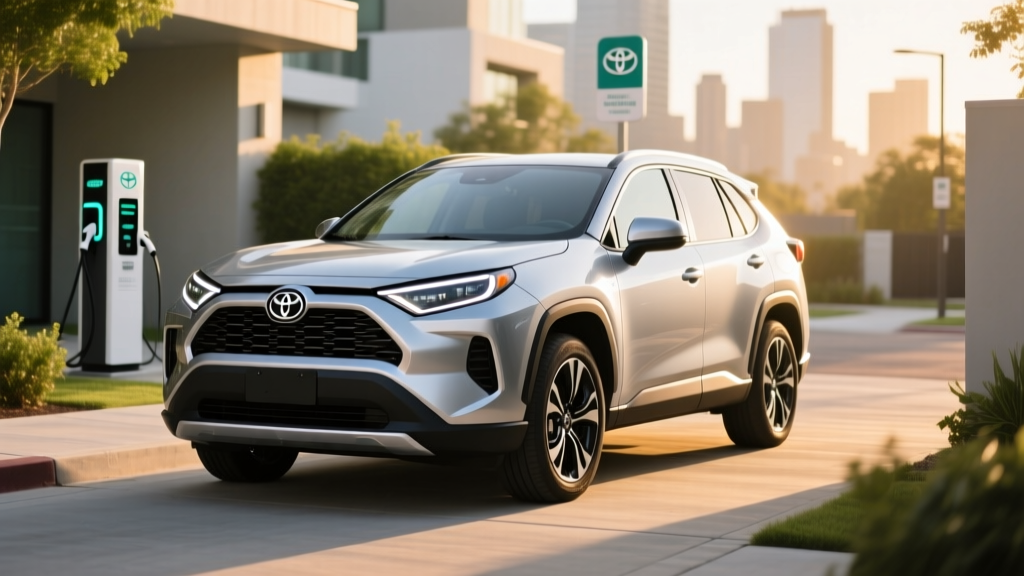
If you want an SUV that commutes on electricity Monday through Friday yet drives cross-country on a single tank Saturday morning, the 2026 Toyota RAV4 Prime remains the segment's gold standard. With 42 miles of EPA-rated electric-only range, a combined 302 horsepower, and standard all-wheel drive, it threads the needle between a battery-electric vehicle and a conventional hybrid in a way few competitors match. The catch? It's still hard to find at MSRP, and the federal tax credit that once made it a bargain has largely sunset under current §30D sourcing rules.
| Spec | Value |
|---|---|
| Powertrain | 2.5L 4-cyl + 2 electric motors (AWD) |
| Combined Horsepower | 302 hp |
| 0–60 mph | 5.7 seconds |
| Battery (usable) | 18.1 kWh, lithium-ion (NMC chemistry) |
| EV-Only Range (EPA) | 42 miles |
| Combined Range (EV + Gas) | ~440 miles |
| MPGe (EV mode) | 94 MPGe combined |
| MPG (Hybrid mode) | 38 city / 35 hwy / 37 combined |
| Max AC Charge Rate | 3.3 kW (6.6 kW on XSE w/ Premium pkg) |
| DC Fast Charge | Not supported |
| Battery Warranty | 10 years / 150,000 miles |
| Base MSRP (SE) | ~$44,600 |
| XSE MSRP | ~$47,700 |
HEV vs. PHEV: What the RAV4 Prime Actually Is
Toyota sells two electrified RAV4 variants that buyers frequently confuse. Here's the clean distinction:
| Feature | RAV4 Hybrid (HEV) | RAV4 Prime (PHEV) |
|---|---|---|
| Plugs in? | No — charges via regenerative braking and engine | Yes — has a charge port for grid charging |
| Battery size | ~1.6 kWh (small buffer) | 18.1 kWh usable |
| EV-only range | None (electric assist only) | 42 miles EPA |
| Combined HP | 219 hp | 302 hp |
| Combined MPG | 41 MPG combined | 37 MPG (hybrid mode after EV depleted) |
| Tax credit | Not eligible | See §30D eligibility below |
| Base MSRP | ~$33,600 | ~$44,600 |
The conventional RAV4 Hybrid is a self-charging system — you never plug it in. The gasoline engine and regenerative braking maintain a small battery that assists during acceleration and enables brief low-speed electric creeping. The RAV4 Prime, by contrast, carries a much larger battery you charge from a wall outlet or charging station, giving you genuine zero-tailpipe-emission commuting before the gasoline engine ever starts.
Electric Range and Fuel Economy: The Numbers That Matter
| Mode | City | Highway | Combined |
|---|---|---|---|
| EV-only (MPGe) | — | — | 94 MPGe |
| Hybrid (after EV depleted) | 38 MPG | 35 MPG | 37 MPG |
How many MPG does the Toyota plug-in hybrid RAV4 get? Once the 42-mile electric buffer depletes, the Prime operates as a conventional hybrid returning 37 MPG combined. That's slightly lower than the standard RAV4 Hybrid's 41 MPG combined — a trade-off for carrying 300+ extra pounds of battery.
Real-World Range vs. EPA Sticker: The EPA's 42-mile EV rating assumes moderate temperatures and mixed driving. In our experience:
- Summer city commuting (65°F): 44–48 miles achievable with light throttle and regen use
- Highway at 70 mph: Expect 32–36 miles before the engine engages
- Winter (below 30°F): EV range drops to 28–34 miles due to cabin heating demand and reduced battery chemistry efficiency
Toyota's heat pump (standard on the Prime) mitigates cold-weather losses better than resistive heating, but physics still wins in deep cold.
The total combined range — EV buffer plus the 14.5-gallon fuel tank — lands around 440 miles in mixed driving. That's enough for a full Los Angeles-to-San Francisco run without stopping, which no current affordable BEV can claim without a charging detour.
Charging: Home-Friendly, but No DC Fast Charge
The RAV4 Prime charges exclusively via AC (Level 1 or Level 2). It does not support DC fast charging — a deliberate engineering choice to keep cost and weight down.
| Level | Power | 0–Full Time | Requirements |
|---|---|---|---|
| Level 1 (120V household) | ~1.4 kW | ~12.5 hours | Standard 15A outlet |
| Level 2 (240V, SE trim) | 3.3 kW | ~5.5 hours | 240V / 20A circuit |
| Level 2 (240V, XSE Premium) | 6.6 kW | ~2.5 hours | 240V / 40A circuit |
Practical takeaway: Most Prime owners charge overnight on a Level 2 home charger and wake to a full 42-mile buffer. The SE trim's 3.3 kW onboard charger is adequate for overnight top-ups but slow for midday replenishment. If you plan to charge at work or at public Level 2 stations during errands, the XSE with the Premium package (6.6 kW) cuts charge time in half — a worthwhile upgrade if your routine involves multiple short trips with charging gaps.
Because the battery is only 18.1 kWh, a full Level 2 session costs roughly $2.00–$3.50 depending on your local electricity rate (assuming $0.13–$0.19/kWh). That's approximately $0.05–$0.08 per electric mile — versus roughly $0.14–$0.18 per mile on gasoline at $3.50/gallon and 37 MPG.
Powertrain and Performance: 302 HP Changes the Conversation
The RAV4 Prime pairs a 2.5-liter Atkinson-cycle 4-cylinder engine (177 hp on its own) with front and rear electric motors. Combined output is 302 horsepower, making it the quickest RAV4 Toyota sells — the 5.7-second 0–60 time outpaces many sport compact sedans.
The rear motor provides electronic all-wheel drive (e-AWD) without a mechanical driveshaft, which means:
- Instant torque to all four wheels off the line
- No transmission shift lag (the e-CVT is a power-split device, not a traditional CVT)
- Regenerative braking on both axles recovers energy during deceleration
In EV mode, the Prime runs rear-motor-biased under light loads, switching to front-motor or dual-motor as demand increases. The transition from EV to hybrid mode is seamless — most passengers won't notice when the gasoline engine fires up.
Pricing, Trims, and Federal Tax Credit Eligibility
| Trim | MSRP (approx.) | Key Additions |
|---|---|---|
| SE | $44,600 | 3.3 kW charger, SofTex seats, 8" touchscreen |
| XSE | $47,700 | 6.6 kW charger (w/ Premium pkg), panoramic roof option, 9" display |
Does the RAV4 Prime qualify for a federal tax credit? Under current IRS §30D rules, the situation is complicated. The federal clean vehicle credit offers up to $7,500, but eligibility hinges on battery component sourcing and critical-mineral requirements that have tightened significantly since the Inflation Reduction Act took effect. As of the 2026 tax year, many Toyota PHEVs face partial or full disqualification due to battery-component manufacturing origin restrictions (the so-called "foreign entity of concern" rules). Toyota's supply chain has been adapting, but buyers must verify eligibility at the point of sale.
§30D Credit Requirements (2026 tax year):
- Vehicle MSRP must not exceed $80,000 for SUVs (RAV4 Prime qualifies)
- Buyer modified AGI: ≤ $150,000 (single) / ≤ $300,000 (joint) / ≤ $225,000 (head of household)
- Battery components: percentage manufactured in North America must meet annual thresholds
- Critical minerals: percentage sourced from the U.S. or FTA partners must meet annual thresholds
- Credit can be transferred to the dealer at point of sale as an immediate price reduction
- Final assembly must occur in North America (RAV4 Prime is assembled in Japan — this may disqualify it)
Always confirm with your dealer and a tax professional. Rules change annually. See fueleconomy.gov for the latest eligible-vehicle list.
Some states offer additional incentives. California's CVRP, for instance, has offered rebates for PHEVs with ≥35 miles of EV range (the Prime qualifies), though funding availability varies. Check your state energy office for current programs.
Battery Longevity, Warranty, and Replacement Cost
Toyota Hybrid Battery Warranty: 10 years / 150,000 miles (whichever comes first), covering defects and capacity loss below a specified threshold. This applies to both the RAV4 Hybrid and the RAV4 Prime.
Is the Toyota plug-in hybrid RAV4 reliable? Toyota's hybrid synergy drive system is among the most proven in the industry — the company has shipped over 25 million hybrid vehicles globally since the 1997 Prius. The RAV4 Prime's larger PHEV battery uses NMC (nickel-manganese-cobalt) chemistry with active liquid thermal management, which helps mitigate degradation compared to passively cooled packs.
Real-world degradation data from early Prime owners (2021–2023 models) suggests roughly 5–8% capacity loss over the first 60,000 miles, meaning the 42-mile EV range might settle around 38–40 miles after several years — a negligible drop for daily commuting.
What does battery replacement cost? If the pack falls outside warranty, a RAV4 Prime traction battery replacement runs approximately $6,000–$9,000 including labor at a Toyota dealer. That's a worst-case scenario — in practice, Toyota's hybrid batteries have demonstrated remarkable longevity, with many first-generation Prius packs lasting 200,000+ miles before needing service. The 10-year/150,000-mile warranty provides substantial coverage, and California-emissions-state buyers get the full duration regardless of mileage.
RAV4 Prime vs. Full EV vs. Gas: Which Is Right for You?
Choose the RAV4 Prime (PHEV) if:
- Your daily round-trip commute is under 40 miles and you can charge at home
- You take road trips of 300+ miles regularly and don't want to plan around DC fast chargers
- You live in an area with sparse public charging infrastructure
- You want EV-like operating costs for commuting but gasoline flexibility for everything else
Choose a full BEV (e.g., Tesla Model Y, Hyundai Ioniq 5) if:
- You can install a Level 2 charger at home AND your daily driving rarely exceeds 200 miles
- You want zero tailpipe emissions and minimal maintenance (no oil changes, no engine)
- You're comfortable with road-trip charging stops (15–25 minutes at DC fast chargers)
- Lower per-mile fuel cost matters more than total range flexibility
Choose the standard RAV4 Hybrid (HEV) if:
- You cannot charge at home (apartment, street parking, no garage outlet)
- Your budget is closer to $35,000 than $45,000
- You want excellent fuel economy (41 MPG) without any plug-in routine
- The $11,000 price premium over the HEV doesn't pencil out given your mileage
Pros
- 42 miles EV range covers most commutes entirely on electricity
- 302 hp makes it the quickest compact SUV in its class
- Standard AWD with no drivetrain hump
- Excellent reliability track record; 10-yr battery warranty
- No range anxiety — 440+ mile total range
- Strong resale value; Toyota PHEV demand remains high
Cons
- No DC fast charging — long road trips are gas-only
- MSRP premium of ~$11,000 over the RAV4 Hybrid
- Federal tax credit eligibility uncertain under current §30D rules (Japan assembly)
- Dealer markups remain common due to constrained supply
- 3.3 kW charger on SE trim is slow for midday top-ups
- Cargo space slightly reduced vs. non-Prime RAV4 (battery packaging)
Frequently Asked Questions
How far can the Toyota plug-in hybrid RAV4 go on electric only?
The EPA rates the 2026 RAV4 Prime at 42 miles of EV-only range. In real-world summer city driving, 44–48 miles is achievable. Highway driving at 70 mph and cold-weather conditions reduce this to 28–36 miles. Once the battery depletes, the gasoline engine takes over seamlessly.
Does the RAV4 Prime charge itself like a regular hybrid?
Partially. Regenerative braking recovers some energy, but the 18.1 kWh battery is too large to fill from regen alone. To get the full 42-mile EV range, you must plug in to a 120V or 240V outlet. If you never plug it in, it functions as a conventional hybrid at 37 MPG combined — but you're paying an $11,000 premium for EV range you're not using.
How long does the hybrid battery last?
Toyota warranties the Prime's traction battery for 10 years or 150,000 miles. Real-world data from early Prius and RAV4 Hybrid owners suggests Toyota's hybrid batteries routinely exceed 200,000 miles before significant degradation. The Prime's liquid-cooled NMC pack should follow this pattern, though its larger capacity means replacement cost is higher if it does fail out of warranty.
Is the RAV4 Prime worth it over the standard RAV4 Hybrid?
It depends on your commute and charging access. If you drive under 40 miles daily and charge at home, the Prime lets you run on electricity (at roughly $0.06/mile) for months between fill-ups. The 302 hp and standard AWD are bonuses. But if you can't plug in at home, the standard RAV4 Hybrid at $33,600 and 41 MPG is the smarter financial play — you'll save $11,000 upfront with only a modest fuel-cost difference.
Does the RAV4 Prime qualify for the $7,500 federal tax credit?
Eligibility is uncertain for the 2026 model year. While the Prime meets the MSRP cap ($80,000 for SUVs) and most buyers meet income thresholds, the vehicle is assembled in Japan, which may disqualify it under the North American final-assembly requirement. Additionally, battery-component and critical-mineral sourcing rules tighten annually. Check the fueleconomy.gov eligible-vehicle list and confirm with your dealer before relying on the credit.
What's the difference between kW and kWh on the RAV4 Prime?
kWh (kilowatt-hours) measures energy capacity — the Prime's battery holds 18.1 kWh. kW (kilowatts) measures power flow rate — the onboard charger accepts 3.3 kW or 6.6 kW depending on trim. Think of kWh as the size of your gas tank and kW as how fast the pump fills it.
Sources: EPA Fuel Economy — Toyota RAV4 Prime, Toyota RAV4 Prime Official Page, IRS §30D Clean Vehicle Credits