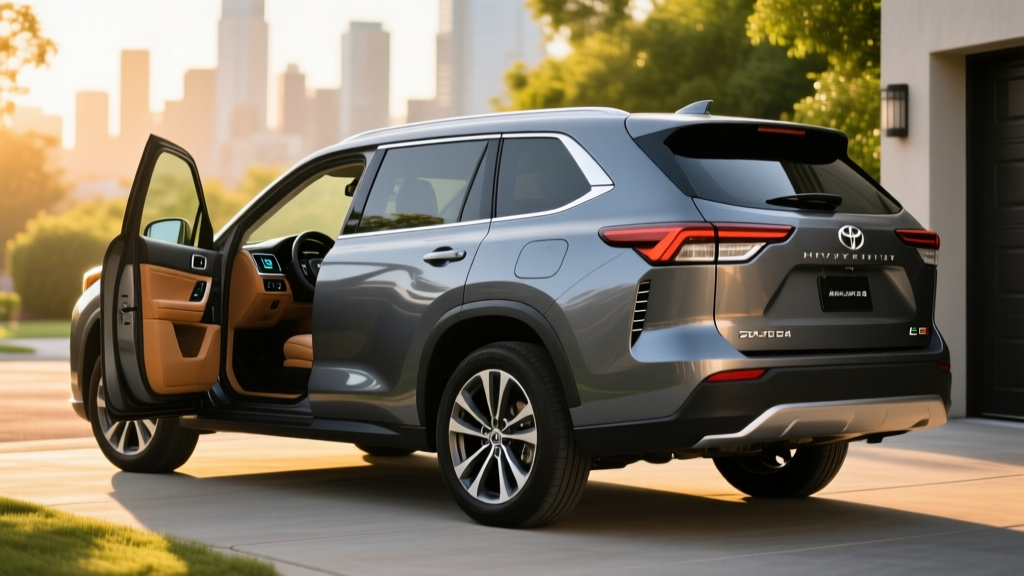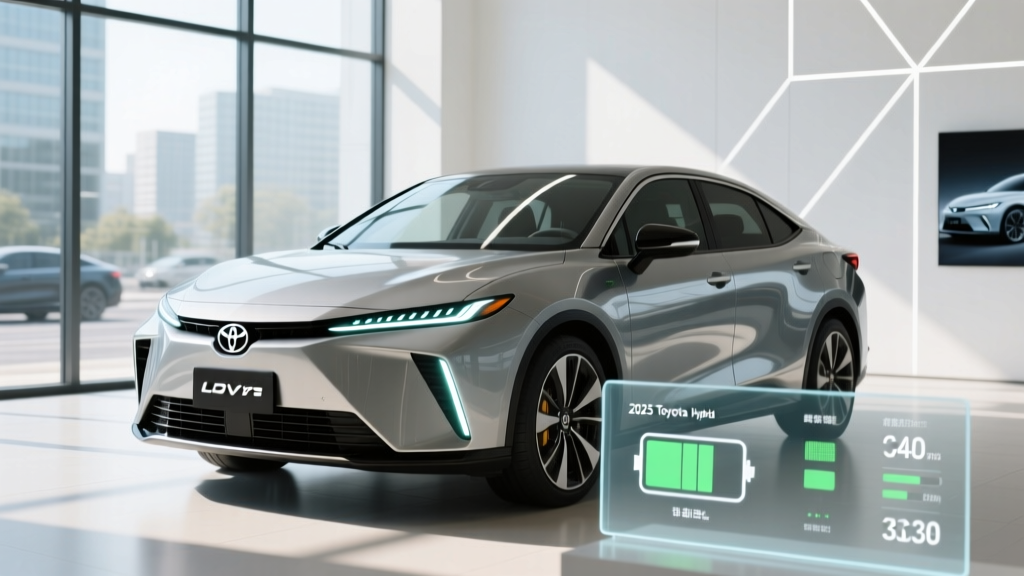
The term "LDV" (Light Duty Vehicle) covers the core of Toyota's electrified lineup in the U.S. market: the RAV4, Highlander, Sienna, Grand Highlander, and Tacoma. For buyers researching the Toyota LDV hybrid sales breakdown 2025, the story is one of massive hybrid adoption driven by fuel prices, limited EV charging infrastructure in suburban and rural areas, and Toyota's strategy of offering a hybrid variant on nearly every model it sells.
This guide unpacks the sales data, powertrain specs, real-world MPG, PHEV vs HEV differences, and tax credit eligibility across Toyota's light-duty hybrid portfolio heading into the 2026 model year.
Toyota LDV Hybrid Sales Breakdown: 2025 Numbers by Model
Toyota reported record hybrid sales in the U.S. through 2025, with hybrid and PHEV models accounting for over 40% of total Toyota brand volume. Here is how the light-duty hybrid lineup performed based on Toyota Motor North America sales reports and industry tracking:
| Model | Type | Approx. 2025 U.S. Hybrid Sales | Share of Model Sales |
|---|---|---|---|
| RAV4 Hybrid | HEV | ~215,000 | ~52% of RAV4 total |
| RAV4 Prime (PHEV) | PHEV | ~28,000 | ~7% of RAV4 total |
| Highlander Hybrid | HEV | ~58,000 | ~41% of Highlander total |
| Grand Highlander Hybrid | HEV / Hybrid MAX | ~44,000 | ~48% of GH total |
| Sienna (HEV only) | HEV | ~72,000 | 100% (HEV-only model) |
| Tacoma Hybrid (i-FORCE MAX) | HEV | ~32,000 | ~18% of Tacoma total |
The RAV4 Hybrid continues to dominate as Toyota's single best-selling electrified vehicle in the U.S., while the Sienna stands out as the only Toyota LDV sold exclusively as a hybrid — no gas-only variant exists. The RAV4 Prime PHEV remains supply-constrained due to high demand and battery allocation limits.
HEV vs PHEV: What Toyota LDV Buyers Need to Know
Conventional Hybrid (HEV) — Models like the RAV4 Hybrid, Highlander Hybrid, Sienna, and Tacoma i-FORCE MAX use a small battery (typically 1.0–1.9 kWh) charged entirely by the engine and regenerative braking. You never plug them in. The electric motor assists the gas engine to reduce fuel consumption, but the vehicle cannot drive on electricity alone for meaningful distances.
Plug-in Hybrid (PHEV) — The RAV4 Prime is Toyota's primary PHEV in the LDV segment. It carries a larger 18.1 kWh battery that can be charged from a wall outlet or public Level 2 charger, delivering an EPA-rated 42 miles of electric-only driving before the gas engine engages. Once the battery is depleted, it operates as a conventional hybrid.
Toyota does not currently offer PHEV versions of the Highlander, Grand Highlander, Sienna, or Tacoma in the U.S. market. If plug-in capability is a priority, the RAV4 Prime is your only Toyota LDV option.
EPA MPG & Electric-Only Range: Full Spec Table
| Model (2025/2026 MY) | Type | Combined HP | EPA City MPG | EPA Hwy MPG | EPA Combined MPG | EV-Only Range (PHEV) | Battery (kWh) |
|---|---|---|---|---|---|---|---|
| RAV4 Hybrid (AWD) | HEV | 219 hp | 41 | 38 | 39 | N/A | ~1.6 kWh |
| RAV4 Prime (AWD) | PHEV | 302 hp | 40 (hybrid) | 36 (hybrid) | 38 (hybrid) / 94 MPGe | 42 mi | 18.1 kWh |
| Highlander Hybrid (AWD) | HEV | 243 hp | 35 | 35 | 35 | N/A | ~1.9 kWh |
| Grand Highlander Hybrid | HEV | 245 hp | 36 | 32 | 34 | N/A | ~1.9 kWh |
| Grand Highlander Hybrid MAX | HEV | 362 hp | 27 | 28 | 27 | N/A | ~1.9 kWh |
| Sienna (FWD) | HEV | 245 hp | 36 | 36 | 36 | N/A | ~1.9 kWh |
| Tacoma i-FORCE MAX (4WD) | HEV | 326 hp | 23 | 24 | 23 | N/A | ~1.9 kWh |
Source: fueleconomy.gov (EPA). Real-world MPG may vary based on driving style, terrain, and climate.
Real-World MPG: Do Toyota Hybrids Beat the EPA Sticker?
Toyota's hybrid system excels in stop-and-go city driving, where the electric motor handles low-speed propulsion and regenerative braking recaptures energy. In real-world testing by owners and automotive publications:
- RAV4 Hybrid: Owners consistently report 38–43 MPG combined in mixed driving. City-heavy commutes often push above the 41 MPG EPA city figure, while sustained highway driving at 75+ mph can drop to 33–35 MPG.
- RAV4 Prime: When the battery is charged, short commutes under 42 miles use zero gasoline. Once depleted, real-world hybrid-mode MPG averages 35–38 MPG — slightly below the EPA 38 combined, likely due to the added weight of the larger battery.
- Sienna: This minivan regularly exceeds its 36 MPG EPA combined in suburban driving, with many owners reporting 37–40 MPG. Highway-only trips at 70+ mph tend to return 32–34 MPG.
- Highlander Hybrid: Real-world results cluster around 33–36 MPG combined, close to the EPA 35. Heavier loads (towing, full passenger cabin) reduce this to the high 20s.
- Tacoma i-FORCE MAX: As a body-on-frame truck, expect 21–25 MPG real-world depending on payload and terrain. The hybrid system provides a modest 1–2 MPG improvement over the non-hybrid turbo four-cylinder.
Battery Warranty & Replacement Cost
All Toyota hybrids and PHEVs sold in the U.S. carry a hybrid battery warranty of 10 years / 150,000 miles (whichever comes first), transferable to subsequent owners. This applies to both HEV and PHEV traction batteries.
Replacement cost estimates (out of warranty):
- RAV4 Hybrid HEV battery: $2,500–$4,000
- RAV4 Prime PHEV battery: $6,000–$9,000 (larger 18.1 kWh pack)
- Highlander / Sienna / Grand Highlander HEV battery: $3,000–$5,000
- Tacoma i-FORCE MAX battery: $3,500–$5,500
Toyota's nickel-metal hydride (NiMH) and lithium-ion hybrid batteries have demonstrated strong longevity. It is common for Toyota HEV batteries to last 150,000+ miles with minimal degradation. The Toyota warranty guide details full coverage terms.
RAV4 Prime PHEV Deep Dive: Charging, Range & Powertrain
The RAV4 Prime is the standout in Toyota's LDV lineup for buyers who want electric-only commuting with gas-engine flexibility. Here are the key specs:
- Battery: 18.1 kWh lithium-ion (usable capacity ~14.5 kWh)
- Electric-only range: EPA 42 miles
- Total range (EV + gas): ~600 miles combined
- Level 1 charging (120V): ~12 hours from empty (included cord)
- Level 2 charging (240V, 3.3 kW onboard): ~4.5 hours
- DC fast charging: NOT available — the RAV4 Prime does not support DC fast charging
- Combined system output: 302 hp (2.5L 4-cyl + front/rear electric motors)
- 0–60 mph: 5.7 seconds
- Drivetrain: Electronic AWD (rear motor provides rear-wheel torque)
The lack of DC fast charging is a notable limitation. On road trips, you cannot quickly top up the battery at a public fast charger — the RAV4 Prime relies entirely on Level 1 or Level 2 AC charging. For daily use, however, most owners charge overnight at home and start each morning with a full 42-mile electric buffer.
Pricing & Federal Tax Credit Eligibility
| Model | Starting MSRP (2025/2026) | Federal Tax Credit (§30D) | Effective Price After Credit |
|---|---|---|---|
| RAV4 Hybrid LE | $33,575 | $0 (HEV — not eligible) | $33,575 |
| RAV4 Prime SE | $44,460 | Up to $7,500* | ~$36,960 |
| Highlander Hybrid LE | $42,220 | $0 (HEV) | $42,220 |
| Grand Highlander Hybrid | $45,380 | $0 (HEV) | $45,380 |
| Sienna LE | $38,485 | $0 (HEV) | $38,485 |
| Tacoma i-FORCE MAX | $42,320 | $0 (HEV) | $42,320 |
*RAV4 Prime §30D tax credit eligibility (2025/2026 rules): The RAV4 Prime qualifies for up to $7,500 under IRS §30D, subject to:
- MSRP cap: SUVs must be under $80,000 — RAV4 Prime qualifies
- Buyer income cap: AGI must not exceed $150,000 (single), $225,000 (head of household), or $300,000 (joint)
- Battery sourcing: Critical minerals and battery component requirements phase in annually; verify current-year compliance on the IRS clean vehicle credit page
- Point-of-sale transfer: As of 2024+, buyers can transfer the credit to the dealer for an immediate price reduction at purchase
Conventional hybrids (HEVs) do not qualify for the §30D federal tax credit. Some states offer separate incentives for HEVs, but these vary widely. Check your state's energy office or the AFDC state incentive database for local programs.
Who Should Choose a Toyota Hybrid vs a Full EV or Gas Car?
Choose a Toyota HEV (RAV4 Hybrid, Sienna, Highlander) if:
- You cannot install a home charger (apartment, street parking, landlord restrictions)
- You regularly drive in areas with sparse public charging infrastructure
- You want 35–41 MPG without changing your fueling habits
- You tow occasionally (Sienna and Highlander Hybrid handle light towing)
- You want lower upfront cost vs a PHEV or BEV
Choose the RAV4 Prime PHEV if:
- You have home Level 2 charging and a commute under 42 miles round-trip
- You want electric-only daily driving but need gas flexibility for road trips
- You qualify for the $7,500 federal tax credit (income and sourcing requirements met)
- You value the 302 hp performance upgrade over the standard RAV4 Hybrid
Choose a full BEV (e.g., Tesla Model Y, Hyundai Ioniq 5) if:
- You have reliable home charging and your daily driving is under 250 miles
- You want zero tailpipe emissions and minimal maintenance (no oil changes, no engine)
- You want the lowest per-mile fuel cost (electricity at $0.13/kWh ≈ $4.50 per 100 miles vs $12–15 for gas)
- You're comfortable planning longer road trips around DC fast-charging stops
Toyota LDV Hybrid Pros
- Best-in-class reliability track record (Toyota hybrid system since 1997)
- No charging infrastructure needed for HEVs
- Strong real-world MPG, especially in city driving
- 10-year / 150,000-mile hybrid battery warranty
- RAV4 Prime offers 42 mi EV range + 302 hp + AWD
- High resale value across the hybrid lineup
Toyota LDV Hybrid Cons
- Only one PHEV option (RAV4 Prime) — no PHEV minivan or 3-row SUV
- RAV4 Prime has no DC fast charging
- HEVs do not qualify for the federal §30D tax credit
- Hybrid MAX powertrain (Grand Highlander) sacrifices MPG for power (27 MPG combined)
- RAV4 Prime is frequently supply-constrained with dealer markups
- CVT-like driving feel in most models (except Hybrid MAX with 6-speed auto)
Frequently Asked Questions
How many MPG does the Toyota RAV4 Hybrid get in real-world driving?
The EPA rates the 2025 RAV4 Hybrid AWD at 41 city / 38 highway / 39 combined MPG. In real-world mixed driving, most owners report 38–43 MPG. City-heavy routes with frequent stops allow the hybrid system to maximize regenerative braking and electric motor use, often pushing above the EPA city figure. Sustained highway driving above 75 mph typically drops to 33–35 MPG due to aerodynamic drag.
How far can the RAV4 Prime go on electric only?
The EPA rates the RAV4 Prime at 42 miles of electric-only range on a full charge. In real-world conditions, expect 35–40 miles in warm weather and 28–33 miles in freezing temperatures, as the battery is less efficient in cold and the cabin heater draws additional power. The total combined range (electric + gas tank) is approximately 600 miles.
Do Toyota hybrids need to be plugged in?
No. Conventional Toyota hybrids (HEV) like the RAV4 Hybrid, Highlander Hybrid, Sienna, and Tacoma i-FORCE MAX charge their batteries entirely through the gas engine and regenerative braking. You never plug them in. Only the RAV4 Prime PHEV requires (or benefits from) plug-in charging to access its 42-mile electric-only range.
Is the Toyota hybrid battery reliable and what does replacement cost?
Toyota's hybrid battery systems have an exceptional reliability record spanning over 25 years of production (since the 1997 Prius). All current Toyota hybrids carry a 10-year / 150,000-mile hybrid battery warranty. Out-of-warranty replacement costs range from approximately $2,500 for a RAV4 Hybrid NiMH pack to $6,000–$9,000 for the RAV4 Prime's larger lithium-ion PHEV battery. Many Toyota hybrid batteries last well beyond 150,000 miles without significant degradation.
Does any Toyota hybrid qualify for a federal tax credit?
Only the RAV4 Prime PHEV qualifies for the federal §30D clean vehicle tax credit, which can provide up to $7,500. Eligibility depends on the buyer's adjusted gross income (caps at $150K single / $300K joint), the vehicle's MSRP (must be under $80,000 for SUVs), and battery component/critical mineral sourcing requirements that tighten annually. Conventional Toyota hybrids (HEVs) do not qualify for the federal credit. Check the IRS clean vehicle credit page for current rules.
How does the RAV4 Prime charge, and how long does it take?
The RAV4 Prime charges via Level 1 (standard 120V outlet) in approximately 12 hours, or Level 2 (240V, using its 3.3 kW onboard charger) in about 4.5 hours. It does NOT support DC fast charging. For most owners, overnight Level 2 charging at home is the practical solution, providing a full 42-mile electric buffer each morning.
Hybrid vs PHEV vs full EV — which Toyota is right for me?
If you lack home charging access or frequently drive in areas without public chargers, a Toyota HEV (RAV4 Hybrid, Sienna, Highlander) gives you 34–41 MPG with zero behavior change. If you can charge at home and commute under 42 miles, the RAV4 Prime PHEV lets you drive electric daily while keeping a gas engine for road trips. If you have reliable home charging, drive under 250 miles daily, and want the lowest operating cost, consider a full BEV like the Tesla Model Y or Hyundai Ioniq 5 instead of any hybrid.