Quick Verdict: The 2017 Highlander Hybrid as a Used Buy
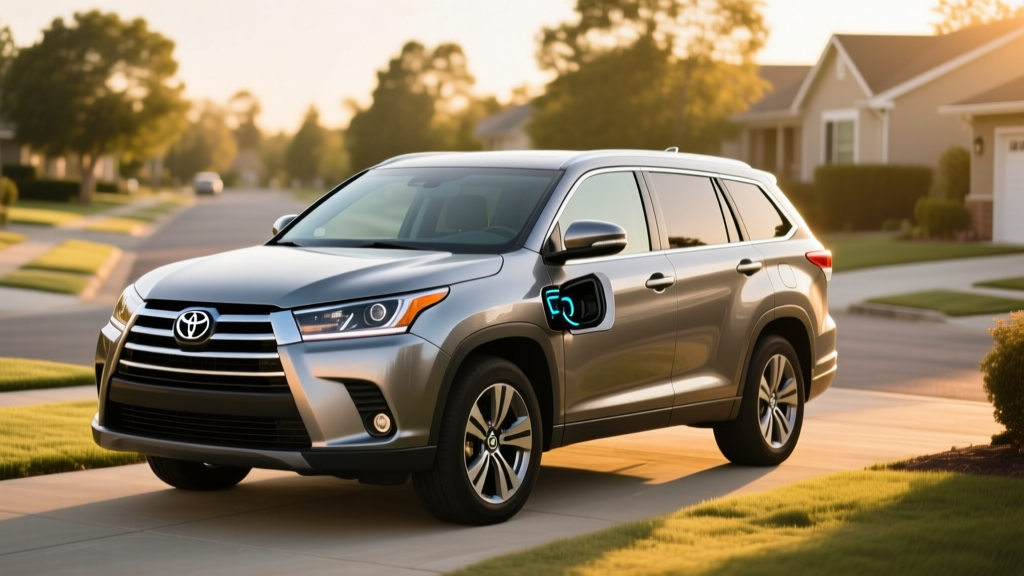
The 2017 Toyota Highlander Hybrid is a three-row midsize SUV that delivers 28–29 MPG combined in real-world driving — roughly 40% better fuel economy than its gas-only counterpart. For used-car shoppers in 2026, it remains one of the most reliable hybrid SUVs on the market, with a proven nickel-metal hydride (NiMH) battery pack that routinely exceeds 150,000 miles before meaningful degradation. If you need three rows, all-wheel drive, and low running costs without ever plugging in, this is a strong contender on the used market.
One important distinction up front: the 2017 Highlander Hybrid is a conventional hybrid (HEV), not a plug-in hybrid (PHEV). It charges its own battery through regenerative braking and the gasoline engine. You never plug it in, and it has no electric-only driving range. If you want plug-in electric miles, you'd need to look at a PHEV like the Toyota RAV4 Prime or a full battery-electric vehicle (BEV).
EPA Fuel Economy & Real-World MPG
| Trim / Drivetrain | City MPG | Highway MPG | Combined MPG |
|---|---|---|---|
| LE / XLE / Limited (AWD-i) | 29 | 27 | 28 |
| Limited Platinum (AWD-i) | 29 | 27 | 28 |
Source: EPA / fueleconomy.gov
The 2017 Highlander Hybrid's EPA rating of 28 MPG combined is achievable in mixed driving. In city-heavy commutes, expect 30–32 MPG thanks to frequent regenerative braking and electric-motor assist at low speeds. On sustained highway trips at 70+ mph, expect 25–27 MPG as the V6 engine does more of the work. In cold weather (below freezing), expect a 5–10% reduction — roughly 25–26 MPG combined — as the engine runs more often to provide cabin heat.
This is where Toyota's hybrid system shines: unlike a gas-only vehicle that gets worse mileage in the city, the Highlander Hybrid actually performs better in stop-and-go traffic. The electric motor handles low-speed propulsion, and regenerative braking recovers energy that would otherwise be wasted as heat in the brake pads.
Powertrain Specs: V6 + Dual Electric Motors
| Engine | 3.5L V6 (2GR-FXE, Atkinson cycle) |
| Engine Output | 238 HP / 242 lb-ft torque |
| Electric Motors | Front: 123 kW (165 HP) / Rear: 50 kW (67 HP) |
| Net System Horsepower | 306 HP combined |
| Transmission | eCVT (planetary gearset, no fixed gears) |
| Drivetrain | AWD-i (electronic all-wheel drive, rear motor) |
| Battery Type | Nickel-Metal Hydride (NiMH) |
| Battery Capacity | ~1.9 kWh (not plug-in) |
| 0–60 mph | ~7.8 seconds |
| Towing Capacity | 3,500 lbs |
| Cargo Volume | 13.8 cu ft (behind 3rd row) / 83.7 cu ft (all rows folded) |
The 2017 Highlander Hybrid uses Toyota's third-generation Hybrid Synergy Drive. The 3.5-liter V6 runs on the Atkinson cycle — a combustion strategy that sacrifices some low-end torque for greater thermal efficiency. The front electric motor (165 HP) is integrated into the transaxle and handles most low-speed driving. The rear motor (67 HP) activates only when the system detects front-wheel slip or when additional traction is needed, giving the Highlander its AWD-i designation.
There is no mechanical driveshaft connecting the front and rear axles. The rear wheels are driven entirely by the electric motor, which means the AWD system adds minimal weight and parasitic loss compared to a conventional mechanical AWD setup.
HEV vs PHEV vs EV: Which Fits Your Needs?
| Feature | HEV (This Highlander) | PHEV (e.g., RAV4 Prime) | BEV (e.g., Kia EV9) |
|---|---|---|---|
| Plug-in Charging | No — self-charging | Yes — plug in for EV miles | Yes — sole energy source |
| Electric-Only Range | ~1 mile at low speed | 35–42 miles typical | 230–300+ miles |
| Total Range | ~450 miles | ~550+ miles combined | 230–300+ miles |
| Fueling | Gas station only | Gas station + outlet/charger | Charger only |
| Home Charging Needed | No | Recommended (Level 2) | Essential (Level 2) |
| §30D Federal Tax Credit (New) | Not eligible | Up to $7,500* | Up to $7,500* |
| Used Market Tax Credit | Not eligible | Up to $4,000* | Up to $4,000* |
*Federal tax credits under IRS §30D and §25E have income caps, MSRP caps, battery-sourcing requirements, and dealer-registration rules. Consult IRS.gov and a tax professional for eligibility.
- You don't have access to home or workplace charging
- You need three rows and AWD for family duty
- You want maximum simplicity — no charging cables, no range planning
- Your annual mileage is moderate (10,000–15,000 miles/year)
- You're buying used and want a proven, low-risk powertrain
- You have Level 2 home charging and a short daily commute (PHEV)
- You want to eliminate gasoline entirely (BEV)
- You're buying new and want to maximize federal tax credits
- You drive primarily in urban areas where EV mode delivers the biggest savings
Battery Lifespan, Warranty & Replacement Cost
When new, the 2017 Highlander Hybrid's battery was covered for 8 years / 100,000 miles (10 years / 150,000 miles in California and states that follow CARB emissions rules). As of 2026, most examples have aged out of factory warranty coverage based on the 8-year clock, though some low-mileage examples in CARB states may still have residual coverage.
The 2017 Highlander Hybrid uses a nickel-metal hydride (NiMH) battery pack — the same chemistry Toyota has used in its hybrids since the original Prius in 1997. NiMH is less energy-dense than modern lithium-ion, but it has a well-documented track record for longevity. The pack is relatively small (~1.9 kWh) and Toyota's battery management system keeps it in a narrow state-of-charge window (roughly 40–80%), which dramatically reduces stress and degradation.
How Long Does the Battery Last?
Based on owner reports and fleet data, Toyota's NiMH hybrid batteries routinely last 150,000–200,000+ miles before capacity loss becomes noticeable. "Noticeable" in a hybrid context means slightly reduced fuel economy and more frequent engine engagement — not a sudden failure. Many first-generation Prius taxis exceeded 300,000 miles on the original battery.
For a 2017 model in 2026, the battery is 9 years old. Age-related degradation is a factor even if mileage is low. Expect roughly 5–10% capacity loss at this age, which translates to a marginal (1–2 MPG) reduction in real-world fuel economy. This is rarely a dealbreaker.
Battery Replacement Cost
If the hybrid battery does fail, here's what to budget:
- Dealer replacement (new OEM pack): $3,000–$4,500 including labor
- Refurbished/reconditioned pack: $1,500–$2,500 from independent hybrid specialists
- Individual cell/module replacement: $500–$1,200 if only one or two modules are weak (common failure mode)
The Highlander Hybrid's NiMH pack is far cheaper to replace than a large BEV lithium-ion battery. And because the pack is located under the second-row seats (not the floor), replacement labor is straightforward — typically a 2–3 hour job.
Pricing & Tax Credit Eligibility (2026 Used Market)
As of early 2026, used 2017 Toyota Highlander Hybrids trade in the following ranges depending on trim, mileage, and condition:
| Trim | Mileage Range | Typical Asking Price |
|---|---|---|
| LE | 80,000–120,000 mi | $18,000–$22,000 |
| XLE | 70,000–110,000 mi | $21,000–$26,000 |
| Limited | 60,000–100,000 mi | $24,000–$29,000 |
| Limited Platinum | 50,000–90,000 mi | $26,000–$32,000 |
Does It Qualify for a Tax Credit?
No. The 2017 Highlander Hybrid does not qualify for any federal tax credit. Conventional hybrids (HEVs) are not eligible for the IRS §30D New Clean Vehicle Credit or the §25E Used Clean Vehicle Credit. These credits are reserved for plug-in vehicles — PHEVs with at least 7 kWh of battery capacity and full BEVs.
Some states previously offered hybrid-specific rebates (e.g., Oregon's Clean Vehicle Rebate), but most have shifted their incentive programs exclusively to plug-in vehicles. Check your state's current energy or environmental agency website for any remaining hybrid incentives, but don't count on them.
Reliability & Ownership Costs
Toyota's hybrid powertrain is among the most reliable in the automotive industry. The eCVT transmission has no clutch packs, torque converters, or friction bands to wear out — it's a planetary gearset with three rotating elements. Brake pad life is extended significantly (often 60,000–80,000+ miles) because regenerative braking handles most deceleration.
Maintenance Advantages Over Gas-Only Models
- Brake pads: Last 2–3× longer than gas Highlander due to regen braking
- Transmission: eCVT has no conventional transmission fluid changes; Toyota recommends inspection but not routine replacement
- Engine wear: The Atkinson-cycle V6 runs fewer hours per mile than a conventional engine (electric motor shares the load), reducing long-term wear
- No 12V battery drain issues: The hybrid system maintains the 12V auxiliary battery automatically
Insurance & Depreciation
Insurance premiums for the 2017 Highlander Hybrid are comparable to the gas V6 model — insurers do not surcharge for hybrid components. Depreciation has been favorable: Toyota Highlanders (especially hybrids) hold value well in the used market due to strong demand from families seeking reliable three-row SUVs with low fuel costs.
Pros & Cons at a Glance
- 28–32 MPG real-world — exceptional for a 3-row AWD SUV
- Proven NiMH battery with 150,000+ mile track record
- 306 HP provides confident merging and highway passing
- AWD-i with no mechanical drivetrain losses to rear axle
- Low maintenance costs (extended brake life, no conventional transmission)
- Strong resale value and parts availability
- 3,500-lb towing capacity (adequate for small trailers, boats)
- No plug-in capability — cannot access HOV lanes or EV tax credits
- Third row is tight for adults (best for children on longer trips)
- Cargo space behind 3rd row is modest (13.8 cu ft)
- Infotainment system is dated by 2026 standards (no wireless CarPlay/Android Auto)
- NiMH battery is heavier and less energy-dense than modern lithium-ion
- Highway MPG drops noticeably above 70 mph
- Factory battery warranty has expired for most 2017 examples
Frequently Asked Questions
How many MPG does the 2017 Toyota Highlander Hybrid get?
The EPA rates it at 29 city / 27 highway / 28 combined MPG. In real-world city-heavy driving, owners commonly report 30–32 MPG. Highway-only driving at 70+ mph typically yields 25–27 MPG. Cold weather reduces these figures by roughly 5–10%.
Do I need to plug in the 2017 Highlander Hybrid?
No. This is a conventional hybrid (HEV), not a plug-in. The battery charges itself through regenerative braking and the gasoline engine. You fuel it exclusively at gas stations, just like a regular car. There is no charging port, no charging cable, and no electric-only driving range beyond approximately 1 mile at very low speeds.
Is the 2017 Highlander Hybrid reliable?
Yes. Toyota's Hybrid Synergy Drive is one of the most proven powertrain systems in production. The NiMH battery routinely lasts 150,000–200,000+ miles. The eCVT transmission has no wearable friction components. Toyota's hybrid-specific components have lower failure rates than conventional transmissions and drivetrain parts. According to IIHS, the 2017 Highlander earned Good ratings in all crashworthiness categories tested.
What does a hybrid battery replacement cost?
A new OEM NiMH battery from a Toyota dealer costs $3,000–$4,500 installed. Refurbished packs from hybrid specialists run $1,500–$2,500. In many cases, only one or two modules within the pack fail, and individual module replacement costs $500–$1,200. This is significantly less expensive than replacing a BEV traction battery.
Does the 2017 Highlander Hybrid qualify for any tax credits?
No federal tax credits apply. Conventional hybrids are ineligible for the IRS §30D New Clean Vehicle Credit or the §25E Used Clean Vehicle Credit (both require plug-in capability and minimum battery capacity). Some states may offer minimal hybrid incentives, but most programs now focus exclusively on PHEVs and BEVs. Consult IRS.gov for current rules.
How does it compare to the current Highlander Hybrid?
The current-generation Highlander Hybrid (2020+) switched to a 2.5L four-cylinder hybrid system with 243 net HP and achieves an EPA-estimated 35–36 MPG combined — a significant efficiency gain. However, the 2017 model's 3.5L V6 offers more power (306 HP vs 243 HP), higher towing capacity (3,500 lbs vs 3,500 lbs — unchanged), and a more traditional driving feel. The 2017 model trades efficiency for power and is typically $10,000–$15,000 less expensive on the used market.
Should I buy a 2017 Highlander Hybrid or a full EV?
Choose the 2017 Highlander Hybrid if you lack home charging, regularly take long road trips where charging infrastructure is sparse, need three rows on a budget, or simply prefer the simplicity of gas-station fueling. Consider a BEV like the Kia EV9 or Tesla Model X if you have reliable Level 2 home charging, your daily driving is under 60 miles, you want to eliminate gasoline costs, and you're prepared for a higher purchase price. A PHEV like the Toyota Grand Highlander Hybrid (if available) or a used Chrysler Pacifica Hybrid offers a middle ground — electric miles for daily commuting with gasoline range for longer trips.
Before You Buy: Inspection Checklist
If you're evaluating a used 2017 Highlander Hybrid, prioritize these items during your pre-purchase inspection:
- Hybrid battery health check: Ask a Toyota dealer or hybrid specialist to run a battery health diagnostic. This reads individual module voltages and internal resistance — the best indicator of remaining battery life.
- Inverter coolant pump: Toyota issued a recall for the hybrid inverter coolant pump on some model years. Verify the recall was performed (check NHTSA VIN lookup at nhtsa.gov/recalls).
- Brake actuator: Toyota's hybrid brake actuator is expensive ($1,500–$2,500) if it fails. Listen for unusual clicking or grinding from the brake pedal area during a test drive.
- AWD-i rear motor: On a wet or gravel surface, verify that the rear wheels engage under acceleration. The rear motor should activate seamlessly within the first few car lengths.
- Maintenance records: Confirm regular oil changes (the V6 still needs them every 5,000–10,000 miles) and inverter coolant service per Toyota's schedule.
The 2017 Toyota Highlander Hybrid remains one of the smartest used three-row SUV purchases in 2026 — a vehicle that delivers real fuel savings, proven reliability, and family practicality without the complexity or charging requirements of a plug-in vehicle.