Quick Verdict: Performance Meets Family-Hauler Efficiency
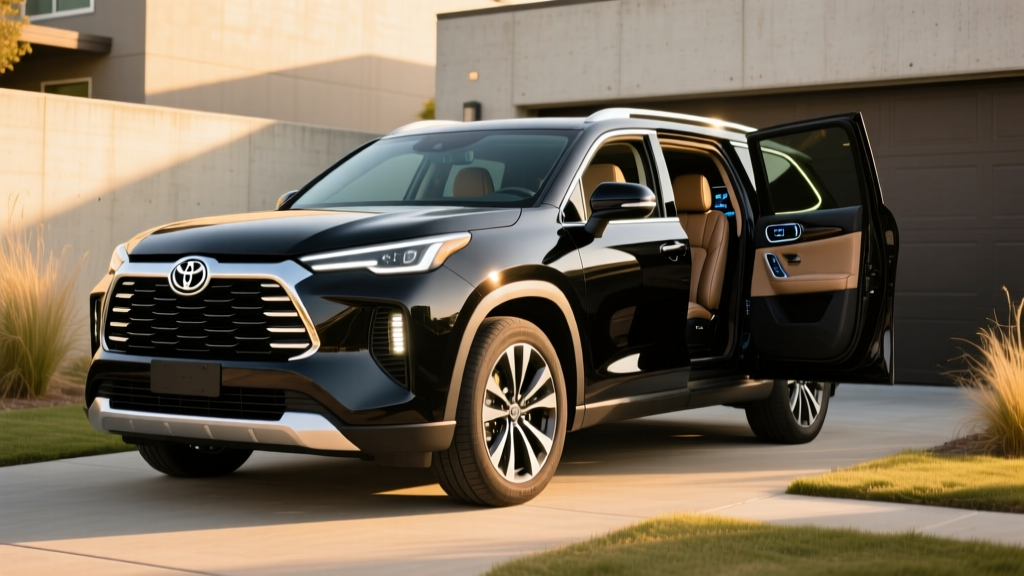
The 2026 Toyota Grand Highlander Platinum Hybrid MAX occupies a specific niche: buyers who want three-row SUV space, legitimate towing capability, and better fuel economy than a turbocharged gas-only competitor—but aren't ready to commit to a full battery-electric vehicle. The Hybrid MAX powertrain pairs a turbocharged 2.4-liter four-cylinder with electric motors for 362 combined horsepower, achieving an EPA-estimated 27 MPG combined. That's a meaningful improvement over the gas-only Grand Highlander's 24 MPG combined, though it comes at a premium price point that demands scrutiny.
This is a conventional hybrid (HEV), not a plug-in hybrid (PHEV). You'll never plug it in—the battery charges through regenerative braking and the gasoline engine. That distinction matters for buyers comparing it to the Grand Highlander Hybrid (non-MAX, 36 MPG combined) or plug-in alternatives from other manufacturers.
Fuel Economy: EPA Numbers vs. Real-World MPG
The Hybrid MAX powertrain sacrifices some efficiency for its performance advantage. Here's how the EPA rates it:
| Driving Cycle | EPA MPG | Real-World Expectation |
|---|---|---|
| City | 26 MPG | 24-28 MPG |
| Highway | 27 MPG | 25-27 MPG |
| Combined | 27 MPG | 25-27 MPG |
Source: fueleconomy.gov
Hybrids typically exceed EPA city estimates in stop-and-go driving where regenerative braking recovers energy. However, the Hybrid MAX's turbocharged engine and performance tuning mean it doesn't gain as much city advantage as Toyota's standard Hybrid system. On a 400-mile highway road trip at 70-75 MPH, expect to see 25-26 MPG—slightly below the EPA highway number due to aerodynamic drag and the three-row SUV's weight (approximately 4,700 lbs curb weight).
For comparison, the non-MAX Grand Highlander Hybrid (245 HP) achieves 36 MPG combined—a 9 MPG advantage. The Hybrid MAX trades that efficiency for 117 additional horsepower and a 5,000-lb towing capacity versus 3,500 lbs.
Hybrid MAX Powertrain: Turbo Meets Electric
The Hybrid MAX system combines:
- Engine: 2.4-liter turbocharged four-cylinder, 271 HP, 317 lb-ft torque
- Electric Motors: Front and rear motors, 91 HP combined
- Total System Output: 362 HP, 400 lb-ft torque
- Transmission: 6-speed automatic (not CVT)
- Drivetrain: Electronic on-demand AWD (eAWD)
The 6-speed automatic is a deliberate choice—Toyota's Hybrid MAX system uses a traditional stepped transmission rather than the planetary gearset (eCVT) found in the standard Hybrid. This provides more direct acceleration feel and better towing performance, though it sacrifices some of the seamless efficiency optimization that eCVTs provide.
The 1.8 kWh nickel-metal hydride (NiMH) battery pack is small by PHEV standards—intentionally so. It's designed for frequent charge/discharge cycles during driving, not for electric-only range. You cannot plug in the Hybrid MAX; it charges exclusively through regenerative braking and engine power.
HEV vs. PHEV vs. EV: Which Fits Your Needs?
| Factor | Hybrid (HEV) | Plug-in Hybrid (PHEV) | Battery Electric (BEV) |
|---|---|---|---|
| Plug-in Required? | No | Yes (optional but recommended) | Yes (mandatory) |
| Electric-Only Range | None | 20-45 miles typical | 200-400+ miles |
| Fuel Cost per Mile | $0.12-0.15 | $0.08-0.12 (with charging) | $0.04-0.08 |
| Home Charging Setup | Not needed | Level 2 recommended | Level 2 essential |
| Range Anxiety | None | Minimal | Varies by use case |
| Federal Tax Credit | None | Up to $7,500 (if eligible) | Up to $7,500 (if eligible) |
Choose the Hybrid MAX if: You need towing capacity, want performance, have no home charging access, and drive in areas with limited public charging infrastructure.
Consider a PHEV if: You have home charging, your daily commute is under 30 miles, and you want electric-only driving for most trips while retaining gas flexibility for road trips.
Go full EV if: You have reliable home Level 2 charging, your daily driving is under 250 miles, and you want the lowest per-mile operating cost.
Pricing, Trim Levels & Tax Credit Eligibility
The 2026 Toyota Grand Highlander Platinum Hybrid MAX starts at an MSRP of approximately $54,000 (destination included). The Platinum trim is the top-tier offering, including:
- Panoramic roof
- Heated and ventilated front and second-row seats
- 12.3-inch touchscreen with wireless Apple CarPlay/Android Auto
- JBL premium audio
- 360-degree camera system
- Toyota Safety Sense 3.0 suite
Federal Tax Credit Status
The Hybrid MAX is a conventional hybrid (HEV), not a plug-in. It does not qualify for the federal §30D Clean Vehicle Credit, which is reserved for plug-in hybrids and battery-electric vehicles with sufficient battery capacity. There is currently no federal tax credit for conventional hybrids.
Some states offer hybrid incentives, but these vary widely and change frequently. Check your state's energy office or department of environmental quality for current programs. Source: IRS.gov
Battery Warranty, Reliability & Replacement Cost
Toyota provides comprehensive hybrid battery coverage:
- Hybrid Battery Warranty: 10 years / 150,000 miles (whichever comes first)
- Hybrid System Components: 8 years / 100,000 miles
- Powertrain Warranty: 5 years / 60,000 miles
The 1.8 kWh NiMH battery in the Hybrid MAX is small and cycles frequently but at shallow depth—unlike a PHEV or EV battery that undergoes deep discharge cycles. Toyota's hybrid batteries have demonstrated exceptional longevity in real-world use; it's common for Prius and Camry Hybrid batteries to exceed 150,000-200,000 miles before needing replacement.
If replacement is needed out of warranty, expect to pay $2,500-$4,000 for a Hybrid MAX battery pack (parts and labor). However, given the 10-year/150,000-mile warranty and Toyota's track record, most owners will never face this cost.
Toyota's hybrid systems have proven highly reliable. The Hybrid MAX uses a turbocharged engine, which adds complexity compared to the naturally aspirated 2.5-liter in the standard Hybrid, but Toyota's turbocharged engines (found in the RAV4, Highlander, and Crown) have shown solid durability in early service data.
Real-World Ownership: Who Should Buy This Hybrid?
Pros
- 362 HP provides confident highway merging and passing
- 5,000-lb towing capacity (best in class for hybrid SUVs)
- 27 MPG combined beats gas-only competitors by 3-5 MPG
- No plug-in required—works with existing gas-station infrastructure
- Platinum trim offers luxury features without luxury-brand pricing
- 10-year/150,000-mile hybrid battery warranty
Cons
- 9 MPG less efficient than standard Grand Highlander Hybrid
- No federal tax credit (HEV, not PHEV)
- $54,000 MSRP is a significant premium over base trims
- Turbo engine requires premium fuel for maximum performance
- Heavier than standard Hybrid, affecting handling and tire wear
Ideal Buyer Profile: You tow a boat, camper, or trailer regularly (3,500-5,000 lbs), you want quick acceleration for highway driving, you lack home charging access, and you prioritize performance over maximum fuel economy. You're comparing against the Kia Telluride Hybrid, Mazda CX-90 PHEV, or Honda Pilot—but want Toyota's hybrid reliability reputation.
Look Elsewhere If: Your priority is maximum MPG (choose the standard Grand Highlander Hybrid at 36 MPG combined), you have home charging and want electric-only commuting (consider the RAV4 Prime or a three-row PHEV from another brand), or you're budget-conscious (the Hybrid MAX's $54,000 MSRP is steep).
Frequently Asked Questions
How many MPG does the Grand Highlander Hybrid MAX get?
The EPA rates it at 26 MPG city, 27 MPG highway, and 27 MPG combined. Real-world testing shows 25-27 MPG combined depending on driving style and conditions. Highway driving at 70+ MPH typically yields 25-26 MPG.
Does the Hybrid MAX have electric-only range?
No. The Hybrid MAX is a conventional hybrid (HEV), not a plug-in hybrid (PHEV). It cannot drive on electric power alone for any meaningful distance. The electric motors assist the gasoline engine during acceleration and low-speed driving, but the engine is always running or ready to engage.
Do I need to plug in the Hybrid MAX?
No. Conventional hybrids like the Hybrid MAX charge their batteries through regenerative braking and the gasoline engine. You'll fuel it like any other gas vehicle—there's no plug or charging port.
Is the Hybrid MAX reliable?
Toyota's hybrid systems have demonstrated excellent long-term reliability. The 10-year/150,000-mile hybrid battery warranty reflects Toyota's confidence. The turbocharged 2.4-liter engine is newer than Toyota's naturally aspirated hybrids, but early data from other Toyota turbo models (RAV4, Highlander) suggests solid durability. Regular maintenance (oil changes, coolant service) is essential for longevity.
What does hybrid battery replacement cost?
Out-of-warranty replacement runs $2,500-$4,000 for the Hybrid MAX battery pack. However, the 10-year/150,000-mile warranty covers most owners, and Toyota hybrid batteries commonly exceed 200,000 miles before needing replacement.
Does the Hybrid MAX qualify for any tax credit?
No federal tax credit. The §30D Clean Vehicle Credit requires plug-in capability and minimum battery capacity (7 kWh for PHEVs, which the Hybrid MAX's 1.8 kWh pack doesn't meet). Some states offer hybrid incentives—check your state's energy office for current programs.
Hybrid MAX vs. standard Hybrid: which should I choose?
Choose Hybrid MAX if you need 5,000-lb towing capacity, want 362 HP for performance driving, and don't mind 27 MPG. Choose the standard Hybrid (245 HP, 36 MPG) if fuel economy is your priority, you tow under 3,500 lbs, and you want to save $5,000+ on purchase price.
Can I tow with the Hybrid MAX?
Yes. The Hybrid MAX is rated for 5,000 lbs towing capacity (when properly equipped), matching the gas-only Grand Highlander. The standard Hybrid is limited to 3,500 lbs. The Hybrid MAX's turbo engine and 6-speed automatic provide better towing performance than the standard Hybrid's eCVT.