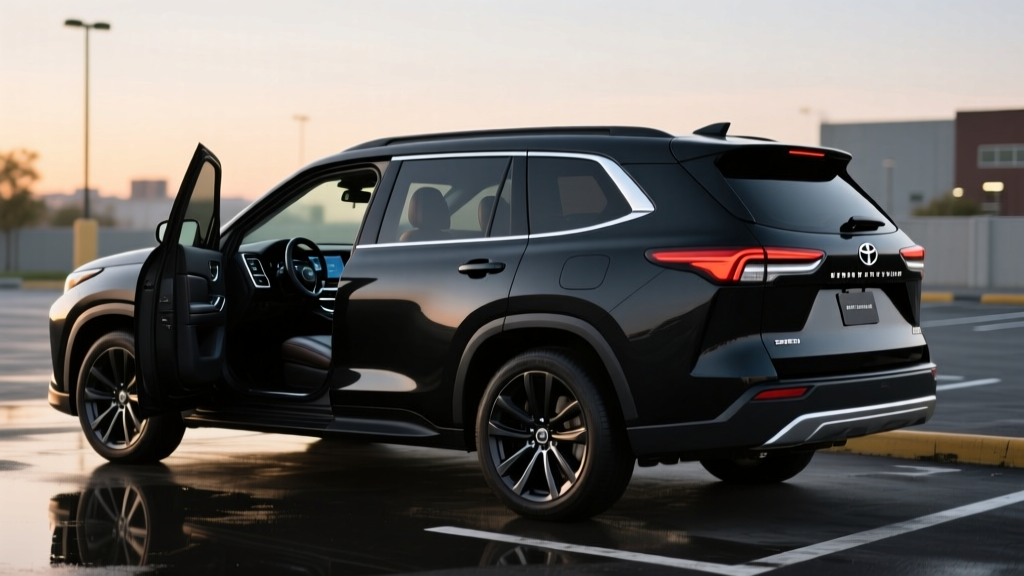
The 2025 Toyota Grand Highlander Hybrid Nightshade Edition threads a narrow needle: it's the stealthy, blacked-out appearance package applied to Toyota's most family-friendly three-row hybrid. But beneath the gloss-black wheels and dark badging lies a conventional hybrid electric vehicle (HEV) powertrain that prioritizes fuel economy over plug-in complexity. For buyers cross-shopping this against plug-in hybrids, full EVs, or gas-only rivals, the numbers — and the ownership math — tell the real story.
Quick Verdict: What the Nightshade Hybrid Actually Is
The Nightshade Edition is an appearance and convenience trim built on top of the Grand Highlander Hybrid's XLE or Limited grade (Toyota has shifted Nightshade availability across model years). It adds black 20-inch alloy wheels, black mirror caps, black badging, and a darkened exterior accent treatment. Mechanically, it is identical to every other Grand Highlander Hybrid: a 2.5-liter four-cylinder engine paired with Toyota's fourth-generation hybrid system driving all four wheels via electronic on-demand AWD (e-AWD).
This is not a plug-in hybrid. There is no charging port, no electric-only driving mode, and no eligibility for the federal §30D new clean vehicle tax credit, which requires plug-in capability and minimum battery capacity under current IRS rules. The Grand Highlander Hybrid is a self-charging HEV — it recovers energy through regenerative braking and the engine, storing it in a small nickel-metal hydride (NiMH) traction battery.
HEV vs PHEV — Where the Grand Highlander Hybrid Lands
| Attribute | Grand Highlander Hybrid (HEV) | Typical 3-Row PHEV (e.g., Hyundai Santa Fe PHEV) |
|---|---|---|
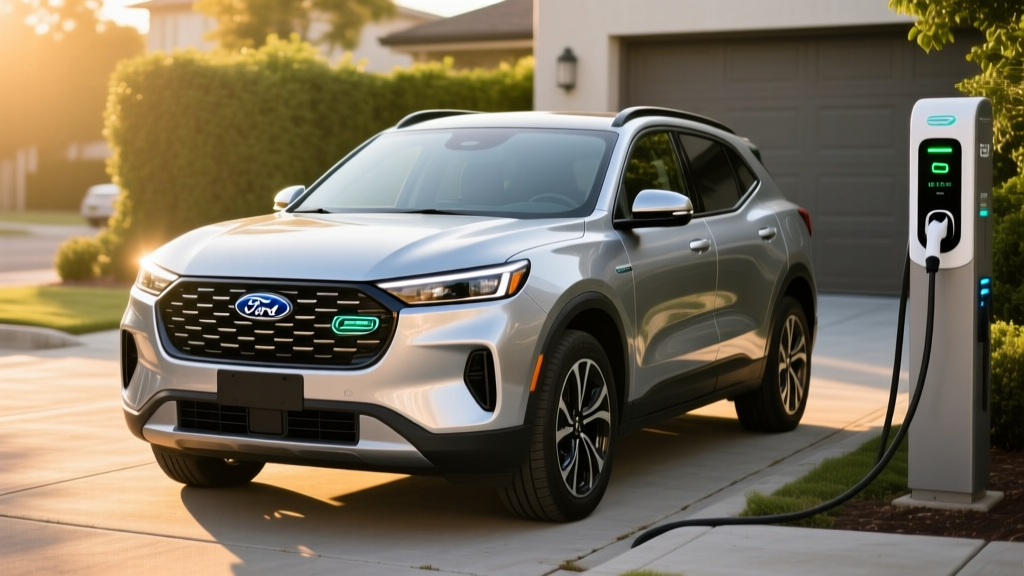
| Plug-in charging required? | No — self-charging | Yes — for EV range benefit |
| Electric-only range | 0 miles (EV mode limited to ~1 mile at low speed) | 30–35 miles |
| Battery size | ~1.6 kWh (NiMH, small buffer) | 13–18 kWh (lithium-ion) |
| Federal tax credit (§30D) | Not eligible | Up to $7,500 if sourcing/income/MSRP rules met |
| Best use case | No home charger, want MPG simplicity | Home charger + short daily commute on electric |
Fuel Economy: EPA Ratings and Real-World MPG
The headline number for the 2025 Grand Highlander Hybrid with e-AWD is 36 MPG combined per the EPA's fueleconomy.gov listing. The breakdown:
| Driving Cycle | EPA Rating | Real-World Expectation |
|---|---|---|
| City | 36 MPG | 34–38 MPG (hybrids often beat EPA in stop-and-go thanks to regen) |
| Highway | 35 MPG | 30–33 MPG (aerodynamic drag and sustained speeds reduce hybrid advantage) |
| Combined | 36 MPG | 32–35 MPG depending on terrain, climate, and driving style |
For a three-row SUV with 5,000+ lb curb weight, those figures are genuinely strong. The gas-only Grand Highlander 2.4L turbo AWD rates at 24 MPG combined — a 50% efficiency penalty. The Hybrid MAX performance variant (362 HP) drops to around 27 MPG combined.
Real-world caveat: In cold weather (below 30°F), expect a 5–10% MPG dip as the engine runs more frequently to heat the cabin and warm up the hybrid system. Towing (max 3,500 lb for the Hybrid, vs. 5,000 lb for Hybrid MAX) will push MPG into the low-to-mid 20s.
Powertrain and Performance Specs
| Specification | 2025 Grand Highlander Hybrid (Nightshade / e-AWD) |
|---|---|
| Engine | 2.5L inline-4 Atkinson-cycle |
| Engine output | 186 HP / 186 lb-ft torque |
| Electric motors | Front: 134 HP / 199 lb-ft; Rear: 40 HP / 89 lb-ft |
| Net combined system HP | 245 HP |
| Transmission | eCVT (planetary gearset, no fixed gears) |
| Drivetrain | Electronic on-demand AWD (e-AWD) |
| 0–60 MPH | ~7.6 seconds |
| Towing capacity | 3,500 lb (Hybrid); 5,000 lb (Hybrid MAX) |
| Traction battery | NiMH, ~1.6 kWh (sealed, self-charging) |
| Driving modes | Normal, Eco, Sport, EV (limited low-speed), Trail |
The 245 HP combined output is adequate for family hauling, not thrilling. The eCVT delivers seamless acceleration without shift shock, though it drones under hard throttle — typical Toyota hybrid behavior. The rear motor provides genuine AWD traction in snow and rain, engaging automatically when slip is detected, rather than operating as a full-time mechanical system.
Nightshade-Specific Features and Interior
The Nightshade package is primarily visual. For the 2025 model year, it typically includes:
- 20-inch gloss-black alloy wheels
- Black mirror caps, black door handles, black roof rails
- Dark "Nightshade" badging
- Black interior accents and SofTex-trimmed seats (typically black)
- Heated and ventilated front seats (carried over from XLE/Limited base)
- 12.3-inch Toyota Audio Multimedia touchscreen with wireless Apple CarPlay and Android Auto
- Toyota Safety Sense 3.0 (adaptive cruise, lane tracing, automatic emergency braking, blind-spot monitor with rear cross-traffic alert)
Cargo room remains identical to other Grand Highlander trims: 20.6 cu ft behind the third row, 57.9 cu ft behind the second, and 97.5 cu ft with both rear rows folded. Third-row legroom is a genuine 33.5 inches — one of the segment's best, and a key differentiator from the standard Highlander.
Pricing, Tax Credits, and Ownership Economics
The 2025 Grand Highlander Hybrid Nightshade Edition prices in the low-to-mid $50,000 range depending on whether it's built on the XLE or Limited grade. Approximate MSRP structure:
- Grand Highlander Hybrid XLE (AWD): ~$47,000
- Grand Highlander Hybrid Nightshade (XLE-based): ~$49,500–$50,500
- Grand Highlander Hybrid Limited (AWD): ~$53,000
- Grand Highlander Hybrid Platinum: ~$57,000+
Tax credit reality: The Grand Highlander Hybrid does not qualify for the federal §30D New Clean Vehicle Credit. That credit is reserved for plug-in vehicles (BEVs and PHEVs) meeting battery sourcing, MSRP caps, and buyer income limits under current IRS rules. Some states offer separate hybrid or high-efficiency vehicle rebates — check your state energy office for specifics, but don't count on a four-figure incentive.
Total cost of ownership advantage: Where the hybrid earns its keep is at the pump. At 36 MPG combined versus 24 MPG for the gas-only model, and with $3.40/gallon fuel, the hybrid saves roughly $1,400–$1,600 per year for a driver covering 15,000 miles. Over a typical 7-year ownership cycle, that's $10,000+ in fuel savings — enough to offset the hybrid's higher upfront price and then some.
Battery Warranty, Reliability, and Replacement Cost
Toyota Hybrid Battery Warranty
Toyota covers the hybrid traction battery for 10 years or 150,000 miles (whichever comes first) on 2020-and-newer models. This applies to all 50 states and is transferable to subsequent owners. The hybrid system components (inverter, control module, electric motors) carry the same 10-year/150,000-mile coverage.
Reliability: Toyota's hybrid system is among the most proven in the industry, with over 25 years of Prius-derived engineering. The NiMH traction battery in the Grand Highlander Hybrid is far less stressed than a PHEV or BEV battery — it operates in a narrow state-of-charge window (roughly 40–80%) managed by the hybrid control system, which dramatically extends cycle life. Failures before 150,000 miles are rare.
Replacement cost: If the hybrid battery does fail outside warranty, expect a dealer replacement to run $3,000–$4,500 including labor. Independent hybrid specialists and refurbished battery options can reduce that to $1,500–$2,500. Given Toyota's track record and the generous warranty, this is a low-probability expense for most owners.
Hybrid vs PHEV vs EV: Which 3-Row SUV Fits You?
Choose the Grand Highlander Hybrid (HEV) if:
- You lack access to home or workplace Level 2 charging
- You want 3-row seating with maximum fuel economy and zero plug-in routine
- You tow occasionally (3,500 lb capacity) and drive long highway stretches
- You plan to own the vehicle 8+ years and value Toyota's reliability record
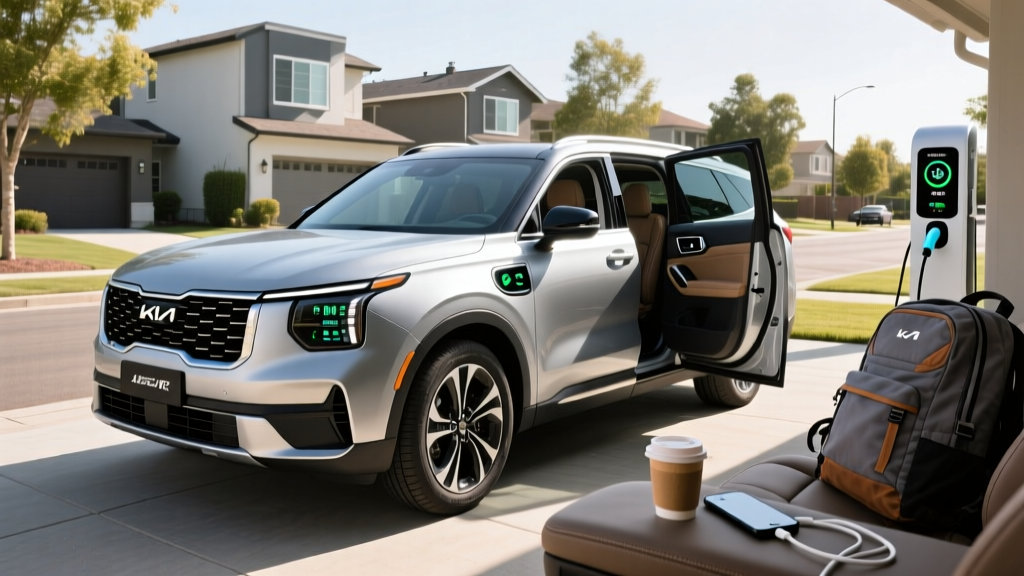
Choose a PHEV (e.g., Kia Sorento PHEV, Hyundai Santa Fe PHEV) if:
- You have home Level 2 charging and a daily commute under 30 miles
- You want to drive on electricity most weekdays but need gas flexibility for road trips
- You may qualify for the §30D federal tax credit (check IRS sourcing and income rules)
Choose a full EV (e.g., Kia EV9, Rivian R1S) if:
- You have reliable home charging and your trips rarely exceed 250–300 miles
- You want the lowest per-mile energy cost and zero tailpipe emissions
- You're willing to accept longer road-trip charging stops and a higher purchase price (offset by tax credits)
Pros, Cons, and the Bottom Line
Pros
- 36 MPG combined in a genuine 3-row SUV — best in class
- Real third-row space for adults (33.5" legroom)
- 10-year/150,000-mile hybrid battery warranty
- No plug-in charging hassle — just drive
- Nightshade styling adds presence without a luxury-brand premium
- Toyota Safety Sense 3.0 standard across trims
Cons
- No federal tax credit eligibility (HEV, not PHEV)
- 3,500 lb tow rating trails Hybrid MAX and body-on-frame rivals
- eCVT drone under hard acceleration
- Nightshade is appearance-only — no performance upgrade
- Highway MPG drops noticeably above 75 MPH
- No DC fast charging capability (not applicable to HEV, but limits EV-mode utility)
Frequently Asked Questions
How many MPG does the 2025 Grand Highlander Hybrid Nightshade get?
The EPA rates it at 36 MPG combined (36 city / 35 highway) with e-AWD. In real-world mixed driving, expect 32–35 MPG; city-heavy routes can push toward 38 MPG thanks to regenerative braking, while sustained highway driving at 75+ MPH may drop to 30–32 MPG.
Can the Grand Highlander Hybrid drive on electric power only?
Only in very limited circumstances — the EV mode allows roughly 1 mile at low speeds (under 25 MPH) on battery alone, typically for creeping through a parking lot or driveway. This is not a meaningful electric commute vehicle. For substantial EV-only range, you need a PHEV or BEV.
Does the Grand Highlander Hybrid qualify for any tax credit?
No. The federal §30D New Clean Vehicle Credit requires plug-in capability and minimum battery capacity. As a conventional HEV, the Grand Highlander Hybrid is ineligible. Check your state's energy office for any local high-efficiency vehicle incentives, but these are uncommon and typically modest.
Is the Toyota hybrid battery reliable, and what does replacement cost?
Toyota's hybrid batteries are among the most reliable in the industry. The NiMH pack in the Grand Highlander is covered for 10 years / 150,000 miles. Out-of-warranty replacement runs $3,000–$4,500 at a dealer, or $1,500–$2,500 through independent hybrid shops using refurbished cells. Most owners will never face this expense.
What's the difference between the Grand Highlander Hybrid and the Hybrid MAX?
The standard Hybrid uses a 2.5L four-cylinder + electric motors for 245 HP and 36 MPG combined. The Hybrid MAX pairs a 2.4L turbocharged four-cylinder with a more powerful hybrid system for 362 HP, a 6-speed automatic (no eCVT), 5,000 lb towing, but only ~27 MPG combined. The MAX is the performance/towing choice; the standard Hybrid is the efficiency play.
Does the Nightshade Edition add any mechanical upgrades?
No. The Nightshade is purely an appearance and convenience package — black wheels, black exterior accents, dark interior trim. The powertrain, suspension, brakes, and AWD system are identical to other Grand Highlander Hybrid trims.
How does the Grand Highlander Hybrid compare to the Kia Sorento Hybrid?
The Sorento Hybrid rates at 35–37 MPG combined depending on trim and offers a lower starting price (~$40K), but its third row is significantly tighter — suitable only for small children. The Grand Highlander's third row accommodates adults, making it the better choice for families who regularly use all three rows. The Sorento PHEV variant does offer ~32 miles of EV range and potential tax credit eligibility.
Sources: EPA fueleconomy.gov, Toyota Grand Highlander Hybrid specifications, IRS §30D New Clean Vehicle Tax Credit. Pricing reflects 2025 model year MSRP before destination; tax credit rules are subject to change — consult a tax professional for eligibility.