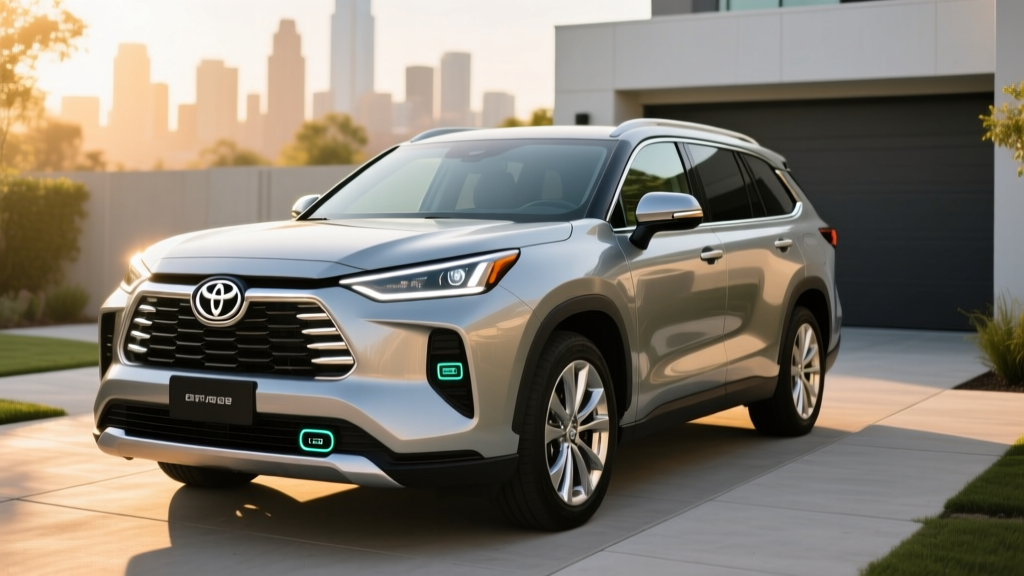
The 2026 Toyota Grand Highlander Hybrid Max sits at a crossroads that confuses a lot of three-row SUV shoppers. It wears the "Hybrid" badge, it sips fuel compared to its turbocharged sibling, and yet it packs 362 horsepower — more than most V6 family haulers from five years ago. If you've been searching for a hybrid max SUV that blends three-row practicality with genuine efficiency gains, this powertrain demands a closer look. But understanding exactly what Toyota's Hybrid Max system delivers — and what it doesn't — requires separating marketing from mechanical reality.
This guide breaks down the Grand Highlander Hybrid Max's real-world fuel economy, powertrain engineering, battery longevity, ownership costs, and how it stacks up against both plug-in hybrid (PHEV) and full battery-electric (BEV) alternatives for families weighing their options in 2026.
What Is the Hybrid Max Powertrain?
Toyota's Hybrid Max is a performance-oriented hybrid architecture that pairs a turbocharged engine with electric motors for both power and efficiency. In the 2026 Grand Highlander, the system combines a 2.4-liter turbocharged inline-four engine with a front-mounted electric motor and a rear-mounted electric motor (eAWD), producing a combined 362 horsepower and 400 lb-ft of torque.
Critically, the Hybrid Max is a conventional hybrid (HEV), not a plug-in hybrid (PHEV). You never plug it in. The 1.4 kWh nickel-metal hydride (NiMH) traction battery charges exclusively through regenerative braking and the gasoline engine. This is a fundamentally different system from the standard Grand Highlander Hybrid, which pairs a 2.5-liter naturally aspirated four-cylinder with Toyota's fourth-generation hybrid transaxle for maximum fuel economy.
HEV vs. PHEV: Where Hybrid Max Fits
Hybrid Max (HEV): No plug required. 1.4 kWh battery. Self-charging via regen and engine. ~27 MPG combined. Cannot drive on electric power alone at highway speeds.
Plug-In Hybrid (PHEV): Requires plugging in to realize full benefit. Larger battery (typically 13–20 kWh). 25–40 miles of electric-only range before the engine engages. Falls back to hybrid mode once battery depletes.
Full EV (BEV): No gasoline engine. 70–110+ kWh battery. 250–400+ miles of range. Requires home or public charging infrastructure.
Fuel Economy: EPA Numbers vs. Real-World MPG
The 2026 Grand Highlander Hybrid Max carries an EPA rating of 26 MPG city / 27 MPG highway / 27 MPG combined. That's a meaningful improvement over the turbo-only Grand Highlander (21/26/23 MPG with the 2.4L turbo) but a notable step down from the standard Grand Highlander Hybrid (36/34/35 MPG).
| Powertrain | City | Highway | Combined | HP |
|---|---|---|---|---|
| 2.4L Turbo (gas) | 21 | 26 | 23 | 265 |
| Hybrid Max (2.4T HEV) | 26 | 27 | 27 | 362 |
| Standard Hybrid (2.5L HEV) | 36 | 34 | 35 | 245 |
Source: fueleconomy.gov
Real-World MPG: What to Actually Expect
The Hybrid Max's relatively flat city/highway EPA split (26/27) tells you something important about this powertrain: the turbocharged engine runs more frequently than in Toyota's efficiency-first hybrids. In real-world driving, expect:
- City/suburban: 25–28 MPG. The electric motors help substantially at low speeds, and regenerative braking recaptures energy in stop-and-go traffic. Some drivers report exceeding the EPA city figure on short, flat commutes.
- Highway cruising (70–80 mph): 24–27 MPG. Aerodynamic drag dominates at highway speed, and the 2.4L turbo must work harder to maintain velocity in a 4,600-lb vehicle. Cold weather and headwinds push this toward the lower end.
- Mixed driving (annual average): 25–27 MPG for most owners, based on aggregated user reports. This tracks closely with the EPA combined figure — a rarity, as many vehicles fall short of combined estimates in mixed use.
For comparison, the standard Grand Highlander Hybrid routinely delivers 32–37 MPG in real-world mixed driving, often beating its EPA rating in city-heavy commutes. If maximum fuel economy is your priority, the standard hybrid is the clear winner.
Performance and Powertrain Specs
The Hybrid Max exists because Toyota identified a gap: buyers who wanted three rows and hybrid efficiency but found the 245-hp standard hybrid underwhelming for highway merging and mountain passes. The 362-hp Hybrid Max addresses this directly.
| Combined Horsepower | 362 hp |
| Combined Torque | 400 lb-ft |
| Engine | 2.4L turbocharged inline-4 |
| Front Motor | Permanent-magnet synchronous (integrated in transaxle) |
| Rear Motor | eAWD rear-axle electric motor |
| Traction Battery | 1.4 kWh NiMH (nominal) |
| Transmission | 6-speed automatic (Direct Shift) |
| Drivetrain | AWD (eAWD with rear electric motor) |
| 0–60 mph | ~6.3 seconds (est.) |
| Towing Capacity | 5,000 lbs (max, properly equipped) |
| EPA Combined MPG | 27 MPG |
| Fuel Tank | 17.9 gallons |
| Total Driving Range | ~483 miles |
| Base MSRP (Limited trim) | ~$54,000 |
The six-speed automatic is a deliberate choice over the CVT found in the standard hybrid. Toyota uses a geared transmission here to handle the turbo engine's torque delivery and provide more natural shift feel under hard acceleration. The trade-off is slightly less seamless low-speed operation — you'll feel shifts in a way you won't with the standard hybrid's planetary-gear eCVT.
Battery Warranty, Lifespan, and Replacement Cost
Hybrid battery longevity remains the single most common concern among first-time hybrid buyers. Here's what you need to know about the Hybrid Max system specifically.
Battery Warranty Coverage
Toyota Hybrid Battery Warranty: 10 years / 150,000 miles (whichever comes first), applicable to the original owner and transferable to subsequent owners. This covers capacity loss and functional failure of the hybrid traction battery.
Hybrid System Components: 8 years / 100,000 miles for the inverter, converter, and associated control modules.
Note: California and states adopting CARB emissions standards may mandate extended coverage up to 10 years / 150,000 miles for all hybrid system components. Verify your state's requirements.
The Hybrid Max uses a relatively small 1.4 kWh NiMH battery pack. Because the battery is small and the system doesn't rely on deep discharge cycles (unlike a PHEV or BEV), the stress on individual cells is modest. Toyota's NiMH hybrid batteries have demonstrated exceptional longevity in real-world use — it's common for RAV4 Hybrid and Camry Hybrid batteries to reach 150,000–200,000+ miles before any capacity-related service is needed.
If replacement is eventually required: A new OEM hybrid battery for the Grand Highlander Hybrid Max is estimated at $3,000–$4,500 (parts only, based on comparable Toyota hybrid systems), with labor adding $500–$1,000. Refurbished or reconditioned battery packs are available from third-party suppliers for approximately $1,500–$2,500. Given the 10-year/150,000-mile warranty and Toyota's track record, out-of-pocket battery replacement during typical ownership is unlikely.
Pricing, Trims, and Tax Credit Eligibility
The 2026 Grand Highlander Hybrid Max is available exclusively in higher trim levels — typically the Limited and Platinum grades — reflecting its positioning as a performance upgrade within the lineup.
| Trim | MSRP (est.) | Federal Tax Credit |
|---|---|---|
| Limited (Hybrid Max AWD) | ~$54,000 | Not eligible |
| Platinum (Hybrid Max AWD) | ~$58,500 | Not eligible |
Pricing is estimated based on current model-year trends and may vary. Check Toyota's official site for final MSRP.
Federal Tax Credit: Not Eligible
The Grand Highlander Hybrid Max does not qualify for the IRS §30D Clean Vehicle Credit. The federal credit applies only to plug-in electric vehicles (PHEVs and BEVs) with sufficient battery capacity and compliant critical-mineral/battery-component sourcing. Conventional hybrids (HEVs), including the Hybrid Max, are excluded regardless of efficiency or price.
Some states offer hybrid-specific rebates or HOV lane access, but these vary by jurisdiction. Check your state's energy office or DMV for current programs.
Hybrid Max vs. PHEV vs. Full EV: Which Three-Row SUV Fits You?
The Grand Highlander Hybrid Max competes against three categories: other conventional hybrids, plug-in hybrid SUVs, and full battery-electric SUVs. The right choice depends on your driving patterns, charging access, and budget.
Choose the Hybrid Max If:
- You need three rows and want more power than a standard hybrid offers
- You have no reliable access to home or workplace charging
- You frequently tow (5,000-lb capacity)
- You take regular road trips exceeding 300+ miles where charging stops add unwanted time
- You want hybrid efficiency without changing any habits (no plugging in)
Consider a PHEV or BEV If:
- PHEV: You have home Level 2 charging and most daily trips are under 30–40 miles (electric-only covers your commute, gas engine handles road trips)
- BEV: You have reliable home charging, want the lowest per-mile fuel cost, qualify for the $7,500 federal credit, and are comfortable with public DC fast charging on road trips
- You want to eliminate or drastically reduce gasoline purchases
- Lower maintenance costs matter (no oil changes, fewer moving parts with BEV)
The closest three-row PHEV alternative is the Toyota Grand Highlander Hybrid (standard, non-Max), though it's an HEV, not a PHEV. For a true three-row PHEV, options remain limited in 2026 — the Chrysler Pacifica PHEV (minivan) and Mazda CX-90 PHEV offer plug-in capability with three rows, though neither matches the Grand Highlander's cargo volume. On the BEV side, the Kia EV9 and Tesla Model X provide three-row electric driving with 270–340 miles of range, but at significantly higher starting prices ($55,000–$80,000+).
Reliability and Long-Term Ownership
Toyota's hybrid systems carry some of the strongest reliability records in the automotive industry. The Hybrid Synergy Drive architecture, in continuous production since the 1997 Prius, has been refined over nearly three decades. The turbocharged 2.4L engine in the Hybrid Max is newer, but it's a detuned variant of the T24A-FTS already deployed in the Crown, Tacoma, and Lexus RX — with no widespread reliability concerns reported through 2025 model years.
Key ownership considerations:
- Brake longevity: Hybrid vehicles typically experience 30–50% less brake pad wear due to regenerative braking handling most deceleration. Expect 60,000–80,000+ miles on original pads in mixed driving.
- Transmission: The 6-speed automatic is a proven Toyota design. Fluid service at 60,000-mile intervals is recommended for longevity, especially with frequent towing.
- Coolant system: The Hybrid Max has separate cooling circuits for the engine and hybrid inverter. Both require periodic inspection, but the system is well-understood by Toyota dealerships nationwide.
- Insurance: Expect premiums comparable to the turbo-only Grand Highlander. Hybrid Max trims don't carry the insurance surcharges sometimes applied to full BEVs.
Who Should Buy the Grand Highlander Hybrid Max?
The Hybrid Max occupies a specific niche: families who need three usable rows, want more passing power and towing capability than a standard hybrid delivers, and prefer not to deal with plug-in charging logistics. It's a pragmatic performance upgrade, not an efficiency champion.
If your priority is maximum MPG, the standard Grand Highlander Hybrid (35 MPG combined) saves approximately $400–$600 per year in fuel costs versus the Hybrid Max at 15,000 miles/year and $3.50/gallon. That adds up to $2,000–$3,000 over five years. The Hybrid Max trades that savings for 117 additional horsepower, a more engaging drive, and a 5,000-lb tow rating the standard hybrid can't match.
For buyers who have home charging and short commutes, a PHEV like the CX-90 PHEV (25 miles electric-only, then ~25 MPG hybrid) can deliver near-EV daily driving with gas-engine road-trip flexibility — and may qualify for partial federal or state incentives. For buyers ready to go fully electric, the Kia EV9 (270–300 miles of range, 5,000-lb towing on select trims) offers dramatically lower fuel and maintenance costs, though at a higher entry price and with road-trip charging planning required.
The Grand Highlander Hybrid Max makes the most sense when you want the simplicity of gas-station refueling, the confidence of AWD and strong acceleration, and the fuel savings that still come from hybrid assistance — without fundamentally changing how you interact with your vehicle.
Frequently Asked Questions
How many MPG does the Grand Highlander Hybrid Max get?
The EPA rates it at 26 city / 27 highway / 27 combined. Real-world driving typically yields 25–28 MPG depending on conditions. City driving with frequent stops maximizes regenerative braking benefits, while sustained highway speeds above 75 mph push consumption toward 24–25 MPG.
Does the Hybrid Max need to be plugged in?
No. The Hybrid Max is a conventional hybrid (HEV). The 1.4 kWh battery charges entirely through regenerative braking and the gasoline engine. There is no charge port, no plug, and no electric-only driving range to manage.
How far can it go on electric power alone?
Effectively zero miles at meaningful speeds. The small battery and electric motors assist the gasoline engine but cannot propel the vehicle independently at highway speeds. At very low speeds (parking lots, brief creep), the system may operate on electric power for seconds at a time, but this is not usable electric-only range in the way a PHEV provides.
Is the Hybrid Max battery reliable, and what does replacement cost?
Toyota's NiMH hybrid batteries have an excellent longevity record, commonly lasting 150,000–200,000+ miles. The battery is covered by a 10-year/150,000-mile warranty. If replacement is needed out of warranty, expect $3,000–$5,500 for an OEM battery including labor.
Does the Grand Highlander Hybrid Max qualify for any tax credit?
No. The federal §30D Clean Vehicle Credit applies only to plug-in vehicles (PHEVs and BEVs). Conventional hybrids are not eligible regardless of efficiency. Some states may offer minor incentives for hybrids — check your state energy office for current programs.
Hybrid Max vs. standard Grand Highlander Hybrid — which should I choose?
Choose the standard Hybrid if maximum fuel economy matters most (35 vs. 27 MPG combined, saving ~$500/year in fuel). Choose the Hybrid Max if you need more power (362 vs. 245 hp), plan to tow regularly (5,000 lbs vs. 3,500 lbs), and accept the MPG trade-off for a more responsive driving experience.