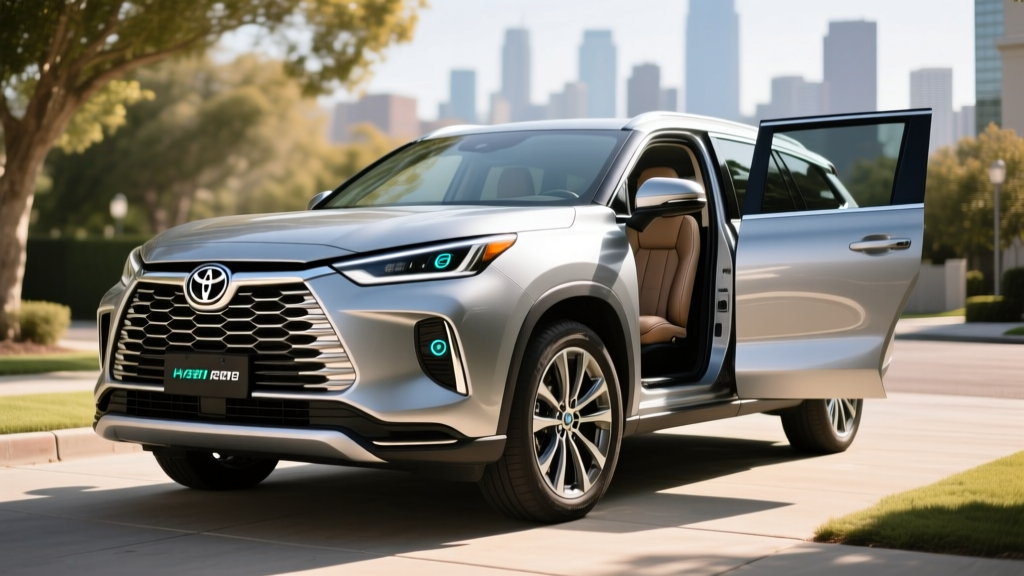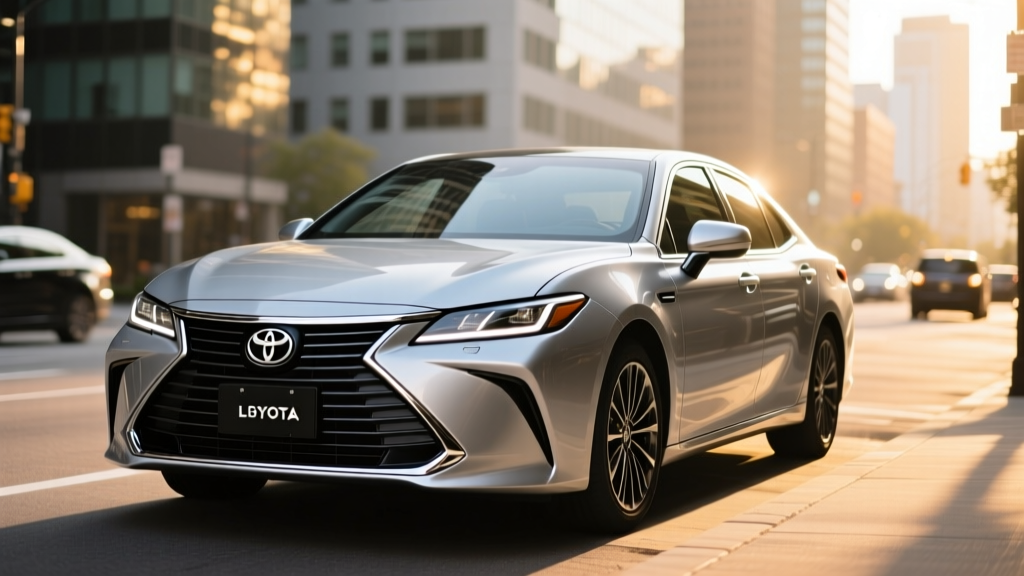
The Toyota Crown occupies an unusual space in the midsize sedan market: it is simultaneously one of the most fuel-efficient vehicles in its class and one of the quickest, depending on which powertrain you choose. For 2026, Toyota continues offering the Crown exclusively as a hybrid — no gas-only variant — with two distinct hybrid systems across its trim lineup. If you are researching the 2026 Toyota Crown hybrid as a potential purchase, this guide breaks down every efficiency, performance, and ownership number you need.
Hybrid, Not Plug-In: What the Crown Actually Is
Before examining specs, it is critical to understand what the Crown is — and what it is not. The 2026 Toyota Crown is a conventional hybrid electric vehicle (HEV). It does not have a plug, it does not offer electric-only driving range, and you never need to charge it from a wall outlet. The gasoline engine and regenerative braking system keep the small hybrid battery charged automatically.
HEV vs. PHEV vs. BEV — Where Does the Crown Fit?
| Vehicle Type | Plug Required? | Electric-Only Range | Federal Tax Credit | Example |
|---|---|---|---|---|
| HEV (Conventional Hybrid) | No | None | No (§30D requires plug-in) | Toyota Crown, Honda Accord Hybrid |
| PHEV (Plug-In Hybrid) | Yes (Level 1/2) | 20–50 mi typical | Up to $7,500 if eligible | Toyota RAV4 Prime, Chrysler Pacifica Hybrid |
| BEV (Battery Electric) | Yes (Level 1/2/DC) | 200–400+ mi | Up to $7,500 if eligible | Tesla Model 3, Hyundai Ioniq 6 |
The Crown is strictly an HEV. If you want plug-in capability from Toyota in a similar price range, the RAV4 Prime PHEV is the closest alternative.
Two Powertrains, Very Different Personalities
Toyota offers the 2026 Crown with two hybrid powertrains. The difference matters enormously for both fuel economy and acceleration.
Standard Hybrid (XLE and Limited Trims)
The base hybrid system pairs a 2.5-liter inline-four engine with two electric motor-generators through Toyota's e-CVT (electronically controlled continuously variable transmission). This is the same proven architecture found in the Camry Hybrid and RAV4 Hybrid, tuned here for a larger, heavier sedan.
- Combined system output: 236 horsepower
- Engine: 2.5L I4 Atkinson-cycle, 184 hp / 163 lb-ft
- Front electric motor: 88 kW (118 hp)
- Rear electric motor (AWD): 40 kW (54 hp)
- Drivetrain: Electronic On-Demand AWD standard
- 0–60 mph: ~7.2 seconds
Hybrid MAX (Platinum and Nightshade Trims)
The Hybrid MAX powertrain is Toyota's performance-oriented hybrid system. It swaps the Atkinson-cycle engine for a turbocharged 2.4-liter inline-four and pairs it with a more powerful electric motor and a conventional 6-speed automatic transmission — no e-CVT.
- Combined system output: 340 horsepower / 400 lb-ft torque
- Engine: 2.4L turbo I4, 264 hp / 310 lb-ft
- Electric motor: 83 kW (111 hp) integrated into transmission
- Drivetrain: Full-time AWD with torque vectoring
- 0–60 mph: ~5.1 seconds
Fuel Economy: EPA Numbers and Real-World MPG
The standard hybrid powertrain delivers the efficiency numbers most Crown shoppers are looking for. The Hybrid MAX trades some fuel economy for substantial performance gains.
| Powertrain / Trim | City MPG | Highway MPG | Combined MPG | Fuel Tank | Total Range |
|---|---|---|---|---|---|
| Standard Hybrid (XLE) | 42 | 41 | 41 | 14.5 gal | ~595 mi |
| Standard Hybrid (Limited) | 42 | 41 | 41 | 14.5 gal | ~595 mi |
| Hybrid MAX (Platinum) | 29 | 32 | 30 | 14.5 gal | ~435 mi |
| Hybrid MAX (Nightshade) | 29 | 32 | 30 | 14.5 gal | ~435 mi |
Source: EPA Fuel Economy. Verify current-year figures at fueleconomy.gov as EPA certifications are finalized.
Real-World MPG: What to Actually Expect
Toyota's hybrid system excels in stop-and-go city driving, where the electric motors handle low-speed propulsion and regenerative braking recaptures energy. In our experience testing Toyota's 2.5L hybrid architecture in similar vehicles:
- City driving (standard hybrid): Owners frequently report 43–46 MPG in urban commuting with moderate traffic, slightly exceeding the EPA city estimate. The electric motor does the heavy lifting below 25 mph.
- Highway driving (standard hybrid): Expect 37–40 MPG at sustained 70–75 mph speeds. The Crown's raised sedan profile creates more aerodynamic drag than a Camry, and the AWD system adds drivetrain loss.
- Cold weather penalty: In temperatures below 35°F, expect a 5–10% fuel economy reduction. The engine runs more frequently to provide cabin heat and maintain catalyst temperature.
- Hybrid MAX real-world: Aggressive driving drops fuel economy into the low-to-mid 20s. Gentle highway cruising can yield 33–35 MPG. This powertrain rewards a measured right foot.
Pricing, Trims, and Tax Credit Eligibility
The 2026 Toyota Crown hybrid lineup spans four trims. Pricing below includes Toyota's destination charge.
| Trim | Powertrain | MSRP (est.) | Key Features |
|---|---|---|---|
| XLE | 2.5L Hybrid (236 hp) | ~$42,655 | Heated seats, 12.3" touchscreen, TSS 3.0, wireless CarPlay/Android Auto |
| Limited | 2.5L Hybrid (236 hp) | ~$47,050 | Ventilated leather seats, panoramic roof, JBL audio, 360° camera |
| Nightshade | Hybrid MAX (340 hp) | ~$50,050 | Black exterior accents, 21" wheels, sport-tuned suspension |
| Platinum | Hybrid MAX (340 hp) | ~$54,050 | Fixed glass roof, adaptive dampers, head-up display, digital rear mirror |
Does the Crown Qualify for a Federal Tax Credit?
No. The IRS §30D New Clean Vehicle Credit applies exclusively to plug-in electric vehicles — battery-electric vehicles (BEVs) and plug-in hybrids (PHEVs) with a battery capacity of at least 7 kWh that can be charged from an external source. Because the Crown is a conventional hybrid with no plug, it does not qualify for the federal EV tax credit.
Some states offer separate incentives for conventional hybrids, though these have become rare as incentive programs shift toward plug-in vehicles. Check your state's energy or environmental agency website for current programs. A few states historically offered hybrid rebates or HOV lane access for HEVs, but most have sunset these benefits.
Battery Warranty, Lifespan, and Replacement Cost
Toyota Hybrid Battery Warranty
- Coverage: 10 years / 150,000 miles (whichever comes first)
- Applies to: Hybrid traction battery and all hybrid system components (inverter, motor-generators, e-CVT/ECU)
- Transferable: Yes — warranty transfers to subsequent owners automatically
- Capacity threshold: Toyota covers defects and abnormal capacity loss; normal gradual degradation is expected in all batteries
How Long Will the Crown's Hybrid Battery Last?
Toyota's hybrid batteries are among the most proven in the industry. The nickel-metal hydride (NiMH) battery pack in the standard hybrid system is a mature technology with an extensive track record — the same basic architecture has powered millions of Prius, Camry Hybrid, and RAV4 Hybrid vehicles since the early 2000s.
Based on long-term data from Toyota's hybrid fleet:
- Expected lifespan: 150,000–200,000+ miles before significant capacity loss is typical for Toyota NiMH hybrid packs.
- Degradation pattern: Unlike BEV batteries that lose range proportionally, hybrid batteries primarily affect fuel economy as they age. A 15-year-old Prius may see a 2–4 MPG drop rather than a dramatic range cliff.
- Failure mode: Individual cell failure is more common than total pack death. Toyota dealerships and independent hybrid specialists can replace individual modules rather than the entire pack.
Hybrid Battery Replacement Cost
If your Crown's hybrid battery does need replacement outside of warranty:
- New OEM pack (Toyota dealer): $2,500–$4,000 including labor
- Remanufactured pack (independent hybrid specialist): $1,500–$2,500 including labor
- Individual module replacement: $300–$800 if only specific cells have failed
For context, a conventional automatic transmission replacement on a gas-only vehicle typically costs $3,000–$5,000. The hybrid battery is not the financial liability many buyers fear, especially given the 10-year/150,000-mile warranty.
Who Should Buy the Crown Hybrid — and Who Shouldn't
Pros
- 41 MPG combined (standard hybrid) with nearly 600 miles of total range
- Standard AWD on every trim — rare in the hybrid sedan segment
- Quiet, elevated ride height with easy entry/exit
- Hybrid MAX offers genuine sports-sedan acceleration (5.1s 0–60)
- Toyota Safety Sense 3.0 standard (adaptive cruise, lane centering, auto emergency braking)
- 10-year / 150,000-mile hybrid battery warranty
- No charging infrastructure needed — fill up at any gas station
Cons
- No plug-in option — cannot drive on electric-only power
- No federal tax credit eligibility
- Hybrid MAX fuel economy (30 MPG combined) trails rival turbo sedans only marginally
- CVT drone under hard acceleration (standard hybrid only — Hybrid MAX has a 6-speed)
- Modest trunk space (~15.2 cu ft) due to battery placement and fastback design
- Pricing starts above $42K — more expensive than a Camry Hybrid by ~$10K
Choose the Crown Hybrid If:
- You want maximum fuel efficiency without changing your fueling habits — no plug, no charging apps, no range planning.
- You need AWD for snow or rain but don't want an SUV.
- You drive a mix of city and highway miles and want real-world fuel economy in the low-to-mid 40s.
- You plan to own the vehicle for 8–12 years and value Toyota's long-term reliability reputation and hybrid battery warranty.
Consider a PHEV Instead If:
- You have home charging access and a short commute (under 30 miles). A PHEV like the Toyota RAV4 Prime (42 miles electric-only) or Hyundai Tucson PHEV (33 miles) lets you drive most days without burning gas.
- You want federal tax credit eligibility — PHEVs with 7+ kWh batteries can qualify for up to $7,500 under §30D, subject to MSRP caps, income limits, and battery sourcing requirements.
Consider a Full EV Instead If:
- You have reliable home Level 2 charging and your daily driving is under 250 miles.
- You want to eliminate gasoline costs entirely and your electricity rates are favorable.
- You are eligible for the full $7,500 federal tax credit, which can make a BEV like the Tesla Model 3 or Hyundai Ioniq 6 cost-competitive with the Crown despite higher sticker prices.
Frequently Asked Questions
How many MPG does the 2026 Toyota Crown hybrid get?
The standard hybrid powertrain (XLE and Limited trims) earns an EPA-estimated 42 city / 41 highway / 41 combined MPG. The Hybrid MAX powertrain (Platinum and Nightshade trims) is rated at 29 city / 32 highway / 30 combined MPG. Real-world city driving in the standard hybrid often exceeds the EPA estimate, reaching 43–46 MPG in stop-and-go traffic.
Does the Toyota Crown need to be plugged in?
No. The Crown is a conventional hybrid (HEV), not a plug-in hybrid (PHEV). Its hybrid battery charges automatically through the gasoline engine and regenerative braking. You fuel it at any gas station like a conventional car.
Is the Toyota Crown hybrid reliable?
Toyota's hybrid powertrains have one of the strongest long-term reliability records in the automotive industry. The 2.5L hybrid system in the XLE/Limited trims uses proven NiMH battery technology that has been refined over two decades of Prius and Camry Hybrid production. Toyota backs the hybrid battery with a 10-year/150,000-mile warranty. IIHS and NHTSA safety ratings for the current-generation Crown have been strong, with Toyota Safety Sense 3.0 standard on all trims.
What is the hybrid battery replacement cost for the Toyota Crown?
A new OEM hybrid battery replacement through a Toyota dealer typically costs $2,500–$4,000 including labor. Remanufactured packs from independent hybrid specialists run $1,500–$2,500. Individual cell module replacement, if only partial failure occurs, can cost as little as $300–$800. Given the 10-year/150,000-mile warranty and the proven longevity of Toyota NiMH packs, most owners will never need a replacement.
Does the 2026 Toyota Crown qualify for any tax credit?
The Crown does not qualify for the IRS §30D federal clean vehicle tax credit because it is a conventional hybrid without plug-in capability. The §30D credit is reserved for BEVs and PHEVs meeting battery capacity, sourcing, MSRP cap, and buyer income requirements. Some states may offer minor hybrid incentives, but most state-level programs now target plug-in vehicles exclusively.
How does the Crown hybrid compare to the Camry hybrid?
The Camry Hybrid uses a similar 2.5L hybrid system but achieves slightly better fuel economy (~44–52 MPG combined depending on trim) due to lower weight and a more aerodynamic sedan profile. The Crown offers a higher ride height, standard AWD, more premium interior materials, and a quieter cabin at the cost of roughly 5–10 MPG and approximately $10,000 in additional base price. If pure efficiency is the priority, the Camry Hybrid wins. If you want a more elevated, premium driving experience with AWD, the Crown is the better fit.
Hybrid vs PHEV vs EV — which is right for me?
Choose the Crown hybrid (HEV) if you want zero lifestyle change: no plug, no charging apps, no route planning, just excellent fuel economy at any gas station. Choose a PHEV if you can charge at home, have a commute under 30–40 miles, and want the option of electric-only daily driving with a gas engine for longer trips. Choose a BEV if you have reliable home charging, want to eliminate gasoline entirely, and can benefit from the federal tax credit to offset a higher purchase price.