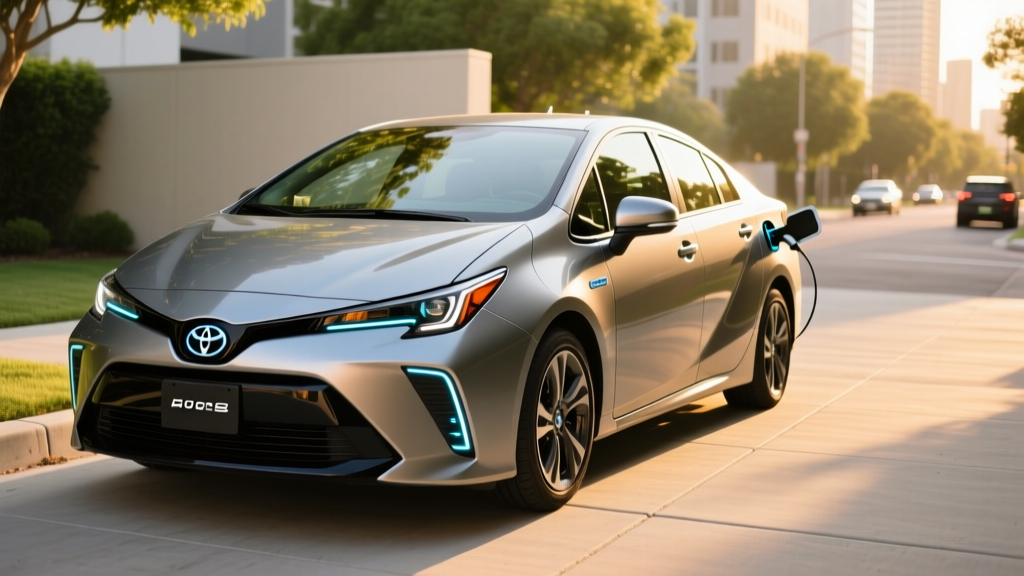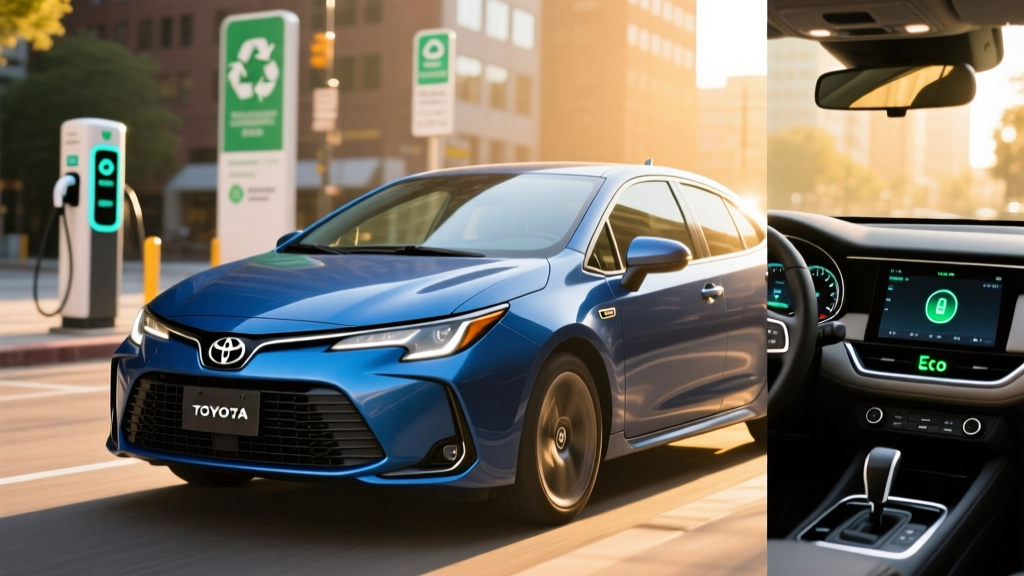
If you want to slash fuel costs without ever plugging in, the Toyota Corolla Hybrid car remains one of the most pragmatic choices on the market. For 2026, Toyota continues to offer the Corolla Hybrid as a conventional hybrid electric vehicle (HEV) — meaning it recharges its own battery through regenerative braking and the gasoline engine. No plugs, no charging stations, no range anxiety. You just drive it like any other Corolla, but visit the gas station far less often.
This guide covers the 2026 Corolla Hybrid's EPA fuel economy, real-world MPG expectations, powertrain specs, pricing across trims, battery longevity, and how it stacks up against plug-in hybrids and full battery-electric vehicles for different driving lifestyles.
2026 Toyota Corolla Hybrid MPG: EPA Ratings and Real-World Results
Fuel economy is the headline reason buyers search for the Corolla Hybrid. Here is the official EPA breakdown by drivetrain configuration, sourced from fueleconomy.gov:
| Configuration | City MPG | Highway MPG | Combined MPG |
|---|---|---|---|
| LE FWD | 53 | 46 | 50 |
| LE AWD | 51 | 44 | 48 |
| SE / Nightshade AWD | 50 | 43 | 47 |
The front-wheel-drive LE is the efficiency champion at 50 MPG combined. Opting for electronic all-wheel drive (AWD) — which adds a rear-mounted electric motor for traction — costs you roughly 2–3 MPG. The sport-tuned SE and Nightshade trims drop another 1 MPG due to larger 18-inch alloy wheels and a stiffer suspension calibration.
Real-World MPG: What Owners Actually See
Toyota's hybrid system excels in stop-and-go city driving, where the electric motor handles low-speed propulsion and regenerative braking recaptures energy. Many owners report exceeding the EPA city figure in suburban commuting, with 54–58 MPG achievable in warm weather on flat terrain at speeds under 45 mph.
Highway driving tells a different story. At sustained 75–80 mph speeds, expect 40–43 MPG — below the EPA highway sticker. The 1.8-liter Atkinson-cycle engine lacks the displacement to operate at peak efficiency at high velocities, and aerodynamic drag increases exponentially above 65 mph. In cold weather (below 30°F), overall MPG drops 8–15% as the engine runs more frequently to heat the cabin and maintain battery temperature.
HEV vs. PHEV vs. EV: Which Corolla (or Toyota) Is Right for You?
The Corolla Hybrid is a conventional hybrid (HEV). It cannot plug in, has no electric-only driving range to speak of (the small battery assists at low speeds but cannot propel the car alone for meaningful distances), and requires zero behavioral change from the driver. Here is how the three electrified powertrain types compare:
| Feature | HEV (Corolla Hybrid) | PHEV (e.g., Prius Prime) | BEV (e.g., bZ4X) |
|---|---|---|---|
| Plugs in? | No | Yes | Yes |
| Electric-only range | ~0 miles | ~44 miles | 220–252 miles |
| Uses gasoline? | Yes (always) | Yes (after battery depletes) | No |
| Fuel cost per mile | ~$0.07 | ~$0.04–0.08 | ~$0.03–0.05 |
| Home charging needed? | No | Recommended (120V or 240V) | Essential |
| Federal tax credit (§30D) | Not eligible | Up to $7,500* | Up to $7,500* |
*§30D credit eligibility depends on MSRP caps, buyer income limits, and battery critical-mineral sourcing requirements. See IRS.gov for current-year rules. The conventional Corolla Hybrid does not qualify for the new clean vehicle credit.
Choose the Corolla Hybrid (HEV) if: You lack home charging access, live in an apartment, drive long highway miles where PHEV electric range won't help, or simply want maximum simplicity with no plugs or apps.
Consider a PHEV (Prius Prime) if: You have a garage or driveway with a standard 120V outlet, your daily commute is under 40 miles round-trip, and you want to drive mostly on electricity while retaining gas-engine backup for road trips.
Go full BEV if: You can install a Level 2 home charger, want zero tailpipe emissions, and your typical drives fall within 200+ miles of a charging station.
Powertrain and Performance Specs
The 2026 Corolla Hybrid uses Toyota's fifth-generation hybrid system, pairing a 1.8-liter four-cylinder Atkinson-cycle engine with two motor-generators through a planetary gearset (eCVT). AWD models add a third electric motor on the rear axle.
| Specification | Detail |
|---|---|
| Engine | 1.8L 4-cylinder Atkinson-cycle |
| Net combined horsepower | 138 hp |
| Transmission | Electronically controlled CVT (eCVT) |
| Drivetrain (standard) | Front-wheel drive |
| Drivetrain (available) | Electronic AWD (rear electric motor) |
| Hybrid battery | ~1.3 kWh lithium-ion (sealed, not plug-in) |
| 0–60 mph (est.) | ~9.0 seconds (FWD), ~8.8 seconds (AWD) |
| Curb weight | ~3,085–3,175 lbs |
The 138 combined horsepower is modest. The Corolla Hybrid is tuned for efficiency, not acceleration. Merging onto fast-moving freeways requires planning, and passing at highway speeds is adequate but not brisk. The AWD system engages automatically in low-traction conditions — rain, snow, gravel — but is not designed for off-road use or sustained high-speed rear-drive operation. The rear motor provides up to ~40 hp and disengages above approximately 43 mph to preserve efficiency.
2026 Corolla Hybrid Pricing by Trim
Toyota prices the Corolla Hybrid as an accessible entry point into electrified driving. Here is the 2026 MSRP breakdown (destination charge included):
| Trim | Drivetrain | MSRP (incl. destination) |
|---|---|---|
| LE | FWD | $24,225 |
| LE | AWD | $25,625 |
| SE | AWD | $27,625 |
| Nightshade | AWD | $28,325 |
The LE FWD at $24,225 is the value leader — it includes Toyota Safety Sense 3.0 (pre-collision braking, lane departure alert, adaptive cruise control, lane tracing assist, and road sign assist), an 8-inch touchscreen with wireless Apple CarPlay and Android Auto, automatic climate control, and LED headlights.
The SE and Nightshade trims add sport-tuned suspension, 18-inch wheels, a leather-trimmed steering wheel, and cosmetic upgrades. AWD is standard on these upper trims. No Corolla Hybrid trim qualifies for the federal §30D new clean vehicle tax credit, as conventional HEVs are excluded from the program. However, some states offer modest rebates for hybrid purchases — check your state energy office for current programs.
Battery Warranty, Longevity, and Replacement Cost
Hybrid battery reliability is the number one concern among first-time hybrid buyers. Toyota addresses this with one of the strongest hybrid battery warranties in the industry.
In practice, Toyota's hybrid batteries have proven remarkably durable. The Corolla Hybrid's sealed lithium-ion pack is relatively small (~1.3 kWh) and operates within a narrow state-of-charge window — typically between 40% and 80% — which dramatically reduces stress on the cells. Toyota has used this charge-buffer strategy since the original Prius, and real-world data from millions of Toyota hybrids on the road shows that catastrophic battery failure within the warranty period is uncommon.
What Does Hybrid Battery Replacement Cost?
If the battery does require replacement outside warranty coverage, expect to pay between $2,000 and $4,000 for a new OEM replacement, including labor. Refurbished or reconditioned packs from third-party shops can reduce this to $1,000–$2,500. Individual module replacement (only the degraded cells) is sometimes possible for $500–$1,500 at specialized hybrid repair shops.
For context, the hybrid battery in the Corolla is far less expensive to replace than a full EV traction battery (which can cost $8,000–$20,000+). The smaller capacity and simpler thermal management of an HEV pack keep costs manageable.
Corolla Hybrid vs. Prius: Which Toyota Hybrid Makes More Sense?
Many cross-shoppers land on the Corolla Hybrid and the Toyota Prius. Both use similar hybrid architectures, but there are meaningful differences:
| Attribute | Corolla Hybrid LE | Prius LE |
|---|---|---|
| Combined MPG | 50 | 57 |
| Horsepower | 138 hp | 194 hp |
| 0–60 mph | ~9.0 sec | ~7.2 sec |
| Starting MSRP | $24,225 | $29,445 |
| Cargo space | 13.1 cu ft | 23.8 cu ft (hatchback) |
| Body style | Sedan (trunk) | Liftback (hatch) |
| AWD available? | Yes | Yes |
The Prius delivers 7 more MPG, 56 more horsepower, and significantly more cargo versatility thanks to its hatchback design — but costs roughly $5,200 more. If your budget is firm at $25,000 and you drive a sedan-friendly lifestyle, the Corolla Hybrid is the rational pick. If you value acceleration, cargo flexibility, and maximum efficiency, the Prius justifies the premium.
Ownership Costs: Fuel Savings vs. a Gas-Only Corolla
Let's quantify the fuel-cost advantage. The gas-only 2026 Corolla LE (2.0L, CVT) rates at 32 city / 41 highway / 35 combined MPG per the EPA.
| Model | Combined MPG | Annual Fuel Cost | 5-Year Fuel Cost |
|---|---|---|---|
| Corolla Gas (LE 2.0L) | 35 | $1,457 | $7,286 |
| Corolla Hybrid (LE FWD) | 50 | $1,020 | $5,100 |
Over five years, the Corolla Hybrid saves approximately $2,186 in fuel at $3.40/gallon. If gas prices rise to $4.00/gallon, savings increase to ~$2,570. The hybrid's MSRP premium over the gas Corolla LE (~$1,500–$2,000 depending on trim) is typically recouped within 3–4 years of average driving, after which the savings are pure gain.
Insurance costs for the Corolla Hybrid are generally comparable to the gas model — typically within $50–$100/year difference depending on your insurer and location. Maintenance is also similar; the hybrid system adds no routine service items. In fact, regenerative braking reduces wear on the friction brake pads, often extending their life well beyond 80,000 miles.
Frequently Asked Questions
How many MPG does the Toyota Corolla Hybrid get?
The 2026 Corolla Hybrid LE FWD achieves an EPA-rated 53 city / 46 highway / 50 combined MPG. AWD trims rate slightly lower at 48 combined. Real-world results vary: city-heavy driving in warm weather can exceed 54 MPG, while sustained highway speeds above 75 mph and cold temperatures may reduce economy to 40–43 MPG.
Does the Corolla Hybrid need to be plugged in?
No. The Corolla Hybrid is a conventional hybrid (HEV). It recharges its small battery through regenerative braking and the gasoline engine. You never plug it in — you simply fill it with gas as usual, just less frequently.
Does the Toyota Corolla Hybrid qualify for a federal tax credit?
No. The federal §30D new clean vehicle tax credit applies only to plug-in hybrid electric vehicles (PHEVs) and battery electric vehicles (BEVs) that meet battery-sourcing, MSRP, and buyer-income requirements. Conventional hybrids like the Corolla Hybrid are not eligible. Check your state energy office for any local hybrid incentive programs.
How long will the Corolla Hybrid battery last?
Toyota warranties the hybrid battery for 10 years or 150,000 miles. In practice, many Toyota hybrid batteries last well beyond 200,000 miles with normal use. The battery management system keeps cells within a protective state-of-charge window, minimizing degradation. If replacement is needed outside warranty, expect $2,000–$4,000 for an OEM pack.
Is the Corolla Hybrid good in snow?
AWD-equipped Corolla Hybrid trims (LE AWD, SE, Nightshade) provide electronic all-wheel drive that automatically sends power to the rear wheels when front-wheel slip is detected. It handles light to moderate snow and rain confidently. However, it is not a substitute for winter tires in severe conditions, and ground clearance (5.1 inches) is typical for a sedan — not designed for deep snow.
Should I buy the Corolla Hybrid or a full EV?
Choose the Corolla Hybrid if you lack reliable home charging, regularly drive more than 300 miles in a single trip, live in an area with sparse public charging infrastructure, or want the lowest upfront cost with no lifestyle adjustment. Choose a full EV if you can charge at home, want the lowest per-mile energy cost, prioritize zero tailpipe emissions, and your daily driving stays within ~200 miles.