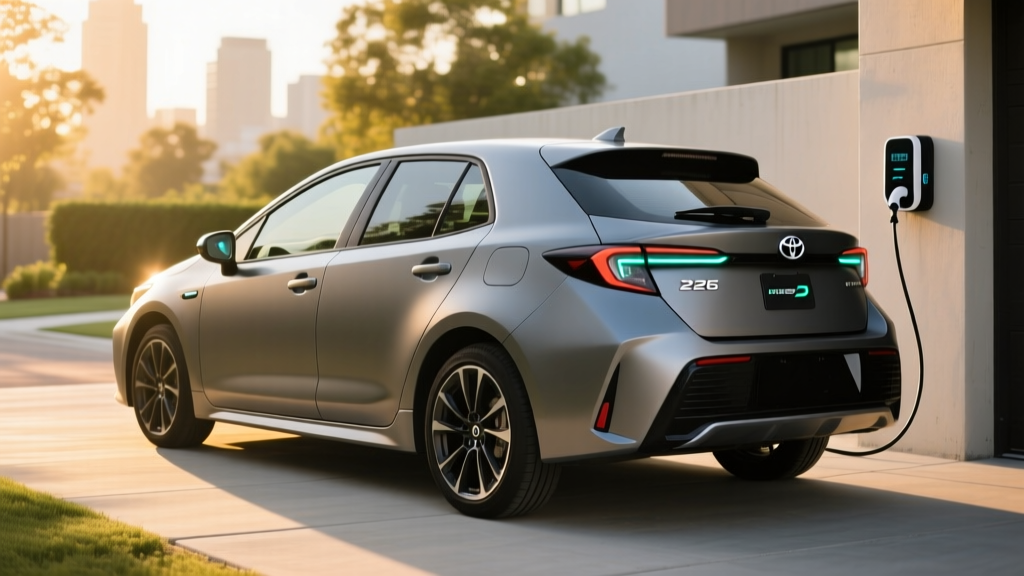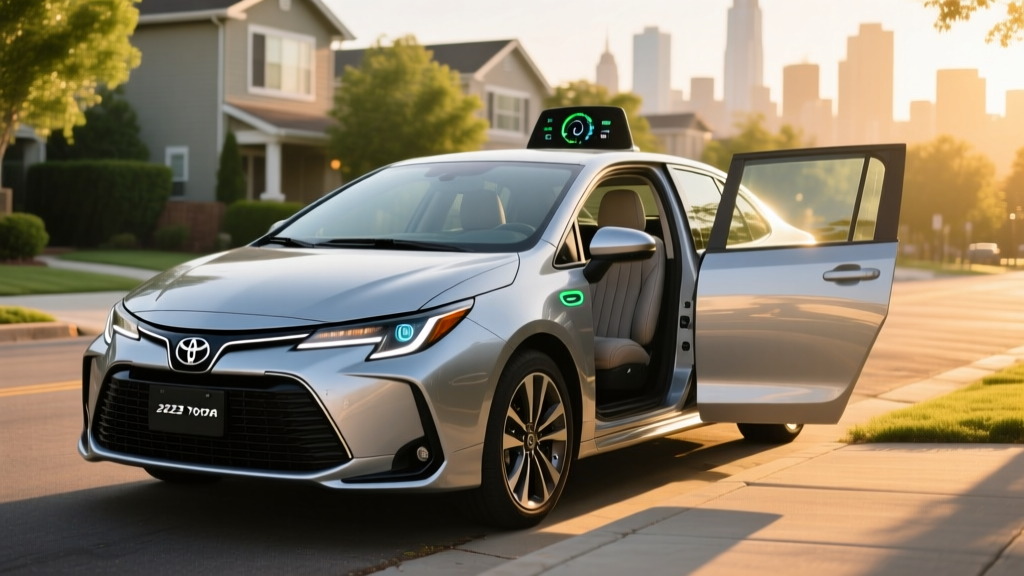
The 2023 Toyota Corolla Hybrid occupies a specific niche in the electrified-vehicle landscape: it's a conventional hybrid (HEV) that requires no plug, no behavioral change, and no charging infrastructure — yet delivers fuel economy that rivals vehicles costing twice as much. With an EPA-estimated 50 MPG combined and a starting MSRP around $22,050, it remains one of the most accessible high-efficiency vehicles on the road.
But how does it stack up in 2026, when plug-in hybrids and full EVs have proliferated? And what does real-world ownership actually look like for the Corolla Hybrid's battery, reliability, and long-term cost? This guide breaks down the numbers.
HEV vs PHEV: Where the Corolla Hybrid Fits
Before examining specs, it's essential to clarify what the Corolla Hybrid is — and isn't. It is a conventional hybrid (HEV), meaning its small battery recharges through regenerative braking and the gasoline engine. You never plug it in. There is no electric-only driving mode of any meaningful distance.
Conventional Hybrid (HEV) — Toyota Corolla Hybrid:
No plug required. Battery (~1.3 kWh) recharges via regen and engine. Electric motor assists the gas engine but cannot drive the car alone for more than brief low-speed moments. Fuel economy: ~50 MPG combined.
Plug-in Hybrid (PHEV) — e.g., Toyota Prius Prime:
Plugs in to charge a larger battery (~13.6 kWh). Offers 30–44 miles of electric-only driving before the gas engine engages. Requires home or public charging access to realize full efficiency benefit.
Battery Electric Vehicle (BEV) — e.g., Tesla Model 3:
No gasoline. 250–350+ miles of range from a large battery (60–82 kWh). Requires reliable charging access (home Level 2 strongly recommended).
The Corolla Hybrid is purpose-built for buyers who want maximum fuel efficiency with zero infrastructure dependency. If you can't charge at home or work, an HEV is often the smartest electrified choice.
Fuel Economy: EPA Ratings and Real-World MPG
| Metric | FWD (LE) | AWD (SE/XLE) |
|---|---|---|
| City MPG | 53 | 47 |
| Highway MPG | 46 | 41 |
| Combined MPG | 50 | 44 |
| Fuel Tank (gal) | 11.4 | 11.4 |
| Est. Total Range (mi) | ~570 | ~500 |
Source: EPA / fueleconomy.gov
Powertrain and Performance Specs
| Specification | Detail |
|---|---|
| Engine | 1.8L 4-cylinder Atkinson-cycle |
| Engine Power | 96 hp / 105 lb-ft torque |
| Electric Motor (FWD) | 71 hp / 120 lb-ft (front) |
| Electric Motor (AWD) | + 40 hp rear motor (AWD-i) |
| Net Combined Horsepower | 138 hp |
| Transmission | eCVT (planetary gearset) |
| 0–60 mph | ~9.1 seconds (est.) |
| Hybrid Battery | ~1.3 kWh lithium-ion (sealed NiMH on early builds) |
| Drivetrain | FWD or electronic AWD (AWD-i) |
The 138 hp combined output is modest. This is not a performance vehicle — it's an efficiency platform. The eCVT provides seamless acceleration without shift shock, but passing maneuvers at highway speed require planning. The AWD-i system adds a small rear electric motor that engages automatically in low-traction situations (rain, snow, gravel) up to about 43 mph, then disengages to preserve fuel economy.
Pricing, Trims, and Tax Credit Eligibility
| Trim (2023 MY) | Drivetrain | MSRP |
|---|---|---|
| LE | FWD | ~$22,050 |
| SE | AWD | ~$25,550 |
| XLE | AWD | ~$28,050 |
Some states offer hybrid-specific rebates or reduced registration fees, but these vary widely by jurisdiction. Check your state's energy or DMV website for current programs. Consult a tax professional for personalized guidance.
Reliability, Battery Warranty, and Replacement Costs
Toyota Hybrid Battery Warranty
Coverage: 10 years / 150,000 miles (whichever comes first) for the hybrid battery and all hybrid system components, including the inverter and electric motors.
Applies to: All 2020+ model-year Toyota hybrids, including the 2023 Corolla Hybrid.
Source: Toyota Warranty Guide
Toyota's hybrid synergy drive system has over 25 years of proven reliability, dating back to the 1997 Prius. The Corolla Hybrid uses Toyota's fifth-generation hybrid transaxle. Independent fleet data and long-term owner surveys consistently rank Toyota hybrids among the most dependable electrified vehicles, with many reaching 200,000+ miles on the original hybrid battery.
Battery replacement cost: If the hybrid battery fails outside warranty (uncommon before 150k+ miles), a new OEM replacement runs approximately $2,000–$3,500 installed at a dealership. Refurbished/remanufactured units are available for $1,000–$1,800. This is dramatically cheaper than BEV battery replacements ($8,000–$20,000+), because the Corolla Hybrid's battery is small (~1.3 kWh).
Corolla Hybrid vs PHEV vs EV: Decision Framework
Choose the Corolla Hybrid (HEV) if:
- You lack home charging access (apartment, street parking, no garage)
- Your budget is under $25,000–$30,000
- You want zero behavioral change — just drive and fuel up normally
- Most of your driving is city/suburban (where hybrids shine)
- You want AWD for snow/rain without the fuel penalty of a gas AWD sedan
Choose a PHEV (e.g., Prius Prime) if:
- You can install a Level 2 home charger
- Your daily commute is under 40 miles (covers most electric-only range)
- You want to drive mostly electric on weekdays but take gas-powered road trips
- You want to qualify for the §30D federal tax credit (up to $7,500, subject to income, MSRP, and sourcing rules)
Choose a Full EV (e.g., Model 3, Bolt) if:
- You have reliable home Level 2 charging
- You want zero tailpipe emissions and minimal maintenance
- Your daily driving is under 250 miles and you're comfortable with road-trip charging planning
- You want the lowest per-mile "fuel" cost (~$0.04–$0.06/mile on home electricity vs ~$0.10–$0.12/mile for the Corolla Hybrid at 50 MPG)
5-Year Ownership Cost Snapshot
| Cost Factor (5 yr / 75k mi) | Corolla Hybrid (FWD) | Corolla Gas (2.0L) | Tesla Model 3 RWD |
|---|---|---|---|
| Fuel / Energy | ~$5,600 | ~$8,800 | ~$2,800 |
| Maintenance | ~$2,200 | ~$2,800 | ~$1,500 |
| Insurance (avg) | ~$7,500 | ~$7,200 | ~$9,500 |
| Total Operating Cost | ~$15,300 | ~$18,800 | ~$13,800 |
Assumptions: $3.50/gal gasoline, $0.14/kWh home electricity, 15,000 mi/year. Insurance varies significantly by driver profile and state. The Model 3 benefits from lower fuel and maintenance but carries higher insurance and purchase price.
Pros and Cons
Pros
- 50 MPG combined (FWD) — among the highest of any non-plug-in vehicle
- No charging infrastructure required
- AWD available (rare for a hybrid sedan at this price)
- Low starting MSRP (~$22,050)
- 10-year / 150,000-mile hybrid battery warranty
- Proven Toyota Hybrid Synergy Drive reliability
- ~570-mile total range — fewer fuel stops
Cons
- Modest 138 hp — slow acceleration (9+ sec 0–60)
- No electric-only driving mode
- No federal tax credit eligibility
- AWD trims drop to 44 MPG combined
- Small trunk vs some competitors (13.1 cu ft)
- Infotainment feels dated vs newer rivals
- Road noise noticeable at highway speeds
Frequently Asked Questions
How many MPG does the 2023 Toyota Corolla Hybrid get?
The FWD LE trim is EPA-rated at 53 city / 46 highway / 50 combined MPG. The AWD trims (SE, XLE) are rated at 47 city / 41 highway / 44 combined. Real-world city driving often exceeds EPA estimates by 2–5 MPG thanks to regenerative braking, while sustained highway driving at 75+ mph may fall slightly below.
Does the Corolla Hybrid need to be plugged in?
No. The Corolla Hybrid is a conventional HEV. Its ~1.3 kWh battery recharges entirely through regenerative braking and the gasoline engine. There is no plug, no charging cable, and no electric-only range to manage.
Does the 2023 Corolla Hybrid qualify for a federal tax credit?
No. The IRS §30D Clean Vehicle Credit requires a plug-in vehicle with a battery capacity of at least 7 kWh. The Corolla Hybrid's battery is approximately 1.3 kWh. Only BEVs and qualifying PHEVs are eligible. Some states may offer hybrid-specific incentives — check your state energy office for details.
How long will the Corolla Hybrid battery last, and what does replacement cost?
Toyota covers the hybrid battery for 10 years / 150,000 miles. Based on long-term data from Toyota's hybrid fleet (Prius, Camry Hybrid, RAV4 Hybrid), most hybrid batteries last well beyond 150,000 miles. If replacement is needed out of warranty, expect $2,000–$3,500 for a new OEM unit or $1,000–$1,800 for a refurbished battery, installed.
Is the Corolla Hybrid worth it over the gas-only Corolla?
Financially, the hybrid's ~$2,000 price premium over the gas Corolla LE pays back in roughly 3–4 years at 15,000 miles/year and $3.50/gal fuel, given the ~18 MPG combined advantage. Beyond cost, you get smoother low-speed driving, less engine noise in city traffic, and significantly lower CO₂ emissions per mile.
How does the Corolla Hybrid compare to the Prius?
The redesigned 2023+ Prius offers 57 MPG combined (FWD), 194 hp, and a more modern interior — but starts about $5,000 higher. The Corolla Hybrid is the value play: similar efficiency, lower price, and a conventional sedan form factor. If performance and tech matter, the Prius wins. If budget is primary, the Corolla Hybrid is the answer.