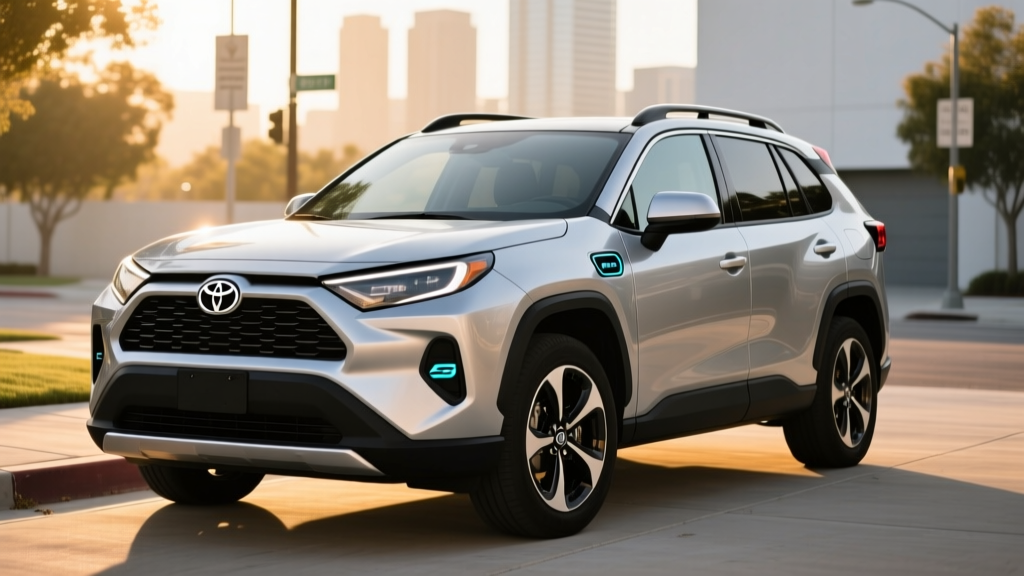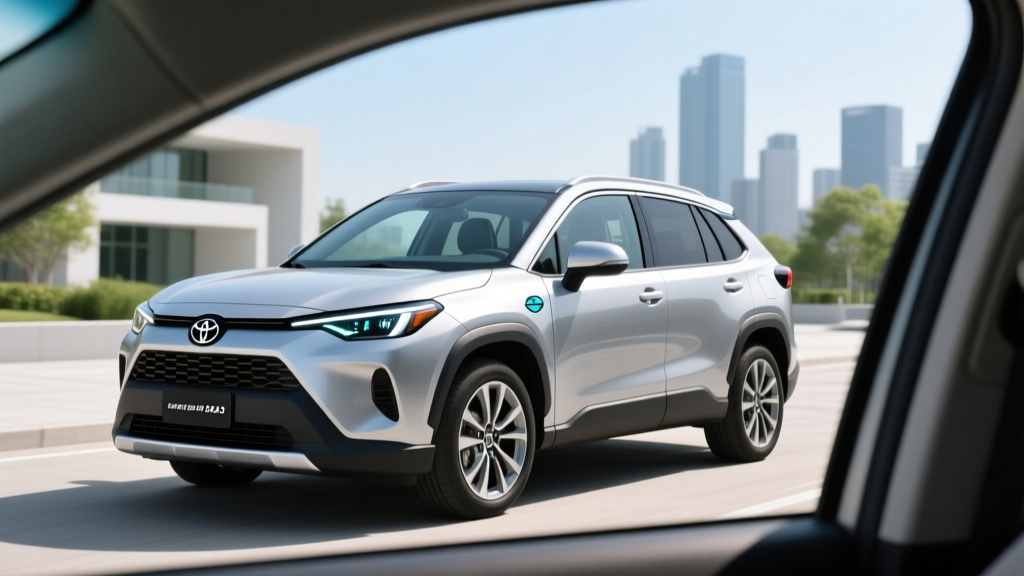
The Toyota Corolla Cross Hybrid S occupies a narrow but increasingly popular lane: a compact crossover that pairs all-wheel drive with hybrid efficiency at a base price that undercuts most competitors. For 2026, the S trim remains the entry point into Toyota's hybrid AWD crossover lineup, targeting buyers who want electrified efficiency without plugging in, without range anxiety, and without paying a premium for a full EV or plug-in hybrid.
This guide covers everything you need to decide whether the Corolla Cross Hybrid S fits your commute, your budget, and your long-term ownership plans — with exact EPA figures, real-world MPG expectations, powertrain details, and a clear look at how it stacks up against PHEVs and battery-electric alternatives.
Corolla Cross Hybrid S at a Glance: Key Specs
| Spec | Value |
|---|---|
| Powertrain | 2.0L 4-cyl + 2 electric motors (AWD) |
| Combined Horsepower | 196 hp (net system) |
| Transmission | ECVT (electronically controlled CVT) |
| EPA MPG (City / Hwy / Combined) | 45 / 38 / 42 |
| Fuel Tank Capacity | 10.6 gallons |
| Estimated Total Range | ~445 miles |
| Drivetrain | Electronic AWD (standard on all hybrid trims) |
| 0–60 mph | ~7.5 seconds |
| Cargo Volume (rear seats up) | 25.5 cu ft |
| Cargo Volume (rear seats folded) | ~56 cu ft |
| Base MSRP (S trim, incl. destination) | ~$29,845 |
| Hybrid Battery Warranty | 10 years / 150,000 miles |
| Federal Tax Credit (§30D) | Not eligible (conventional HEV) |
How Many MPG Does the Corolla Cross Hybrid S Actually Get?
The EPA rates the 2026 Toyota Corolla Cross Hybrid at 45 MPG city, 38 MPG highway, and 42 MPG combined across all hybrid trims, including the S. These figures come from fueleconomy.gov, the official EPA database.
| Driving Cycle | EPA Rating | Real-World Expectation |
|---|---|---|
| City | 45 MPG | 44–48 MPG (hybrids excel in stop-and-go) |
| Highway (70–80 mph) | 38 MPG | 34–37 MPG (aero drag, less regen benefit) |
| Combined | 42 MPG | 38–44 MPG (depends on route mix) |
| Cold Weather (below 32°F) | — | 33–38 MPG combined (engine runs more for heat) |
Why City MPG Beats Highway MPG in Hybrids
This is the single biggest advantage of a conventional hybrid over a gas-only car. In city driving, the Corolla Cross Hybrid's electric motors handle low-speed propulsion and the regenerative braking system recaptures energy at every stop. The 2.0L engine shuts off frequently, sipping fuel only when needed. On the highway, the gasoline engine does most of the work — there's less braking to regenerate from, and aerodynamic drag increases significantly above 65 mph.
In real-world mixed commuting (roughly 60% city, 40% highway), owners commonly report averaging 40–44 MPG in moderate weather. During winter months with temperatures below freezing, expect a 5–10 MPG drop because the engine runs more often to provide cabin heat and because battery efficiency decreases in cold temperatures.
Hybrid (HEV) vs. Plug-In Hybrid (PHEV) vs. Full EV: Which Fits You?
The Corolla Cross Hybrid S is a conventional hybrid (HEV) — it has no plug, no electric-only driving mode, and no external charging capability. It generates all its electricity internally through the gasoline engine and regenerative braking. This is fundamentally different from a plug-in hybrid (PHEV) or a battery-electric vehicle (BEV).
| Feature | HEV (Corolla Cross Hybrid) | PHEV (e.g., RAV4 Prime) | BEV (e.g., Tesla Model Y) |
|---|---|---|---|
| Plug-in Charging | No | Yes (Level 1/2) | |
| Electric-Only Range | 0 miles (EV assist only) | 25–42 miles typical | |
| Battery Size | ~1.0–1.6 kWh (small buffer) | 13–18 kWh usable | |
| Gasoline Engine | Yes (primary power) | Yes (backup + highway) | |
| DC Fast Charging | No | Rarely (most PHEVs lack it) | |
| Federal Tax Credit (§30D) | Not eligible | Up to $7,500 (if eligible) | |
| Home Charging Needed | No | Yes (for EV range benefit) | |
| Typical Combined Efficiency | 42 MPG | 38 MPG gas + 94 MPGe electric | |
| Starting Price Range | ~$29,000–$35,000 | ~$43,000–$50,000 |
Who Should Choose the Corolla Cross Hybrid (HEV)?
The Corolla Cross Hybrid S is ideal if you:
- Can't charge at home. Apartment dwellers, street parkers, and those without garage access get full hybrid benefit without installing a charger.
- Want lower fuel costs with zero behavior change. You fill up at gas stations exactly as before — just less often.
- Drive a city-heavy commute. Hybrids shine in stop-and-go traffic where regen braking and electric assist maximize efficiency.
- Have a firm budget under $32,000. The S trim starts around $29,845, thousands less than any comparable PHEV or BEV crossover.
When a PHEV or BEV Makes More Sense
Consider a PHEV like the Toyota RAV4 Prime (42 miles electric-only, ~$44,500) if you have home charging and a short commute that could be covered entirely on electricity, plus the flexibility for longer road trips on gasoline. Consider a BEV like the Hyundai Ioniq 5 or Tesla Model Y if you have reliable home Level 2 charging, want to eliminate gasoline entirely, and can absorb a higher purchase price offset by lower operating costs and potential §30D tax credits.
Powertrain Deep Dive: 196 hp AWD Hybrid System
Toyota's fifth-generation hybrid system in the Corolla Cross pairs a 2.0-liter Dynamic Force 4-cylinder engine with two electric motor-generators and a nickel-metal hydride (NiMH) hybrid battery pack. A third motor-generator powers the rear axle, providing electronic all-wheel drive without a mechanical driveshaft.
- Gasoline engine: 2.0L inline-4, Atkinson cycle, ~150 hp
- Front electric motor: integrated into transaxle, assists acceleration and handles regen
- Rear electric motor: up to ~40 hp, engages for AWD traction and low-speed electric creep
- Net system output: 196 hp
- Hybrid battery: ~1.0–1.6 kWh NiMH (not user-accessible for plug-in charging)
The ECVT (electronically controlled continuously variable transmission) isn't a traditional belt-and-pulley CVT. It uses a planetary gearset to blend power from the engine and electric motors seamlessly. Acceleration feels linear, and the 0–60 mph time of approximately 7.5 seconds is adequate for merging and passing — noticeably quicker than the non-hybrid Corolla Cross (which runs a 169-hp 2.0L with a conventional CVT and clocks 0–60 in about 9.2 seconds).
The electronic AWD system is always active but rear-motor engagement varies. Under normal dry-road cruising, the front motor and engine handle propulsion. The rear motor activates during acceleration from stops, on slippery surfaces, and when the system detects front-wheel slip. This isn't a performance AWD system for off-roading, but it provides confident traction in rain, light snow, and gravel.
Pricing, Trims, and Tax Credit Eligibility
For 2026, the Corolla Cross Hybrid is offered in three trims: S, SE, and XSE. The S trim is the value leader.
| Trim | MSRP (incl. destination) | Key Features |
|---|---|---|
| S | ~$29,845 | 196-hp hybrid AWD, 8" touchscreen, TSS 3.0, LED headlights |
| SE | ~$31,500 | Sport-tuned suspension, SofTex seats, wireless CarPlay/Android Auto |
| XSE | ~$34,200 | 12.3" digital cluster, JBL audio, power liftgate, heated front seats |
Federal Tax Credit: Not Eligible
The Corolla Cross Hybrid S does not qualify for the federal §30D clean vehicle tax credit. Under current IRS rules, only plug-in electric vehicles (BEVs and PHEVs) with sufficient battery capacity are eligible. Conventional hybrids (HEVs) like this one are excluded regardless of price or efficiency.
However, some states and utilities offer rebates or incentives for hybrid purchases. Check your state energy office or local utility for programs — these vary significantly by jurisdiction and change frequently. Additionally, the fuel savings alone are substantial: at $3.40/gallon and 12,000 miles/year, the Corolla Cross Hybrid S saves roughly $600–$800 annually compared to a 28-MPG non-hybrid compact crossover.
Battery Longevity, Warranty, and Replacement Costs
Toyota's hybrid battery track record is among the best in the industry. The Prius, now in its sixth generation, has demonstrated that NiMH and lithium-ion hybrid battery packs routinely last 150,000–200,000+ miles with minimal degradation. The Corolla Cross Hybrid uses a relatively small battery that operates within a narrow state-of-charge window (roughly 40–80%), which is the least stressful operating range for battery chemistry.
What If the Battery Fails Out of Warranty?
Hybrid battery replacement costs for the Corolla Cross Hybrid are estimated at $2,000–$3,500 at a Toyota dealership (parts + labor). Independent hybrid specialists may offer refurbished pack replacements for $1,500–$2,500. Individual module replacement (if only a few cells degrade) can cost $500–$1,000. Given the 10-year/150,000-mile warranty and Toyota's historical reliability data, most owners will never face this expense.
The broader hybrid powertrain — engine, ECVT transaxle, motor-generators — is covered under Toyota's standard 5-year/60,000-mile powertrain warranty, with the hybrid-specific components under the 10-year/150,000-mile hybrid warranty.
Reliability and Safety Ratings
Toyota consistently ranks at or near the top of long-term reliability studies. According to IIHS and NHTSA data, the Corolla Cross platform has earned strong crash-test scores, and the hybrid variant carries the same structural safety as the gasoline model.
All 2026 Corolla Cross Hybrid trims include Toyota Safety Sense 3.0 (TSS 3.0) as standard equipment:
- Pre-Collision System with Pedestrian Detection
- Lane Departure Alert with Steering Assist
- Lane Tracing Assist
- Full-Speed Range Dynamic Radar Cruise Control
- Automatic High Beams
- Road Sign Assist
Pros and Cons: The Honest Assessment
Pros
- 42 MPG combined with standard AWD — rare at this price point
- Strong city MPG (45) rewards stop-and-go commuters
- ~$29,845 base price undercuts most hybrid and all PHEV crossovers
- No charging infrastructure needed — gas and go
- 10-year/150,000-mile hybrid battery warranty
- 196 hp provides confident merging power
- TSS 3.0 safety suite is standard across all trims
- Proven Toyota hybrid reliability with deep dealer network
Cons
- No federal tax credit eligibility (HEV, not PHEV/BEV)
- Highway MPG (38) is good but not exceptional — less benefit on long highway commutes
- Cargo space (25.5 cu ft) is smaller than the RAV4 Hybrid and some competitors
- No plug-in option in the Corolla Cross lineup
- Rear seat legroom is tight for taller passengers
- Cold-weather MPG drops noticeably (5–10 MPG)
- ECVT drone under hard acceleration (common to Toyota hybrids)
Frequently Asked Questions
How many MPG does the Toyota Corolla Cross Hybrid S get?
The EPA rates it at 45 MPG city, 38 MPG highway, and 42 MPG combined. In real-world mixed driving, expect 38–44 MPG depending on your route, speed, and weather. City-heavy commutes will see the best results, often exceeding the EPA city estimate.
Does the Corolla Cross Hybrid need to be plugged in?
No. This is a conventional hybrid (HEV), not a plug-in hybrid (PHEV). The battery charges itself through regenerative braking and the gasoline engine. You never plug it in — just fill up at the gas station as you would with any conventional car.
Does the Corolla Cross Hybrid qualify for a federal tax credit?
No. Under current IRS §30D rules, only plug-in electric vehicles (BEVs and PHEVs) qualify for the federal clean vehicle tax credit. Conventional hybrids are not eligible. Some state or utility incentives may apply — check your local programs.
Is the Corolla Cross Hybrid reliable, and what does battery replacement cost?
Toyota's hybrid systems have an outstanding reliability record spanning over two decades. The hybrid battery is warranted for 10 years/150,000 miles, and historical data from Prius and RAV4 Hybrid owners shows packs commonly lasting 150,000–200,000+ miles. Out-of-warranty replacement is estimated at $2,000–$3,500 at a dealership.
How does the Corolla Cross Hybrid compare to the RAV4 Hybrid?
The RAV4 Hybrid offers more interior space (37.5 cu ft cargo), slightly higher horsepower (219 hp net), and similar MPG (39 combined). However, the RAV4 Hybrid starts around $35,000 — roughly $5,000 more than the Corolla Cross Hybrid S. If cargo space and rear-seat room are priorities, the RAV4 Hybrid justifies the premium. If budget and city efficiency matter more, the Corolla Cross Hybrid S is the smarter buy.
Is the Corolla Cross Hybrid S good in snow?
The electronic AWD system provides competent traction in light to moderate snow and icy conditions. The rear electric motor engages automatically when front-wheel slip is detected. Pair it with dedicated winter tires for the best results. It's not a substitute for a dedicated off-road vehicle, but it handles typical winter commuting well.
Should I buy the Corolla Cross Hybrid or a full EV?
Choose the Corolla Cross Hybrid if you lack home charging access, frequently drive long distances in areas with sparse charging infrastructure, or need to stay under ~$32,000. Choose a full EV (like the Chevrolet Equinox EV or Hyundai Ioniq 5) if you have reliable Level 2 home charging, want to eliminate gasoline costs entirely, and can take advantage of the up-to-$7,500 federal tax credit to offset a higher purchase price.