2026 Toyota Corolla Cross Hybrid: The Numbers That Matter
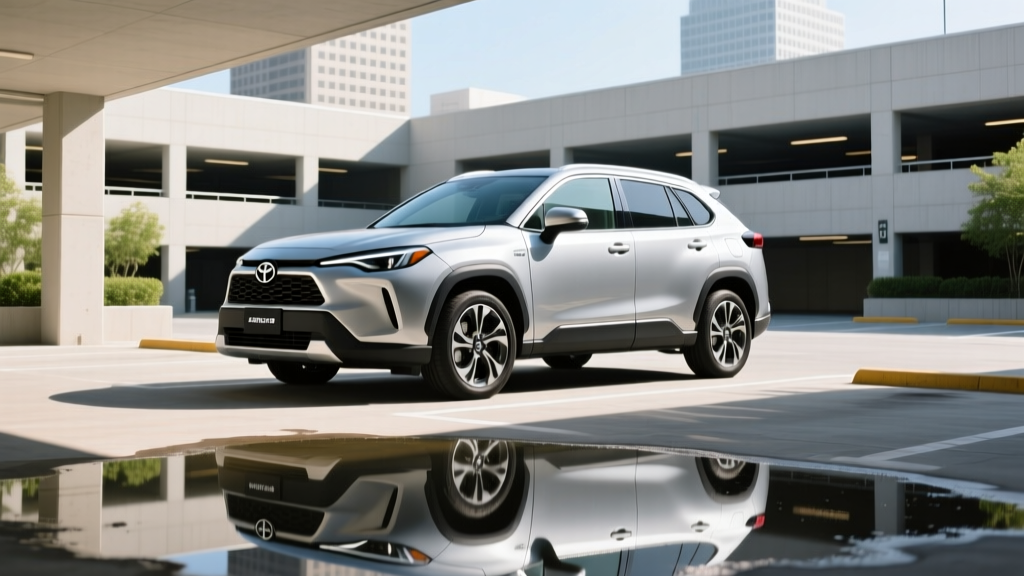
The Toyota Corolla Cross Hybrid occupies a narrow but lucrative lane: a compact crossover with standard all-wheel drive, 42 MPG combined, and a starting MSRP under $30,000. For 2026, Toyota has kept the formula intact — a 2.0-liter four-cylinder paired with a series-parallel hybrid system producing 196 combined horsepower — while adjusting pricing modestly to reflect new safety tech and infotainment updates.
Below, we break down every trim's price, real-world fuel economy versus the EPA sticker, the hybrid battery warranty that matters most to long-term buyers, and whether this HEV makes more sense than a PHEV or full BEV for your daily driving.
| Spec | Value |
|---|---|
| Powertrain | 2.0L I4 + 2 electric motors (AWD) |
| Combined Horsepower | 196 hp |
| EPA MPG (City / Hwy / Combined) | 46 / 40 / 42 |
| Drivetrain | Electronic AWD (standard) |
| Battery Type | Lithium-ion (1.3 kWh, HEV) |
| 0–60 mph | ~7.5 seconds |
| Cargo Volume (behind rear seats) | 25.5 cu ft |
| Base MSRP (S trim) | $29,990 |
| Hybrid Battery Warranty | 10 years / 150,000 miles |
How Many MPG Does the Corolla Cross Hybrid Actually Get?
The EPA rates the 2026 Corolla Cross Hybrid at 46 MPG city, 40 MPG highway, and 42 MPG combined across all trims, since the AWD hybrid powertrain is standard. Per fueleconomy.gov, these numbers apply to the LE, XLE, and any sport-oriented trims offered this year.
| Driving Scenario | EPA Estimate | Real-World Expectation |
|---|---|---|
| City (stop-and-go) | 46 MPG | 47–52 MPG (regenerative braking advantage) |
| Highway (70+ mph) | 40 MPG | 36–39 MPG (aero drag, no regen benefit) |
| Combined (mixed) | 42 MPG | 40–44 MPG |
| Cold weather (below 30°F) | N/A | 34–38 MPG (engine runs more for heat) |
This is the hybrid paradox most first-time buyers don't expect: you'll beat the EPA city number in real stop-and-go traffic because regenerative braking recaptures energy that a gas car wastes as brake heat. On sustained highway runs above 70 mph, the small engine works harder against aerodynamic drag with no regen assist, dropping efficiency by 3–6 MPG.
In cold climates, expect a 10–15% efficiency hit. The engine must run longer to provide cabin heat (there's no resistive heater drawing from a large battery pack as in a BEV), and the battery's charge-acceptance rate drops at low temperatures. This is normal for all hybrids — not a Corolla Cross defect.
HEV vs. PHEV: This Is a Conventional Hybrid — No Plugging In
A critical distinction for shoppers cross-referencing multiple Toyota hybrids: the Corolla Cross Hybrid is a conventional hybrid electric vehicle (HEV), not a plug-in hybrid (PHEV). You never plug it in. The 1.3 kWh lithium-ion battery charges exclusively through regenerative braking and engine-driven generation. There is no electric-only driving range to speak of — the EV mode creeps at parking-lot speeds for a few hundred yards at most.
| Feature | Corolla Cross Hybrid (HEV) | Typical PHEV (e.g., RAV4 Prime) |
|---|---|---|
| Plug-in charging | No — never plug in | Yes — Level 1 or Level 2 |
| Electric-only range | ~0.5 mi at low speed | 35–42 mi |
| Battery capacity | 1.3 kWh | 14–18 kWh |
| Federal tax credit (§30D) | Not eligible | Up to $7,500 (if requirements met) |
| Total range | ~500+ mi on one tank | ~550–600 mi (EV + gas) |
Toyota does not currently offer a Corolla Cross PHEV in the US market. If you want Toyota plug-in hybrid capability in a compact SUV, the RAV4 Prime (42 mi electric-only, ~$44,000 MSRP) is the closest option — at a significant price premium.
Powertrain and Performance: 196 hp with Electronic AWD
The 2026 Corolla Cross Hybrid uses Toyota's fifth-generation hybrid system: a 2.0-liter Dynamic Force inline-four (150 hp, 139 lb-ft on its own) paired with two motor-generators through an electronically controlled continuously variable transmission (eCVT). A rear-mounted electric motor provides electronic all-wheel drive — there's no mechanical driveshaft to the rear axle.
Combined system output is 196 horsepower. The 0–60 mph time lands around 7.5 seconds, which is adequate for merging and passing but not quick by any performance metric. The eCVT eliminates shift shock and keeps the engine in its most efficient RPM band, though it produces the characteristic drone under hard acceleration that Toyota has partially mitigated with simulated shift points in the software.
The AWD system engages the rear motor automatically during acceleration, low-traction conditions, and cornering. It's not a serious off-road system — ground clearance is 8.1 inches, and there's no low-range gearing — but it handles snow, rain, and gravel competently.
2026 Corolla Cross Hybrid Pricing by Trim
Toyota has structured the 2026 Corolla Cross Hybrid in three main trims. All share the same powertrain, AWD system, and battery. Pricing below includes the mandatory destination charge.
| Trim | MSRP (incl. destination) | Key Features |
|---|---|---|
| S | $29,990 | 8" touchscreen, TSS 3.0, 17" alloy wheels, wireless CarPlay/Android Auto |
| XLE | $32,490 | SofTex seats, heated front seats, power liftgate, dual-zone climate |
| XSE | $34,190 | Sport-tuned suspension, 18" wheels, paddle shifters, ambient lighting |
At $29,990 for the base S trim, the Corolla Cross Hybrid undercuts most AWD hybrid competitors. The Honda CR-V Hybrid starts around $35,000; the Hyundai Tucson Hybrid begins near $33,500. The Corolla Cross trades some interior volume (25.5 cu ft cargo vs. ~33 cu ft in the CR-V) for a lower entry price and slightly better fuel economy.
Does the Corolla Cross Hybrid Qualify for a Federal Tax Credit?
No. The Corolla Cross Hybrid is a conventional HEV, and the IRS §30D New Clean Vehicle Credit applies only to plug-in electric vehicles (BEVs and PHEVs) with sufficient battery capacity. Per IRS guidelines, a vehicle must have a battery capacity of at least 7 kWh and meet critical-mineral and battery-component sourcing requirements to qualify for up to $7,500.
- ✅ BEVs and PHEVs with ≥7 kWh battery — potentially eligible
- ❌ Conventional hybrids (HEVs) like the Corolla Cross Hybrid — not eligible
- ❌ Mild hybrids (MHEVs) — not eligible
- ⚠️ Income caps apply: $150K single / $300K joint for new vehicles
- ⚠️ MSRP caps: $55,000 for SUVs, $80,000 for vans/trucks
- ⚠️ Battery sourcing and critical-mineral requirements apply
Some states offer their own hybrid-specific rebates or HOV lane access, but these vary widely. Check your state's energy office or DMV for current programs. The fuel savings alone — roughly $800–$1,000 per year versus a 28 MPG gas compact SUV at 12,000 miles/year and $3.50/gallon — effectively serve as the Corolla Cross Hybrid's financial incentive.
Hybrid Battery Warranty, Lifespan, and Replacement Cost
Coverage: 10 years or 150,000 miles (whichever comes first) for the hybrid battery pack on 2020+ Toyota hybrids. This covers capacity loss below a defined threshold and any manufacturing defects. The hybrid system components (inverter, motor-generators, control module) are covered for 8 years / 100,000 miles.
Toyota's hybrid battery track record is among the best in the industry. Data from fleet operators and long-term owners shows that the nickel-metal hydride and lithium-ion packs in Toyota hybrids routinely exceed 200,000 miles with less than 10–15% capacity degradation. The 1.3 kWh pack in the Corolla Cross is small, operates in a narrow state-of-charge window (roughly 40–80% SoC), and is managed by Toyota's thermal regulation system — all of which minimize calendar and cycle degradation.
If replacement is needed out of warranty, a new Toyota hybrid battery for the Corolla Cross runs approximately $2,500–$3,500 installed at a dealer. Refurbished/remanufactured packs are available from third parties for $1,500–$2,200. Individual module replacement (only the degraded cells) can drop the cost below $1,000 at independent hybrid specialists. This is dramatically cheaper than BEV battery replacement, which typically runs $8,000–$20,000+.
Who Should Buy the Corolla Cross Hybrid — and Who Shouldn't
Choose the Corolla Cross Hybrid if:
- You want AWD and 40+ MPG without plugging in
- Your budget is $30,000–$35,000 for a compact SUV
- You drive 10,000–15,000 miles/year and want low fuel cost
- You live in an apartment or lack home charging access
- You prioritize proven reliability and low maintenance
Look elsewhere if:
- You need 30+ cu ft of cargo space (get a RAV4 Hybrid or CR-V Hybrid)
- You want electric-only commuting (consider a PHEV like the RAV4 Prime)
- You want to eliminate gas entirely (look at a BEV like the Hyundai Ioniq 5)
- You want the federal $7,500 tax credit (requires a PHEV or BEV)
- You tow more than 1,500 lbs (this hybrid is rated for ~1,500 lbs max)
The Corolla Cross Hybrid is the rational choice for urban and suburban drivers who rack up miles in mixed traffic and don't want the complexity, cost, or charging dependency of a plug-in vehicle. It's also a strong pick for cold-climate buyers who see significant BEV range loss in winter — the hybrid's efficiency dip in cold weather is modest by comparison.
Corolla Cross Hybrid vs. Competitors
| Model | Combined MPG | HP | Cargo (cu ft) | Base MSRP |
|---|---|---|---|---|
| Toyota Corolla Cross Hybrid | 42 | 196 | 25.5 | $29,990 |
| Honda CR-V Hybrid | 40 | 204 | 33.1 | $35,395 |
| Hyundai Tucson Hybrid | 38 | 226 | 38.7 | $33,475 |
| Kia Sportage Hybrid | 38 | 227 | 39.5 | $33,090 |
| Toyota RAV4 Hybrid | 39 | 219 | 37.5 | $33,425 |
The Corolla Cross Hybrid wins on price and city MPG. It loses on cargo space — significantly. If you regularly haul strollers, hockey gear, or four adults' luggage, the RAV4 Hybrid or CR-V Hybrid justify their $3,500–$5,500 premium with 30–40% more cargo volume. If your daily load is groceries and a laptop bag, the Corolla Cross's smaller footprint makes it easier to park and cheaper to fuel.
Frequently Asked Questions
How many MPG does the 2026 Corolla Cross Hybrid get?
The EPA rates it at 46 city / 40 highway / 42 combined. In real-world city driving with frequent stops, many owners report 47–52 MPG thanks to regenerative braking. Highway cruising at 75+ mph typically yields 36–39 MPG.
Does the Corolla Cross Hybrid need to be plugged in?
No. It's a conventional hybrid (HEV). The battery charges through regenerative braking and the gasoline engine. You simply fill it with gas like any other car.
Is the Corolla Cross Hybrid reliable?
Toyota's hybrid powertrains have two decades of proven reliability data. The eCVT has no traditional transmission fluid to change, regenerative braking extends brake pad life to 80,000–100,000+ miles, and the hybrid battery is warranted for 10 years / 150,000 miles. Per IIHS, Toyota's safety systems also rank highly in crash avoidance.
What does a hybrid battery replacement cost?
Out of warranty, expect $2,500–$3,500 for a new OEM pack installed at a dealer. Refurbished packs run $1,500–$2,200. Most Toyota hybrid batteries last well beyond 200,000 miles in real-world use.
Hybrid vs. PHEV vs. EV — which fits my lifestyle?
HEV (Corolla Cross Hybrid): Best if you lack charging access, want simplicity, and drive 10K–15K miles/year in mixed conditions.
PHEV (RAV4 Prime): Best if you have home charging, commute under 40 miles, and want electric-only daily driving with gas backup.
BEV (Ioniq 5, Model Y): Best if you have reliable home or workplace charging, want zero tailpipe emissions, and drive under 250 miles between charges (or plan road trips around DC fast chargers).
Does the Corolla Cross Hybrid qualify for any tax credit?
Not the federal §30D credit — that's reserved for plug-in vehicles. Some states offer hybrid rebates or reduced registration fees. Check your state energy office for current programs. The fuel savings (~$800–$1,000/year vs. a gas equivalent) offset the lack of a purchase incentive over time.