The subcompact hybrid SUV segment is crowded, but the 2025 Toyota Corolla Cross Hybrid carves out a distinct position: standard all-wheel drive, a proven 196-horsepower powertrain, and an EPA-estimated 42 MPG combined — all starting under $30,000. For buyers weighing a transition from a gas-only crossover without committing to a plug, this is one of the most pragmatic electrified vehicles on the market. Here's the data you need to decide if it's the right fit.
HEV vs. PHEV: Where the Corolla Cross Hybrid Fits
Before examining the numbers, it's critical to understand what the Corolla Cross Hybrid is — and isn't. This is a conventional hybrid electric vehicle (HEV), not a plug-in hybrid (PHEV). You never plug it in. The 1.3 kWh nickel-metal hydride (NiMH) traction battery charges exclusively through regenerative braking and the gasoline engine. There is no electric-only driving mode of meaningful distance, no charging port, and no DC fast-charge capability.
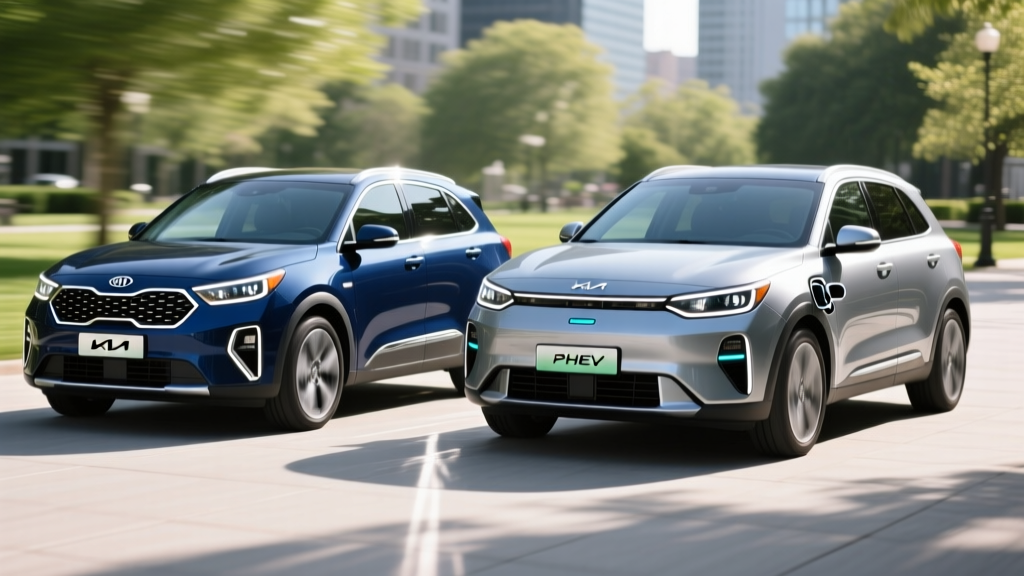
HEV vs. PHEV — Quick Distinction
| Feature | HEV (Corolla Cross Hybrid) | PHEV (e.g., RAV4 Prime) |
|---|---|---|
| Plug-in charging | No — self-charging | Yes — Level 1/2 |
| Electric-only range | ~1 mile at low speed | 25–42 miles typical |
| Battery size | ~1.3 kWh (NiMH) | 13–18 kWh (Li-ion) |
| Federal tax credit (§30D) | Not eligible | Up to $7,500 (if eligible) |
| Best for | No home charging access | Home charging + short commutes |
If you're considering a plug-in alternative in Toyota's lineup, the RAV4 Prime (PHEV) offers 42 miles of electric-only range but starts above $44,000. The Corolla Cross Hybrid is the budget-conscious, no-plug-required option.
Fuel Economy: EPA Ratings and Real-World MPG
The headline number is strong. According to fueleconomy.gov, the 2025 Corolla Cross Hybrid earns the following EPA estimates across all trims (S, SE, XSE):
| Metric | City | Highway | Combined |
|---|---|---|---|
| EPA Estimate | 46 MPG | 38 MPG | 42 MPG |
| Real-World Expectation | 44–50 MPG | 35–39 MPG | 40–45 MPG |
| Cold Weather (below 32°F) | 38–42 MPG | 33–36 MPG | 36–40 MPG |
Real-world context: Toyota's hybrid system excels in city driving, where the electric motor handles low-speed propulsion and regenerative braking recaptures energy at every stop. Many owners report exceeding the 46 MPG city estimate in stop-and-go traffic during mild weather. Highway efficiency drops more noticeably — at 75 mph, the gasoline engine carries most of the load, and the vehicle's boxy crossover shape creates aerodynamic drag. Expect a combined real-world figure around 40–45 MPG in temperate conditions, dipping to 36–40 MPG in sustained winter cold.
For comparison, the gas-only Corolla Cross AWD is rated at 29 MPG combined — meaning the hybrid delivers roughly 45% better fuel economy for a modest price premium.
Powertrain and Performance Specs
| Specification | Value |
|---|---|
| Engine | 2.0L 4-cylinder Atkinson-cycle |
| Engine output | 150 hp / 139 lb-ft torque |
| Front electric motor | 83 kW (111 hp) |
| Rear electric motor (AWD) | 30 kW (40 hp) |
| Net combined system horsepower | 196 hp |
| Drivetrain | Electronic AWD (standard, all trims) |
| Transmission | eCVT (planetary gearset) |
| 0–60 mph | ~7.5 seconds (est.) |
| Traction battery | ~1.3 kWh NiMH (sealed) |
| Fuel tank | 10.6 gallons |
| Total driving range | ~445 miles (EPA combined) |
The fifth-generation Toyota Hybrid System pairs the 2.0L engine with two electric motor-generators through a planetary gearset — not a traditional belt-driven CVT. This means no rubber-band effect under acceleration. The rear motor provides electronic AWD by powering the rear axle independently, with no mechanical driveshaft. In practice, the AWD system engages seamlessly in rain and light snow, though ground clearance (6.5 inches) limits serious off-road capability.
At 196 combined horsepower, the Corolla Cross Hybrid is genuinely quick for its class — roughly 2 seconds faster to 60 mph than the gas-only model. Merging onto highways and climbing grades feels confident, a notable advantage over some competing hybrids that prioritize efficiency over power.
Pricing, Trims, and Tax Credit Eligibility
The 2025 Corolla Cross Hybrid is offered in three trims. Pricing below includes the mandatory destination charge:
| Trim | MSRP (incl. destination) | Key Features |
|---|---|---|
| S | $29,590 | 8" touchscreen, TSS 3.0, 17" alloy wheels |
| SE | $30,890 | SofTex seats, heated front seats, 18" wheels |
| XSE | $32,690 | JBL audio, wireless CarPlay/Android Auto, power liftgate |
Federal Tax Credit Status
The Corolla Cross Hybrid does not qualify for the IRS §30D Clean Vehicle Credit (up to $7,500). That credit is reserved for plug-in electric vehicles (BEVs and PHEVs) meeting specific battery-sourcing, critical-mineral, MSRP, and buyer-income requirements. Conventional hybrids are excluded under current IRS rules.
Some states and utilities offer rebates for conventional hybrids — check your state energy office or local utility for current programs. These vary widely by jurisdiction.
Even without a federal credit, the hybrid's fuel savings close the price gap quickly. At $3.50/gallon and 12,000 miles/year, the hybrid saves roughly $650–$750 annually compared to the gas-only Corolla Cross AWD (29 vs. 42 MPG combined). Over five years, that's $3,250–$3,750 in fuel savings — more than offsetting the hybrid's ~$1,500 price premium over the gas LE AWD.
Battery Warranty, Lifespan, and Replacement Cost
Hybrid Battery Warranty Coverage
- Duration: 10 years / 150,000 miles (whichever comes first)
- Coverage: Defects and capacity loss below functional threshold
- Transferable: Yes — to subsequent owners at no cost
- Hybrid system components: 8 years / 100,000 miles (inverter, transaxle, control module)
Toyota's hybrid battery track record is among the strongest in the industry. The Prius, now in its 25th year of production, has demonstrated that NiMH hybrid batteries routinely last 150,000–200,000+ miles with minimal degradation. Unlike a full EV battery, the Corolla Cross Hybrid's small 1.3 kWh pack operates in a narrow state-of-charge window (roughly 40–80%), which dramatically reduces stress and extends cycle life.
Replacement cost if out of warranty: A new OEM hybrid battery pack runs approximately $2,000–$3,500 installed at a Toyota dealer. Third-party remanufactured packs are available for $1,200–$2,000. Given the 10-year/150,000-mile warranty and real-world longevity data, most original owners will never face this expense.
The conventional 12V auxiliary battery (a separate, standard lead-accent or AGM unit) follows a typical 3–5 year replacement cycle, identical to any gas vehicle.
Who Should Choose the Corolla Cross Hybrid vs. an EV or Gas Car
Pros
- 42 MPG combined — top-tier for AWD crossovers
- Standard AWD on every trim
- No plug-in required — works for apartment/rental dwellers
- 196 hp provides confident acceleration
- 10-year/150,000-mile hybrid battery warranty
- Toyota Safety Sense 3.0 standard (AEB, lane-keep, adaptive cruise)
- Strong resale value and reliability reputation
Cons
- No federal tax credit eligibility
- Cargo space (25.5 cu ft) trails some rivals
- Rear seat legroom is tight for tall adults
- No DC fast charging (not applicable — it's an HEV)
- Infotainment UI lags behind Hyundai/Kia systems
- Road noise noticeable at highway speeds
- Not eligible for HOV lane access in most states
Decision Framework: Is This the Right Electrified Vehicle for You?
Choose the Corolla Cross Hybrid if: You lack reliable access to home or workplace charging, you want AWD and strong fuel economy without behavioral changes, and you plan to keep the vehicle 5+ years to maximize the fuel-savings payback.
Choose a PHEV (like the RAV4 Prime) if: You have Level 2 home charging, your daily commute is under 40 miles, and you want electric-only daily driving with gas-engine backup for road trips.
Choose a full BEV (like the Hyundai Ioniq 5 or Tesla Model Y) if: You have home charging, want the lowest per-mile fuel cost (~$0.04/mi vs. $0.08/mi for this hybrid), qualify for the $7,500 federal credit, and are comfortable with public DC fast charging for road trips.
Stick with the gas Corolla Cross if: Your annual mileage is under 8,000 miles, where the hybrid's fuel savings won't offset the higher purchase price within your ownership window.
Safety, Tech, and Daily Livability
Every 2025 Corolla Cross Hybrid comes equipped with Toyota Safety Sense 3.0, which includes pre-collision braking with pedestrian detection, lane-departure alert with steering assist, lane-tracing assist, automatic high beams, and full-speed-range adaptive cruise control. The NHTSA and IIHS have historically rated Toyota's TSS-equipped vehicles well, though model-year-specific ratings for the Corolla Cross Hybrid should be verified as they're released.
Importantly, TSS 3.0 is an SAE Level 2 driver-assistance system — it provides steering and speed support but requires the driver to remain fully attentive with hands on the wheel and eyes on the road. It is not autonomous or self-driving.
Inside, the 8-inch touchscreen supports wireless Apple CarPlay and Android Auto (on SE and XSE trims). The XSE adds a 9-speaker JBL audio system. Cargo volume behind the rear seats is 25.5 cubic feet — adequate for groceries and luggage but less generous than the Honda HR-V (24.4 cu ft is comparable, though the HR-V's magic-seat fold offers more versatility). Towing is not recommended for the Corolla Cross Hybrid.
Ownership Costs: 5-Year Projection
| Cost Category | Hybrid XSE | Gas AWD XLE |
|---|---|---|
| Purchase price (MSRP) | $32,690 | $31,190 |
| Federal tax credit | $0 | $0 |
| Fuel (60,000 mi @ $3.50/gal) | $5,000 | $7,241 |
| Maintenance (est.) | $2,100 | $2,400 |
| Insurance (est. avg) | $7,500 | $7,200 |
| 5-Year Total | $47,290 | $48,031 |
| Net Savings (Hybrid) | ~$741 over 5 years (grows to ~$1,400+ at year 7) | |
The hybrid breaks even against the gas model around year 3–4 of ownership and pulls further ahead as mileage accumulates. Higher annual mileage (15,000+ miles/year) accelerates payback to under 3 years.
Frequently Asked Questions
How many MPG does the 2025 Toyota Corolla Cross Hybrid get?
The EPA rates it at 46 city / 38 highway / 42 combined MPG. Real-world testing shows most drivers achieve 40–45 MPG combined in mixed driving, with city-heavy routes sometimes exceeding the EPA city estimate. Cold weather and sustained highway speeds reduce efficiency to roughly 36–40 MPG combined.
Does the Corolla Cross Hybrid need to be plugged in?
No. It is a conventional hybrid (HEV). The battery charges through regenerative braking and the gasoline engine. There is no charging port. You fuel it exclusively at a gas station, exactly like a conventional car.
How far can the Corolla Cross Hybrid drive on electric power alone?
Effectively less than 1 mile, and only at very low speeds (under 25 mph) in stop-and-go conditions. The electric motor assists the engine continuously but cannot propel the vehicle for meaningful distances without the engine running. If electric-only range is a priority, you need a PHEV like the RAV4 Prime (42 miles electric-only) or a full BEV.
Is the Corolla Cross Hybrid reliable, and what does a battery replacement cost?
Toyota's hybrid system has over two decades of proven reliability. The hybrid battery is warranted for 10 years / 150,000 miles and commonly lasts well beyond that. Out-of-warranty replacement runs $2,000–$3,500 for an OEM pack, or $1,200–$2,000 for a remanufactured unit. The hybrid system components (inverter, transaxle) carry an 8-year/100,000-mile warranty.
Does the 2025 Corolla Cross Hybrid qualify for any tax credit?
It does not qualify for the federal §30D Clean Vehicle Credit, which is limited to plug-in vehicles (BEVs and PHEVs) meeting battery-sourcing and MSRP/income requirements. Some state, local, or utility programs offer rebates for conventional hybrids — check your jurisdiction. The gas savings typically offset the price premium within 3–5 years regardless.
How does the Corolla Cross Hybrid compare to the RAV4 Hybrid?
The RAV4 Hybrid is larger (midsize vs. subcompact), offers more cargo room (37.6 cu ft vs. 25.5), and is rated at 39 MPG combined — 3 MPG less than the Corolla Cross Hybrid. The RAV4 Hybrid starts around $34,000 and offers more power and space but at a higher price and slightly lower fuel economy. Choose the Corolla Cross Hybrid for maximum efficiency and lower cost; choose the RAV4 Hybrid for family-hauling space.
Is the AWD system always active?
The electronic AWD system engages the rear electric motor automatically when the front wheels lose traction or during hard acceleration. Under steady-state cruising, the vehicle operates primarily in front-wheel drive to maximize efficiency. There is no mechanical driveshaft — the rear axle is powered solely by its dedicated electric motor.