Quick Verdict: The Efficiency Benchmark Under $25,000
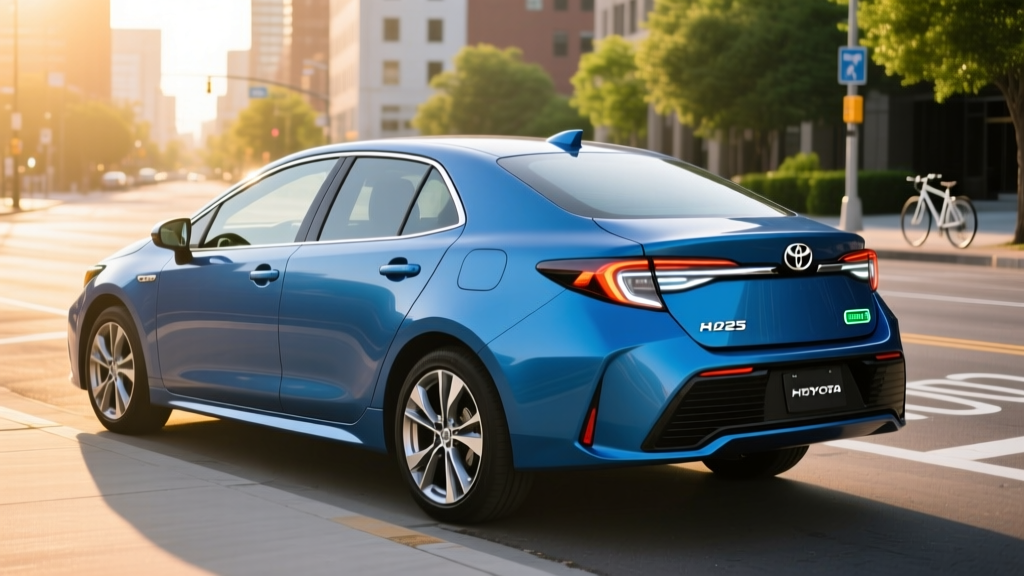
The 2025 Toyota Corolla Hybrid remains one of the most compelling arguments for electrified driving without plugging in. With an EPA-estimated 50 MPG combined in the LE FWD trim, a starting MSRP of $23,500, and Toyota's proven fifth-generation hybrid powertrain, it occupies a narrow lane: genuine hybrid efficiency at a gas-car price point. For buyers who can't charge at home but want to cut fuel costs by nearly half compared to a conventional compact sedan, this is the default answer.
But the Corolla Hybrid isn't trying to be a plug-in. There is no EV-only mode, no charging port, and no federal tax credit. That clarity is actually a strength — it eliminates the confusion that plagues many electrified purchases. Here's exactly what you're getting, what it costs to own, and where it fits against PHEVs and full EVs in 2025.
HEV vs. PHEV: What the Corolla Hybrid Actually Is
Conventional Hybrid (HEV) — This is the Corolla Hybrid. A small battery (roughly 1.3 kWh) recharges itself through regenerative braking and the gasoline engine. You never plug it in. The electric motor assists the engine during acceleration and can power the car at low speeds for brief distances, but the gas engine is always the primary energy source.
Plug-In Hybrid (PHEV) — This is NOT the Corolla Hybrid. A PHEV like the Toyota Prius Prime carries a larger battery (13.6 kWh) that you plug in to recharge, offering 30-44 miles of pure electric driving before the gas engine takes over. Toyota does not currently offer a Corolla PHEV in the US market.
This distinction matters because many shoppers search for "Corolla plug-in hybrid" or ask whether the Corolla Hybrid needs to be charged. It does not. You fuel it like a normal car, and the hybrid system handles the rest.
Fuel Economy: EPA Numbers and Real-World MPG
| Trim / Drivetrain | City MPG | Highway MPG | Combined MPG |
|---|---|---|---|
| LE (FWD) | 53 | 46 | 50 |
| SE (FWD) | 50 | 43 | 47 |
| XLE (FWD) | 50 | 43 | 47 |
| LE (AWD) | 47 | 41 | 44 |
| SE (AWD) | 46 | 39 | 43 |
Data source: fueleconomy.gov (EPA estimates for 2025 Toyota Corolla Hybrid).
Real-World MPG Expectations: Toyota's hybrid system excels in city driving where regenerative braking is frequent. Owners consistently report matching or exceeding the EPA city estimate of 53 MPG in stop-and-go traffic. Highway driving is a different story — at sustained 70-75 mph speeds, expect 40-44 MPG in FWD trims. In cold weather (below 35°F), the engine runs more often to provide cabin heat and warm up the catalytic converter, dropping observed fuel economy by 5-10 MPG in the LE trim. Annual fuel cost at 15,000 miles and $3.40/gallon averages approximately $1,020 for the LE FWD — roughly half what a comparable gas-only compact sedan costs.
Powertrain and Performance Specs
| Specification | Detail |
|---|---|
| Engine | 1.8L 4-cylinder Atkinson-cycle |
| Combined System Horsepower | 138 hp |
| Hybrid System Generation | 5th-gen Toyota Hybrid System |
| Transmission | eCVT (planetary gearset, not belt-driven) |
| Drivetrain | FWD standard; AWD available (rear e-motor) |
| Battery Type | Lithium-ion (~1.3 kWh, sealed) |
| 0-60 mph | ~7.9 seconds (FWD) |
| Top Speed | ~112 mph (electronically limited) |
| Fuel Tank Capacity | 11.4 gallons |
| Total Range (est.) | ~570 miles (LE FWD) |
| Towing Capacity | Not rated for towing |
The 138 hp combined output comes from the 1.8L gas engine paired with two motor-generators. The AWD system adds a separate rear-mounted electric motor (no mechanical driveshaft) that engages during acceleration and low-traction situations. The eCVT is Toyota's planetary gearset design — it's fundamentally different from the rubber-belt CVTs in competitors and is one reason the system's reliability record is so strong.
Performance is adequate rather than exciting. The 0-60 time of roughly 7.9 seconds puts it in line with most compact sedans, though the electric motor's instant torque makes it feel responsive around town. Highway passing power is acceptable but requires the engine to rev noticeably.
Pricing, Trims, and Tax Credit Eligibility
| Trim | Drivetrain | MSRP (2025) | Key Features |
|---|---|---|---|
| LE | FWD | $23,500 | 8" touchscreen, wireless CarPlay/Android Auto, TSS 3.0 |
| LE | AWD | $24,900 | Same as LE FWD + AWD e-motor |
| SE | FWD | $25,950 | Sport-tuned suspension, 16" alloy wheels, paddle shifters |
| SE | AWD | $27,350 | Same as SE FWD + AWD e-motor |
| XLE | FWD | $27,700 | SofTex seats, 10-way power driver seat, 7" cluster display |
Federal Tax Credit: The 2025 Toyota Corolla Hybrid does not qualify for the federal §30D Clean Vehicle Credit. That credit applies only to plug-in electric vehicles (BEVs and PHEVs) meeting specific battery-sourcing, MSRP, and buyer-income requirements as outlined by the IRS. Conventional hybrids like the Corolla Hybrid are excluded under current law.
State Incentives: A handful of states offer modest rebates or HOV-lane access for conventional hybrids, but these programs are increasingly rare and vary by jurisdiction. Check your state's energy or environmental agency website for current offerings — do not rely on dealer information, as incentive programs change frequently.
Total Value Proposition: Even without a tax credit, the Corolla Hybrid's fuel savings are substantial. At 15,000 miles per year and $3.40/gallon, the LE FWD saves approximately $900-$1,100 annually compared to a typical gas-only compact sedan getting 30 MPG combined. Over five years, that's $4,500-$5,500 in fuel savings — effectively paying back the roughly $1,500 hybrid premium over a base Corolla gas model in under two years.
Battery Warranty, Reliability, and Replacement Costs
Hybrid Battery Warranty: Toyota covers the Corolla Hybrid's battery pack for 10 years or 150,000 miles (whichever comes first) in all 50 states. This is among the longest hybrid battery warranties in the industry and applies to the traction battery, not the 12V auxiliary battery.
Hybrid System Warranty: The broader hybrid system components — including the inverter, motor-generators, and eCVT — are covered for 8 years or 100,000 miles.
Real-World Longevity: Toyota's hybrid battery track record is the strongest in the industry. The Prius, which shares the same fundamental hybrid architecture, has demonstrated battery packs lasting 150,000-250,000+ miles with minimal capacity loss. The Corolla Hybrid's fifth-generation system uses a lithium-ion pack (replacing the older nickel-metal hydride units) with improved thermal management, which should extend longevity further.
Replacement Cost: If the hybrid battery does eventually need replacement outside of warranty, expect $2,000-$3,500 for a new OEM battery pack (parts and labor). Refurbished or reconditioned packs are available for $1,000-$2,000. Individual battery modules can sometimes be replaced for $200-$500 if only a single cell group has degraded. These costs have decreased significantly over the past decade as the hybrid fleet has aged and the aftermarket has matured.
Overall Reliability: The Corolla Hybrid carries Toyota's reputation for long-term durability. The eCVT transmission has no belts or clutches to wear — it's a gearset that Toyota has refined over 25+ years. The IIHS has historically rated the Corolla platform well for crashworthiness, and Toyota Safety Sense 3.0 (standard on all trims) provides forward collision warning, automatic emergency braking, lane-keeping assist, and adaptive cruise control.
Who Should Buy the Corolla Hybrid vs. a PHEV or Full EV
Choose the Corolla Hybrid (HEV) if:
- You cannot charge at home (apartment, street parking, no garage)
- Your budget is under $28,000 and you want maximum MPG
- You drive 10,000-20,000+ miles per year and want predictable fuel savings
- You want zero behavior change — no plugging in, no range planning
- You live in a cold climate where EV range loss is a concern
- You prioritize long-term reliability and low maintenance costs
Choose a Plug-In Hybrid (PHEV) like the Prius Prime if:
- You can install a Level 2 charger at home and have a short commute (under 40 miles)
- You want electric-only daily driving but gas flexibility for road trips
- You want to qualify for the federal §30D tax credit (up to $3,750 for the Prius Prime, subject to income and sourcing rules)
- You're willing to pay a $5,000-$8,000 premium over the Corolla Hybrid
Choose a Full EV (BEV) like the Chevy Equinox EV or Tesla Model 3 if:
- You have reliable home charging (Level 2) and want the lowest per-mile energy cost
- You want to eliminate gasoline entirely and reduce maintenance (no oil changes, fewer moving parts)
- Your daily driving is under 250 miles and you have access to DC fast charging for road trips
- You want to qualify for the full $7,500 federal tax credit (subject to eligibility)
The Corolla Hybrid's ideal buyer is someone who wants the simplicity of a gas car with the efficiency of an electrified vehicle. It asks nothing of you — no charging routine, no behavior change, no app management. You just drive it and fill up less often. For the majority of American drivers who lack home charging access, this remains the most practical path to cutting fuel costs in half.
Pros and Cons at a Glance
Pros
- 50 MPG combined (LE FWD) — class-leading efficiency
- $23,500 starting price — hybrid at gas-car cost
- 10-year / 150,000-mile hybrid battery warranty
- AWD available for $1,400 — rare in this segment
- Toyota Safety Sense 3.0 standard on all trims
- No charging required — zero behavior change
- Proven long-term reliability track record
- Wireless Apple CarPlay and Android Auto standard
Cons
- No federal tax credit eligibility (HEV, not PHEV/BEV)
- Modest 138 hp — not a performance-oriented sedan
- Highway MPG drops to 43-46 (city is where it shines)
- Cold weather reduces efficiency by 5-10 MPG
- Rear seat and cargo space tighter than some competitors
- No EV-only driving mode for short trips
- AWD trims sacrifice 6-7 MPG vs. FWD
Frequently Asked Questions
How many MPG does the 2025 Toyota Corolla Hybrid actually get?
The EPA rates the LE FWD trim at 53 city / 46 highway / 50 combined MPG. In real-world driving, many owners report matching or exceeding the city figure thanks to frequent regenerative braking. Highway driving at 70+ mph typically yields 40-44 MPG. Cold weather (below 35°F) can reduce combined fuel economy by 5-10 MPG due to increased engine runtime for heating.
Does the Corolla Hybrid need to be plugged in?
No. The Corolla Hybrid is a conventional hybrid (HEV), not a plug-in hybrid (PHEV). Its small lithium-ion battery recharges through regenerative braking and the gasoline engine. You fuel it exactly like a regular gas car — there is no charging port.
Is there a plug-in hybrid version of the Corolla?
Toyota does not offer a Corolla PHEV in the United States as of 2025. If you want a Toyota plug-in hybrid, the closest alternatives are the Prius Prime (44 miles electric-only range, starting ~$33,000) or the RAV4 Prime (42 miles electric-only, starting ~$44,000).
How long will the Corolla Hybrid battery last?
Toyota's hybrid batteries have demonstrated 150,000-250,000+ mile lifespans in real-world use across the Prius and Camry Hybrid fleets. The Corolla Hybrid's battery is covered by a 10-year / 150,000-mile warranty. Out-of-warranty replacement costs $2,000-$3,500 for a new OEM pack.
Does the 2025 Corolla Hybrid qualify for any tax credit?
No. The federal §30D Clean Vehicle Credit applies only to plug-in vehicles (BEVs and PHEVs). Conventional hybrids are excluded. Some states may offer minor incentives for hybrids, but these are increasingly rare. Check your state's energy agency for current programs.
How does the Corolla Hybrid compare to the regular gas Corolla?
The gas-only 2025 Corolla (2.0L engine) gets an EPA-estimated 34 MPG combined vs. the Hybrid's 50 MPG combined — a 47% improvement. The hybrid costs approximately $1,500 more upfront but typically pays back that premium in fuel savings within 1.5-2 years at average mileage. The hybrid also delivers smoother low-speed acceleration from electric motor torque.
Is the AWD system worth the MPG trade-off?
The AWD Corolla Hybrid drops from 50 to 44 MPG combined (LE trim) — a 6 MPG penalty. If you regularly drive in snow or on unpaved roads, the electronic AWD system provides meaningful traction benefits. For most buyers in mild climates, the FWD model's superior efficiency is the better choice. The AWD system uses a rear electric motor with no mechanical connection to the front axle, so there's no drivetrain parasitic loss when AWD isn't engaged.