Quick Verdict: The AWD Sedan That Actually Saves You Money
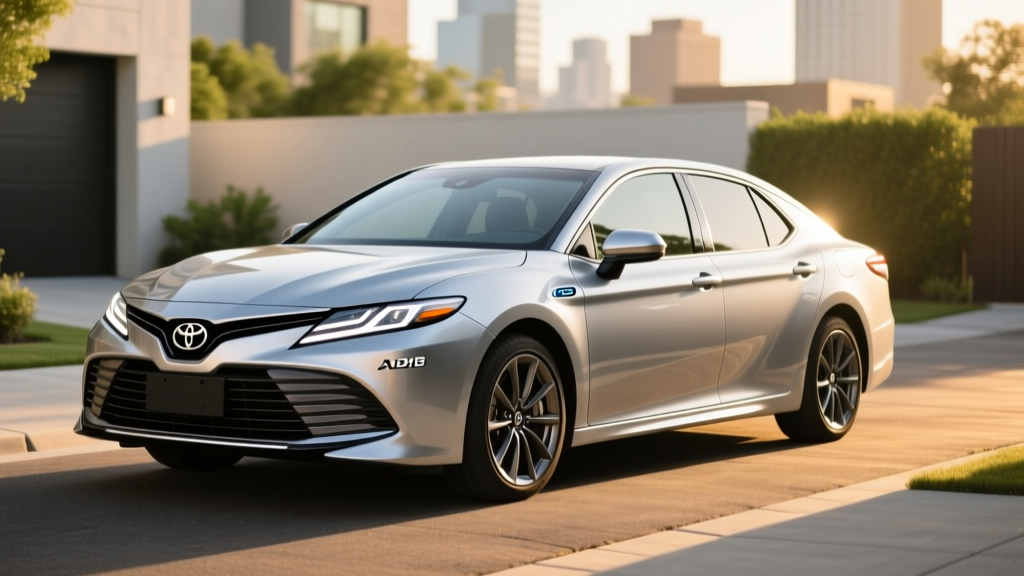
The 2026 Toyota Camry Hybrid AWD occupies a specific niche: buyers who want all-weather traction, sedan comfort, and hybrid fuel economy without ever plugging in. With an EPA-estimated 50 MPG combined on the LE AWD trim, it undercuts most crossovers on fuel costs while offering standard electronic on-demand all-wheel drive. Toyota's fifth-generation hybrid system pairs a 2.5-liter four-cylinder with three electric motors (two front, one rear) for a combined 232 horsepower — enough for confident merging and passing, if not outright sporty.
This is a conventional hybrid electric vehicle (HEV), not a plug-in. You fuel it at any gas station and never need to think about charging infrastructure. For buyers in snow-belt states who aren't ready for a full battery-electric vehicle, the Camry Hybrid AWD makes a compelling case.
| Specification | 2026 Camry Hybrid AWD (LE) |
|---|---|
| Powertrain | 2.5L 4-cyl + 3 electric motors (F+R) |
| Combined Horsepower | 232 hp |
| EPA MPG (City / Hwy / Combined) | 51 / 49 / 50 |
| Fuel Tank | 13.2 gallons |
| Total Range | ~660 miles |
| 0–60 mph | ~7.1 seconds |
| Drivetrain | Electronic On-Demand AWD |
| Hybrid Battery | ~1.6 kWh lithium-ion (self-charging) |
| Base MSRP (LE AWD) | $30,495 |
| Battery Warranty | 10 years / 150,000 miles |
HEV vs. PHEV: Why the Camry Hybrid Is NOT a Plug-In
A common source of confusion: the Camry Hybrid is a conventional hybrid (HEV), meaning it charges its small battery exclusively through regenerative braking and the gasoline engine. There is no plug, no charging port, and no electric-only driving range to speak of. The ~1.6 kWh battery buffer assists the engine during acceleration and enables brief low-speed electric-only movement (typically under 1 mile at parking-lot speeds), but this is fundamentally different from a plug-in hybrid.
| Feature | Camry Hybrid (HEV) | Typical PHEV (e.g., RAV4 Prime) |
|---|---|---|
| Plug-in charging? | No — gas only | Yes — Level 1/2 charging |
| Battery size | ~1.6 kWh | ~18.1 kWh |
| Electric-only range | Under 1 mile (low speed) | 42 miles (EPA) |
| Federal tax credit | Not eligible | Up to $7,500 (§30D) |
| Home charger needed? | No | Yes, for full benefit |
| Complexity | Lower | Higher |
If you want electric-only commuting capability and qualify for the IRS §30D federal tax credit, a PHEV like the RAV4 Prime or Prius Prime is the better play. If you want simplicity — no charging logistics, no range planning, just fill up and drive — the Camry Hybrid HEV delivers.
Fuel Economy: EPA Numbers and Real-World MPG
The 2026 Camry Hybrid AWD LE carries EPA estimates of 51 city / 49 highway / 50 combined MPG. Higher trims (SE, XLE, XSE) with larger 19-inch wheels and sport-tuned suspensions drop slightly to 48/47/47 combined. These numbers come from fueleconomy.gov.
| Trim (AWD) | City | Highway | Combined | Est. Annual Fuel Cost |
|---|---|---|---|---|
| LE | 51 | 49 | 50 | ~$1,050 |
| SE / Nightshade | 48 | 47 | 47 | ~$1,120 |
| XLE | 48 | 47 | 47 | ~$1,120 |
| XSE | 48 | 47 | 47 | ~$1,120 |
Real-world expectations: Toyota's hybrid system excels in stop-and-go city driving, where regenerative braking constantly recovers energy. Many owners report exceeding the EPA city estimate by 2–4 MPG in moderate climates on urban routes. Highway driving at sustained 75+ mph, however, typically yields 43–46 MPG — the gasoline engine carries more of the load without the benefit of frequent regen events. In cold weather (below 30°F), expect a 5–8% reduction as the engine runs more frequently to provide cabin heat and maintain battery temperature.
For context, the non-hybrid AWD competition — think Subaru Legacy or Mazda6 AWD — typically returns 27–30 MPG combined. The Camry Hybrid AWD cuts fuel consumption roughly in half.
How the Electronic On-Demand AWD Works
The Camry Hybrid AWD uses Toyota's electronic on-demand system: a dedicated 40-horsepower electric motor drives the rear axle only when front-wheel slip is detected or during hard acceleration from a stop. There is no mechanical driveshaft connecting the engine to the rear wheels. This means:
- No parasitic drivetrain loss during steady-state cruising (the rear motor disengages)
- Instant torque vectoring to the rear axle within milliseconds
- Minimal fuel economy penalty vs. the FWD Camry Hybrid (only ~1–2 MPG less)
- Not a rock-crawling system — designed for rain, snow, and light ice, not off-road use
In winter testing on packed snow and wet pavement, the system engages seamlessly. You won't feel a "clunk" or hesitation — the rear motor simply adds traction. Combined with standard traction control and available winter tires, the Camry Hybrid AWD handles moderate winter conditions competently for a sedan.
Powertrain and Performance
The fifth-generation Toyota Hybrid System (THS) in the 2026 Camry pairs a 2.5-liter Dynamic Force four-cylinder engine (184 hp, 163 lb-ft) with two front-mounted motor-generators and one rear motor. Combined system output is 232 horsepower — a meaningful bump over the previous generation's 219 hp.
The result is a 0–60 mph time of approximately 7.1 seconds, which places the Camry Hybrid AWD ahead of most four-cylinder turbo AWD sedans and well ahead of CVT-equipped competitors. Throttle response from a stop is notably quick thanks to electric motor torque, and highway passing at 55–75 mph feels confident without excessive engine drone.
The lithium-ion hybrid battery sits under the rear seat, preserving trunk space (15.1 cubic feet) and keeping the center of gravity low. Total vehicle weight for the AWD LE is approximately 3,605 pounds — roughly 130 pounds more than the FWD variant.
Pricing, Trims, and Tax Credit Eligibility
The 2026 Camry Hybrid AWD starts at $30,495 for the LE trim (including destination). Here's the lineup:
- LE AWD: $30,495 — 17-inch alloy wheels, 8-inch touchscreen, wireless CarPlay/Android Auto, Toyota Safety Sense 3.0
- SE AWD: $32,095 — Sport-tuned suspension, 19-inch wheels, paddle shifters, black exterior accents
- Nightshade AWD: $33,295 — Blacked-out trim, 19-inch gloss black wheels
- XLE AWD: $35,495 — Leather-trimmed seats, 12.3-inch touchscreen, heated front seats, ambient lighting
- XSE AWD: $36,095 — Sport-luxury blend, perforated leather, sport suspension, 19-inch machined wheels
Federal tax credit: The Camry Hybrid (HEV) does not qualify for the IRS §30D New Clean Vehicle Credit. That credit applies only to plug-in electric vehicles (BEVs and PHEVs) meeting battery sourcing, MSRP cap, and buyer income requirements. Some states offer modest rebates for high-efficiency hybrids — check your state energy office for current programs.
Battery Warranty, Reliability, and Replacement Cost
Toyota Hybrid Battery Warranty: 10 years or 150,000 miles (whichever comes first), covering capacity loss below a defined threshold. This applies in all 50 states and is transferable to subsequent owners.
Toyota's hybrid battery track record is among the best in the industry. The Prius, now in its 25th year of production, has demonstrated that nickel-metal hydride and lithium-ion hybrid batteries routinely exceed 200,000 miles with minimal degradation. The key difference from a full EV battery: the Camry's ~1.6 kWh pack operates within a very narrow state-of-charge window (roughly 40–80%), never fully charging or fully depleting. This shallow cycling dramatically extends cell life.
Replacement cost if out of warranty: A new OEM hybrid battery pack for the Camry Hybrid runs approximately $2,500–$4,000 installed at a dealership. Independent hybrid specialists and refurbished packs can reduce this to $1,500–$2,500. Given the 10-year/150,000-mile warranty and the proven longevity of Toyota's hybrid components, most owners will never face this expense.
According to reliability data from IIHS and long-term owner surveys, the Camry Hybrid consistently ranks among the most dependable midsize sedans. The hybrid system actually reduces wear on several components: regenerative braking extends brake pad life (many owners report 80,000+ miles on original pads), and the engine's start-stop cycling is managed smoothly by the motor-generators.
Camry Hybrid AWD vs. Full EV vs. Gas: Which Should You Choose?
Choose the Camry Hybrid AWD if:
- You live in a region with harsh winters and need AWD without the crossover fuel penalty
- You lack access to home charging (apartment, street parking, no garage)
- You regularly drive 400+ miles between stops and don't want to plan around chargers
- You want to cut fuel costs ~50% vs. a gas AWD sedan without changing your refueling habits
- You plan to keep the car 8–10+ years and value Toyota's reliability reputation
Choose a PHEV (e.g., Prius Prime, RAV4 Prime) if:
- You have home Level 2 charging and a commute under 40 miles round-trip
- You want to drive mostly on electricity weekdays and use gas for road trips
- You qualify for the §30D federal tax credit (income and sourcing requirements apply)
Choose a full BEV (e.g., Tesla Model 3, Hyundai Ioniq 6) if:
- You have reliable home charging and your daily driving is under 250 miles
- You want zero tailpipe emissions and minimal maintenance (no oil changes, fewer brake replacements)
- You qualify for the full $7,500 federal tax credit, which can make a BEV price-competitive
Choose a conventional gas AWD sedan if:
- Upfront price is the absolute priority (gas sedans start ~$3,000–$5,000 less)
- You drive very few miles annually (under 8,000) where fuel savings won't offset the hybrid premium
Pros
- 50 MPG combined AWD — best-in-class for non-plug-in sedans
- Seamless electronic AWD with no fuel-economy penalty vs. FWD hybrid
- 10-year / 150,000-mile hybrid battery warranty
- No charging infrastructure required
- 660+ mile total range per tank
- Strong resale value and Toyota reliability
- Toyota Safety Sense 3.0 standard on all trims
Cons
- No federal tax credit eligibility (HEV, not PHEV/BEV)
- AWD system is for traction, not performance cornering or off-road
- Highway MPG drops to low-to-mid 40s at sustained 75+ mph
- CVT-like engine drone under hard acceleration
- Rear-seat headroom slightly reduced vs. prior generation
- Base LE infotainment is 8-inch (12.3-inch requires XLE or above)
Frequently Asked Questions
How many MPG does the 2026 Camry Hybrid AWD get?
The LE AWD trim is EPA-rated at 51 city / 49 highway / 50 combined. Sport-oriented trims (SE, XSE) with larger wheels drop to 48/47/47 combined. In real-world city driving, many owners exceed EPA estimates by 2–4 MPG. Highway driving at 75+ mph typically yields 43–46 MPG.
Does the Camry Hybrid AWD need to be plugged in?
No. The Camry Hybrid is a conventional hybrid (HEV). It charges its battery through regenerative braking and the gasoline engine. There is no plug, no charging port, and no electric-only commuting range. You refuel it at any gas station like a conventional car.
Is the Camry Hybrid AWD good in snow?
Yes, for a sedan. The electronic on-demand AWD system sends up to 40 hp to the rear wheels when slip is detected, engaging in milliseconds. Combined with standard traction and stability control and a set of dedicated winter tires, it handles moderate snow and ice confidently. It is not a substitute for a ground-clearance-equipped SUV in deep snow.
How long will the Camry Hybrid battery last?
Toyota warranties the hybrid battery for 10 years or 150,000 miles. In practice, Toyota hybrid batteries from the Prius and Camry lines routinely exceed 200,000 miles. The shallow charge-discharge cycles (the battery operates between roughly 40–80% state of charge) significantly reduce cell stress compared to full EV batteries.
What does it cost to replace the hybrid battery?
If replacement is needed outside the 10-year/150,000-mile warranty, expect $2,500–$4,000 for a new OEM battery at a dealer, or $1,500–$2,500 for a refurbished unit from an independent hybrid specialist. Most owners never reach this point.
Does the Camry Hybrid AWD qualify for any tax credit?
No. The IRS §30D New Clean Vehicle Credit applies only to plug-in vehicles (BEVs and PHEVs) with qualifying battery components and critical minerals sourcing. The Camry Hybrid is a conventional HEV and is not eligible. Some states or municipalities offer small efficiency rebates — check your local programs.
How does Camry Hybrid AWD compare to RAV4 Hybrid AWD?
The RAV4 Hybrid AWD is EPA-rated at 41/38/39 combined — roughly 11 MPG less than the Camry Hybrid AWD LE — due to its taller, heavier crossover body. However, the RAV4 offers more cargo space (37.5 cu ft vs. 15.1 cu ft trunk), higher ground clearance (8.1 inches vs. ~5.5 inches), and available towing (1,750 lbs). If you need cargo versatility and ground clearance, the RAV4 wins. If you prioritize fuel economy and driving refinement, the Camry sedan is more efficient.