Quick Verdict: The Midsize Sedan Efficiency Benchmark
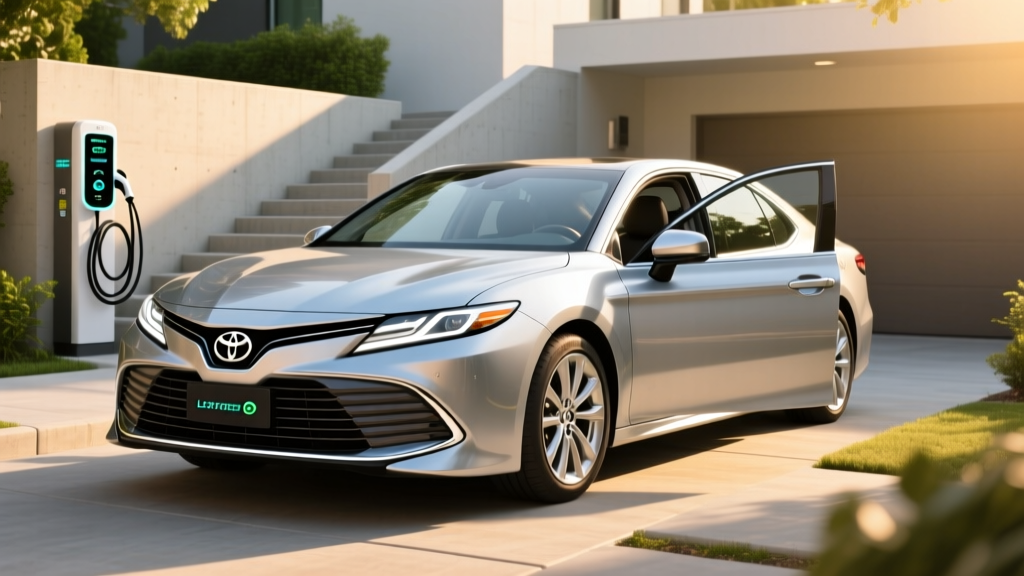
The 2022 Toyota Camry Hybrid remains one of the most compelling arguments for conventional hybrid (HEV) ownership in the midsize sedan segment. With EPA-estimated fuel economy reaching 52 MPG combined on the LE trim, a proven 2.5-liter four-cylinder hybrid powertrain, and a starting MSRP around $27,350, it delivers the kind of ownership economics that neither pure gasoline sedans nor most plug-in hybrids can match without home charging infrastructure. As of 2026, used 2022 Camry Hybrids represent strong value on the pre-owned market, and the model's reliability track record continues to anchor its resale performance.
This is a conventional hybrid — meaning it charges its battery through regenerative braking and the gasoline engine. You never plug it in. If you're looking for electric-only driving, you'll want to compare this against PHEV alternatives like the Toyota Prius Prime or Hyundai Sonata Plug-in Hybrid, which we address below.
HEV vs PHEV: Where the Camry Hybrid Fits
A common point of confusion for sedan shoppers is the difference between a conventional hybrid (HEV) and a plug-in hybrid (PHEV). The 2022 Camry Hybrid is strictly an HEV. Here's what that means in practice:
| Feature | 2022 Camry Hybrid (HEV) | Typical PHEV (e.g., Prius Prime) |
|---|---|---|
| Plug-in charging required? | No — self-charging via regen + engine | Yes — Level 1 or Level 2 |
| Electric-only range | ~1 mile at very low speeds | 25–44 miles EPA |
| Battery size | 1.6 kWh (NiMH, small buffer) | 13.6 kWh (Li-ion) |
| DC fast charging? | No | Typically no (Level 2 max) |
| Federal tax credit | Not eligible | Up to $7,500 (subject to §30D rules) |
| Best for | Drivers without home charging access | Drivers with home charging and short commutes |
The Camry Hybrid's advantage is simplicity: no charging setup, no range anxiety about electric-only miles, and no dependency on electrical infrastructure. You fuel it like any gas car and it extracts maximum efficiency from every gallon.
Fuel Economy: EPA Ratings vs Real-World MPG
The EPA publishes separate ratings for each Camry Hybrid trim because wheel size and weight affect efficiency. Here's the complete breakdown from fueleconomy.gov:
| Trim | City MPG | Highway MPG | Combined MPG |
|---|---|---|---|
| LE | 51 | 53 | 52 |
| SE / SE Nightshade | 44 | 47 | 46 |
| XLE | 44 | 47 | 46 |
Real-world expectations: Toyota's hybrid system excels in stop-and-go city driving, where regenerative braking recaptures energy that a gasoline-only car wastes as heat. Many Camry Hybrid owners report exceeding EPA city estimates — 54–56 MPG on the LE in moderate-temperature urban driving is well-documented. Highway driving is where hybrids lose their advantage somewhat: at sustained 70+ MPH speeds, the electric motor contributes less, and aerodynamic drag dominates. Expect 46–50 MPG on the highway in the LE trim.
In cold weather (below 30°F), expect a 5–10% efficiency drop as the engine runs more frequently to generate cabin heat and maintain battery temperature. This is far less severe than the 20–40% range loss a full EV experiences in winter, but it's worth noting if you live in northern climates.
Powertrain Specs and Performance
The 2022 Camry Hybrid uses Toyota's fourth-generation Hybrid Synergy Drive system. Here are the exact specifications:
| Specification | Value |
|---|---|
| Engine | 2.5L Dynamic Force 4-cylinder (A25A-FXS) |
| Engine output | 176 hp @ 5,700 rpm / 163 lb-ft @ 5,200 rpm |
| Electric motor output | 118 hp / 149 lb-ft (front motor) |
| Net combined horsepower | 208 hp |
| AWD-e rear motor (SE/XLE only) | 40 hp (rear axle, engaged as needed) |
| AWD-e net combined hp | 208 hp (rear motor supplements, doesn't add) |
| Transmission | eCVT (planetary gearset, not belt-driven) |
| 0–60 mph | ~7.2 seconds (FWD), ~7.0 seconds (AWD-e) |
| Battery type | Nickel-metal hydride (NiMH), ~1.6 kWh |
| Drivetrain | FWD standard; AWD-e available on SE, XLE |
The 208 combined horsepower is competitive for the segment — it's 21 hp more than the Honda Accord Hybrid's 187 hp (in the comparable 2022 model year). The AWD-e system, available on SE and XLE trims, uses an independent rear motor that engages automatically during acceleration from a stop or when slip is detected. It's not a performance AWD system, but it provides meaningful traction improvement in rain and light snow without the fuel-economy penalty of a mechanical AWD setup.
The eCVT is Toyota's planetary-gear design, not the rubber-band-feel belt CVTs found in some competitors. Acceleration is linear and predictable, though it won't deliver the instant-torque thrill of a full EV.
Pricing, Trim Levels, and Tax Credit Eligibility
At launch, the 2022 Camry Hybrid was priced as follows (destination included):
- Hybrid LE: $27,350
- Hybrid SE: $28,850
- Hybrid SE Nightshade: $29,550
- Hybrid XLE: $32,450
Adding AWD-e cost $1,400 on the SE and XLE trims. Fully loaded XLE models with options approached $37,000.
Federal tax credit: The 2022 Camry Hybrid does not qualify for the federal §30D clean vehicle credit. That credit is reserved for plug-in electric vehicles (BEVs and PHEVs) meeting specific battery sourcing, MSRP cap, and buyer income requirements as defined by the IRS. Conventional hybrids like the Camry Hybrid have not been eligible for the federal purchase credit since the phase-out of earlier hybrid incentives years ago.
Some states and municipalities offer their own incentives for hybrids, though these are increasingly targeted toward PHEVs and BEVs. Check your state's energy or environmental agency for current programs.
Used market (2026): As of early 2026, used 2022 Camry Hybrid LE models typically list between $22,000–$26,000 depending on mileage and condition. The used EV tax credit (up to $4,000 under §25E) also does not apply to conventional hybrids — only to plug-in vehicles.
Battery Warranty, Lifespan, and Replacement Cost
Toyota Hybrid Battery Warranty (2022 model year):
- Coverage: 10 years or 150,000 miles (whichever comes first), applicable in all 50 states
- What's covered: Hybrid battery pack, hybrid control module, and related hybrid system components
- Capacity threshold: Toyota warrants against defects and abnormal loss of capacity — not a specific percentage retention guarantee like BEV warranties
Toyota's hybrid battery longevity record is among the best in the industry. The Camry Hybrid's NiMH pack is relatively small (~1.6 kWh) and operates within a narrow state-of-charge window — typically between 40% and 80% — which dramatically reduces stress on the cells. This shallow-cycling strategy is why Camry Hybrid batteries routinely last 150,000–200,000+ miles before any degradation concerns arise.
Replacement cost if out of warranty: A new OEM hybrid battery for the Camry Hybrid costs approximately $2,000–$3,500 installed at a Toyota dealer. Independent hybrid specialists often offer refurbished packs for $1,000–$1,800 installed. This is orders of magnitude less than a BEV traction battery replacement ($10,000–$20,000+), and it's a cost most owners will never face within the vehicle's useful life.
The broader hybrid system — including the inverter, electric motor, and eCVT — is also covered under the 10-year/150,000-mile warranty. Toyota's hybrid components have demonstrated exceptional reliability across millions of vehicles since the Prius launched in the US in 2000.
Camry Hybrid vs PHEV vs Full EV: Which Fits You?
Choose the Camry Hybrid (HEV) if:
- You don't have access to home or workplace Level 2 charging
- You want maximum fuel efficiency with zero behavioral change (no plugging in)
- You drive 15,000+ miles per year and want predictable low fuel costs
- You want proven long-term reliability with minimal maintenance
- Your budget is $25,000–$35,000 (new or lightly used)
Choose a PHEV (e.g., Prius Prime, RAV4 Prime) if:
- You have home charging (Level 1 or 2) and a commute under 40 miles
- You want electric-only daily driving with gas-engine flexibility for road trips
- You want to qualify for the federal §30D tax credit (up to $7,500, subject to eligibility)
Choose a full EV (e.g., Tesla Model 3, Hyundai Ioniq 6) if:
- You have reliable home Level 2 charging
- You want zero tailpipe emissions and the lowest per-mile fuel cost
- You want instant torque and a quiet, single-speed driving experience
- You're comfortable with 250–350 miles of range and DC fast charging on road trips
Ownership Costs: 5-Year Fuel Savings vs Gas-Only Camry
The financial case for the Camry Hybrid is straightforward. Compared to the gas-only 2022 Camry LE (2.5L 4-cylinder, EPA 28 city / 39 highway / 32 combined), the Hybrid LE's 52 MPG combined saves substantial fuel cost:
| Cost Factor | Camry Gas LE (32 MPG) | Camry Hybrid LE (52 MPG) |
|---|---|---|
| Annual fuel (15,000 mi/yr @ $3.50/gal) | $1,641 | $1,010 |
| 5-year fuel cost | $8,203 | $5,048 |
| 5-year fuel savings (Hybrid) | ~$3,155 | |
| Price premium (Hybrid LE vs Gas LE at launch) | ~$1,600 | |
| Net 5-year savings after premium | ~$1,555 | |
| Maintenance (oil, brakes) | Standard | Lower (regen saves brake pads) |
The Hybrid's regenerative braking significantly extends brake pad life — many owners report 80,000–100,000+ miles on original pads. Oil change intervals are the same (10,000 miles with synthetic), but the engine runs less frequently, reducing overall wear. The hybrid premium typically pays for itself within 3–4 years for average drivers, sooner for high-mileage or city-heavy driving patterns.
Pros
- 52 MPG combined (LE) — best in midsize sedan class
- No plug-in charging needed — works everywhere
- 208 hp with smooth, linear acceleration
- 10-year / 150,000-mile hybrid battery warranty
- AWD-e available for inclement weather
- Proven long-term reliability and strong resale value
- Comfortable ride, spacious rear seat, 15.1 cu-ft trunk
Cons
- SE/XLE trims drop to 46 MPG combined (larger wheels)
- No federal tax credit eligibility
- eCVT drone under hard acceleration
- Infotainment feels dated vs competitors (2022 model year)
- Not eligible for HOV lane access in most states
- Electric-only mode limited to ~1 mile at very low speeds
Frequently Asked Questions
How many MPG does the 2022 Toyota Camry Hybrid get?
The Camry Hybrid LE achieves an EPA-estimated 51 city / 53 highway / 52 combined MPG. The SE, SE Nightshade, and XLE trims are rated at 44 city / 47 highway / 46 combined due to larger 18- or 19-inch wheels and additional equipment weight. In real-world city driving, the LE often exceeds its EPA estimate, returning 54–56 MPG in moderate temperatures.
Is the 2022 Camry Hybrid a plug-in hybrid?
No. The Camry Hybrid is a conventional hybrid (HEV). It charges its small battery through regenerative braking and the gasoline engine. You never plug it in. If you want plug-in capability with electric-only range, look at the Toyota Prius Prime or RAV4 Prime.
Does the 2022 Camry Hybrid qualify for any tax credit?
It does not qualify for the federal §30D new clean vehicle credit or the §25E used clean vehicle credit — both are limited to plug-in electric vehicles (BEVs and PHEVs). Some states may offer separate hybrid incentives, but these vary by jurisdiction and are increasingly rare. Check your state's energy office for current programs.
How reliable is the Camry Hybrid, and what does a battery replacement cost?
Toyota's hybrid system has an exceptional reliability record spanning over two decades and millions of vehicles. The hybrid battery is covered for 10 years or 150,000 miles. If replacement is needed out of warranty, expect $2,000–$3,500 for a new OEM pack or $1,000–$1,800 for a refurbished unit at an independent specialist. Most Camry Hybrid batteries last well beyond 150,000 miles.
Is the Camry Hybrid better than a full EV for my commute?
It depends on your charging access and driving pattern. If you have reliable home Level 2 charging and a commute under 250 miles, a full EV will have lower per-mile fuel costs and zero tailpipe emissions. But if you lack home charging, drive long distances frequently, or live in an area with limited public charging infrastructure, the Camry Hybrid delivers outstanding efficiency without any infrastructure dependency. The Hybrid also carries a lower purchase price and avoids the range-planning required for EV road trips.
Does the AWD-e system hurt fuel economy?
Minimally. The AWD-e Camry Hybrid SE and XLE achieve 46 MPG combined — the same as their FWD counterparts. The rear motor only engages when needed (launch, slip), and the system adds relatively little weight. The 6 MPG gap between the LE (52 combined) and AWD-e trims is due to larger wheels and tires, not the AWD-e system itself.