Quick Verdict: What the Toyota Aygo X Hybrid Actually Is
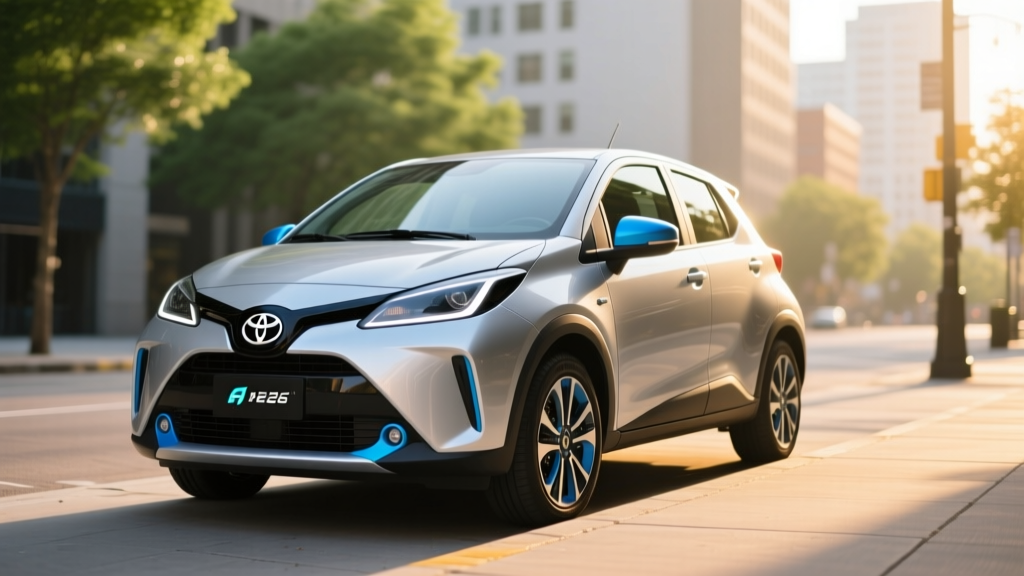
The Toyota Aygo X is a subcompact crossover built primarily for the European market, sitting on Toyota's GA-B platform. Before we go further, a critical clarification for US-based shoppers: the Toyota Aygo X is not sold in the United States as of the 2026 model year. It is available across Europe, the UK, and select other markets. If you're reading this from outside the US or considering an import, this guide covers what you need to know.
The Aygo X was introduced in 2022 with a conventional 1.0-liter gasoline engine. Toyota has since expanded the lineup in certain markets with a mild-hybrid variant, leveraging their decades of hybrid expertise. This is a conventional hybrid (HEV) — not a plug-in hybrid (PHEV). You never plug it in. The system recovers energy during braking and deceleration, stores it in a small battery, and uses it to assist the gasoline engine and enable brief electric-only driving at low speeds.
HEV vs PHEV — What's the Difference?
Conventional Hybrid (HEV): Small battery (typically 0.5–1.5 kWh), self-charging via regenerative braking and the engine. No plug. Improves city MPG significantly. The Toyota Aygo X hybrid falls here.
Plug-in Hybrid (PHEV): Larger battery (typically 10–25 kWh), charges via a plug (Level 1 or Level 2). Offers 20–50 miles of electric-only range before the gas engine engages. Examples: Toyota RAV4 Prime, Prius Prime.
Battery Electric (BEV): No gas engine at all. Runs entirely on a large battery pack (40–100+ kWh). Examples: Tesla Model 3, Hyundai Ioniq 5.
Toyota Aygo X Hybrid Powertrain & Performance
The Aygo X hybrid pairs Toyota's 1.0-liter three-cylinder engine with an integrated electric motor-generator and a compact lithium-ion battery pack. This is a mild-to-full hybrid system designed for urban efficiency rather than performance.
| Specification | Detail |
|---|---|
| Engine | 1.0L 3-cylinder + electric motor-generator |
| Combined Output | ~72–85 hp (market-dependent) |
| Transmission | CVT (Continuously Variable Transmission) |
| Drivetrain | Front-wheel drive |
| 0–62 mph (0–100 km/h) | ~14.5–15.5 seconds (estimated) |
| Hybrid Battery | ~0.7–1.0 kWh lithium-ion (self-charging) |
| Plug-in Capable? | No — conventional HEV, no plug required |
| Platform | Toyota GA-B (TNGA-B) |
| Curb Weight | ~940–1,015 kg (~2,070–2,240 lbs) |
The powertrain prioritizes low-speed urban efficiency. The electric motor fills in torque at low RPM where the small three-cylinder is weakest, smoothing out acceleration from stops. At highway speeds, the gasoline engine does most of the work. This is exactly the operating profile where Toyota's hybrid system excels — stop-and-go city driving.
Fuel Economy: MPG and Real-World Expectations
Fuel economy is the Aygo X hybrid's headline feature. European WLTP figures place the hybrid variant in the range of 4.0–4.5 L/100km combined, which translates to approximately 52–59 MPG (US) under WLTP testing. WLTP tends to be slightly more optimistic than the US EPA cycle, so a reasonable EPA-equivalent estimate would be:
| Driving Condition | Estimated MPG (US) | Notes |
|---|---|---|
| City | 55–62 MPG | Hybrids excel in stop-and-go; regen braking recovers energy |
| Highway | 45–50 MPG | Small engine works harder at sustained speeds; less hybrid benefit |
| Combined | 50–55 MPG | EPA-equivalent estimate based on WLTP data |
Real-World MPG vs. Sticker: What to Expect
Toyota hybrids historically meet or exceed their city MPG ratings in real-world driving, especially in congested urban environments where regenerative braking is most active. Highway MPG may fall 3–5 MPG below sticker at sustained 75+ mph speeds. In cold weather (below 40°F / 4°C), expect a 5–10% fuel economy reduction as the engine runs longer to heat the cabin and bring the catalytic converter to operating temperature.
For context, the non-hybrid Aygo X with the same 1.0L engine and manual transmission achieves roughly 45–50 MPG combined (WLTP). The hybrid system adds approximately 10–15% efficiency improvement, most noticeably in city driving.
Pricing, Tax Credits & Ownership Costs
In European markets, the Toyota Aygo X hybrid is positioned as an affordable entry point into Toyota's hybrid lineup. Pricing varies by country due to VAT and local incentive structures:
- UK: Approximately £17,000–£21,000 (~$21,500–$26,500 USD) depending on trim
- Germany: Approximately €18,000–€22,000 (~$19,500–$23,800 USD)
- France: Approximately €17,500–€21,500, with potential ecological bonus eligibility
US Tax Credit Eligibility (For Import Consideration)
Under IRS §30D Clean Vehicle Credit rules, the Aygo X hybrid would not qualify for the federal tax credit even if it were sold in the US. The §30D credit applies only to plug-in electric vehicles (PHEVs and BEVs) with a minimum battery capacity of 7 kWh and specific critical-mineral and battery-component sourcing requirements. Conventional hybrids (HEVs) like the Aygo X hybrid do not meet the plug-in or battery-capacity threshold.
Some US states have offered rebates for conventional hybrids in the past, but most have shifted incentive budgets exclusively to PHEVs and BEVs. Always check your state's current energy office or DMV for active programs.
Battery Warranty, Reliability & Replacement Cost
Toyota's hybrid battery reliability record is among the best in the industry, built on over 25 years of hybrid production since the original 1997 Prius. The Aygo X hybrid benefits from this mature technology.
| Warranty Item | Toyota Europe Coverage | US Equivalent (if sold) |
|---|---|---|
| Hybrid Battery | 8 years / 100,000 miles (160,000 km) | 10 years / 150,000 miles (standard Toyota US hybrid warranty) |
| Powertrain | 5 years / 62,000 miles (100,000 km) | 5 years / 60,000 miles |
| Bumper-to-Bumper | 3 years / 62,000 miles (100,000 km) | 3 years / 36,000 miles |
| Hybrid System Components | 5 years / 62,000 miles | 8 years / 100,000 miles |
Toyota also offers a Hybrid Battery Health Check program in many markets — an annual diagnostic that, when completed, extends hybrid battery coverage by an additional year or 10,000 miles, potentially extending coverage up to 10–15 years.
Battery Replacement Cost
If the hybrid battery does need replacement outside of warranty, costs for a Toyota subcompact hybrid battery are relatively modest compared to full EV packs:
- OEM replacement battery: $1,500–$3,000 (parts)
- Labor: $300–$600
- Total out-of-pocket: ~$1,800–$3,600
For comparison, a full EV battery replacement (e.g., a 60–80 kWh pack) typically runs $8,000–$18,000. The Aygo X hybrid's small ~1 kWh battery is far less expensive to replace and, based on Toyota's track record, rarely needs replacement within the first 10–15 years of normal use. Consumer Reports data on Toyota hybrid batteries shows most retain above 85% capacity after 150,000 miles.
Who Should Choose the Aygo X Hybrid vs. a PHEV or Full EV?
Pros
- Exceptional city fuel economy (55+ MPG)
- No plug required — no home charger installation needed
- Low purchase price relative to PHEVs and EVs
- Proven Toyota hybrid reliability with strong warranty
- Compact size ideal for tight urban parking
- Low battery replacement cost vs. EVs
- No range anxiety — refuel at any gas station
Cons
- Not available in the US market
- No electric-only driving range beyond low-speed creeping
- No eligibility for US federal EV/PHEV tax credits
- Modest power — not suited for highway-heavy commuting
- Limited cargo and rear-seat space (subcompact)
- No DC fast charging (not applicable — HEV)
- Higher tailpipe emissions than PHEV or BEV alternatives
Decision Framework: Which Electrified Vehicle Fits You?
Choose the Toyota Aygo X Hybrid (HEV) if: You drive primarily in a city, have no access to home or workplace charging, want maximum MPG with zero lifestyle change, and live in a market where it's sold. Ideal for urban apartment dwellers who can't install a charger.
Choose a PHEV (e.g., Toyota Prius Prime) if: You have access to a Level 1 or Level 2 outlet at home, your daily commute is under 40 miles (covering most trips on electric), but you want gas-engine backup for longer road trips. Qualifies for partial or full §30D tax credit.
Choose a full EV (e.g., Chevrolet Bolt, Hyundai Ioniq 5) if: You have reliable home charging, drive under 250 miles daily, want zero tailpipe emissions, and want to qualify for up to $7,500 in federal tax credits (subject to MSRP caps, income limits, and battery sourcing rules per IRS §30D).
How the Aygo X Hybrid Compares to Alternatives
For buyers in markets where the Aygo X is available, the competitive landscape includes:
| Vehicle | Type | Combined MPG / MPGe | Starting Price (EUR) | Electric-Only Range |
|---|---|---|---|---|
| Toyota Aygo X Hybrid | HEV | ~52–59 MPG (WLTP) | €18,000 | N/A (low-speed assist only) |
| Toyota Yaris Hybrid | HEV | ~60–65 MPG (WLTP) | €22,000 | N/A |
| Honda Jazz e:HEV | HEV | ~55–60 MPG (WLTP) | €24,000 | N/A |
| Renault Clio E-Tech | HEV | ~55–62 MPG (WLTP) | €22,500 | N/A |
| Toyota Prius Prime | PHEV | ~52 MPG + 123 MPGe | €38,000 | ~45 mi (WLTP) |
| MG4 EV | BEV | ~250 mi range (WLTP) | €30,000 | 250 mi (full electric) |
The Aygo X hybrid occupies the most affordable rung of Toyota's hybrid ladder. The Yaris Hybrid offers better fuel economy and more space but at a €4,000+ premium. For buyers who can charge at home, a PHEV or BEV delivers dramatically lower per-mile energy costs — but at a higher purchase price.
Frequently Asked Questions
How many MPG does the Toyota Aygo X hybrid get?
Based on WLTP testing and EPA-equivalent estimates, the Aygo X hybrid achieves approximately 55–62 MPG in city driving, 45–50 MPG on the highway, and 50–55 MPG combined. City MPG is higher because the hybrid system recovers the most energy during frequent stops.
Can the Toyota Aygo X hybrid drive on electric power only?
Only at very low speeds (typically under 15 mph) for short distances, such as creeping through a parking lot or in heavy traffic. The battery is too small (~0.7–1.0 kWh) for meaningful electric-only range. This is normal for conventional hybrids — the electric motor's primary role is to assist the gas engine, not replace it.
Do I need to plug in the Aygo X hybrid to charge it?
No. The Aygo X hybrid is a conventional HEV. Its battery charges automatically through regenerative braking and the gasoline engine. There is no plug, no charging cable, and no home charger required. This is a key distinction from PHEVs, which do require plugging in to access their electric-only range.
Is the Toyota Aygo X hybrid reliable?
Toyota's hybrid systems have demonstrated exceptional reliability over 25+ years of production. The hybrid battery carries an 8-year/100,000-mile warranty in Europe (10-year/150,000-mile in the US market equivalent). Real-world data from Consumer Reports and owner surveys consistently rank Toyota hybrids among the most reliable vehicles on the road.
What does it cost to replace the hybrid battery?
Out-of-warranty replacement for the Aygo X hybrid's small battery pack runs approximately $1,800–$3,600 including parts and labor. This is significantly less than a full EV battery replacement ($8,000–$18,000). Based on Toyota's track record, most hybrid batteries last 150,000+ miles before significant degradation.
Does the Toyota Aygo X hybrid qualify for any tax credit?
In the US, no — conventional hybrids do not qualify for the federal §30D Clean Vehicle Credit, which requires plug-in capability and a minimum 7 kWh battery. The Aygo X is also not sold in the US. In European markets, some countries offer modest purchase incentives for low-emission vehicles, but these vary by jurisdiction and change frequently. Check your local government's transport or energy authority for current programs.
Is the Toyota Aygo X hybrid available in the United States?
No. As of the 2026 model year, Toyota does not sell the Aygo X in the US market. The closest US-market equivalents are the Toyota Corolla Hybrid (starting ~$24,000, EPA 50 MPG combined) and the Toyota Prius (starting ~$28,000, EPA up to 57 MPG combined). Both are larger vehicles but offer similar or better hybrid efficiency.
Hybrid vs PHEV vs EV — which should I choose?
If you cannot charge at home and drive mostly in a city, a conventional hybrid (HEV) like the Aygo X offers the best efficiency with zero lifestyle change. If you have home charging and a short commute, a PHEV gives you electric-only daily driving with gas backup. If you have home charging and want the lowest per-mile cost and zero tailpipe emissions, a full EV is the strongest choice — and may qualify for up to $7,500 in US federal tax credits.
Sources: fueleconomy.gov (EPA MPG data for US-market Toyota hybrids), IRS §30D Clean Vehicle Credit, Toyota Europe official specifications. European WLTP figures converted to US MPG equivalents for reader reference. Actual specifications may vary by market and model year.