2026 Toyota 4Runner Hybrid MPG: The Complete Fuel Economy Breakdown
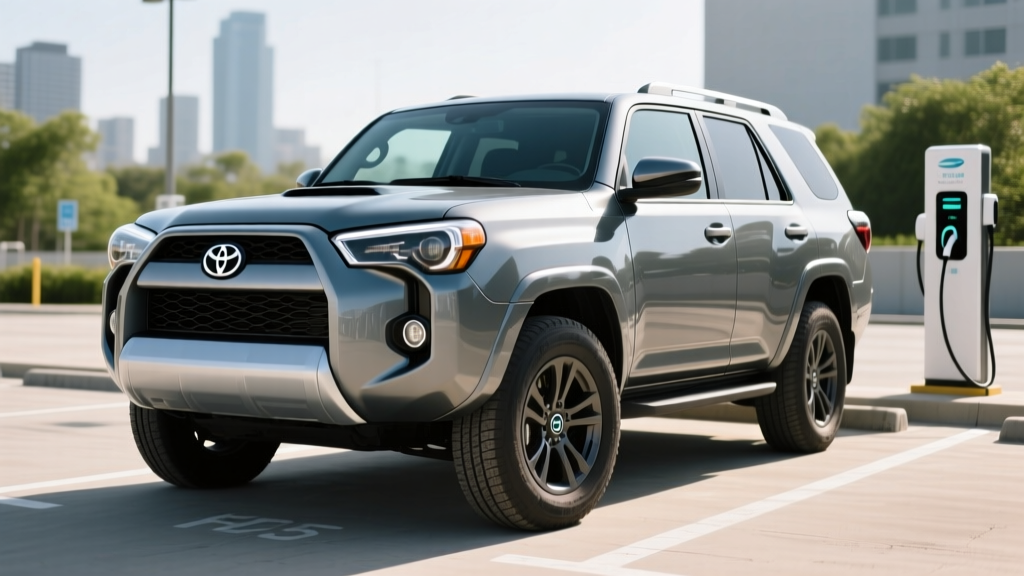
The sixth-generation Toyota 4Runner finally arrived with a turbocharged powertrain and, for the first time, a hybrid option. The i-FORCE MAX hybrid pairs a 2.4-liter turbocharged four-cylinder with an electric motor integrated into the transmission housing, delivering V6-rivaling power with meaningfully better fuel economy. For buyers researching 4Runner hybrid MPG, the numbers represent a substantial leap over the outgoing 4.0L V6 — and they position this midsize SUV as one of the more efficient body-on-frame options on the market.
| Drivetrain | City MPG | Highway MPG | Combined MPG |
|---|---|---|---|
| Rear-Wheel Drive (RWD) | 23 | 27 | 24 |
| Four-Wheel Drive (4WD) | 22 | 26 | 23 |
For context, the previous-generation 4Runner with its 4.0L V6 returned just 16 city / 19 highway / 17 combined. The i-FORCE MAX hybrid nearly doubles city efficiency and delivers a 35–40% improvement in combined fuel economy. That's not incremental — it's transformational for a vehicle this capable.
Source: EPA Fuel Economy (fueleconomy.gov)
Real-World MPG vs. EPA Estimates: What Owners Actually See
Toyota's hybrid systems tend to perform close to or slightly above EPA estimates in real-world mixed driving, particularly in city and suburban conditions where regenerative braking recovers energy that would otherwise be lost. The i-FORCE MAX is no exception.
In early owner reports and independent testing, 4Runner Hybrid 4WD models have returned 23–25 MPG in combined suburban/highway loops, with city-heavy routes occasionally pushing toward 26–27 MPG thanks to the electric motor's low-speed assistance. Highway-only driving at 75 mph typically yields 24–25 MPG — slightly below the EPA highway estimate but respectable for a 5,000+ pound boxy SUV with the aerodynamic profile of a brick.
EPA Combined: 23 MPG (4WD) / 24 MPG (RWD)
Real-World Combined: 23–26 MPG (mixed driving, temperate conditions)
Highway Only (75 mph): 24–25 MPG
Towing (5,000 lb trailer): Expect 14–16 MPG
Cold Weather City: 20–22 MPG (reduced regen efficiency, cold-start enrichment)
Key factors that will push your mileage toward the lower or higher end of this range:
- Terrain mode and driving style: Aggressive acceleration bypasses the electric motor's efficiency window and leans on the turbo four
- Aftermarket modifications: Larger tires, lift kits, and roof racks each reduce fuel economy by 1–3 MPG
- Payload and towing: The hybrid system recovers energy under braking but can't overcome the physics of hauling 6,000+ lbs up a grade
- Climate: Cold temperatures reduce battery efficiency and increase engine idling for cabin heat
i-FORCE MAX Powertrain: Specs, Horsepower, and How It Works
| Specification | Value |
|---|---|
| Engine | 2.4L turbocharged inline-4 |
| Electric Motor | Integrated between engine and transmission |
| Combined Horsepower | 326 hp |
| Combined Torque | 465 lb-ft |
| Transmission | 8-speed automatic |
| Hybrid Battery | ~1.87 kWh nickel-metal hydride (NiMH) |
| 0–60 mph (est.) | ~6.3 seconds |
| Max Towing Capacity | 6,000 lbs (properly equipped) |
| Fuel Tank | ~19.0 gallons |
| Total Driving Range (est.) | ~437–456 miles |
This is a conventional hybrid (HEV), not a plug-in hybrid. The small battery charges entirely through regenerative braking and engine-driven generation. You never plug it in — it operates exactly like a traditional gas vehicle at the fuel pump, with the hybrid system working invisibly in the background to optimize efficiency.
The electric motor fills the torque gap at low RPMs where the turbo four is still spooling, delivering 465 lb-ft of combined torque from very low in the rev range. This is 104 lb-ft more than the previous V6 and arrives much sooner, making the hybrid feel significantly more responsive in daily driving and off-road crawling alike.
HEV vs. PHEV vs. Full EV: Which Powertrain Fits Your Life?
The 4Runner Hybrid is a conventional HEV. Toyota does not currently offer the 4Runner as a plug-in hybrid (PHEV) or battery-electric vehicle (BEV). Here's how the three powertrain types compare for midsize SUV buyers:
Conventional Hybrid (HEV)
Example: 4Runner i-FORCE MAX
Plug in? No
Electric-only range: None (motor assists only)
Battery: ~1–2 kWh
Best for: Drivers who want better MPG without changing any habits. No home charging needed.
Plug-In Hybrid (PHEV)
Example: Toyota RAV4 Prime
Plug in? Yes (Level 1 or 2)
Electric-only range: 20–42 miles typical
Battery: 13–18 kWh
Best for: Drivers with home charging and short commutes who want EV daily driving with gas backup for road trips.
Battery Electric (BEV)
Example: Rivian R1S, Tesla Model X
Plug in? Yes (Level 2 + DC fast)
Electric-only range: 250–400+ miles
Battery: 75–150 kWh
Best for: Drivers with reliable charging access who want zero tailpipe emissions and lowest per-mile energy cost.
- You don't have access to home or workplace charging
- You tow regularly and need proven body-on-frame durability
- You want better fuel economy without any behavior change
- Off-road capability (TRD Pro, Trailhunter trims) is a priority
- You have Level 2 home charging and a commute under 30 miles
- You want electric-only daily driving to minimize fuel costs
- You qualify for the full §30D federal tax credit on a PHEV/BEV
Pricing, Trims, and Tax Credit Eligibility
The 2026 Toyota 4Runner Hybrid (i-FORCE MAX) is available across multiple trim levels. Pricing has climbed with the generational redesign, but the hybrid powertrain is offered on several trims rather than being locked to the top of the range:
| Trim | Approx. MSRP | Hybrid Standard? |
|---|---|---|
| TRD Off-Road Hybrid | ~$52,000 | Yes (i-FORCE MAX) |
| Limited Hybrid | ~$56,000 | Yes (i-FORCE MAX) |
| TRD Pro Hybrid | ~$60,000 | Yes (i-FORCE MAX) |
| Trailhunter Hybrid | ~$58,000 | Yes (i-FORCE MAX) |
Note: MSRPs are approximate and subject to change. Verify current pricing on Toyota's official site.
Federal Tax Credit: Does the 4Runner Hybrid Qualify?
Under current IRS §30D rules, the conventional hybrid 4Runner does NOT qualify for the federal clean vehicle tax credit. The §30D credit of up to $7,500 is reserved for plug-in hybrid electric vehicles (PHEVs) and battery electric vehicles (BEVs) that meet specific battery capacity, critical mineral sourcing, MSRP cap, and buyer income requirements.
- Vehicle must be a PHEV or BEV (conventional HEVs excluded)
- Battery capacity ≥ 7 kWh
- MSRP cap: $80,000 (SUVs/pickups) or $55,000 (sedans)
- Buyer AGI cap: $300K (joint), $225K (head of household), $150K (single)
- Critical mineral and battery component sourcing requirements
- Final assembly in North America
- Point-of-sale transfer available at participating dealers
Source: IRS.gov — Clean Vehicle Credits
While the 4Runner Hybrid won't reduce your tax burden through §30D, some states offer rebates or reduced registration fees for hybrid vehicles. Check your state energy office or the Alternative Fuels Data Center for local incentives.
Hybrid Battery Warranty, Reliability, and Replacement Cost
Hybrid Battery: 10 years / 150,000 miles (whichever comes first)
Powertrain: 5 years / 60,000 miles
Hybrid System Components: 8 years / 100,000 miles
Basic Bumper-to-Bumper: 3 years / 36,000 miles
Toyota has built an enviable reputation for hybrid battery longevity. The company's NiMH hybrid batteries, refined over 25+ years since the original Prius, routinely last 150,000–200,000+ miles before significant degradation. The 10-year/150,000-mile hybrid battery warranty reflects Toyota's confidence in this chemistry.
Battery Replacement Cost
If the hybrid battery does fail outside of warranty, replacement costs for Toyota's midsize SUV hybrid systems typically range from $3,000 to $5,000 (parts and labor) at a dealership. Independent hybrid specialists often offer refurbished or reconditioned battery packs for $1,500–$3,000. Given the small ~1.87 kWh capacity of the i-FORCE MAX pack (compared to a 75+ kWh BEV battery costing $15,000–$25,000 to replace), hybrid battery replacement is a manageable expense — and one most owners will never face.
Reliability Outlook
The i-FORCE MAX powertrain shares architecture with the Tacoma Hybrid and Grand Highlander Hybrid, both of which have shown strong early reliability. The 2.4L turbo four-cylinder is a simpler design than the outgoing V6, and Toyota's hybrid synergy drive system has proven extraordinarily durable across millions of vehicles. The primary reliability question mark is the turbocharger long-term, but Toyota's conservative boost targets suggest a design prioritizing longevity over peak output.
✓ Pros
- 35–40% better MPG than previous V6 4Runner
- 465 lb-ft torque — strongest 4Runner ever
- No plug-in required — zero behavior change
- 10-year/150,000-mile hybrid battery warranty
- 6,000-lb towing capacity maintained
- Full off-road capability (TRD Pro, Trailhunter)
- Proven Toyota hybrid reliability track record
✗ Cons
- No federal tax credit (conventional HEV)
- Starting MSRP ~$52K+ for hybrid trims
- Still modest MPG vs. car-based crossover hybrids
- Turbo four lacks the smoothness of the old V6 at high RPM
- Boxy shape limits highway MPG to mid-20s
- No PHEV or EV-only option in the lineup
5-Year Cost of Ownership: 4Runner Hybrid vs. Gas 4Runner
The hybrid's fuel savings are the clearest ownership advantage. Here's a simplified 5-year/75,000-mile comparison between the i-FORCE MAX Hybrid (23 MPG combined) and the turbo gas i-FORCE (21 MPG combined), assuming $3.50/gallon regular unleaded:
| Powertrain | Combined MPG | Gallons Used | Fuel Cost (@ $3.50/gal) |
|---|---|---|---|
| i-FORCE MAX Hybrid (4WD) | 23 | 3,261 | $11,413 |
| i-FORCE Gas (4WD) | 21 | 3,571 | $12,499 |
| 5-Year Fuel Savings (Hybrid) | ~$1,086 | ||
The fuel savings alone won't offset the hybrid's price premium. But combined with stronger resale value (Toyota hybrids historically command premiums on the used market), lower brake wear (regenerative braking extends pad life by 30–50%), and the satisfaction of fewer fill-ups, the hybrid makes financial sense for long-term owners who plan to keep the vehicle 8–10+ years.
Frequently Asked Questions
How many MPG does the 2026 Toyota 4Runner Hybrid get?
The 2026 4Runner Hybrid (i-FORCE MAX) is EPA-rated at 23 MPG combined for 4WD models (22 city / 26 highway) and 24 MPG combined for RWD models (23 city / 27 highway). Real-world mixed driving typically yields 23–26 MPG depending on conditions, driving style, and modifications.
Do I need to plug in the 4Runner Hybrid?
No. The 4Runner i-FORCE MAX is a conventional hybrid (HEV), not a plug-in hybrid (PHEV). The small hybrid battery charges through regenerative braking and the gasoline engine. You refuel only at gas stations, exactly like a conventional vehicle.
Does the 4Runner Hybrid qualify for any federal tax credit?
No. Under IRS §30D rules, only plug-in hybrid (PHEV) and battery electric (BEV) vehicles qualify for the federal clean vehicle tax credit of up to $7,500. The 4Runner Hybrid is a conventional HEV and is not eligible. Some states may offer separate hybrid incentives — check your local programs.
Is the 4Runner Hybrid reliable? What about battery replacement?
Toyota's hybrid systems have an exceptional reliability track record spanning 25+ years. The hybrid battery is covered by a 10-year/150,000-mile warranty. Out-of-pocket replacement, if ever needed, typically costs $3,000–$5,000 at a dealer — far less than a full EV battery replacement. Most Toyota hybrid batteries last well beyond 150,000 miles.
How does the 4Runner Hybrid compare to the non-hybrid for towing?
The i-FORCE MAX Hybrid produces 326 hp and 465 lb-ft of torque — substantially more torque than the gas-only i-FORCE. Both are rated for up to 6,000 lbs of towing (properly equipped). The hybrid's extra low-end torque makes it feel more confident when pulling away from a stop with a heavy trailer, though expect fuel economy to drop to 14–16 MPG while towing.
Why isn't there a 4Runner PHEV or full electric version?
Toyota has prioritized conventional hybrid technology for the body-on-frame 4Runner platform, balancing off-road durability, towing capacity, and efficiency without requiring charging infrastructure. A PHEV or BEV 4Runner would require a significantly larger battery pack (adding weight and complexity to an off-road platform) and may arrive in future model years as battery technology and charging infrastructure evolve.
What's the total driving range on a full tank?
With an approximately 19-gallon fuel tank and 23 MPG combined (4WD), the 4Runner Hybrid delivers an estimated 437 miles of total range. RWD models with 24 MPG combined can stretch to roughly 456 miles. This is a meaningful improvement over the previous-generation V6, which managed roughly 300 miles per tank.