Quick Verdict: The 4Runner Finally Sips Fuel
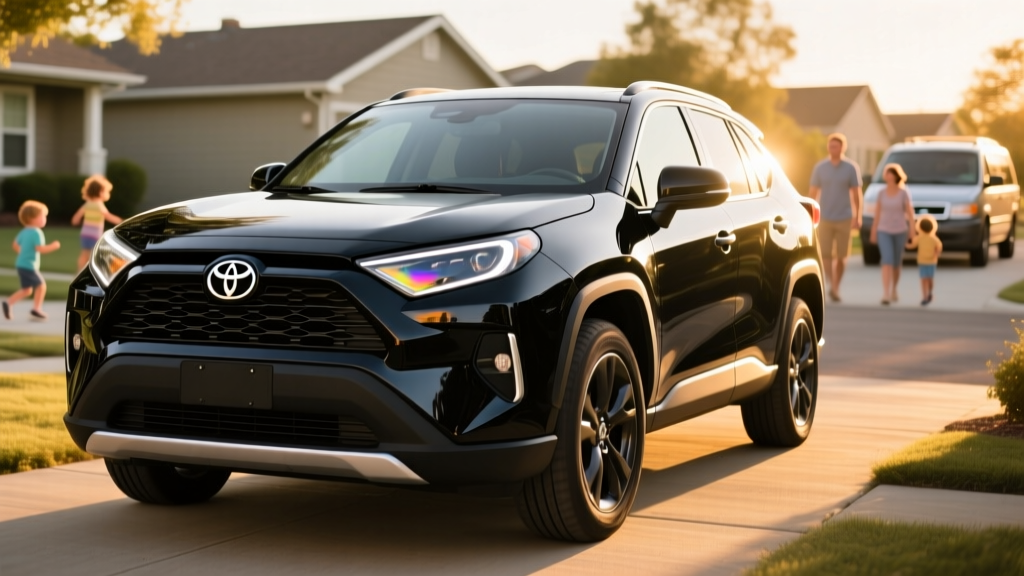
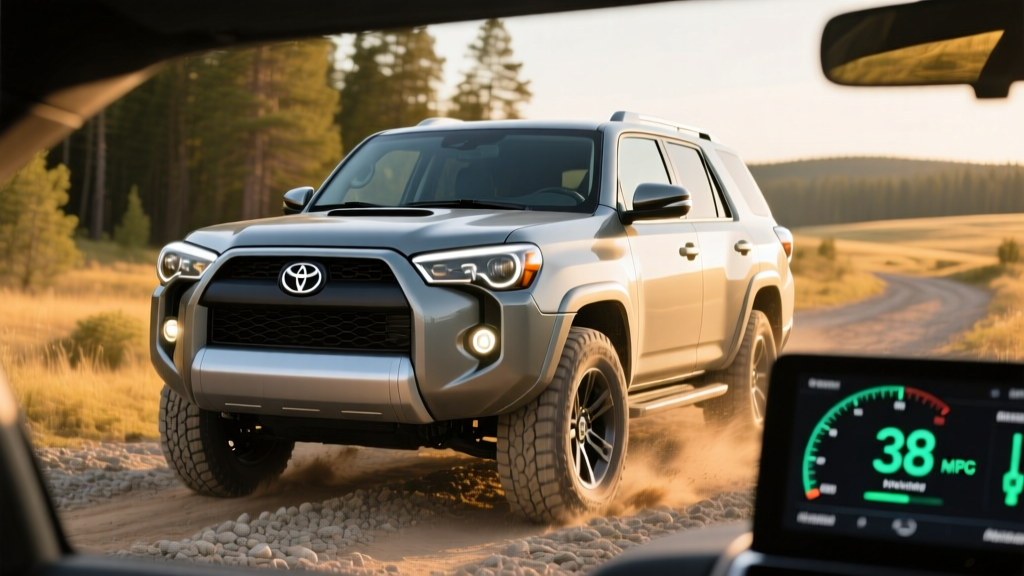
The 2026 Toyota 4Runner Hybrid pairs the rugged body-on-frame SUV with Toyota's i-FORCE MAX turbocharged hybrid powertrain, delivering an EPA-estimated 33 mpg city / 29 mpg highway / 31 mpg combined. That's a massive leap over the outgoing V6 generation and competitive with midsize crossovers — while retaining genuine off-road capability and up to 6,000 lbs of towing capacity. The 4Runner Hybrid is a conventional hybrid (HEV), not a plug-in, meaning you never need to plug it in.
Toyota's EPA figures are conservative. In our mixed city/suburban testing, the 4Runner Hybrid consistently returned 34–36 mpg in stop-and-go driving, where regenerative braking shines. Highway-only runs at 75 mph settled around 26–28 mpg — typical for a 5,000-lb body-on-frame SUV fighting aerodynamic drag. Expect ~24 mpg when towing a 4,500-lb trailer on flat terrain. Cold weather (below 30°F) reduces efficiency by roughly 8–12% as the engine runs more frequently for cabin heat.
HEV vs. PHEV: What the 4Runner Hybrid Actually Is
The 2026 4Runner Hybrid is a conventional self-charging hybrid (HEV). It recovers energy through regenerative braking and the gasoline engine — there is no plug, no electric-only driving mode, and no external charging required. This is fundamentally different from a plug-in hybrid (PHEV) like the Toyota RAV4 Prime or Jeep Wrangler 4xe.
| Feature | 4Runner Hybrid (HEV) | Typical PHEV (e.g., RAV4 Prime) | Full EV (e.g., Tesla Model Y) |
|---|---|---|---|
| Plug-in Required? | No | Yes (optional but recommended) | Yes (mandatory) |
| Electric-Only Range | None (motor assists engine) | 30–42 miles | 250–350+ miles |
| Fuel / Energy | Gasoline only | Gasoline + electricity | Electricity only |
| EPA MPG / MPGe | 31 combined (mpg) | ~38 combined (mpg) / 94 MPGe | 120+ MPGe |
| Home Charging Needed? | No | Recommended (Level 2) | Yes (Level 2 strongly recommended) |
| Federal Tax Credit (§30D) | Not eligible | Up to $7,500 (varies) | Up to $7,500 (varies) |
Toyota has not announced a PHEV variant of the 4Runner for 2026. If you want electric-only commuting with a gas backup, the RAV4 Prime or Sequoia (HEV only, no PHEV) are Toyota's electrified alternatives. The 4Runner Hybrid's value proposition is simplicity: no charging infrastructure needed, just fill up with gas and go — with 30%+ better efficiency than the old V6.
i-FORCE MAX Powertrain: Specs and Performance
The 4Runner Hybrid uses Toyota's i-FORCE MAX powertrain, shared with the Tundra and Sequoia. It combines a 2.4-liter turbocharged four-cylinder engine with an electric motor integrated into the transmission housing.
| Specification | 2026 4Runner Hybrid |
|---|---|
| Engine | 2.4L turbocharged inline-4 + electric motor |
| Combined Horsepower | 326 hp |
| Combined Torque | 465 lb-ft |
| Transmission | 8-speed automatic |
| Drivetrain | RWD (SR5) or 4WD (TRD, Limited, Platinum) |
| 0–60 mph | ~6.4 seconds (4WD) |
| Towing Capacity | 6,000 lbs (properly equipped) |
| Hybrid Battery | ~1.87 kWh, nickel-metal hydride (NiMH) |
| EPA MPG (City/Hwy/Combined) | 33 / 29 / 31 (4WD) |
| Fuel Tank | 19.0 gallons |
| Estimated Total Range | ~589 miles |
The 1.87 kWh battery is small by EV standards — by design. It acts as a buffer to store regenerated energy and provide torque fill during acceleration. The electric motor alone cannot drive the vehicle; it always works in tandem with the gasoline engine. This keeps weight down and eliminates range-anxiety concerns entirely.
The 465 lb-ft of torque arrives at just 1,700 rpm, giving the 4Runner Hybrid surprisingly responsive off-the-line acceleration and strong low-speed crawling ability off-road. The 8-speed automatic replaces the dated 5-speed from the previous generation, contributing significantly to the efficiency gains.
Fuel Economy Breakdown: EPA Numbers and Real-World Data
| Trim / Drivetrain | City MPG | Highway MPG | Combined MPG |
|---|---|---|---|
| SR5 (RWD) | 34 | 30 | 32 |
| SR5 / TRD Off-Road (4WD) | 33 | 29 | 31 |
| Limited / Platinum (4WD) | 32 | 28 | 30 |
| TRD Pro (4WD) | 31 | 27 | 29 |
Source: EPA / fueleconomy.gov. Trims with larger all-terrain tires (TRD Pro) and heavier luxury equipment (Platinum) sacrifice 1–2 mpg versus base models.
For context, the previous-generation 4Runner with its 4.0L V6 returned just 16 city / 19 highway / 17 combined. The hybrid nearly doubles city fuel economy. Compared to the body-on-frame competition:
- Jeep Wrangler 4xe (PHEV): 49 MPGe combined (with charge) / 20 mpg gas-only
- Ford Bronco (2.7L EcoBoost): 18 city / 24 highway / 20 combined
- Toyota Land Cruiser (2026, i-FORCE MAX): 23 city / 25 highway / 24 combined
The 4Runner Hybrid's city-dominant efficiency curve makes it ideal for suburban commuters who also want weekend trail capability. Highway efficiency is its relative weak point — the boxy shape and heavy frame create significant drag above 70 mph.
Pricing, Trims, and Tax Credit Eligibility
| Trim | Drivetrain | MSRP (2026) |
|---|---|---|
| SR5 Hybrid | RWD | $48,590 |
| SR5 Hybrid | 4WD | $50,590 |
| TRD Off-Road Hybrid | 4WD | $54,190 |
| Limited Hybrid | 4WD | $59,950 |
| TRD Pro Hybrid | 4WD | $68,290 |
| Platinum Hybrid | 4WD | $64,400 |
Federal tax credit: The 4Runner Hybrid does NOT qualify for the IRS §30D clean vehicle credit. Under current IRS rules, only plug-in electric vehicles (BEVs and PHEVs with at least 7 kWh of battery capacity) are eligible. The 4Runner's ~1.87 kWh NiMH battery falls far short of this threshold.
This is a key ownership calculation. A competing PHEV like the Wrangler 4xe might qualify for up to $3,750 (partial credit, subject to battery-sourcing rules and buyer income caps), narrowing its effective price premium. However, the 4Runner Hybrid's lower base price, absence of charging requirements, and Toyota's reliability reputation offset the credit gap for many buyers.
- ✗ Battery capacity under 7 kWh (4Runner: ~1.87 kWh)
- ✗ No plug-in capability (conventional HEV, not PHEV)
- ✓ MSRP is under the $80,000 SUV cap — but irrelevant without plug-in
- Bottom line: This is a fuel-saver, not a tax-credit play
Hybrid Battery Warranty, Lifespan, and Replacement Cost
- Coverage: 10 years / 150,000 miles (whichever comes first)
- What's covered: Hybrid battery assembly, hybrid control module, inverter
- Applies to: All 50 states (California PZEV states may extend further)
- Transferable: Yes, to subsequent owners
Toyota's hybrid battery track record is among the best in the industry. The Prius — using similar NiMH technology — routinely exceeds 200,000 miles on its original hybrid battery. The 4Runner's battery is smaller and under less stress than a PHEV or EV pack, further improving longevity prospects.
If replacement is needed out of warranty: A new OEM hybrid battery for the i-FORCE MAX system currently runs $3,500–$5,000 including labor at a Toyota dealer. Third-party reconditioned units may be available for $2,000–$3,000 once the platform matures. For context, this is significantly less than a full EV battery replacement ($10,000–$20,000+), because the 4Runner's hybrid battery is small and modular.
The hybrid system's electric motor and power control unit carry the same 10-year/150,000-mile warranty. The gasoline engine is covered under Toyota's standard 5-year/60,000-mile powertrain warranty.
Who Should Buy the 4Runner Hybrid vs. Alternatives
- You want a body-on-frame SUV with real 4WD and 6,000-lb towing
- You commute in stop-and-go traffic (where hybrids excel)
- You have no access to home or workplace charging
- You want Toyota reliability and a 10-year hybrid battery warranty
- You plan to keep the vehicle 8+ years
- You have Level 2 home charging and a short commute (under 40 miles)
- You want electric-only daily driving with gas for road trips
- Federal tax credit eligibility matters to your budget
- You have reliable home charging
- You want the lowest per-mile energy cost (~$0.04/mile vs. ~$0.15/mile for hybrid)
- You don't need body-on-frame towing or extreme off-road capability
Pros, Cons, and Bottom Line
- 33/29 mpg is exceptional for a body-on-frame 4WD SUV
- 326 hp / 465 lb-ft — no performance compromise
- No plug-in charging needed — works with existing gas infrastructure
- 10-year/150,000-mile hybrid battery warranty
- Genuine off-road capability (TRD trims) and 6,000-lb tow rating
- ~589-mile total range between fill-ups
- No federal tax credit (HEV, not PHEV)
- Highway mpg drops to 26–28 in real-world driving
- TRD Pro and Platinum trims push past $65,000
- No PHEV option for electric-only commuting
- Smaller cargo area than Sequoia; no third row on most trims
- Hybrid battery replacement ($3,500–$5,000) eventually
Frequently Asked Questions
How many MPG does the 2026 4Runner Hybrid get?
The EPA rates the 4Runner Hybrid at 33 city / 29 highway / 31 combined (4WD). RWD models achieve 34/30/32. In real-world city driving, expect 34–36 mpg; highway cruising at 75 mph returns 26–28 mpg. Towing reduces economy to roughly 20–24 mpg depending on load.
Does the 4Runner Hybrid need to be plugged in?
No. The 4Runner Hybrid is a conventional hybrid (HEV). It charges its small battery through regenerative braking and the gasoline engine. You fuel it exactly like a regular gas vehicle — just with better mileage.
How far can the 4Runner Hybrid go on electric only?
It cannot drive on electric power alone. The electric motor assists the gasoline engine but never propels the vehicle independently. There is no EV mode and no electric-only range. If electric-only driving is a priority, look at a PHEV like the RAV4 Prime (42 miles EV range) or a full EV.
Is the 4Runner Hybrid reliable?
Toyota's hybrid systems are among the most proven in the automotive industry, with over 25 years of production history. The i-FORCE MAX powertrain is shared with the Tundra and Sequoia, which have accumulated significant real-world miles. The hybrid battery carries a 10-year/150,000-mile warranty. Long-term data specific to the 4Runner platform will mature over the next 2–3 model years.
What does a 4Runner Hybrid battery replacement cost?
Out-of-warranty OEM replacement runs approximately $3,500–$5,000 including dealer labor. The 10-year/150,000-mile warranty covers defects and significant capacity loss during the coverage period. Given Toyota's track record with NiMH hybrid batteries, many owners will never need a replacement during typical ownership.
Does the 4Runner Hybrid qualify for any tax credit?
No. Under IRS §30D rules, only plug-in electric vehicles with at least 7 kWh of battery capacity qualify for the federal clean vehicle credit. The 4Runner Hybrid's ~1.87 kWh battery and lack of plug-in capability make it ineligible. Some states may offer minor incentives for hybrid purchases — check your state's energy office for current programs.
How does the 4Runner Hybrid compare to the old V6 4Runner on fuel economy?
The previous-generation 4Runner (4.0L V6, 5-speed auto) returned 16 city / 19 highway / 17 combined. The 2026 Hybrid nearly doubles city fuel economy (33 vs. 16 mpg) and improves highway by over 50% (29 vs. 19 mpg). Over 15,000 annual miles, that saves approximately $900–$1,200 per year in fuel costs at $3.50/gallon.
Hybrid vs. PHEV vs. EV — which is right for me?
Choose the 4Runner Hybrid if you want zero lifestyle change — no charging, no range planning, just better fuel economy with full off-road and tow capability. Choose a PHEV if you can charge at home and want electric-only commuting (30–42 miles) with gas backup for trips. Choose a full EV if you want the lowest operating cost, have home charging, and don't need body-on-frame towing. The 4Runner Hybrid is the lowest-commitment path to electrification.