The Short Answer: Tesla Does Not Make a Hybrid Car
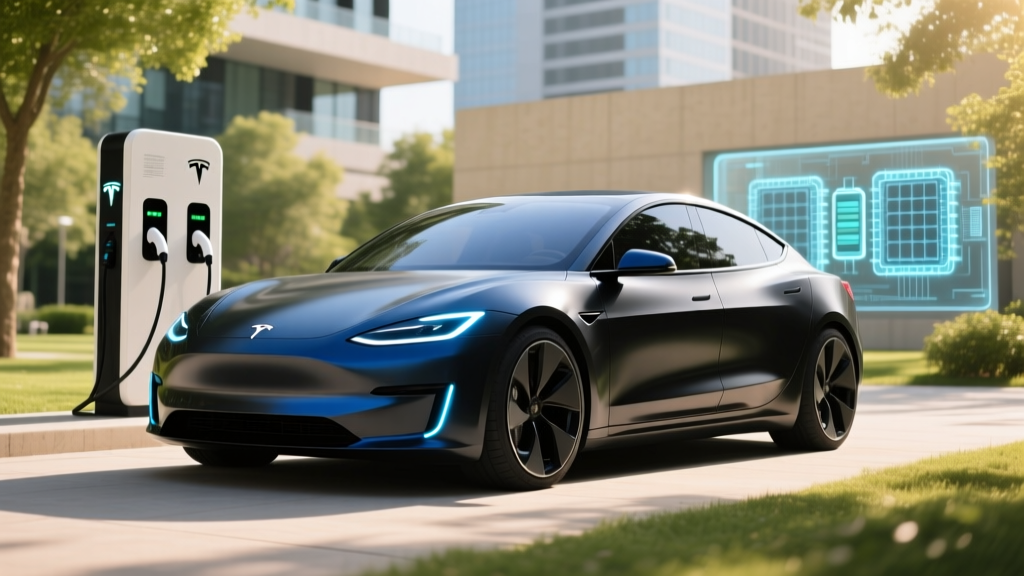
If you've been searching for a Tesla hybrid car, here's the definitive answer: Tesla has never produced a hybrid electric vehicle (HEV) or a plug-in hybrid electric vehicle (PHEV). Every vehicle Tesla has ever sold — from the original Roadster to the current Model 3, Model Y, Model S, Model X, and Cybertruck — is a battery electric vehicle (BEV), powered exclusively by an onboard traction battery and electric motors with zero internal combustion components.
Elon Musk has stated repeatedly that Tesla considers hybrid technology a transitional compromise, not a long-term solution. As of the 2026 model year, that position remains unchanged. There are no announced, rumored, or spy-shot-confirmed Tesla hybrid or PHEV models in any stage of development.
So why do thousands of shoppers search for "Tesla hybrid car" every month? The intent is usually one of three things:
- Range anxiety hedge: Buyers who want Tesla-level tech and efficiency but aren't ready to commit to a full BEV and want a gas backup.
- Charging access limitations: Apartment dwellers or rural drivers who can't install a home Level 2 charger and worry about public charging infrastructure.
- Price sensitivity: Shoppers attracted to Tesla's ~$38,000 starting price for the Model 3 but hoping a hybrid variant might undercut that further.
All three concerns are valid. The good news is that several 2026 PHEVs and HEVs from legacy automakers deliver a compelling mix of electric driving, gas backup, and modern tech — often at prices below Tesla's entry point. Let's break down the landscape.
HEV vs. PHEV vs. BEV: Understanding the Powertrain Options
Before evaluating alternatives, it's critical to understand the three electrified powertrain types. Conflating them is the single most common mistake in hybrid shopping.
| Attribute | HEV (Conventional Hybrid) | PHEV (Plug-In Hybrid) | BEV (Battery Electric — e.g., Tesla) |
|---|---|---|---|
| Plugs in to charge? | No — charges via regenerative braking and engine | Yes — has a charge port (J1772/Level 2, some DC) | Yes — requires charging (Level 1/2/DC fast) |
| Electric-only range | 0–2 miles at very low speed | 20–50+ miles (EPA rated) | 250–400+ miles (EPA rated) |
| Battery size | 0.5–2.0 kWh | 10–30 kWh | 50–120+ kWh |
| Gas engine? | Yes — primary power + battery assist | Yes — backup after battery depletes | No engine at all |
| Federal tax credit (§30D) | No | Up to $7,500 (if battery ≥7 kWh + sourcing rules met) | Up to $7,500 (sourcing + MSRP + income rules) |
| Home charging needed? | No | Strongly recommended for full benefit | Essential for practical ownership |
The key takeaway: a conventional hybrid (HEV) like the Toyota Prius never plugs in. It uses a small battery and electric motor to assist the gas engine, boosting MPG — especially in city driving where regenerative braking recovers energy. A plug-in hybrid (PHEV) like the Toyota RAV4 Prime has a larger battery you charge at home, giving you 30–42 miles of pure electric driving before the gas engine kicks in. Both differ fundamentally from a Tesla BEV, which has no engine whatsoever.
Best PHEV Alternatives to a "Tesla Hybrid" in 2026
If you want Tesla-adjacent tech — a large touchscreen, strong acceleration, over-the-air updates, and meaningful electric-only range — but need a gas engine for road-trip security, these 2026 PHEVs are the closest functional equivalents to what a "Tesla hybrid car" would be.
Toyota RAV4 Prime (PHEV)
The RAV4 Prime remains the benchmark PHEV SUV. Its 18.1 kWh battery delivers an EPA-rated 42 miles of electric-only range, and the combined 302-horsepower powertrain (2.5L four-cylinder + front and rear electric motors) hits 0–60 mph in approximately 5.7 seconds — genuinely quick for a compact SUV. Once the battery depletes, it operates as a conventional hybrid returning an EPA-estimated 38 MPG combined (94 MPGe when factoring in electric driving). All-wheel drive is standard via the rear electric motor.
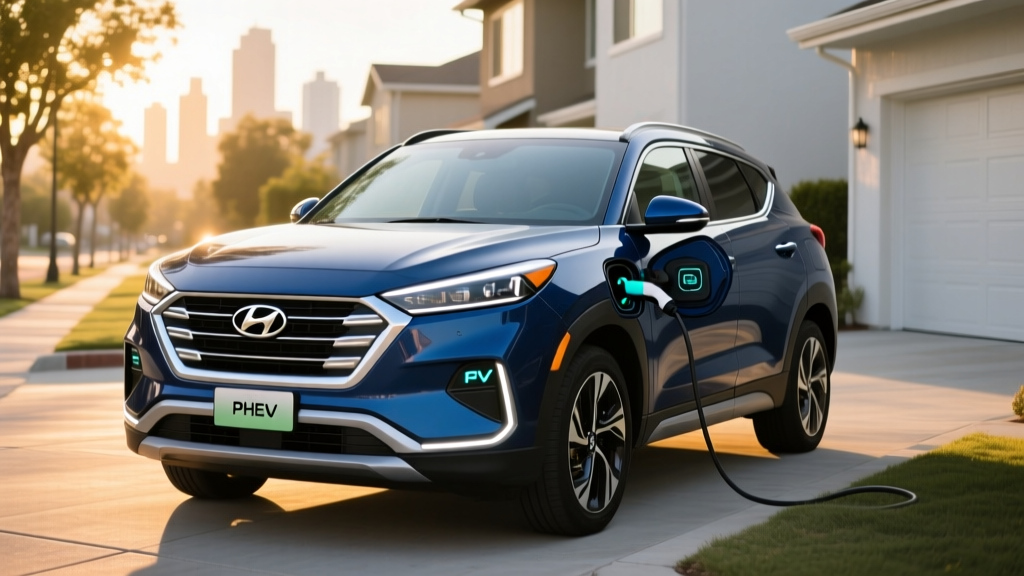
Hyundai Tucson PHEV
Hyundai's Tucson PHEV pairs a 1.6L turbocharged four-cylinder with a 72-kW electric motor and a 13.8 kWh battery for an EPA-rated 33 miles of electric-only driving. Combined output is 261 horsepower. After battery depletion, it returns approximately 35 MPG combined as a hybrid. The Tucson PHEV supports Level 2 AC charging (7.2 kW onboard charger) but does not support DC fast charging — typical for PHEVs in this class. A full Level 2 charge takes roughly 2 hours.
Chrysler Pacifica PHEV (Minivan)
For families needing three rows and a sliding door, the Pacifica PHEV offers an EPA-rated 32 miles of electric-only range from its 16 kWh battery. Combined system output is 260 horsepower. Once the battery is depleted, it achieves approximately 30 MPG combined. It's one of the few PHEVs that has historically qualified for the full $7,500 federal tax credit under §30D, though 2026 eligibility depends on updated battery-sourcing requirements — always verify on IRS.gov before purchasing.
BMW X5 xDrive50e (Luxury PHEV)
If you're cross-shopping a Model X or Model S and want a plug-in hybrid, the BMW X5 xDrive50e is the premium segment standout. Its 25.7 kWh battery (usable ~22 kWh) delivers an EPA-rated 38 miles of electric-only range. The turbocharged inline-six and electric motor combine for 483 horsepower and a 0–60 time of 4.6 seconds. After depletion, it returns roughly 27 MPG combined. It supports Level 2 charging at 7.4 kW but no DC fast charging. Base MSRP sits around $75,000 — well above the $80,000 SUV cap for the §30D credit, so federal incentive eligibility is unlikely.
Best Conventional Hybrids (HEV) If You Don't Want to Plug In
If home charging is impossible and you simply want maximum fuel economy with zero lifestyle change, a conventional hybrid is the right call. These vehicles never plug in — you just fuel up at any gas station and enjoy dramatically improved MPG.
| Model (2026) | EPA City | EPA Highway | EPA Combined | Combined HP | Base MSRP (approx.) |
|---|---|---|---|---|---|
| Toyota Prius | 57 MPG | 56 MPG | 57 MPG | 196 HP | $29,500 |
| Toyota Prius AWD-e | 53 MPG | 54 MPG | 54 MPG | 196 HP | $31,000 |
| Honda Accord Hybrid | 51 MPG | 44 MPG | 48 MPG | 204 HP | $34,000 |
| Toyota Camry Hybrid | 53 MPG | 50 MPG | 52 MPG | 225 HP | $30,500 |
| Hyundai Sonata Hybrid | 50 MPG | 54 MPG | 52 MPG | 192 HP | $31,500 |
| Toyota RAV4 Hybrid | 41 MPG | 38 MPG | 40 MPG | 219 HP | $34,500 |
Real-world MPG note: Conventional hybrids frequently exceed their EPA city estimates in stop-and-go traffic because regenerative braking recovers more energy at low speeds. On the highway, however, expect MPG to fall 3–6 MPG below the EPA sticker due to aerodynamic drag and the reduced benefit of regen at sustained speed. In our experience, a Prius rated at 57 MPG combined will easily return 60+ MPG in urban commuting but may drop to 48–50 MPG on a 75-mph interstate run.
Tax Credits: Do Hybrids and PHEVs Qualify?
This is where the distinction between HEV and PHEV matters enormously.
Federal §30D Clean Vehicle Credit — Hybrid Eligibility Summary:
- Conventional hybrids (HEV): Do NOT qualify. The §30D credit requires a battery capacity of at least 7 kWh and plug-in charging capability. The Toyota Prius HEV, Camry Hybrid, and RAV4 Hybrid are ineligible.
- Plug-in hybrids (PHEV): MAY qualify for up to $7,500, but must meet all of the following 2026 requirements: battery ≥7 kWh, vehicle assembled in North America, MSRP ≤$55,000 (sedans) or ≤$80,000 (SUVs/vans/trucks), buyer income ≤$150,000 (single) / $300,000 (joint), and battery critical-mineral + component sourcing thresholds. The credit can be transferred to the dealer at point of sale as an upfront discount.
- Battery electric vehicles (BEV, e.g., Tesla Model 3): Same §30D rules apply. Tesla Model 3 Rear-Wheel Drive at ~$38,990 may qualify for partial or full credit depending on the buyer's income and current battery-sourcing compliance. Always verify at fueleconomy.gov for the specific VIN.
Source: IRS Clean Vehicle Tax Credits. Rules are subject to change — consult a tax professional for your specific situation.
In practice, the Toyota RAV4 Prime (MSRP ~$44,500, assembled in Japan) does not qualify for the §30D credit due to the North American assembly requirement. The Chrysler Pacifica PHEV (assembled in Canada, MSRP ~$51,000) has historically qualified, but 2026 critical-mineral sourcing thresholds must be confirmed per VIN. The Hyundai Tucson PHEV (assembled in South Korea) is also excluded from §30D due to the assembly requirement. This is a significant financial consideration — a Tesla Model 3 built in California may net a $7,500 point-of-sale credit that no imported PHEV can match.
Reliability, Battery Lifespan, and Replacement Costs
Hybrid battery longevity is consistently the top concern among first-time hybrid buyers. Here's what the data shows:
Battery warranty: Federal law mandates that all hybrid and PHEV battery packs carry a minimum warranty of 8 years / 100,000 miles. In California Air Resources Board (CARB) states — which include California, New York, Massachusetts, Oregon, Washington, and several others — that warranty extends to 10 years / 150,000 miles. Toyota, Honda, and Hyundai all honor these minimums, and some offer longer coverage.
Real-world degradation: Nickel-metal hydride (NiMH) batteries in conventional hybrids like the Prius have a two-decade track record. Data from fleet operators and owner surveys indicates most Prius hybrid batteries retain sufficient capacity to 150,000–200,000 miles before needing replacement. PHEV lithium-ion packs (larger, more cycles) show modest degradation of 8–15% over 100,000 miles based on early data from the RAV4 Prime and Pacifica PHEV cohorts.
Replacement cost: A Toyota Prius hybrid battery replacement runs $2,000–$4,000 (parts and labor) at a dealership, with refurbished units available for $1,000–$2,000 from independent shops. PHEV battery replacements are more expensive due to larger capacity: expect $5,000–$9,000 for a RAV4 Prime pack and $6,000–$10,000 for a Pacifica PHEV pack. For context, a Tesla Model 3 battery replacement out of warranty is estimated at $12,000–$16,000, though Tesla's 8-year/100,000-mile (or 120,000-mile depending on variant) battery warranty covers premature degradation below 70% capacity.
Who Should Buy a Hybrid, PHEV, or Full EV?
Choose a Conventional Hybrid (HEV) If:
- You cannot charge at home (apartment, street parking, no garage)
- You want maximum MPG with zero behavior change
- You drive primarily in city/stop-and-go traffic where regen shines
- You want the lowest possible purchase price in an electrified vehicle
- You plan to keep the car 10+ years and value Toyota/Honda reliability track records
Choose a Plug-In Hybrid (PHEV) If:
- You can install a Level 2 charger at home (240V outlet or hardwired)
- Your daily commute is under 40 miles round-trip (you'll rarely use gas)
- You take regular road trips exceeding 250 miles and don't want to plan charging stops
- You live in a region with sparse DC fast-charging infrastructure
- You want to reduce emissions significantly without full BEV commitment
Choose a Full BEV (e.g., Tesla Model 3/Y) If:
- You have reliable home Level 2 charging access
- Your daily driving is under 250 miles (covers 95%+ of US drivers)
- You want the lowest per-mile fuel cost (~$0.04–$0.06/mile on home electricity vs. ~$0.12–$0.15/mile for gas)
- You want access to Tesla's Supercharger network (17,000+ stalls in North America)
- You want to maximize federal/state tax incentives and eliminate oil changes entirely
Pricing Comparison: Tesla vs. Top Hybrid and PHEV Alternatives
| Vehicle | Type | Base MSRP (2026) | Est. Federal Credit | Effective Price | Combined MPG / MPGe |
|---|---|---|---|---|---|
| Tesla Model 3 RWD | BEV | $38,990 | Up to $7,500* | ~$31,490* | 132 MPGe |
| Toyota Prius LE | HEV | $29,450 | $0 | $29,450 | 57 MPG |
| Toyota RAV4 Prime SE | PHEV | $44,500 | $0 (Japan-built) | $44,500 | 94 MPGe / 38 MPG |
| Chrysler Pacifica PHEV | PHEV | $51,000 | Up to $7,500* | ~$43,500* | 82 MPGe / 30 MPG |
| Hyundai Tucson PHEV | PHEV | $39,500 | $0 (Korea-built) | $39,500 | 80 MPGe / 35 MPG |
| Toyota Camry Hybrid LE | HEV | $30,500 | $0 | $30,500 | 52 MPG |
*Tax credit eligibility depends on buyer income, battery sourcing, MSRP caps, and VIN-specific compliance. Verify at fueleconomy.gov and IRS.gov before purchasing. Point-of-sale transfer available at participating dealers.
The table reveals an important reality: a Tesla Model 3 with the full $7,500 credit can be cheaper than a RAV4 Prime that doesn't qualify. However, the Prius HEV undercuts everything at under $30,000 with no credit needed, and it never requires plugging in.
Frequently Asked Questions
Will Tesla ever make a hybrid car?
There is no indication that Tesla plans to produce a hybrid or PHEV. The company's entire manufacturing infrastructure, Supercharger network, software stack, and brand identity are built around pure battery-electric vehicles. Elon Musk has publicly dismissed hybrids as a "transitional" technology. As of 2026, Tesla's roadmap focuses on the next-generation affordable platform, expanded Cybertruck production, and the Semi — all fully electric.
How many MPG does the best Toyota hybrid get?
The 2026 Toyota Prius LE achieves an EPA-estimated 57 MPG combined (57 city / 56 highway). In real-world city driving with frequent stops, many owners report 60+ MPG thanks to aggressive regenerative braking. Highway-only driving at 75+ mph typically yields 48–52 MPG. The Prius AWD-e drops slightly to 54 MPG combined due to the rear motor's weight and drag.
How far can a PHEV go on electric only?
Electric-only range varies by model. The Toyota RAV4 Prime leads the compact SUV segment at 42 EPA-rated miles. The BMW X5 xDrive50e delivers 38 miles. The Hyundai Tucson PHEV provides 33 miles. The Chrysler Pacifica PHEV offers 32 miles. For most PHEV owners who charge nightly, this covers 80–90% of daily driving without burning a drop of gasoline. Total combined range (electric + gas) typically exceeds 400–500 miles.
Is a hybrid reliable, and what does battery replacement cost?
Modern hybrids from Toyota, Honda, and Hyundai are among the most reliable vehicles on the road. Toyota's hybrid system has been in continuous production since 1997 (Prius) with well-documented longevity. Hybrid battery packs are warranted for a minimum of 8 years / 100,000 miles federally, and 10 years / 150,000 miles in CARB states. Replacement costs range from $2,000–$4,000 for a conventional hybrid (Prius) to $5,000–$10,000 for a PHEV. Most hybrid batteries last 150,000+ miles before requiring service.
Does any hybrid or PHEV qualify for the $7,500 federal tax credit?
Conventional hybrids (HEV) do not qualify for the §30D Clean Vehicle Credit. Plug-in hybrids (PHEV) may qualify if they meet all requirements: ≥7 kWh battery, North American assembly, MSRP within caps ($55K sedans / $80K SUVs), buyer income limits, and battery-sourcing rules. In 2026, qualifying PHEVs include certain domestic-built models like the Chrysler Pacifica PHEV (confirm per VIN). Many popular PHEVs from Toyota and Hyundai are built overseas and are therefore ineligible. Always check the current eligible vehicle list at fueleconomy.gov.
What's cheaper to own long-term: a Tesla Model 3 or a Toyota Prius?
Over five years and 75,000 miles, the economics depend heavily on your electricity and gas prices, insurance costs, and whether you qualify for the §30D credit. A Tesla Model 3 at ~$0.05/mile (home charging) vs. a Prius at ~$0.10/mile (gas at $3.50/gallon, 57 MPG) saves roughly $3,750 in fuel over 75,000 miles. However, Tesla insurance premiums run 20–40% higher on average, and the Prius's lower purchase price (no credit needed) narrows the gap. If you qualify for the full $7,500 credit on the Model 3, the BEV typically wins on total cost of ownership. If you don't qualify or face high insurance rates, the Prius HEV at $29,450 is arguably the most cost-efficient new car sold in America.
Bottom Line: The "Tesla Hybrid" Doesn't Exist — But Your Best Alternative Is Clear
Tesla does not make and has no plans to make a hybrid car. If you want Tesla-level performance and tech with a gas-engine safety net, the closest 2026 equivalent is the Toyota RAV4 Prime (42 miles electric, 302 HP, AWD) — though it doesn't qualify for the federal credit due to Japanese assembly. If you want the cheapest path to high MPG with zero plug-in hassle, the Toyota Prius at $29,450 and 57 MPG combined is unbeatable. And if you can charge at home and want the lowest operating cost, the Tesla Model 3 — potentially $31,490 after the §30D credit — remains the value benchmark for full electric driving.
The right choice depends on your charging access, daily mileage, road-trip frequency, and tax situation. Use the decision framework above, verify credit eligibility for your specific VIN and income at IRS.gov, and test-drive your top two candidates back to back. The data makes the answer clear — you just need to pick which flavor of electrified driving fits your life.