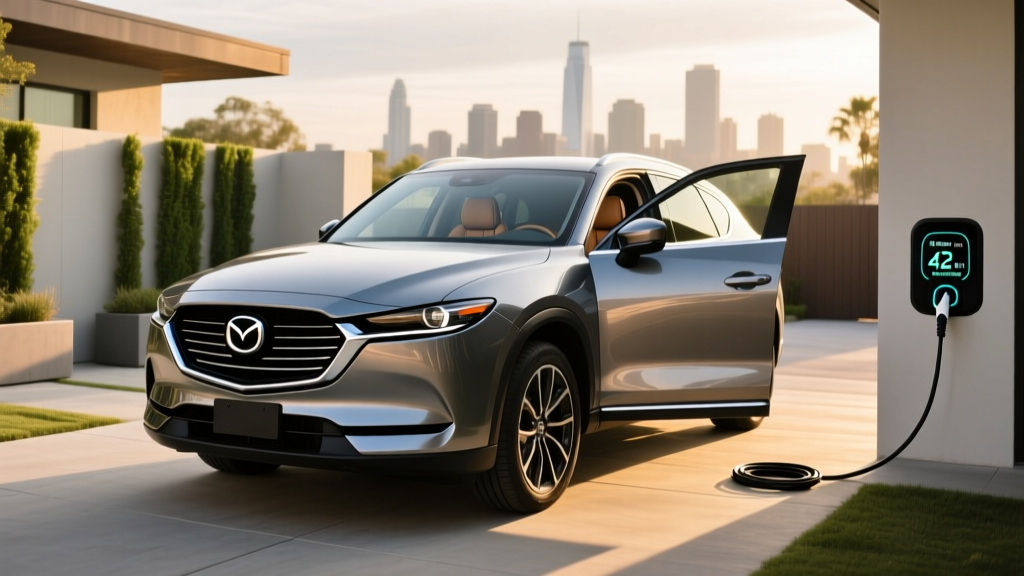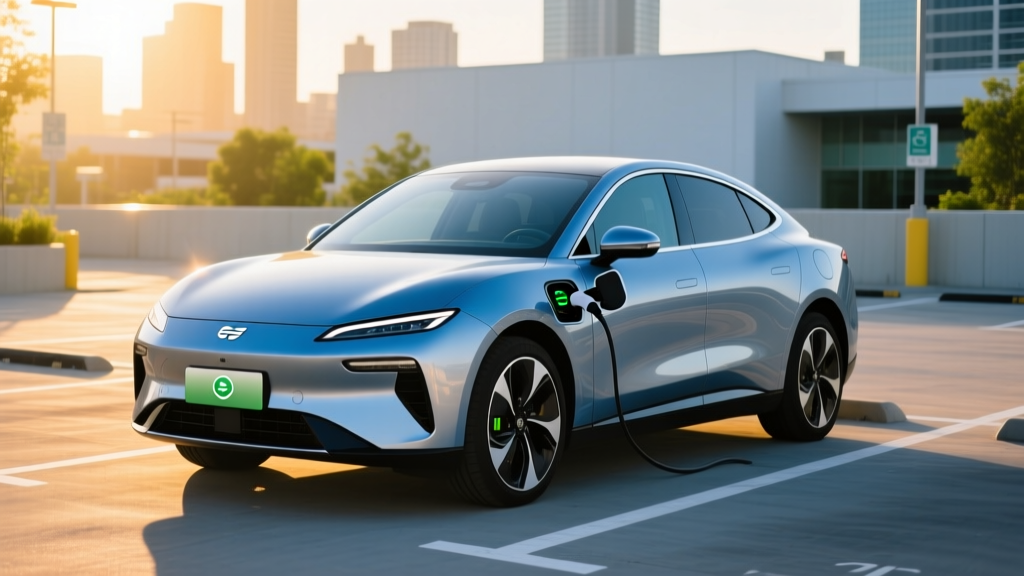
If you've been searching for a tax credit for hybrid cars 2025 or wondering whether that credit carries into the 2026 model year, the short answer is: conventional hybrids (HEVs) do not qualify for the federal EV tax credit — only plug-in hybrids (PHEVs) with sufficient battery capacity do, and even then, only a shrinking list of models clear the IRS §30D sourcing, MSRP, and buyer-income hurdles. In this guide we'll untangle HEV vs PHEV eligibility, map out which popular plug-ins still qualify for up to $7,500 under current rules, and give you the exact MPG, electric-only range, battery warranty, and pricing figures you need to decide between a hybrid, a PHEV, or a full BEV.
HEV vs PHEV: Why the Tax-Credit Line Is Drawn at the Plug
The IRS does not reward fuel efficiency alone — it rewards grid-chargeable battery capacity. Under IRS §30D, a new clean vehicle must have a battery capacity of at least 7 kWh, be plug-in rechargeable, meet North American final-assembly rules, satisfy critical-mineral and battery-component sourcing thresholds, and fall under MSRP and buyer-income caps. Conventional hybrids like the Toyota Camry Hybrid, Honda Accord Hybrid, or Ford Maverick Hybrid fail at step one: their batteries are typically 1.0–1.6 kWh and recharge only from the engine and regenerative braking, so no plug, no credit.
Quick comparison: what you're actually buying
| Attribute | HEV (conventional hybrid) | PHEV (plug-in hybrid) | BEV (full electric) |
|---|---|---|---|
| Battery size | 1.0–1.6 kWh | 13–25 kWh | 60–100+ kWh |
| Plug-in required? | No | Yes (optional but unlocks value) | Yes |
| Electric-only range | 0 mi (motor assists only) | 25–50 mi typical | 230–400+ mi |
| Federal tax credit | None | Up to $7,500 if eligible | Up to $7,500 if eligible |
| Best for | Apartment dwellers, no charger | Home chargers, short commutes + road trips | Home chargers, low running cost |
Federal Tax Credit Rules for Plug-In Hybrids in 2025-2026
The credit structure hasn't changed since the Inflation Reduction Act tightened sourcing rules in 2023, but which vehicles qualify shifts every year as automakers reshuffle battery supply chains. For 2025 and into 2026, a PHEV buyer must satisfy all of the following:
- Credit amount: Up to $7,500 — $3,750 for meeting the critical-minerals requirement plus $3,750 for the battery-component requirement. Many PHEVs now only clear one half, yielding $3,750.
- MSRP caps: Vans, SUVs, and pickups ≤ $80,000; sedans and other passenger cars ≤ $55,000.
- Buyner income caps (AGI): $150,000 single / $225,000 head of household / $300,000 married filing jointly.
- Final assembly: Must occur in North America (VIN check via the DOE VIN decoder).
- Battery sourcing: Increasingly strict percentages of critical minerals and components must originate from the U.S. or FTA partners — this is the rule that disqualifies many otherwise-eligible PHEVs.
- Point-of-sale transfer: Since Jan 1, 2024 you can transfer the credit to the dealer and take it as a down-payment reduction rather than waiting to claim it on your tax return.
Always verify a specific VIN on fueleconomy.gov before signing paperwork — eligibility is VIN- and build-date-specific and has changed mid-year on several popular PHEVs.
Top PHEVs and Their Credit Status (2025-2026 Models)
Below is a snapshot of mainstream plug-in hybrids with the figures buyers actually cross-shop. Range and MPG values are EPA-published; real-world notes reflect typical observed behavior in mixed driving.
| Model (trim) | Battery | EV range | EPA MPG combined | HP | Base MSRP | §30D credit |
|---|---|---|---|---|---|---|
| Toyota RAV4 Prime XSE | 18.1 kWh | 42 mi | 94 MPGe / 38 MPG gas | 302 | $44,515 | Typically $3,750* |
| Jeep Wrangler 4xe | 17.3 kWh | 22 mi | 49 MPGe / 20 MPG gas | 375 | $51,790 | $3,750 |
| Chrysler Pacifica PHEV | 16.0 kWh | 32 mi | 82 MPGe / 30 MPG gas | 260 | $51,095 | $7,500 (verify) |
| Hyundai Tucson PHEV | 13.8 kWh | 33 mi | 80 MPGe / 35 MPG gas | 261 | $39,440 | Often $0–$3,750* |
| Ford Escape PHEV | 14.4 kWh | 37 mi | 105 MPGe / 40 MPG gas | 210 | $40,500 | $3,750 |
*Credit status is build-date dependent; confirm per VIN. Hyundai Tucson PHEV sourcing has fluctuated.
Real-world EV-range reality check
EPA electric-only range assumes mild temperatures, flat terrain, and moderate speeds. In practice: expect 15–25% less EV range below 40°F, on sustained 70+ mph highway runs, or when using cabin heat heavily. A RAV4 Prime rated at 42 mi often delivers 33–36 mi in winter commuting and 38–40 mi in summer city driving.
Fuel Economy: EPA vs the Real World
Hybrids and PHEVs are among the few vehicles that routinely beat their EPA combined numbers in city driving because regenerative braking recovers energy that gas cars waste as heat. The flip side is highway driving, where the electric assist matters less and aerodynamic drag dominates.
| Model | EPA city | EPA highway | EPA combined | Observed real-world (mixed) |
|---|---|---|---|---|
| Toyota Prius (HEV) | 57 | 56 | 57 | 52–60 (city-biased beats EPA) |
| Honda Accord Hybrid | 51 | 44 | 48 | 45–52 |
| Ford Maverick Hybrid | 42 | 33 | 37 | 34–40 |
| Toyota RAV4 Prime (gas-only after EV) | 40 | 36 | 38 | 34–38 |
| Escape PHEV (charge-sustaining) | 42 | 38 | 40 | 37–42 |
Rule of thumb: if most of your miles are stop-and-go city, a hybrid's real-world MPG tends to match or exceed the sticker. If you live on the interstate, budget 5–10% below EPA.
Charging a PHEV: Speeds, Connectors, and the DC-Fast Reality
Most PHEV batteries are small enough that Level 1 (120V household) charging is genuinely viable overnight — something BEV owners can't say. A 14 kWh PHEV battery replenishes in roughly 10–12 hours on Level 1, or 2–3 hours on a 240V Level 2 home charger at 3.3–7.2 kW. Here's the catch most buyers miss: the vast majority of PHEVs do not support DC fast charging. The RAV4 Prime, Tucson PHEV, Escape PHEV, and Pacifica PHEV all max out at Level 2 AC. Only a few performance-oriented PHEVs (e.g., certain Porsche Cayenne and BMW X5 xDrive50e trims) offer DC fast capability, and even then at modest 50 kW peaks.
| Charging level | Power | Miles of EV range per hour | Use case |
|---|---|---|---|
| Level 1 (120V) | ~1.4 kW | ~4–6 mi/hr | Overnight top-off, renters |
| Level 2 (240V) | 3.3–7.2 kW | ~12–25 mi/hr | Home garage, full refill in 2–4 hr |
| DC fast (rare on PHEV) | ~50 kW peak | ~150+ mi/hr | Road-trip top-ups where supported |
If DC fast charging is a non-negotiable — say, you road-trip monthly and want to refill the battery at a rest stop — you're generally better served by a BEV than a PHEV.
Battery Warranty, Lifespan, and Replacement Cost
This is the top anxiety for hybrid buyers, and it's the area where hybrids actually outperform BEVs in peace of mind. Federal emissions regulations require hybrid and PHEV batteries to carry an 8-year/100,000-mile warranty (10 years/150,000 miles in CARB states including CA, NY, MA, WA, OR, and others). Toyota, Honda, and Hyundai typically honor full capacity-replacement claims within that window when state-of-health falls below roughly 70%.
Replacement cost reality
Out-of-warranty hybrid battery replacements (refurbished or new) typically run $2,000–$4,500 for a Prius-class HEV and $5,000–$9,000 for a larger PHEV pack like the RAV4 Prime or Wrangler 4xe. Independent hybrid shops now offer reconditioned modules for 40–60% less than dealer-new. Most HEV/PHEV batteries last 150,000–250,000 miles before meaningful degradation, and because the packs are small, replacement is far cheaper than a BEV battery swap.
Hybrid vs PHEV vs EV: A Decision Framework
The "right" electrified vehicle is a function of three things: where you park at night, how far you drive daily, and how often you road-trip. Here's the framework I use when advising readers:
- Choose an HEV if you park on the street or in an apartment with no charger access, drive 30–60 miles daily, and want zero behavior change. Prius, Accord Hybrid, Maverick Hybrid.
- Choose a PHEV if you can install Level 2 at home, your daily commute is under 40 miles (so most driving is electric), but you take 4+ road trips a year and don't want to plan around chargers. RAV4 Prime, Escape PHEV, Pacifica PHEV.
- Choose a BEV if you have reliable home charging, drive under 250 miles daily, want the lowest per-mile cost, and are comfortable with route planning on road trips. Model Y, Ioniq 5, Equinox EV.
Pricing, Incentives Beyond §30D, and Total Cost
Even when a PHEV doesn't clear the federal credit, other incentives often apply: utility rebates for home charger installation ($250–$1,000 typical), state-level PHEV rebates in places like CA, CO, MA, and NY (vary by jurisdiction — check your state energy office), and reduced registration fees in some states. On the cost side, PHEVs carry an insurance premium of roughly 5–12% over their gas siblings due to higher repair costs and battery replacement exposure.
Why a PHEV makes sense
- 30–40 mi electric covers most commutes silently, at ~$0.04/mi on home power
- No range anxiety — gas engine covers any road trip
- Smaller battery = lower replacement cost and less resource extraction
- Eligible for partial or full §30D credit on qualifying models
Where a PHEV falls short
- Two powertrains to maintain (engine + electric)
- Electric range is too short for drivers who forget to plug in
- Almost no DC fast-charge support
- Higher upfront price than the HEV variant of the same model
Frequently Asked Questions
Do conventional hybrids like the Prius qualify for any federal tax credit?
No. Under current IRS §30D rules, only plug-in vehicles with a battery of at least 7 kWh that can be recharged from an external source qualify. The Prius Hybrid, Camry Hybrid, Accord Hybrid, and similar HEVs are ineligible regardless of fuel economy.
How many MPG does a typical hybrid get?
Mainstream HEVs range from 37 MPG combined (Maverick Hybrid) to 57 MPG combined (Prius LE). PHEVs quote MPGe while on battery — the RAV4 Prime hits 94 MPGe — and 35–40 MPG once the battery is depleted.
How far can a PHEV go on electric only?
Most 2025–2026 PHEVs deliver 25–45 miles of EPA-rated electric range. Real-world winter and highway figures drop 15–25%. If your commute is 30 miles or less, a PHEV can cover it almost entirely on electricity.
Are hybrid batteries reliable and what does replacement cost?
Yes — modern NiMH and lithium-ion hybrid packs commonly reach 150,000–250,000 miles. Warranty is 8 yr/100k mi (10/150k in CARB states). Out-of-warranty replacement runs $2,000–$4,500 for HEVs and $5,000–$9,000 for PHEVs.
Does any hybrid qualify for the 2025 or 2026 federal tax credit?
Only plug-in hybrids (PHEVs) that meet the §30D battery-sourcing, MSRP, income, and North-American-assembly tests. As of this writing, models like the Chrysler Pacifica PHEV, Ford Escape PHEV, Jeep Wrangler 4xe, and Toyota RAV4 Prime have qualified for $3,750–$7,500 depending on build date — confirm per VIN before purchase.
Should I buy a PHEV or a full EV?
If you have home charging and rarely drive more than 250 miles in a day, a BEV will cost less to run. If you lack reliable charging, frequently drive long distances, or live in an area with sparse public charging, a PHEV is the pragmatic bridge — you get electric commuting without road-trip compromise.
Bottom line: the tax credit for hybrid cars in 2025 and into 2026 is really a tax credit for plug-in hybrids, and even then it's a moving target governed by battery sourcing rules more than by the badge on the hood. Verify your specific VIN on fueleconomy.gov, confirm your AGI against the §30D caps, and treat the credit as a bonus — not the reason to buy. The right vehicle is the one whose daily driving profile matches its powertrain, with or without a check from the IRS.