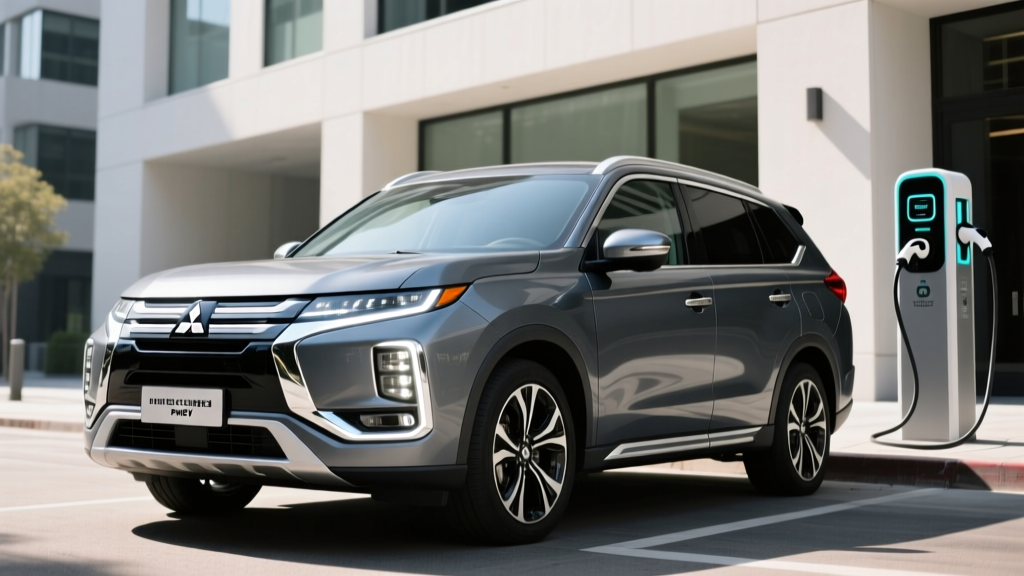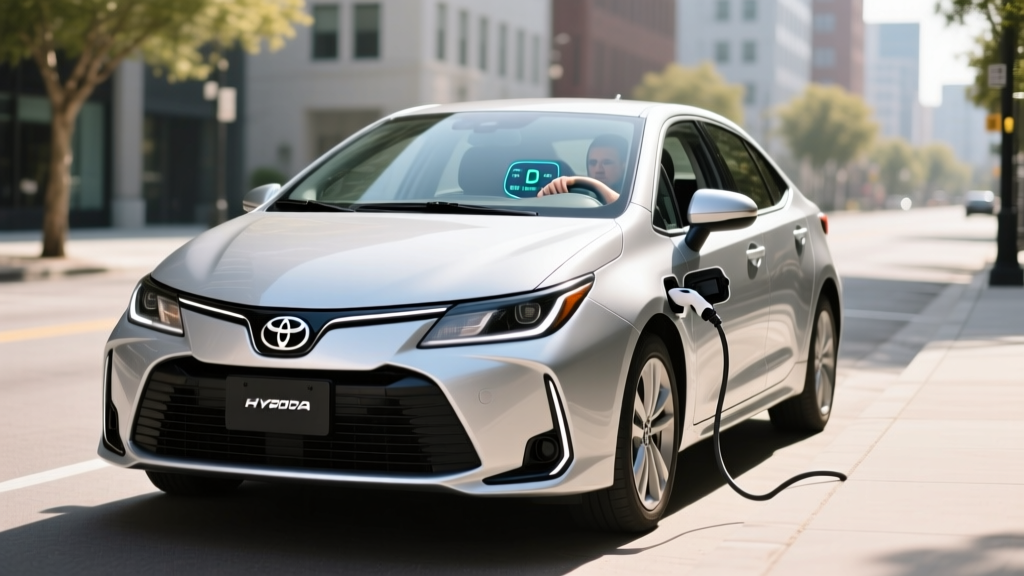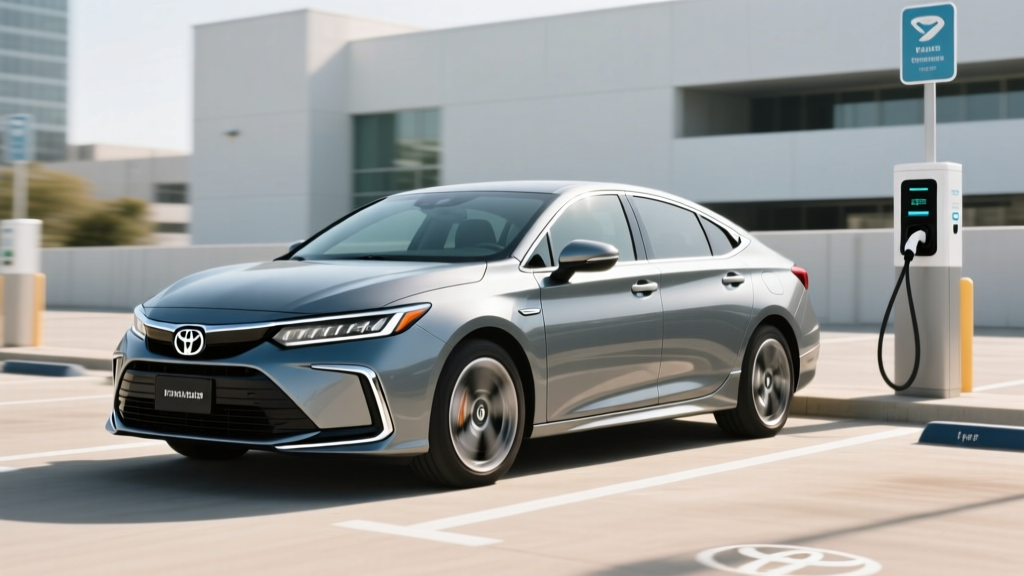
When buyers search for tax benefits for hybrid cars, they're usually hoping for the same $7,500 federal credit that full battery-electric vehicles (BEVs) can claim. The reality for 2026 is more nuanced: conventional hybrids (HEVs) like the Toyota Prius do not qualify for the federal §30D clean vehicle credit, while certain plug-in hybrids (PHEVs) still can — but only if they clear a gauntlet of battery-sourcing, MSRP, and buyer-income requirements that eliminate many models and many buyers.
This guide cuts through the confusion. We'll explain exactly which hybrid types exist, which ones unlock federal or state tax benefits, what the real-world fuel savings look like, and how to decide whether a hybrid, PHEV, or full EV fits your driveway.
HEV vs PHEV: The Tax-Credit Divide
The single most important distinction for tax purposes is whether the vehicle can plug in.
| Attribute | HEV (Conventional Hybrid) | PHEV (Plug-In Hybrid) |
|---|---|---|
| Plugs in to charge? | No — charges via engine & regen | Yes — has a charge port |
| Battery size | 0.6 – 1.6 kWh (small buffer) | 13 – 25+ kWh usable |
| Electric-only range | None (motor assists engine) | 25 – 50+ miles EPA |
| Federal §30D credit? | No — not eligible | Potentially $3,750–$7,500 |
| Example (2026) | Toyota Prius LE | Toyota RAV4 Prime |
Conventional hybrids recapture braking energy and use a small battery to assist the gasoline engine. They never plug in and the IRS does not consider them "clean vehicles" under §30D. Plug-in hybrids carry a much larger battery and an electric motor capable of driving the car on electricity alone for a meaningful distance — typically 25 to 50 miles — before the gasoline engine takes over. Because PHEVs have a charge port and meet minimum battery-capacity thresholds, they can qualify for the same federal credit structure as full EVs, subject to the same restrictions.
Federal Tax Credit Rules for PHEVs (§30D, 2026)
The IRS §30D Clean Vehicle Credit remains in effect for 2026, and the rules have tightened since the program was overhauled by the Inflation Reduction Act. Here is the eligibility checklist every PHEV buyer must clear:
- Vehicle type: Must be a new plug-in electric vehicle (PHEV or BEV) with a battery capacity of at least 7 kWh. Conventional HEVs are excluded.
- MSRP caps: Vans, SUVs, and pickups — $80,000 max. Sedans and other passenger cars — $55,000 max.
- Buyer income caps (modified AGI): $300,000 joint / $225,000 head of household / $150,000 single.
- Battery component sourcing: A percentage of battery components must be manufactured or assembled in North America (threshold increases annually).
- Critical minerals: A percentage of critical minerals must be sourced from the U.S. or a free-trade-agreement partner.
- Credit amount: Up to $3,750 for meeting the critical-minerals requirement, up to $3,750 for the battery-component requirement — $7,500 max if both are met.
- Point-of-sale transfer: Buyers may transfer the credit to the dealer at purchase to reduce the sale price, rather than waiting to claim it on their tax return.
The sourcing requirements are the biggest filter. Several PHEVs that would otherwise qualify — including some European and Korean models — have been reduced to partial credit ($3,750) or zero credit because their battery supply chains do not satisfy the 2026 thresholds. Always check the fueleconomy.gov tax credit lookup for the specific model and trim before counting on the full $7,500.
PHEVs That Can Qualify: 2026 Examples
Below are three popular PHEVs with their powertrain specs, electric range, and current tax-credit outlook. Specs reflect 2026 model-year data where published; always confirm with the manufacturer.
| Spec | Toyota RAV4 Prime | Jeep Wrangler 4xe | Hyundai Tucson PHEV |
|---|---|---|---|
| Powertrain | 2.5L I4 + 2 electric motors | 2.0L turbo I4 + electric motor | 1.6L turbo I4 + electric motor |
| Combined HP | 302 hp | 375 hp | 261 hp |
| Battery (usable) | 14.9 kWh (NMC) | 17.3 kWh (NMC) | 13.8 kWh (NMC) |
| EPA electric range | 42 miles | 22 miles | 33 miles |
| Total combined range | ~600 miles | ~370 miles | ~400 miles |
| Level 2 charge time (0–100%) | ~2.5 hrs (6.6 kW) | ~2 hrs (7.2 kW) | ~2.2 hrs (7.2 kW) |
| DC fast charge? | No | No | No |
| EPA combined (hybrid mode) | 38 MPG | 20 MPG | 35 MPG |
| Base MSRP | ~$44,500 | ~$52,000 | ~$39,500 |
| §30D credit (2026 est.) | $3,750 (partial) | $3,750 (partial) | $3,750 (partial) |
A critical note: most mainstream PHEVs do not support DC fast charging. Their smaller batteries and lower onboard charger rates (typically 6.6–7.2 kW) mean Level 2 is the practical ceiling. For daily use this is fine — you plug in at home overnight and wake up to a full battery. But on road trips, don't expect to top up at a 150 kW Electrify America stall; the vehicle simply won't accept that connection or will charge at negligible speeds.
Real-World MPG: Hybrids Often Beat the Sticker in Town
One of the most satisfying ownership realities of conventional hybrids is that they frequently exceed their EPA city estimate in real-world driving. This is the opposite of most gas cars and EVs, which tend to fall short of their stickers.
| Model (2026) | EPA City | EPA Hwy | EPA Combined | Real-World Observed |
|---|---|---|---|---|
| Toyota Prius LE (HEV) | 57 MPG | 56 MPG | 57 MPG | 55–62 MPG (city-biased) |
| Honda Accord Hybrid | 51 MPG | 44 MPG | 48 MPG | 46–53 MPG |
| Toyota RAV4 Hybrid (HEV) | 41 MPG | 38 MPG | 39 MPG | 37–43 MPG |
| Hyundai Tucson Hybrid | 38 MPG | 38 MPG | 38 MPG | 35–40 MPG |
Why do hybrids overperform in the city? Regenerative braking recaptures energy that a conventional car wastes as heat at every stoplight, and the engine shuts off entirely at idle and low speeds. Highway driving, by contrast, is where aerodynamic drag dominates and the electric motor provides less advantage. If your commute is stop-and-go, a hybrid's real-world numbers can land above the EPA sticker.
For PHEVs, the picture splits in two: while battery charge lasts, you're burning zero gasoline and achieving well over 100 MPGe. Once the battery depletes, you're driving a somewhat heavier conventional hybrid, and MPG can dip below the non-plug-in version of the same model. The Jeep Wrangler 4xe is a stark example — 20 MPG combined in hybrid mode is unremarkable, but 22 miles of electric-only driving around town means many owners go weeks between fill-ups.
Battery Longevity, Warranty, and Replacement Cost
Federal mandate: Hybrid and PHEV battery packs must carry a warranty of at least 8 years / 100,000 miles (10 years / 150,000 miles in CARB states including California, New York, Massachusetts, and others that follow California emissions standards).
What's covered: Most manufacturers warrant the battery against failure and against capacity loss below a stated threshold — typically 60–70% of original capacity.
Hybrid battery reliability has proven strong over two decades of real-world data. Toyota's HEV battery packs in the Prius and Camry Hybrid routinely surpass 150,000 miles with minimal degradation. The smaller batteries in conventional HEVs experience shallow charge cycles (they never fully charge or fully drain), which is gentler on cell chemistry than the deeper cycles a PHEV or BEV undergoes.
PHEV batteries face harder duty — daily deep cycling between full charge and depletion — but are engineered with larger buffers and more robust thermal management. Reported failures before 100,000 miles remain uncommon across major brands.
If a replacement is needed out of warranty, expect these ranges:
- HEV battery replacement: $2,000 – $4,000 (Toyota Prius: ~$2,500 – $3,500 at dealer; refurbished packs available for less)
- PHEV battery replacement: $6,000 – $12,000 depending on pack size and brand
- BEV battery replacement (for comparison): $10,000 – $22,000+
The hybrid battery replacement cost is meaningfully lower than a full EV's, which is a legitimate factor for buyers who plan to keep a vehicle past the 10-year mark.
State and Local Incentives Beyond the Federal Credit
Federal §30D is the headline, but state incentives can tip the scales — especially for conventional hybrids that get nothing from Washington. Examples (verify current availability with your state energy office, as programs change):
- Colorado: Has offered state tax credits for electrified vehicles; PHEVs have historically qualified for partial credits, while HEVs generally do not.
- California (CVRP): The Clean Vehicle Rebate Project has shifted focus toward lower-income buyers and BEVs; PHEV rebates have been reduced or eliminated in recent cycles.
- Utility rebates: Many electric utilities offer $250–$1,000 rebates for purchasing a PHEV or installing a Level 2 home charger. These are often stackable with federal credits.
- HOV lane access: Several states (California, Virginia, Maryland, and others) have granted single-occupant HOV lane access to PHEVs and HEVs, though programs have been phasing out or capping enrollment.
Because state and local programs vary by jurisdiction and change frequently, check your state department of energy or environmental agency for current offerings. Do not assume a program you read about in a 2024 forum post is still active.
Hybrid vs PHEV vs EV: Which Fits Your Life?
Choose a conventional hybrid (HEV) if:
- You cannot install a home charger (apartment, street parking, no garage).
- You want zero behavior change — just drive it like a gas car and get 40–57 MPG.
- Your budget is tight and you want the lowest upfront cost.
- You regularly take long road trips through areas with sparse charging infrastructure.
Choose a plug-in hybrid (PHEV) if:
- You can charge at home (even a standard 120V outlet will replenish a PHEV battery overnight).
- Your daily commute is under 30–40 miles round trip, letting you drive on electricity most days.
- You want electric driving for errands but gasoline freedom for weekend road trips.
- You want to reduce fuel consumption by 50–80% without range anxiety.
Choose a full EV (BEV) if:
- You have reliable home Level 2 charging.
- You want to eliminate gasoline entirely and minimize maintenance (no oil changes, fewer moving parts).
- Your daily driving is under 250 miles and you're comfortable planning DC fast-charge stops on road trips.
- You want to maximize the federal tax credit — BEVs have the widest model eligibility.
Pros and Cons: Tax Benefits in Context
Pros of Hybrid/PHEV Tax Benefits
- PHEVs can claim up to $7,500 federal credit, significantly reducing effective price.
- Point-of-sale transfer means you don't need to wait until tax season to benefit.
- State and utility incentives can stack on top of federal credits.
- HEVs, while ineligible for §30D, still save $1,000–$2,000/year in fuel vs. comparable gas cars.
- Lower total cost of ownership even without a tax credit, thanks to superior MPG.
Limitations and Gotchas
- Conventional hybrids (HEVs) get zero federal tax credit — a common misconception.
- Battery-sourcing rules disqualify many PHEVs from the full $7,500; some get $3,750 or nothing.
- Buyer income caps ($150K single / $300K joint) exclude higher earners.
- MSRP caps ($55K cars / $80K SUVs) exclude luxury PHEVs.
- PHEV credit amounts depend on battery kWh; some PHEVs with smaller packs qualify for reduced credits.
- Tax credit is non-refundable (unless transferred at POS) — you need sufficient tax liability.
Frequently Asked Questions
Do conventional hybrid cars qualify for the federal tax credit?
No. The IRS §30D Clean Vehicle Credit applies only to plug-in electric vehicles — PHEVs and BEVs. Conventional hybrids (HEVs) like the Toyota Prius, Honda CR-V Hybrid, and Ford Maverick Hybrid do not have a charge port and are not eligible for any federal purchase credit. Their value proposition rests entirely on fuel savings and lower purchase price.
How much is the federal tax credit for a plug-in hybrid in 2026?
Up to $7,500, split into two $3,750 halves: one for meeting critical-minerals sourcing requirements and one for battery-component manufacturing requirements. Many PHEVs in 2026 qualify for only $3,750 because their battery supply chains satisfy one requirement but not both. Check the specific vehicle on fueleconomy.gov before purchasing.
Can I get a tax credit for buying a used hybrid?
The §25E Previously-Owned Clean Vehicle Credit offers up to $4,000 (30% of the sale price, capped at $4,000) for a used PHEV or BEV purchased from a dealer. The used vehicle must be at least two model years old, priced at $25,000 or less, and the buyer must meet lower income caps ($75K single / $150K joint). Used conventional hybrids (HEVs) do not qualify.
Is a hybrid's battery expensive to replace?
HEV battery replacement typically costs $2,000–$4,000; PHEV replacement runs $6,000–$12,000. However, most hybrid batteries last well beyond their 8-year/100,000-mile warranty. Toyota Prius batteries commonly exceed 150,000 miles. The hybrid battery replacement cost is significantly lower than a full EV battery, which can exceed $15,000.
Do hybrids get better MPG than their EPA sticker says?
Often, yes — especially in city driving. Regenerative braking and engine shut-off at idle let hybrids like the Prius LE (EPA 57 MPG combined) achieve 55–62 MPG in real-world city-biased driving. Highway MPG tends to land closer to or slightly below the EPA estimate because aerodynamic drag dominates and the electric motor provides less benefit at sustained high speeds.
How far can a PHEV drive on electricity alone?
Current PHEVs offer 22–50 miles of EPA-rated electric-only range. The Toyota RAV4 Prime leads at 42 miles; the Chrysler Pacifica PHEV delivers 32 miles; the Hyundai Tucson PHEV manages 33 miles. This covers the daily commute for most American drivers (average one-way commute is ~16 miles, per Census data), meaning a PHEV owner who charges nightly may use gasoline only on longer trips.