Subaru XV Hybrid: What You Need to Know Before You Buy
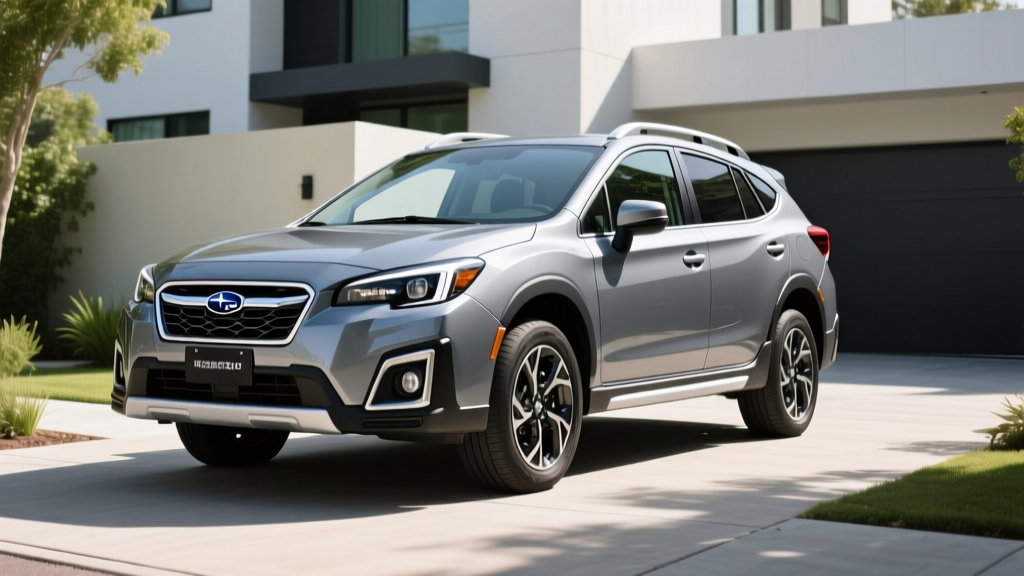
The Subaru XV — sold as the Crosstrek in North America — has long been the go-to compact crossover for outdoor-minded drivers who want standard all-wheel drive without the fuel penalty. The Subaru XV Hybrid (marketed as the Crosstrek Hybrid in the U.S.) adds Subaru's e-Boxer mild-hybrid system to the mix, promising incremental efficiency gains while keeping the rugged formula intact. But with a modest electric motor and a small battery pack, does this hybrid actually move the needle on fuel economy, or is it more of a marketing checkbox?
This guide breaks down the XV Hybrid's real-world MPG, powertrain specifics, battery longevity, pricing, and how it stacks up against both a conventional gas Crosstrek and a full battery-electric alternative. If you're searching for a Subaru XV Hybrid and want the numbers before you visit a dealer, you're in the right place.
HEV vs PHEV: Which Subaru XV Hybrid Are We Talking About?
Before diving into specs, it's critical to distinguish the two electrified flavors Subaru has offered on the XV/Crosstrek platform, because they serve very different buyers:
| Attribute | XV Hybrid (HEV / e-Boxer) | Crosstrek Hybrid (PHEV — Discontinued after 2023) |
|---|---|---|
| Type | Conventional hybrid (self-charging) | Plug-in hybrid (requires charging for EV mode) |
| Battery Capacity | ~0.9 kWh (small lithium-ion) | 8.8 kWh usable (lithium-ion) |
| Electric-Only Range | None (motor assists only) | ~17 miles EPA |
| Needs to Plug In? | No — regenerates via braking/engine | Yes — to access EV range and max efficiency |
| DC Fast Charging | No | No (Level 2 AC only) |
| Federal Tax Credit (§30D) | Not eligible | Was eligible (discontinued) |
Key takeaway: The current-generation Subaru XV Hybrid uses a conventional HEV system. You never plug it in. It recovers energy during braking and deceleration, stores it in a small battery, and uses a compact electric motor to assist the gasoline engine during acceleration and low-speed driving. The plug-in hybrid (PHEV) version of the Crosstrek was discontinued after the 2023 model year in the U.S. and is no longer available new. This review focuses on the HEV variant, which is the electrified XV you can actually buy today.
Fuel Economy: EPA MPG and Real-World Expectations
The Subaru XV Hybrid's headline number is its fuel economy improvement over the standard gasoline model. Here's how the EPA rates it, along with what you can realistically expect:
| Model | City MPG | Highway MPG | Combined MPG |
|---|---|---|---|
| XV Hybrid (e-Boxer AWD) | 35 | 34 | 35 |
| XV / Crosstrek (Gas, 2.5L AWD) | 27 | 34 | 29 |
| XV / Crosstrek (Gas, 2.0L AWD) | 28 | 34 | 30 |
Source: fueleconomy.gov — EPA estimates. Actual mileage will vary.
Real-World MPG: What Owners Actually See
Conventional hybrids like the XV e-Boxer tend to perform close to or slightly above their EPA city rating because stop-and-go driving maximizes regenerative braking. On the highway, where the electric motor contributes less, real-world numbers typically align with the EPA sticker or dip slightly.
Based on owner-reported data and independent testing, expect:
- City driving: 33–37 MPG (regen braking shines here)
- Highway driving (70+ mph): 31–34 MPG
- Cold weather (below 32°F): 29–32 MPG combined — engine runs more to heat the cabin and the battery is less efficient
- Combined real-world average: ~33–35 MPG
The hybrid's advantage over the gas model is most pronounced in city driving, where it can deliver an 8 MPG improvement. On the highway, the gap narrows to nearly nothing. If your commute is mostly urban, the XV Hybrid's efficiency gains are meaningful. If you're a highway-dominant driver, the premium for the hybrid powertrain takes longer to recoup.
Powertrain and Performance Specs
The Subaru XV Hybrid pairs a 2.0-liter horizontally opposed (Boxer) four-cylinder engine with a small electric motor integrated into the Lineartronic CVT transmission. Here's the full spec breakdown:
| Specification | Value |
|---|---|
| Engine | 2.0L Boxer-4 (FB20) |
| Engine Output | 145 hp / 139 lb-ft torque |
| Electric Motor | Integrated in CVT, ~13 hp (10 kW) |
| Combined System Output | ~148 hp |
| Transmission | Lineartronic CVT |
| Drivetrain | Symmetrical AWD (standard) |
| Battery | ~0.9 kWh lithium-ion (under cargo floor) |
| 0–60 mph | ~9.3 seconds |
| Towing Capacity | 1,500 lbs |
| Ground Clearance | 8.7 inches |
The e-Boxer system is best understood as a mild hybrid. The electric motor doesn't drive the car independently at meaningful speeds — it assists the gas engine during initial acceleration, smooths out the CVT's response, and enables brief engine-off coasting at very low speeds. Don't expect EV-like silence or torque; this is a subtle efficiency enhancement, not a performance transformation.
Subaru's X-Mode with Hill Descent Control remains standard, and the 8.7 inches of ground clearance is unchanged from the gas model. The hybrid battery's placement under the cargo floor preserves interior space, though cargo volume is marginally reduced compared to the gas version (roughly 0.5 cubic feet lost to the battery housing).
Pricing and Tax Credit Eligibility
The Subaru XV Hybrid (Crosstrek Hybrid in the U.S.) is offered in select trims. Pricing for the 2025–2026 model year positions it as a mid-range option in the Crosstrek lineup:
- XV Hybrid (Sport Hybrid / Limited Hybrid trim): ~$31,000–$34,500 MSRP (depending on market and options)
- Gas Crosstrek Premium (for comparison): ~$27,500 MSRP
- Hybrid premium over equivalent gas trim: ~$2,000–$3,000
Does the Subaru XV Hybrid Qualify for a Federal Tax Credit?
No. Under current IRS §30D rules, only plug-in electric vehicles (BEVs and PHEVs with sufficient battery capacity) qualify for the federal clean vehicle credit. Conventional hybrids (HEVs) like the XV e-Boxer do not have a plug and do not meet the battery-capacity or plug-in requirements. There is no federal tax credit for purchasing this vehicle.
Some states and local utilities offer rebates for conventional hybrids, but these are increasingly rare as incentive programs shift toward plug-in vehicles. Check your state's energy office or utility provider for any current hybrid-specific programs. The previously available PHEV Crosstrek Hybrid did qualify for a portion of the federal credit when it was sold, but that model is discontinued.
Source: IRS §30D Clean Vehicle Credit guidelines.
Battery Longevity, Warranty, and Replacement Cost
Subaru Hybrid Battery Warranty
- Hybrid battery warranty: 8 years / 100,000 miles (whichever comes first)
- Emission-related components: 8 years / 80,000 miles (federal mandate)
- Coverage threshold: Battery must retain sufficient capacity to operate the hybrid system; Subaru replaces if it fails or drops below functional thresholds
Is the Subaru XV Hybrid Reliable?
Subaru's e-Boxer system is mechanically simple compared to more aggressive hybrid setups from Toyota or Honda. The 0.9 kWh battery is small, operates in a narrow state-of-charge window (never fully charged or fully depleted), and is managed conservatively — all of which promote longevity. The motor is integrated into the transmission, reducing complexity.
Subaru's hybrid systems have not been on the market as long as Toyota's, so ultra-long-term data (15+ years) is thinner. However, the e-Boxer has been in use globally since 2019 with no widespread battery-failure reports. Subaru's 8-year/100,000-mile hybrid battery warranty matches the industry standard for hybrid components.
What Does Hybrid Battery Replacement Cost?
If the hybrid battery fails outside of warranty, replacement cost for the XV Hybrid's small 0.9 kWh pack is estimated at $2,000–$3,500 (parts and labor) based on dealer pricing for similar Subaru hybrid components. This is significantly less than PHEV or BEV battery replacement because the pack is far smaller. For context, a Toyota Prius hybrid battery replacement runs $2,000–$4,000, while a full EV battery can exceed $10,000–$20,000.
Given the conservative battery management and the modest capacity, most XV Hybrid owners will never need a battery replacement during typical ownership. The 8-year warranty provides a strong safety net.
Who Should Buy the Subaru XV Hybrid?
Pros
- 35 MPG combined — a 6 MPG gain over the gas 2.5L model
- Standard Symmetrical AWD with 8.7" ground clearance
- No plug-in required — zero change to refueling habits
- Lower battery replacement risk and cost vs. PHEV/EV
- Strong resale value (Subaru brand loyalty)
- X-Mode and Hill Descent Control for light off-road use
Cons
- No electric-only driving — motor only assists
- Modest power (148 hp combined) — not a quick vehicle
- No federal tax credit eligibility
- Highway MPG nearly identical to gas model
- Hybrid premium takes 4–6 years to recoup at average mileage
- Cargo space marginally reduced vs. gas model
Hybrid vs PHEV vs Full EV: Which Fits Your Life?
Choosing between the XV Hybrid, a plug-in hybrid, and a full battery-electric vehicle comes down to your daily driving pattern, charging access, and budget:
- Choose the XV Hybrid (HEV) if: You don't have access to home or workplace charging, you want better city MPG without changing any habits, and you value AWD and ground clearance for outdoor activities. This is a "buy it and drive it like a normal car" solution.
- Choose a PHEV if: You can charge at home and your daily commute is under 30 miles. A PHEV lets you drive electric most days while keeping a gas engine for road trips. The now-discontinued Crosstrek PHEV offered 17 miles of EV range; current alternatives include the Toyota RAV4 Prime (42 miles EV) or Hyundai Tucson PHEV (33 miles EV).
- Choose a full EV if: You have reliable home charging, your daily driving is under 250 miles, and you want zero tailpipe emissions with minimal maintenance. The Hyundai Ioniq 5, Tesla Model Y, or Subaru Solterra (Subaru's own all-electric crossover) are worth considering. Expect $7,500 in federal tax credits on qualifying models, which can offset the higher purchase price.
Payback Calculation: Does the Hybrid Premium Make Sense?
Let's run the numbers on whether the XV Hybrid's fuel savings justify its higher price tag compared to the gas model. Assumptions:
- Annual mileage: 12,000 miles (55% city, 45% highway)
- Gas price: $3.40/gallon (national average, 2025–2026)
- XV Hybrid combined real-world MPG: 34
- Gas XV (2.5L) combined real-world MPG: 28
- Hybrid premium: ~$2,500
| Metric | XV Hybrid | Gas XV (2.5L) |
|---|---|---|
| Annual fuel used | 353 gallons | 429 gallons |
| Annual fuel cost | $1,200 | $1,458 |
| Annual savings (Hybrid) | ~$258/year | |
| Payback period | ~9.7 years | |
At current fuel prices, the hybrid premium takes roughly a decade to recoup through fuel savings alone. If gas prices rise to $4.50/gallon, that drops to ~7 years. If your city driving percentage is higher than 55%, the payback shortens because the hybrid's advantage is greatest in stop-and-go traffic.
However, fuel savings aren't the only factor. The hybrid may hold resale value better as consumer preference shifts toward electrified vehicles, and the driving refinement (smoother low-speed acceleration, quieter idle stops) has subjective value.
Frequently Asked Questions
How many MPG does the Subaru XV Hybrid get?
The EPA rates the Subaru XV Hybrid (e-Boxer AWD) at 35 city / 34 highway / 35 combined MPG. Real-world testing and owner reports typically show 33–37 MPG in city driving and 31–34 MPG on the highway, for a combined average of approximately 33–35 MPG.
Does the Subaru XV Hybrid need to be plugged in?
No. The XV Hybrid is a conventional hybrid (HEV). Its small battery charges automatically through regenerative braking and the gasoline engine. You never plug it in — you simply refuel with gasoline like any other car.
Can the Subaru XV Hybrid drive on electric power alone?
Only at very low speeds (under ~12 mph) for brief distances, such as creeping through a parking lot. The 13 hp electric motor is not powerful enough to propel the vehicle at normal driving speeds independently. This is a key distinction from a PHEV, which can drive 15–40+ miles on electricity alone.
Is the Subaru XV Hybrid good in snow and off-road?
Yes. The hybrid system does not compromise Subaru's Symmetrical AWD, X-Mode traction management, or 8.7 inches of ground clearance. It performs identically to the gas Crosstrek in snow, mud, and light off-road conditions.
Is the Subaru XV Hybrid reliable?
The e-Boxer hybrid system is mechanically conservative, with a small battery managed in a narrow charge window to maximize lifespan. Subaru covers the hybrid battery with an 8-year/100,000-mile warranty. No widespread reliability issues have been reported for this system since its 2019 global introduction.
What does it cost to replace the Subaru XV Hybrid battery?
Estimated at $2,000–$3,500 for parts and labor if replacement is needed outside of warranty. The small 0.9 kWh battery is far less expensive to replace than a PHEV or full EV battery pack. Most owners will never need this service.
Does the Subaru XV Hybrid qualify for any tax credit?
No. Under current IRS §30D rules, only plug-in vehicles (BEVs and PHEVs) qualify for the federal clean vehicle tax credit. Conventional hybrids are not eligible. Some state or utility programs may offer small incentives for hybrids — check your local programs.
What's the difference between the Subaru XV Hybrid and the Crosstrek Hybrid?
The "XV" nameplate is used in international markets (Europe, Japan, Australia), while "Crosstrek" is the North American name. The e-Boxer hybrid system is fundamentally the same across markets, though specific tuning and equipment levels vary by region. The U.S. previously offered a PHEV Crosstrek Hybrid (with a plug and 17 miles of EV range), which was discontinued after 2023.
Safety ratings for the Crosstrek/XV platform can be verified through the IIHS and NHTSA. Always check current model-year ratings before purchasing.