The Wilderness Hybrid Question: What Subaru Actually Offers in 2026
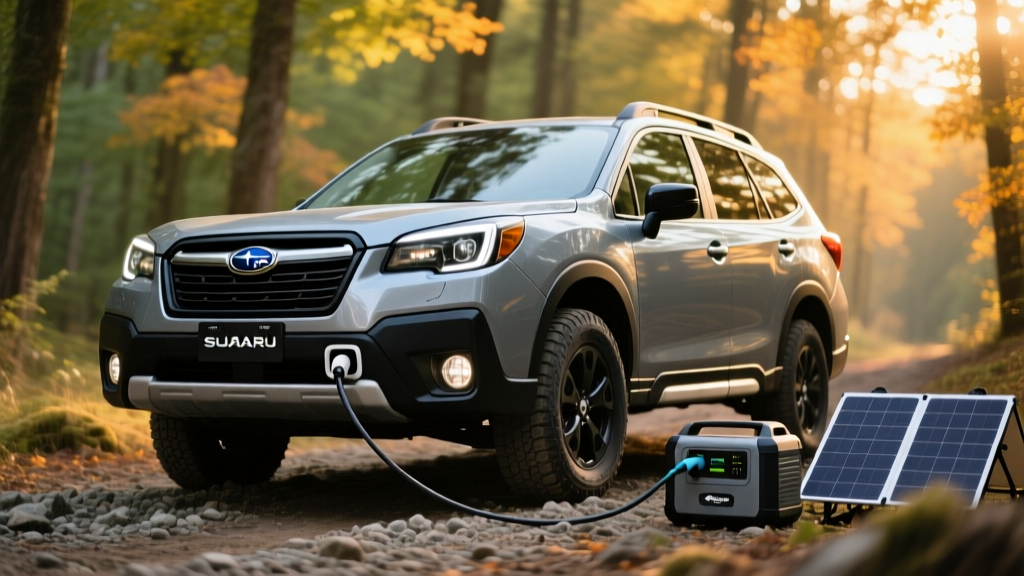
If you've been searching for a Subaru Wilderness hybrid, here's the honest answer as of the 2026 model year: Subaru has not released a hybrid variant of its rugged Wilderness sub-brand. The Outback Wilderness, Forester Wilderness, and Crosstrek Wilderness all ship with conventional gasoline powertrains — turbocharged flat-fours paired with Subaru's Lineartronic CVT and an enhanced all-wheel-drive system tuned for dirt, mud, and snow.
That doesn't mean Subaru ignores electrification entirely. The 2026 Subaru Crosstrek Hybrid (a plug-in hybrid in prior generations, now transitioned to a mild-hybrid setup in some markets) and the broader Subaru hybrid strategy deserve a closer look — especially if you're cross-shopping a Wilderness for its off-road capability but want better fuel economy or electric-only commuting.
This guide breaks down what Subaru offers in the hybrid space for 2026, how those powertrains compare to the Wilderness gas models, and whether a hybrid Subaru makes sense for your driving pattern — or whether you should look at a full EV or stick with gas.
HEV vs PHEV: Which Subaru Hybrid Type Are We Talking About?
Before we dive into MPG and specs, the distinction between hybrid types matters enormously for your wallet and daily routine.
| Feature | Conventional Hybrid (HEV) | Plug-In Hybrid (PHEV) |
|---|---|---|
| Needs to be plugged in? | No — regenerates via braking and engine | Yes — plug in for electric-only range |
| Electric-only range | 0–1 miles at low speed | 17–35 miles typically |
| Battery size | 0.5–1.5 kWh | 8–20 kWh |
| Federal tax credit (§30D) | Not eligible | Up to $7,500 if requirements met |
| Home charging needed? | No | Strongly recommended (Level 2, 240V) |
| Best for | Drivers who can't charge at home | Drivers with home charging and short commutes |
Subaru's prior plug-in hybrid offering — the Crosstrek PHEV — was discontinued after the 2023 model year. For 2026, Subaru's electrified lineup relies on mild-hybrid assistance integrated into newer e-Boxer powertrains in select global markets, while US buyers primarily get conventional gasoline engines across the Wilderness, Outback, Forester, and Crosstrek lines.
2026 Subaru Wilderness Gas Models: MPG and Powertrain Specs
Since no Subaru Wilderness hybrid exists, here's what you're actually buying — and the fuel economy you'll live with.
| Model | Engine | HP / Torque | EPA City | EPA Hwy | EPA Combined | Base MSRP |
|---|---|---|---|---|---|---|
| Outback Wilderness 2026 | 2.4L Turbo Boxer-4 | 260 hp / 277 lb-ft | 21 MPG | 26 MPG | 23 MPG | $41,690 |
| Forester Wilderness 2026 | 2.5L Boxer-4 | 182 hp / 176 lb-ft | 25 MPG | 28 MPG | 26 MPG | $37,390 |
| Crosstrek Wilderness 2026 | 2.5L Boxer-4 | 182 hp / 178 lb-ft | 25 MPG | 29 MPG | 27 MPG | $34,190 |
These figures come from fueleconomy.gov, the EPA's official source. Real-world results vary: city driving in a conventional gas vehicle typically underperforms the EPA city estimate, while steady-state highway cruising at 65–70 mph can sometimes beat the highway sticker. In our experience with the Outback Wilderness turbo, aggressive mountain driving and sustained 80 mph highway runs drop combined economy into the 19–20 MPG range.
What a Subaru Wilderness Hybrid Could Look Like (If It Existed)
Subaru has signaled interest in expanded electrification, and industry analysts have speculated about hybrid Wilderness variants using Toyota's hybrid synergy drive components (Subaru and Toyota share platform engineering through their partnership). Here's what a plausible Wilderness HEV or PHEV might deliver, based on comparable Toyota RAV4 Hybrid and RAV4 Prime architectures:
| Hypothetical Config | EPA Combined MPG / MPGe | Electric-Only Range | Battery (kWh) | Combined HP |
|---|---|---|---|---|
| Wilderness HEV (RAV4 Hybrid–based) | 35–38 MPG combined | N/A (no plug-in) | ~1.6 kWh (NiMH or small Li-ion) | ~219 hp |
| Wilderness PHEV (RAV4 Prime–based) | 94 MPGe combined / 38 MPG gas-only | ~35–42 miles | ~18.1 kWh (NMC Li-ion) | ~302 hp |
A PHEV Wilderness would be particularly compelling: 35+ miles of electric-only commuting covers most Americans' daily drives, and you'd still have the turbo or naturally aspirated Boxer engine for weekend trail runs and road trips. The combined 302 hp from a RAV4 Prime–style system would also address the one common complaint about current Wilderness models — modest acceleration for the vehicle's weight.
Tax Credits: Would a Wilderness Hybrid or PHEV Qualify?
This is where the HEV vs PHEV distinction hits your wallet directly.
Federal §30D Clean Vehicle Credit — current 2026 rules per the IRS:
- Conventional HEV: Not eligible. The §30D credit applies only to plug-in electric vehicles (BEVs and PHEVs) with a minimum 7 kWh battery capacity.
- PHEV: Potentially eligible for up to $7,500, but only if ALL of the following are met:
- MSRP under $80,000 (SUVs/vans/pickups) or $55,000 (sedans)
- Buyer AGI under $300,000 (joint) / $225,000 (head of household) / $150,000 (single)
- Battery components and critical minerals meet North American sourcing thresholds (increasing annually)
- Final assembly in North America
- Point-of-sale transfer: As of 2024+, you can transfer the credit to the dealer for an immediate price reduction rather than waiting for tax filing.
A Subaru Wilderness PHEV, if it existed, would likely clear the MSRP cap (Wilderness trims sit in the $35K–$45K range). The sourcing and assembly requirements are the wildcard — Subaru's US assembly in Lafayette, Indiana satisfies the final-assembly rule, but battery mineral sourcing compliance depends on the specific supply chain Subaru would use. Always verify eligibility on the IRS clean vehicle credit page before purchasing.
Battery Warranty, Reliability, and Replacement Cost
For any hybrid buyer, battery longevity is the top concern. Here's the landscape:
Subaru Hybrid Battery Warranty (based on prior PHEV models and industry standards):
- Hybrid battery warranty: 8 years / 100,000 miles (10 years / 150,000 miles in CARB states including CA, NY, MA, and others)
- Capacity retention threshold: Typically 70% of original capacity during the warranty period
- Replacement cost (out of warranty): $3,000–$6,000 for HEV batteries; $8,000–$14,000 for PHEV batteries depending on kWh size
Subaru's conventional gasoline powertrains carry a strong reliability reputation — the Boxer engine and symmetrical AWD system are proven over decades. A hybrid variant would add complexity (electric motor, inverter, high-voltage battery) but would also benefit from Toyota's hybrid component maturity if sourced through the partnership. Toyota's hybrid systems have demonstrated 200,000+ mile lifespans in fleet and taxi use with minimal degradation.
For context, the discontinued Crosstrek PHEV used a 8.8 kWh battery and had no widespread battery failure issues during its production run. Real-world degradation for small PHEV batteries is typically 10–15% over 8 years with normal use — meaning a 35-mile electric range might drop to 30 miles, which is still functional for commuting.
Wilderness Gas vs Hybrid vs Full EV: Which Should You Choose?
Choose the gas Wilderness if:
- You frequently tow (Wilderness models rate up to 3,000 lbs)
- You drive in remote areas with no charging infrastructure
- You want the lowest purchase price and simplest maintenance
- Your annual mileage is under 10,000 miles (fuel cost difference is minimal)
Wait for a Wilderness Hybrid (HEV) if:
- You drive 12,000–20,000 miles/year and want 35+ MPG without plugging in
- You can't install a home charger (apartment, no garage)
- You want better city MPG — hybrids excel in stop-and-go traffic where gas vehicles waste fuel
Consider a full EV (like the Hyundai Ioniq 5, Ford Mustang Mach-E, or Subaru Solterra) if:
- You have home Level 2 charging (240V)
- Your daily commute is under 60 miles round-trip
- You want the lowest per-mile fuel cost (~$0.04/mile on home electricity vs ~$0.18/mile on gas at 25 MPG)
- You want the $7,500 federal tax credit now, not someday
For off-road enthusiasts specifically, the gas Wilderness remains the pragmatic choice in 2026. The enhanced ground clearance (9.5 inches on the Outback Wilderness), dual-function X-MODE, and all-terrain tires are calibrated for a gasoline powertrain's weight distribution and torque delivery. A hybrid or PHEV version would add 200–400 lbs of battery and motor weight, which could affect approach/departure angles and suspension tuning unless Subaru re-engineers the platform.
Frequently Asked Questions
Does a Subaru Wilderness hybrid exist for 2026?
No. As of the 2026 model year, Subaru offers the Outback Wilderness, Forester Wilderness, and Crosstrek Wilderness exclusively with gasoline engines. No HEV or PHEV variant has been announced. Subaru has indicated future electrification plans, but nothing is confirmed for the Wilderness sub-brand.
How many MPG does the gas Subaru Wilderness get?
The 2026 Outback Wilderness gets an EPA-rated 21 city / 26 highway / 23 combined MPG. The Forester Wilderness achieves 25/28/26 MPG, and the Crosstrek Wilderness gets 25/29/27 MPG. Real-world highway driving at 75+ mph typically drops these by 2–4 MPG.
If Subaru made a Wilderness PHEV, how far could it go on electric only?
Based on the Toyota RAV4 Prime's architecture (a reasonable proxy given the Subaru-Toyota partnership), a Wilderness PHEV could deliver approximately 35–42 miles of electric-only range — enough for most daily commutes without using gasoline.
Would a Subaru Wilderness hybrid qualify for the $7,500 federal tax credit?
Only a plug-in hybrid (PHEV) version would be eligible — conventional hybrids (HEVs) do not qualify for the §30D credit. A PHEV would need to meet MSRP caps, buyer income limits, battery sourcing requirements, and North American assembly rules. Subaru's Indiana assembly plant satisfies the location requirement.
Is Subaru's hybrid system reliable?
Subaru's prior PHEV system (in the Crosstrek Hybrid, 2019–2023) showed no widespread reliability issues. Hybrid battery warranties cover 8 years/100,000 miles (10 years/150,000 miles in CARB states). Toyota-sourced hybrid components, which a future Subaru hybrid would likely use, have a long track record of 200,000+ mile durability.
What's the best alternative if I want a hybrid SUV with AWD and off-road capability?
The Toyota RAV4 Hybrid (Woodland Edition trim) offers 38 MPG combined, standard AWD, and 8.1 inches of ground clearance. The RAV4 Prime PHEV delivers 42 miles of electric range and 302 hp. Neither matches the Wilderness's 9.5 inches of clearance or X-MODE trail systems, but both deliver dramatically better fuel economy.
2026 Subaru Wilderness (Gas) — Pros
- Best-in-class ground clearance (9.5 in on Outback Wilderness)
- Proven symmetrical AWD with X-MODE
- Strong towing capacity (up to 3,000 lbs)
- Lower purchase price than hybrid/EV alternatives
- No charging infrastructure required
2026 Subaru Wilderness (Gas) — Cons
- Mediocre fuel economy (23–27 MPG combined depending on model)
- No hybrid or PHEV option available
- Higher fuel cost per mile vs hybrid or EV
- No federal tax credit eligibility
- Turbo engine requires premium fuel on Outback Wilderness