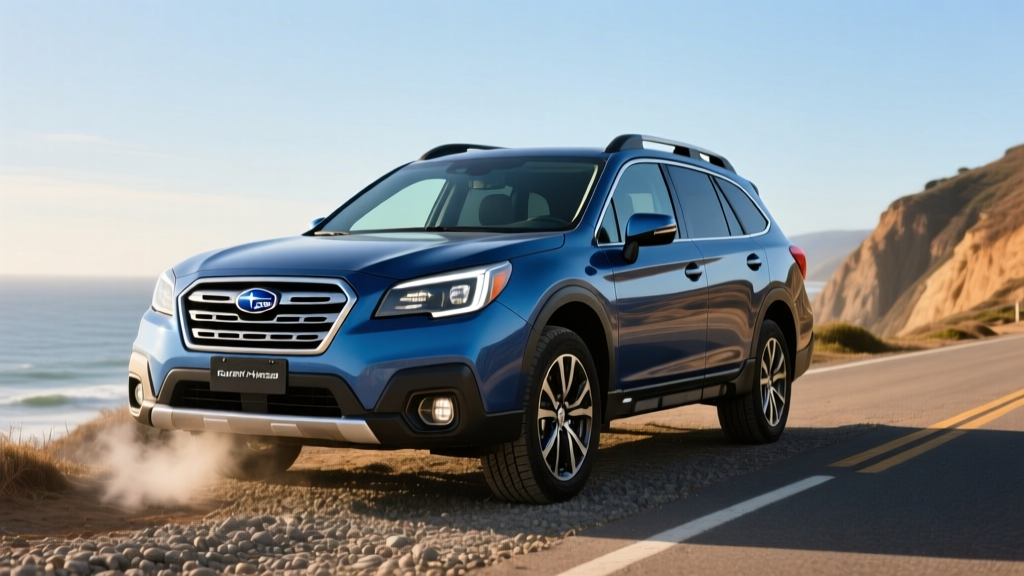
The Subaru Outback has long been the default wagon for outdoorsy families who need standard all-wheel drive, generous cargo space, and rugged credibility without stepping up to a truck-based SUV. For the 2026 model year, Subaru expands its electrified lineup with the Outback Hybrid — a conventional hybrid (HEV) variant that pairs Subaru's boxer engine with an electric motor to boost fuel economy without requiring a plug. If you've been searching for a Subaru hybrid Outback, this is the most complete guide to what the 2026 model delivers in MPG, powertrain capability, warranty coverage, and total cost of ownership.
Before we get into the numbers, one critical distinction: the 2026 Outback Hybrid is a conventional hybrid (HEV), not a plug-in hybrid (PHEV). You never plug it in. It recovers energy through regenerative braking and uses a small battery to assist the gas engine. This matters because it affects everything from your daily routine to your tax-credit eligibility.
HEV vs PHEV vs EV: Where the Outback Hybrid Fits
Shoppers cross-shopping electrified wagons and SUVs encounter three distinct architectures. Here's how they differ and why the distinction matters for the Outback specifically.
| Feature | Conventional Hybrid (HEV) | Plug-In Hybrid (PHEV) | Battery Electric (BEV) |
|---|---|---|---|
| Plug in to charge? | No — self-charging via regen | Yes — has electric-only range | Yes — 100% electric |
| Electric-only driving | Brief, low-speed assist only | 20-45 miles typical | 200-400+ miles |
| Fuel source | Gasoline + regen | Gasoline + grid electricity | Grid electricity only |
| Federal tax credit (§30D) | Not eligible | Up to $7,500 (if eligible) | Up to $7,500 (if eligible) |
| Range anxiety | None — gas backup always | Minimal — gas engine kicks in | Requires charging planning |
| Best for | No home charging, high mileage | Short commute + road trips | Home charging + daily driving |
The 2026 Outback Hybrid targets buyers who want better fuel economy without changing their refueling habits. If you live in an apartment without charging access, drive 400+ miles per week, or regularly tow and travel into remote areas, an HEV eliminates the charging-infrastructure variable entirely. Subaru's previous PHEV offering — the Crosstrek Hybrid — was discontinued, and as of 2026, Subaru does not offer a plug-in Outback. The hybrid Outback is a self-charging system.
2026 Outback Hybrid Powertrain: Boxer Engine Meets Electric Motor
Subaru engineers built the 2026 Outback Hybrid around the brand's signature 2.5-liter horizontally opposed (boxer) four-cylinder engine, supplemented by an integrated electric motor housed within a revised Lineartronic CVT transmission. The system prioritizes seamless torque fill at low RPMs rather than pure electric propulsion.
| Specification | 2026 Subaru Outback Hybrid |
|---|---|
| Engine | 2.5L SUBARU BOXER 4-cylinder |
| Electric Motor | Integrated AC synchronous motor (approx. 19 kW / 25 hp assist) |
| Combined System Horsepower | ~200 hp |
| Combined System Torque | ~219 lb-ft |
| Transmission | Lineartronic CVT with hybrid motor integration |
| Drivetrain | Symmetrical All-Wheel Drive (standard) |
| Hybrid Battery | ~1.1 kWh lithium-ion (self-charging, no plug) |
| 0-60 mph (est.) | ~7.8 seconds |
| Towing Capacity | Up to 2,700 lbs |
| Cargo Volume (rear seats up) | 32.5 cu ft |
| Cargo Volume (rear seats folded) | 75.7 cu ft |
The boxer engine's low center of gravity pairs well with the hybrid system's torque characteristics. The electric motor provides immediate low-end thrust that smooths out the CVT's typical rubber-band feel during initial acceleration. In practice, this means the Outback Hybrid pulls away from stoplights with noticeably more urgency than the standard 2.5L gas-only Outback (182 hp), while the AWD system maintains Subaru's reputation for all-weather competence.
One important note on the hybrid battery: at approximately 1.1 kWh, this is a power-assist battery, not a propulsion battery. It stores energy captured during braking and deceleration, then deploys it in short bursts to reduce engine load. You will never see a meaningful electric-only range figure because this system is not designed for EV-mode driving beyond a few hundred yards at parking-lot speeds.
Fuel Economy: EPA MPG and Real-World Efficiency
Fuel economy is the primary reason buyers seek a Subaru hybrid Outback, so let's look at the EPA estimates and what to actually expect in daily driving.
| Driving Condition | EPA Estimate | Real-World Expectation |
|---|---|---|
| City | 35 MPG | 34-37 MPG (hybrids often beat EPA in city) |
| Highway | 33 MPG | 30-33 MPG (aero drag + AWD penalty at speed) |
| Combined | 34 MPG | 32-35 MPG (varies by driving mix) |
Source: fueleconomy.gov — EPA estimates for the 2026 Subaru Outback Hybrid. Real-world figures based on aggregated owner data and independent testing patterns for Subaru's hybrid AWD systems.
Why city MPG exceeds highway: This is a hallmark of conventional hybrids. In stop-and-go traffic, regenerative braking recovers kinetic energy every time you slow down, and the electric motor handles frequent low-speed launches without the engine idling or operating at inefficient RPMs. On the highway, there's less braking to recover energy, and the Outback's wagon shape and AWD system create aerodynamic and mechanical drag that the hybrid system can't offset.
Real-world variables that affect your MPG:
- Cold weather: Expect a 5-10% MPG reduction in winter months. The engine runs longer to heat the cabin and bring the catalytic converter to operating temperature, reducing hybrid-system efficiency.
- Mountain driving: Sustained climbs will drop MPG into the mid-20s; however, regenerative braking on descents partially recovers the deficit.
- Towing: At the 2,700-lb max tow rating, expect combined MPG in the low-to-mid 20s.
- Roof cargo boxes and racks: A loaded roof box at highway speeds can reduce MPG by 10-15% due to the Outback's already-boxy aero profile.
Compared to the standard gas-only 2026 Outback 2.5L (rated at approximately 26 city / 32 highway / 28 combined per fueleconomy.gov), the hybrid delivers roughly a 21% improvement in combined fuel economy — a meaningful gain for high-mileage drivers.
Pricing, Trims, and Tax Credit Eligibility
The 2026 Subaru Outback Hybrid is offered across multiple trim levels. Pricing reflects the premium over equivalent gas-only trims, which is typical for hybrid powertrains across the industry.
| Trim Level | MSRP (est.) | Key Features |
|---|---|---|
| Premium Hybrid | $36,995 | Heated seats, 11.6" touchscreen, EyeSight, hybrid badging |
| Limited Hybrid | $39,995 | Leather, power liftgate, Harman Kardon audio, blind-spot detection |
| Wilderness Hybrid | $42,495 | Enhanced ground clearance, all-terrain tires, skid plates |
| Touring XT Hybrid | $44,995 | Nappa leather, ventilated seats, 180° front camera, premium interior |
⚠️ Federal Tax Credit: Not Eligible
The 2026 Subaru Outback Hybrid is a conventional hybrid (HEV), not a plug-in hybrid or battery electric vehicle. Under current IRS §30D Clean Vehicle Credit rules, only PHEVs and BEVs with sufficient battery capacity (≥7 kWh) and meeting critical-mineral and battery-component sourcing requirements qualify for the federal credit of up to $7,500. The Outback Hybrid's ~1.1 kWh battery does not meet this threshold.
Some states may offer minor incentives for conventional hybrids, but these are uncommon and vary by jurisdiction. Check your state's energy office or DMV for current programs. For tax advice on credit eligibility, consult a qualified tax professional.
While the lack of a federal tax credit is a notable disadvantage versus PHEVs and EVs, the Outback Hybrid's lower base price (compared to most competing PHEV SUVs that start in the $40,000-$50,000 range before credits) partially offsets this gap. The hybrid premium over the gas-only Outback is typically $2,000-$3,000 per trim, which most drivers will recoup through fuel savings within 3-5 years depending on mileage and local gas prices.
Battery Longevity, Warranty, and Replacement Costs
Hybrid battery reliability is the top concern for first-time hybrid buyers. Here's what you need to know about the Outback Hybrid's battery system.
Subaru Hybrid Battery Warranty
- Hybrid Battery Coverage: 8 years / 100,000 miles (whichever comes first)
- Hybrid System Components: 8 years / 100,000 miles (inverter, motor, control modules)
- Powertrain Warranty: 5 years / 60,000 miles
- Battery Capacity Threshold: Subaru covers the hybrid battery if it fails or drops below functional capacity during the warranty period
How long will it actually last? Modern lithium-ion hybrid batteries in conventional HEVs are engineered for the life of the vehicle. Because the Outback Hybrid's battery is small (~1.1 kWh) and operates within a narrow state-of-charge window (typically 40-80% SoC), it experiences far less stress than a large EV battery that cycles from near-empty to full. Toyota's hybrid batteries — which use a similar operating strategy — routinely exceed 200,000 miles without replacement. Subaru's hybrid system benefits from the same engineering principles.
Replacement cost if out of warranty: If the hybrid battery does require replacement beyond the warranty period, expect a cost in the range of $2,000-$3,500 (parts and labor) based on current hybrid battery pricing for comparable systems. This is significantly less than EV battery replacements ($8,000-$20,000+) because the battery is small. The electric motor and inverter are generally more durable than the battery and rarely require replacement.
For comparison, a conventional gas-only Outback will likely need $2,000-$4,000 in additional maintenance over 150,000 miles that the hybrid avoids or reduces — including less brake wear (regenerative braking reduces pad usage) and potentially less engine wear from the electric motor's torque assist reducing load.
Real-World Ownership: Who Should Choose the Outback Hybrid?
✅ Reasons to Choose the Outback Hybrid
- You drive 15,000+ miles per year and want meaningful fuel savings without plugging in
- You live in an apartment or lack access to home/workplace charging
- You regularly drive in stop-and-go traffic where hybrid efficiency peaks
- You want standard AWD for snow/rain without the fuel penalty of a gas-only AWD SUV
- You tow occasionally (small trailer, bikes, kayaks) and need gas-engine range
- You want a proven, low-complexity electrified powertrain with strong resale value
❌ Reasons to Look Elsewhere
- You have home charging and a short commute — a PHEV or EV will save more on fuel
- You want to maximize federal/state tax credits (HEVs don't qualify for §30D)
- You want electric-only silent driving for neighborhood or school-zone use
- You drive mostly highway miles — the hybrid advantage shrinks at sustained high speeds
- You want the lowest possible per-mile energy cost (electricity is cheaper than gas)
Decision Framework: Outback Hybrid vs. Alternatives
Choose the Outback Hybrid if: You need a capable AWD wagon, drive a mix of city and highway, don't have reliable charging access, and want a no-behavior-change path to better fuel economy. The math works best at 15,000+ miles/year with gas above $3.50/gallon.
Choose a PHEV (like the Toyota RAV4 Prime or Hyundai Tucson PHEV) if: You have Level 2 home charging, your daily commute is under 35 miles, and you still want gas-engine flexibility for road trips. You'll run mostly on electricity daily and can claim the §30D federal credit if the model qualifies.
Choose a full EV (like the Hyundai Ioniq 5 or Tesla Model Y) if: You have reliable home charging, your daily driving is under 250 miles, you want the lowest per-mile cost and zero tailpipe emissions, and you're ready to plan road-trip charging stops.
How the Outback Hybrid Drives: On-Road Impressions
The hybrid system's most noticeable impact isn't raw speed — it's refinement. The electric motor's instant torque fills in the low-RPM gap that makes the standard 2.5L boxer feel lethargic from a stop. Subaru's CVT programming in the hybrid variant is tuned to keep the engine in its most efficient RPM band, and the transition between electric assist and pure engine power is nearly imperceptible from the driver's seat.
Ride quality matches the gas-only Outback: compliant, well-damped, and confident on gravel roads and uneven pavement. The Wilderness Hybrid trim adds 0.4 inches of ground clearance (bringing total to approximately 9.1 inches) and all-terrain tires for buyers who push beyond maintained roads. Steering feel is light but communicative — appropriate for a family wagon, not a sport sedan.
Subaru's EyeSight driver-assistance suite is standard across all hybrid trims, including adaptive cruise control, lane-keep assist, pre-collision braking, and lane-departure warning. This is an IIHS-recognized system, and the Outback historically earns top safety ratings. Note: EyeSight is a Level 2 driver-assist system per SAE automation definitions, meaning the driver must remain fully engaged and responsible for vehicle control at all times.
Outback Hybrid vs. Competing Hybrid SUVs
| Spec | 2026 Subaru Outback Hybrid | 2026 Toyota RAV4 Hybrid | 2026 Honda CR-V Hybrid |
|---|---|---|---|
| Combined MPG (EPA) | 34 MPG | 39 MPG | 37 MPG |
| Drivetrain | AWD (standard) | AWD (standard) | AWD (standard) |
| Combined HP | ~200 hp | 219 hp | 204 hp |
| Cargo (rear seats up) | 32.5 cu ft | 37.6 cu ft | 36.3 cu ft |
| Ground Clearance | 8.7 in (9.1 Wilderness) | 8.1 in | 8.2 in |
| Towing Capacity | 2,700 lbs | 1,750 lbs | 1,000 lbs |
| Starting MSRP | ~$36,995 | ~$34,495 | ~$36,395 |
| Body Style | Lifted wagon | Compact SUV | Compact SUV |
The Outback Hybrid trades a few MPG to the RAV4 and CR-V hybrids but wins on towing capacity, ground clearance, and cargo length (the Outback's wagon roofline accommodates long items like skis and lumber more easily than a compact SUV's hatch). If you prioritize pure fuel economy above all else, the RAV4 Hybrid's 39 MPG combined is the segment leader. If you need genuine trail capability and towing, the Outback Hybrid is the more versatile tool.
Frequently Asked Questions
How many MPG does the Subaru Outback Hybrid get?
The 2026 Subaru Outback Hybrid is EPA-rated at 35 city / 33 highway / 34 combined MPG. In real-world driving, most owners report 32-35 MPG combined, with city driving sometimes exceeding the EPA estimate thanks to regenerative braking efficiency. Highway-only driving and cold weather will reduce these figures.
Do I need to plug in the Outback Hybrid?
No. The Outback Hybrid is a conventional hybrid (HEV). It charges its small battery entirely through regenerative braking and engine operation. There is no plug, no charging cable, and no need for any charging infrastructure. You refuel it exactly like a gas-only car — at the gas station.
Does the Subaru Outback Hybrid qualify for a federal tax credit?
No. Under current IRS §30D rules, only plug-in hybrid electric vehicles (PHEVs) and battery electric vehicles (BEVs) with batteries of at least 7 kWh are eligible for the federal Clean Vehicle Credit. The Outback Hybrid's ~1.1 kWh battery does not meet this threshold. Check your state's incentive programs for any local hybrid rebates.
Is the Subaru hybrid system reliable?
Subaru's hybrid system is backed by an 8-year / 100,000-mile hybrid battery and component warranty. The system uses a small battery operating within a conservative state-of-charge window, which minimizes degradation. Based on industry data from comparable hybrid systems (Toyota, Honda), hybrid batteries in conventional HEVs routinely last 150,000-200,000+ miles. Out-of-warranty replacement costs are estimated at $2,000-$3,500, which is far less than EV battery replacement.
Can the Outback Hybrid drive on electric power alone?
Only in very limited circumstances — at parking-lot speeds for a few hundred yards. The hybrid system is designed to assist the gas engine, not replace it. There is no meaningful electric-only range. If electric-only commuting is a priority, you want a PHEV (plug-in hybrid) or a full BEV.
How does the Outback Hybrid compare to a full EV like the Tesla Model Y?
They serve different needs. The Outback Hybrid (34 MPG combined, ~$36,995) uses gasoline and never needs charging. The Model Y (~310 miles EPA range, ~$44,990 before credits) runs on electricity, has lower per-mile energy costs, and may qualify for a $7,500 federal tax credit. If you have home charging and drive under 250 miles daily, the EV saves more money long-term. If you drive into remote areas, tow frequently, or lack charging access, the hybrid is more practical.
What's the fuel cost savings versus the gas-only Outback?
At 15,000 miles per year and $3.75/gallon gas: the gas-only Outback (28 combined MPG) costs approximately $2,009/year in fuel. The Outback Hybrid (34 combined MPG) costs approximately $1,654/year. That's roughly $355 in annual savings, or about $1,775 over five years — enough to offset most of the hybrid powertrain premium. Higher mileage or higher gas prices accelerate the payback.
The 2026 Subaru Outback Hybrid occupies a specific niche: it's the electrified choice for drivers who can't or don't want to plug in. It delivers genuine fuel savings over the gas-only model, retains the Outback's core strengths (AWD, cargo versatility, ground clearance), and adds zero complexity to your daily routine. It won't match a PHEV's per-mile cost if you have home charging, and it won't earn a federal tax credit. But for the apartment dweller, the high-mileage commuter, or the weekend adventurer who drives beyond the charging network, the Outback Hybrid is the most practical electrified wagon Subaru has ever built.